Aditya A Joshi

8.4K posts

Aditya A Joshi banner
Aditya A Joshi

Aditya A Joshi

@AdvancedHFBuddy

AHFTx Cardiologist at @URMed_AHF. Son, Husband to @AvanteeG, Dad, Physician. @FCBarcelona. Opinions own.

Rochester, NY Katılım Kasım 2016
4.7K Takip Edilen1.7K Takipçiler
Sabitlenmiş Tweet
Aditya A Joshi
Aditya A Joshi@AdvancedHFBuddy·
After slowly coming down from cloud nine, extremely excited to announce that I’ll be joining @UW for my AHFTC fellowship starting July 2022. Truly believe that this endeavor wouldn’t be possible without support from many. Thank you to @AvanteeG @AnantJo23081958 @joshianjali1
English
17
4
68
0
Aditya A Joshi retweetledi
Edgar Argulian
Edgar Argulian@argulian·
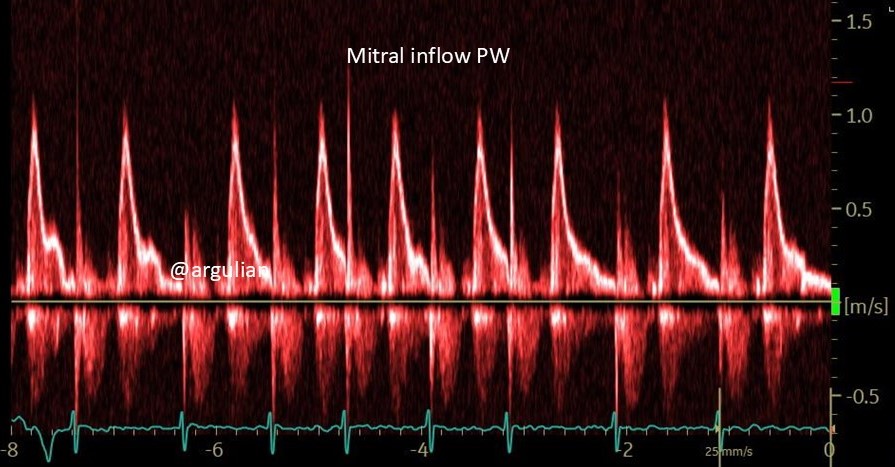
A elderly patient with persistent atrial fibrillation presenting with dyspnea. Mitral inflow interrogation is shown. What are the findings suggestive of increased left ventricular filling pressures?
Edgar Argulian tweet media
English
18
15
88
11.7K
Aditya A Joshi retweetledi
Anish Koka, MD
Anish Koka, MD@anish_koka·
The origin story of organ transplant is brutal. (Link in reply) The 3 precious kids pictured here with surgeon Carl Groth represented the longest anyone had survived with a liver transplant. All were dead within 2 years of this picture being taken.
Anish Koka, MD tweet media
English
2
1
8
2.9K
Aditya A Joshi retweetledi
Edgar Argulian
Edgar Argulian@argulian·
3D TEE with MPR focusing on the aortic valve 1/2
English
3
17
66
4.9K
Aditya A Joshi retweetledi
Edgar Argulian
Edgar Argulian@argulian·
What does this M mode thru the aortic valve demonstrate?
Edgar Argulian tweet media
English
23
25
114
22.2K
Aditya A Joshi retweetledi
Edgar Argulian
Edgar Argulian@argulian·
A patient with dyspnea and lower extremity swelling. Hepatic venous flow was sampled using PW Doppler. 1/2
Edgar Argulian tweet media
English
4
11
35
5.6K
Aditya A Joshi retweetledi
Edgar Argulian
Edgar Argulian@argulian·
An elderly patient with dyspnea and dizziness for a week. CW Doppler interrogation across the aortic valve is shown in 5-ch view. What are the findings and hemodynamic implications?
Edgar Argulian tweet media
English
17
21
78
14.3K
Aditya A Joshi retweetledi
Edgar Argulian
Edgar Argulian@argulian·
A patient with known aortic regurgitation presents with shortness of breath. CW Doppler is obtained across the aortic valve in 5-ch view. What are the findings and hemodynamic implications?
Edgar Argulian tweet media
English
17
26
135
17.7K
Aditya A Joshi retweetledi
Edgar Argulian
Edgar Argulian@argulian·
From achieves: A hypotensive patient after recent cardiac procedure. What are the findings?
English
4
2
21
3.7K
Aditya A Joshi retweetledi
Edgar Argulian
Edgar Argulian@argulian·
An outpatient with shortness of breath, 2D TEE shown. What is the likely pathology?
English
9
5
23
5.2K
Aditya A Joshi retweetledi
Edgar Argulian
Edgar Argulian@argulian·
An elderly patient with malaise and dyspnea. TEE findings shown. What is the diagnosis?
English
6
21
78
13.9K
Aditya A Joshi retweetledi
Anthony DiGiorgio, DO, MHA
Anthony DiGiorgio, DO, MHA@DrDiGiorgio·
I'll admit I've shared this chart. It's incorrect and misleading, but most doctors know the truth probably looks something like that, if not quite so drastic. The reality is our lives are dominated by administrators who don't help patient care. There are teams of coders and billers, CDI consultants, chief experience officers, quality metric data officers, 340B compliance officers, etc. I recently overheard a nurse saying in just a few years she went from having one direct supervisor to five different ones she now has to answer to. There's no question CMS adds a ton of administrative complexity and cost. Much of that is unmeasured as it is shifted to the doctors. For example, one study looked at how much time it took trauma surgeons to document notes for CMS's requirements. They found that it takes 73 full 24-hour days to document one year's worth of notes. Another example is the mandated quality metrics from CMS. To quote my own paper: "The 4 most common types of independent physician practices demonstrate an estimated $15.4billion annual metric reporting cost, with the true cost likely higher. Outpatient physicians spend 2.6 hours weekly on metric reporting; nonphysician staff spend another 12.5 hours weekly. Hospitals also face significant burdens: an average- sized 161-bed community hospital devotes 4.6 fulltime staff solely for quality reporting. Large hospitals report similarly labor-intensive efforts: the Johns Hopkins Hospital reported devoting 108 000 person-hours annually on 162 unique metrics." So, yes, the US healthcare system is administratively complex. CMS ties to ration care by assigning value from the top-down, central planning in ways that are often schizophrenic (for example, the PFS stating that primary care is low value while VBP programs saying it's high value). Other countries use simpler means of rationing care, like global budgets. Those are a disaster and do an even worse job of resource allocation than our central planning does. In his substack, @cremieuxrecueil discusses the potential of PE to increase efficiency. Unlike most physicians, I am not reflexively anti-PE. Unfortunately, the biggest cost drivers in US healthcare are the large consolidated non-profit systems. These typically can't be acquired by PE, and thus aren't prone to the efficiency tightening mentioned. To truly get to a lower administrative burden, we need to remove as many healthcare transactions from government third party payers as possible and reverse the trend of increasing consolidation in non-profit hospital systems. That being said, you should definitely read @cremieuxrecueil's substack post for good perspective.
Crémieux@cremieuxrecueil

Here's my entry. This is one of my favorite fake charts. It's been posted by government officials, politicians, educators, provider advocacy groups, and so many conservative influencers. But it's fake. It's just misled millions of people.

English
17
34
210
47K
Aditya A Joshi retweetledi
Edgar Argulian
Edgar Argulian@argulian·
Is M mode still relevant? A patient with history of open heart surgery. M mode obtained in the parasternal short axis view. What is the finding?
Edgar Argulian tweet media
English
9
12
90
10.9K
Aditya A Joshi retweetledi
Edgar Argulian
Edgar Argulian@argulian·
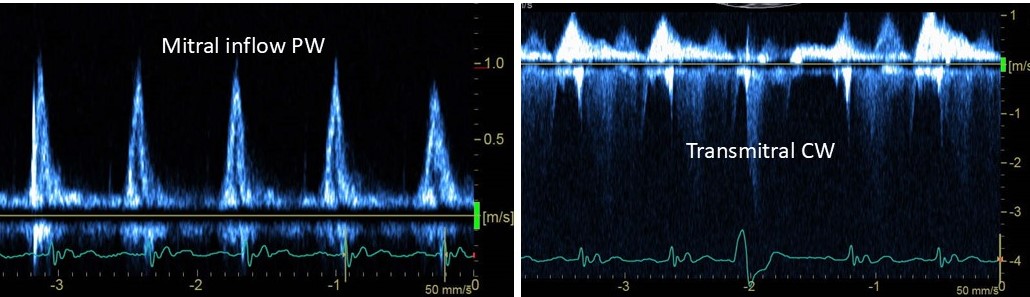
An elderly patient with known severe left ventricular dysfunction is admitted with hypotension. Annular tissue Doppler velocities are low. What are the likely left ventricular filling pressures?
Edgar Argulian tweet media
English
7
9
70
9.9K
Aditya A Joshi retweetledi
Edgar Argulian
Edgar Argulian@argulian·
Does M mode still have a role in hemodynamic assessment? Two elderly patients with dyspnea, mitral M modes shown. What are the findings and implications?
Edgar Argulian tweet media
English
12
23
103
20.2K
Aditya A Joshi retweetledi
Edgar Argulian
Edgar Argulian@argulian·
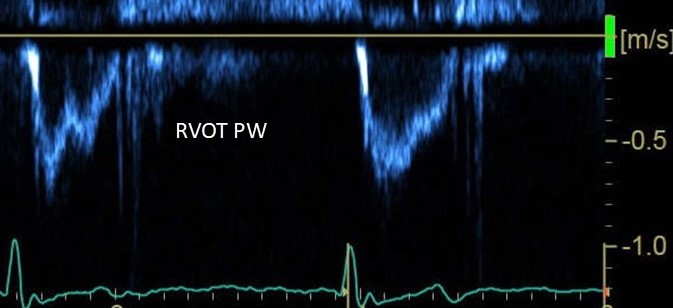
A patient with precapillary pulmonary hypertension and atrial fibrillation. RVOT sampling shown. Why is mid-systolic notching variable?
Edgar Argulian tweet media
English
11
25
125
16.2K
Aditya A Joshi retweetledi
Edgar Argulian
Edgar Argulian@argulian·
A patient with dyspnea. History of 'heart surgery' and 'long infection'. What is the characteristic finding?
English
5
8
30
2.3K
Aditya A Joshi retweetledi
Edgar Argulian
Edgar Argulian@argulian·
Importance of color Doppler interrogation of the left ventricular cavity: what is the diagnostic clue in this image?
English
10
13
58
11K
Aditya A Joshi retweetledi
American Society of Echocardiography
The arterial circle of Vieussens is a rare anatomical variant that can significantly impact cardiac function. This @CASEfromASE presents a 21-year-old patient diagnosed w/ classical Hodgkin lymphoma who experienced nonspecific right-sided chest tightness. bit.ly/3HIHD1c
English
2
58
200
16.3K
Aditya A Joshi retweetledi
Sahil Bloom
Sahil Bloom@SahilBloom·
Everyone needs to hear this…
Sahil Bloom tweet media
English
51
244
2.4K
157.6K