

Aidan Sowa
1.8K posts


You need 1 guy in your village that is the airport driver. My friends can call me day or night and I will happily go to the airport. I love the airport. I'd go either way.
Adele Bloch@adele_bloch
everyone wants a village, but no one wants to be a villager > drive your friends to the airport > go to their party even when you're tired > stop cancelling last minute > host at your place > support the wins & losses it's worth every ounce of effort
English

What other slept on marketing channels are there?
Things like GEO that make a massive difference but are difficult to achieve
English

Clawdbot + MassContent + Sora V1 Agent = TikTok Domination
My bot "Jeffery" spent 144 hours training itself on TikTok & Snapchat story data
Installed its memory to a workflow node
We are so early... it's insane
like, rt + comment "AGENT" for access to use the node in your dms
English

This Kling 3.0 UGC workflow is absolutely insane 🤯
It generates hyper-realistic UGC-style videos from a single text prompt, all in one shot.
Perfect for DTC brands who need to scale UGC without paying $500 per UGC influencer video. 😂
Here's the problem:
You're either paying creators who take weeks to deliver, or you're stitching together janky 5-second AI clips that look obviously fake.
Kling 3.0 solves it:
→ Write a prompt with character, scene, and dialogue
→ Get ~1 min long UGC video with realistic facial expressions
→ good voice control — tone, pacing, emotion, lips moving in realistic way
→ Multi-shot scenes in one generation (hook → demo → CTA)
No insane creator fees.
No no wasted samples.
No losing time.
What you get:
→ step by step ai UGC workflow information
→playbook to build a viral content system for your 8 figure dtc brand
→ Image-to-video workflow for branded product shots
I built a full guide for making viral organic UGC ads to scale my ecom brand clients on TikTok Shop.
Want the guide?
> Like this post
> Comment "KLING"
And I'll send it over (must be following so I can DM)
English

This Kling 3.0 UGC workflow is absolutely insane 🤯
It generates hyper-realistic UGC-style ad videos from a single text prompt — talking heads, unboxings, testimonials, tutorials — in one shot.
Perfect for DTC brands and agencies who need to scale UGC without paying $500 per UGC video.
Here's the problem:
You're either paying creators who take weeks to deliver, or you're stitching together janky 5-second AI clips that look obviously fake.
Kling 3.0 solves it:
→ Write a prompt with character, scene, and dialogue
→ Get a 10-15 second UGC video with realistic facial expressions
→ Native voice control — tone, pacing, emotion per line
→ Multi-shot scenes in one generation (hook → demo → CTA)
→ Paste negative rules to kill AI artifacts instantly
No creator fees.
No stitching clips.
No uncanny valley.
What you get:
→ 6 copy-paste prompt templates for every UGC format
→Voice & dialogue cheat sheet with tone keywords
→ Multi-shot ad structure (hook → problem → solution → CTA)
→ Image-to-video workflow for branded product shots
→ A "where it fails" section so you don't waste credits
→ ChatGPT template to convert any rough idea into a Kling prompt
I built a full prompting guide for UGC ads on TikTok and Meta.
Want the guide?
> Like this post
> Comment "KLING"
And I'll send it over (must be following so I can DM)
English

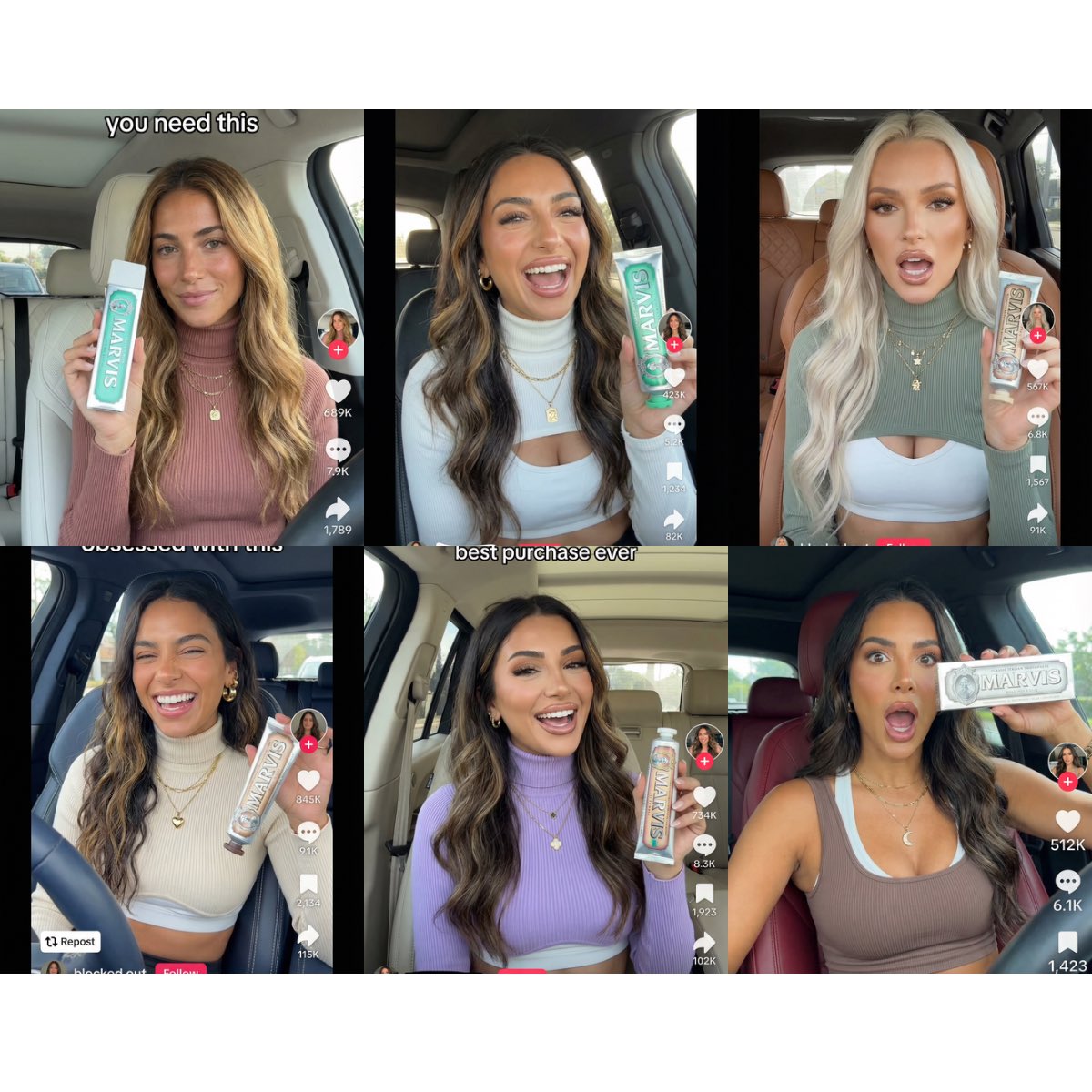
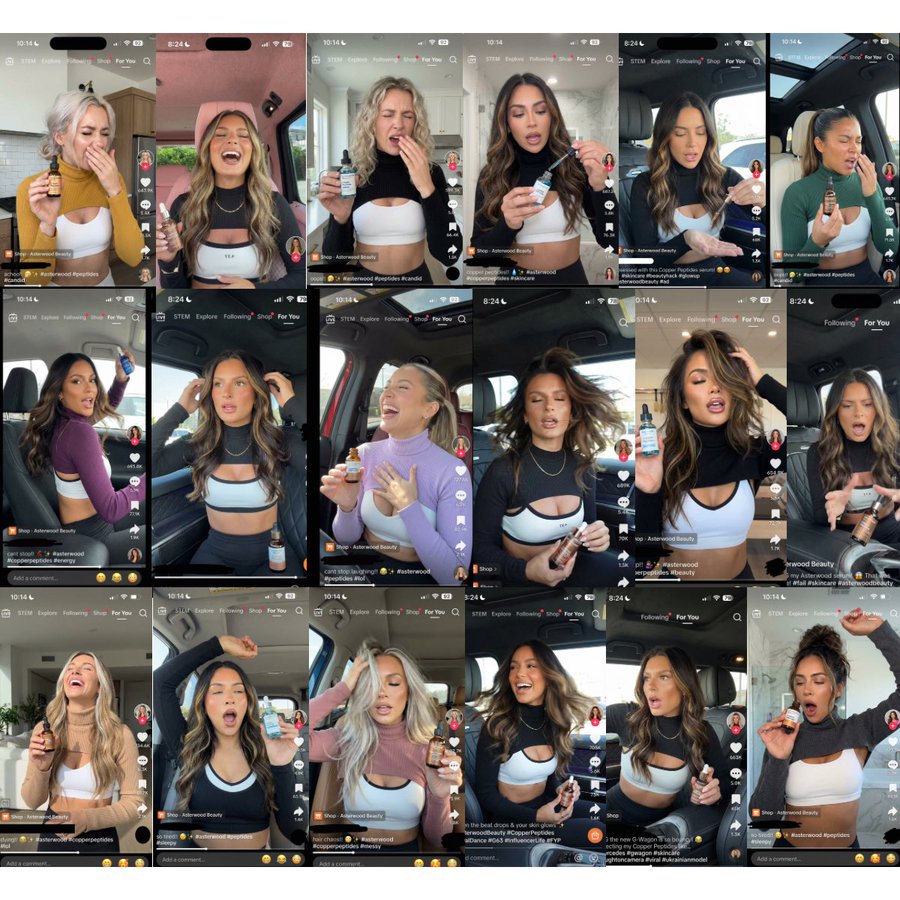
over 230m views in december alone came from ai influencer mass marketing
dozens of accounts
same product
same hook
different faces and personalities
ai generated creators posting sponsored videos at scale
without contracts
without coordination
without creative burnout
this isn’t influencer marketing
it’s distribution engineering
when one format works
ai replicates it across hundreds of accounts
and attention compounds fast
that’s why brands are shifting budgets here
reach becomes predictable
and testing becomes cheap
rt + comment “influencers” and i’ll dm how these networks are built
(follow for dm)
English

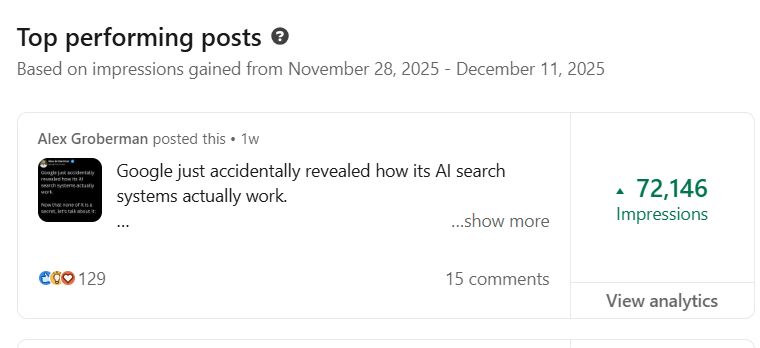
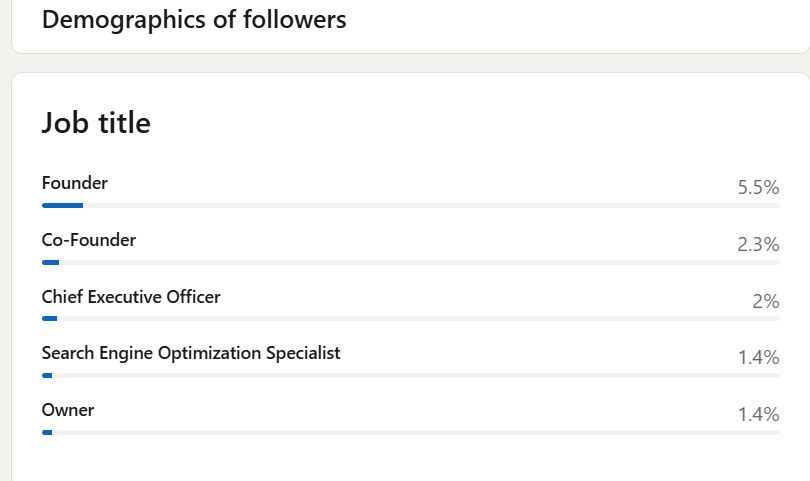
I created my LinkedIn account 53 weeks ago.
Since then I've generated ~$200,000 in direct rev, built 10,000+ connections and passed 4 million impressions.
Super easy algo to crack.
LinkedIn continues to be one of the strongest channels for inbound, authority, and consistent deal flow.
Use my system before they tighten the algorithm again.
And if you want the full cheat sheet with engagement group templates, carousel playbooks, DM workflows, and my posting system, follow me, repost this, and reply “LinkedIn Growth Guide.”
You must do all 3 to receive the DM.
Here is what is working best on LinkedIn right now:
High impact proof posts are still outperforming everything else.
LinkedIn continues rewarding posts that combine a real metric, a short narrative, and a clear business insight.
These generate both dwell time and strong early engagement, which are the two main distribution levers.
Short story driven posts are pulling huge numbers this month.
Tight stories about client outcomes, small wins, failures, pivots, or lessons learned create emotional engagement and keep people reading longer.
Both factors increase reach.
Conversation starter posts remain one of the most reliable visibility triggers.
You need first hour comments for distribution, and bold questions, stances, and challenges still generate the fastest comment velocity.
Native formats continue to do really well.
Text posts, carousels, and native videos significantly outperform link out posts.
LinkedIn continues suppressing link reach.
If you add a link, either place it in the comments or replace the preview image inside the post.
Dwell time is still one of the strongest ranking factors.
If people read your full post, swipe through multiple carousel slides, or watch your video mostly or fully, you get boosted.
Topic authority continues to grow in importance.
Posting consistently around the same topic or category strengthens your topic score, which increases distribution to users who follow or engage with that topic.
Cross niche engagement amplifies reach.
Commenting in 2 to 3 adjacent categories expands your first hour engagement pool and brings your content into new networks.
Reposting top performers is now practically an official LinkedIn best practice.
Most followers never saw your post the first time. Repost every 2 to 4 weeks with a new hook or framing.
Posts with replies to replies get extended visibility.
Deeper comment threads are weighted highly, and posts with multi level conversations stay in feeds for days.
Here is my current posting routine which still works extremely well:
I post 3 times per day, every day.
Morning is a proof driven post or a strong point of view.
Afternoon is a carousel, teardown, or case study.
Evening is a lesson, system, or mini thread.
Skipping even one day reduces next day reach.
Here are the formats performing best right now:
Carousels with a bold headline on slide 1 tied to a result or pain point, 3 to 5 tight middle slides with steps or visuals, and a final slide with a clear call to action such as “Comment guide if you want the full version.”
Short native videos under 60 seconds with a hook in the first 2 to 3 seconds. Subtitles matter.
Walkthroughs and behind the scenes style videos outperform talking head videos.
Proof breakdowns that show the metric, explain how it happened in 3 to 4 steps, and end with a lesson or takeaway.
Sharp hook text posts with 1 to 2 line paragraphs, 3 to 5 takeaways, and a question at the end to prompt replies.
Conversation posts that generate multi level comment threads.
Here is what is currently losing traction:
Link out posts with no context.
Metrics with no explanation.
Large blocks of text with no spacing.
Generic content that blends in with everything else.
Posts where you never reply to comments in the first hour.
Here is the engagement strategy that is working best right now:
Comment on 20 or more posts per day.
Like 50 or more posts per day.
Reply to every comment on your own posts in the first hour.
Repost top performing content every 5 to 7 days with a new hook.
DM 5 to 10 people per day with specific, contextual value tied to something they posted.
Create deeper comment threads by asking follow up questions, tagging people, or continuing the conversation.
LinkedIn is heavily rewarding repeat engagement from the same people and deeper threads where replies provoke more replies.
Here are the hooks performing best right now:
I started this account 53 weeks ago. Here is what nearly $200,000 in pipeline actually looks like.
This 4 slide carousel booked 5 calls in 24 hours. Here is slide 1.
If I had to rebuild my LinkedIn from zero today, this is the exact system I would use.
My 3 post per day routine for consistent inbound.
I made X this month from LinkedIn. Here is the breakdown.
Back every hook with proof.
Here is the 30 day LinkedIn growth plan that works today:
Post 3 times per day with at least one proof based post.
Comment on 20 or more posts daily with real insight.
Like 50 or more posts per day.
Reply to every comment within the first hour.
Repost a winner weekly.
DM 5 to 10 people daily with context first value.
Track impressions, comment depth, leads, and repeating commenters weekly.
Test hooks, formats, and timing every week.
LinkedIn remains one of the strongest platforms for inbound, authority and deal flow in 2025.
Run this system for 30 days.
Screenshot your Day 31 results.
Tag me when inbound starts.
If you want the full cheat sheet, follow me, repost this, and reply “LinkedIn Growth Guide.”
You must do all 3 to receive the DM.


English
PR placements stay indexed for 7-10 years. Your PR from 2024 will still work in 2030.
Ads stop the second you stop paying. Authority compounds faster than ads.
The ROI isn't immediate. It's permanent.
English
Your 2026 PR strategy:
Phase 1: Audit Export last 12 months of coverage (Meltwater/Cision). Track outlet, journalist, angle, traffic/leads. Tag each: Repitch or New Angle.
Phase 2: Quick Wins Target journalists who covered you before, outlets featuring competitors, newsjacking opportunities. Repurpose old coverage into new angles.
Phase 3: Customer Research Extract stories: problems before your product, results after, why they chose you, objections overcome, unexpected use cases.
Phase 4: Story Research Reverse-engineer competitor PR. Use SparkToro/Twitter Lists to find journalists. Build angles around features, wins, industry shifts, expertise. Map to funnel stages.
Phase 5: Outreach Spreadsheet all angles with targets and deadlines. Prioritize by authority, engagement, fit.
Then execute: fix media list gaps, repitch winners, launch new pitches, scale with AI.
Don't stop.

English

hi can i pick your brain for 5 minutes about everything you’ve ever done in business, ever & w full strategy?
would love to have coffee (on me of course)
😭
English
@Laraacostar I mean Christmas is a great way to make a lot of money if you know what you’re doing, people literally have to buy stuff
English
the best xmas gift i can give myself is the ability to work on my dreams
a few years ago i wasn't.
merry xmas
Rob Hoffman@RobHoffman_
these are the messages i get from my co-founder @Laraacostar at 3am on Xmas Eve
English
i'm so anxious avoidant that i will avoid all my unopened tabs while simultaneously fearing losing them so end up opening a new window because like i don't wanna know but i do yk?
English


been gatekeeping this for 2 years but f*ck it:
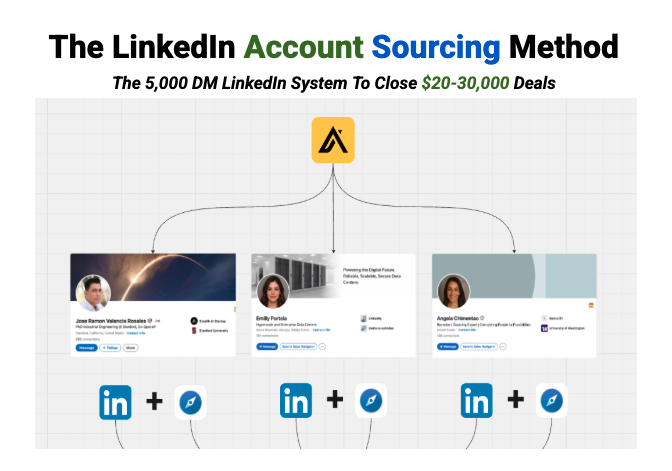
our LinkedIn account sourcing method that lets you send 1,000s of DMs/month
most people:
→ Use their personal account
→ Hit 100 connection requests/week limit
→ Get banned trying to scale
us:
→ Source US-verified accounts at scale
→ 5,000+ monthly DM capacity
→ Zero bans in 24 months
here's the math:
• 1 account = 400 DMs/month
• 10 accounts = 4,000 DMs/month
• 4,000 DMs = 40-80 qualified calls
• 40-80 calls = 8-16 new clients
we've helped 47 agencies scale to $50k+/mo using this exact system.
one client went from 2 sales calls/week to 23/week in 30 days.
follow + comment "ACCOUNTS" for the full breakdown
(Closing this down at 400 people)
English
Need to get press coverage for your company or startup?
I scraped 8,000+ journalist and editor emails from TechCrunch, Forbes, Business Insider, and 100+ other publications.
Want access?
Like+ Comment "PRESS"
Follow me so I can DM you the link
I'll send it over ASAP.
English





Apify’s Apollo scraper went down earlier this month - but there’s a new workaround.
We’ve already scraped 500K+ leads this month using the new method. Same data quality, zero headaches.
I recorded a quick video breaking down:
> The new tool replacing Apify
> How to scrape Apollo safely
> How to import everything cleanly into Clay
Comment “SCRAPE” and I’ll DM you the video.
GIF
English

After monitoring 75,235 email inboxes over the last 12 months, @DeanFiacco's ScaledMail team & I put together a masterclass doc covering everything you need to know about cold email deliverability in 2025.
This doc covers everything deliverability, including:
> 27 essential tech implementation practices for 98%+ deliverability.
> Little-known protocol differences between GSuite & Outlook.
> How good & bad offers directly impact email deliverability.
> Exact IP-pool error tickets to look out for & how to fix them.
> Most effective practices for monitoring deliverability at scale.
> Battle-tested warm-up settings for optimized cold email sending.
> SOPs for swapping out poor deliverability email accounts w/ new ones.
> Ideal GSuite / Outlook use case ratios depending on your target markets.
> What domains to purchase, how domains affect performance, & aged domains.
And more…
Want this document for yourself?
👉 Like & Comment “DELIV” and I’ll DM you the document.
(Must be following to receive)

English