Andrew Jagim, PhD

3.8K posts

Andrew Jagim, PhD banner
Andrew Jagim, PhD

Andrew Jagim, PhD

@AJagim

Director of Sports Medicine Research, Mayo Clinic Health System. Certified Strength & Conditioning Specialist. Opinions are my own.

Onalaska, WI Katılım Mayıs 2012
1.7K Takip Edilen2.1K Takipçiler
Andrew Jagim, PhD retweetledi

PINESorg
PINESorg@PINESorg·
About 15% of male athletes (15-30 yo ) seen at a sports medicine clinic had symptoms related to Low Energy Availability (LEA). This inadequate fuelling was linked to injuries, low testosterone, and reduced performance. #OpenAccess @DrKateAckerman bjsm.bmj.com/content/early/…
PINESorg tweet media
English
0
4
11
774
Andrew Jagim, PhD retweetledi
Aaron Smith, PhD, RD
Aaron Smith, PhD, RD@AaronSmithRD·
🧵 (1/3) Excited to finally share our creatine pilot trial in AD results! We found that 20 g/day creatine monohydrate for 8 weeks was safe and feasible in people with AD. Compliance was excellent, and serum creatine significantly increased.
Aaron Smith, PhD, RD tweet media
English
25
63
328
320.3K
Andrew Jagim, PhD retweetledi
Jeffrey R. Stout
Jeffrey R. Stout@ExphysPhD·
Our study on collegiate female soccer players! ⚽ Starters rack up more distance, sprints & high-speed runs than substitutes over a season. Coaches, keep an eye on workload differences to optimize performance! 📊 #SoccerScience #SportsResearch doi.org/10.3390/jfmk80…
English
0
2
12
731
Andrew Jagim, PhD
Andrew Jagim, PhD@AJagim·
@NutriDetect Any published scientific evidence of the kidney destroying effects or just this screen shot of a quote?
English
0
0
5
351
Andrew Jagim, PhD retweetledi
Jeffrey R. Stout
Jeffrey R. Stout@ExphysPhD·
🚨 New study on cupping therapy for runners! 🏃‍♂️ RCT shows no significant benefits in muscle pain, fatigue, perceived recovery, or jump height vs. sham treatment. 🤔 Time to rethink cupping for post-run recovery? #Running #Recovery #CuppingTherapy qxmd.com/r/40325704
English
2
7
24
2.8K
Andy Galpin, PhD
Andy Galpin, PhD@DrAndyGalpin·
Excellent idea, a 'research journal' specifically written in language for kids. Kudos to those involved. kids.frontiersin.org
English
8
9
69
12.5K
Jeffery L. Heileson, PhD, RD
Jeffery L. Heileson, PhD, RD@jheilesonPhD·
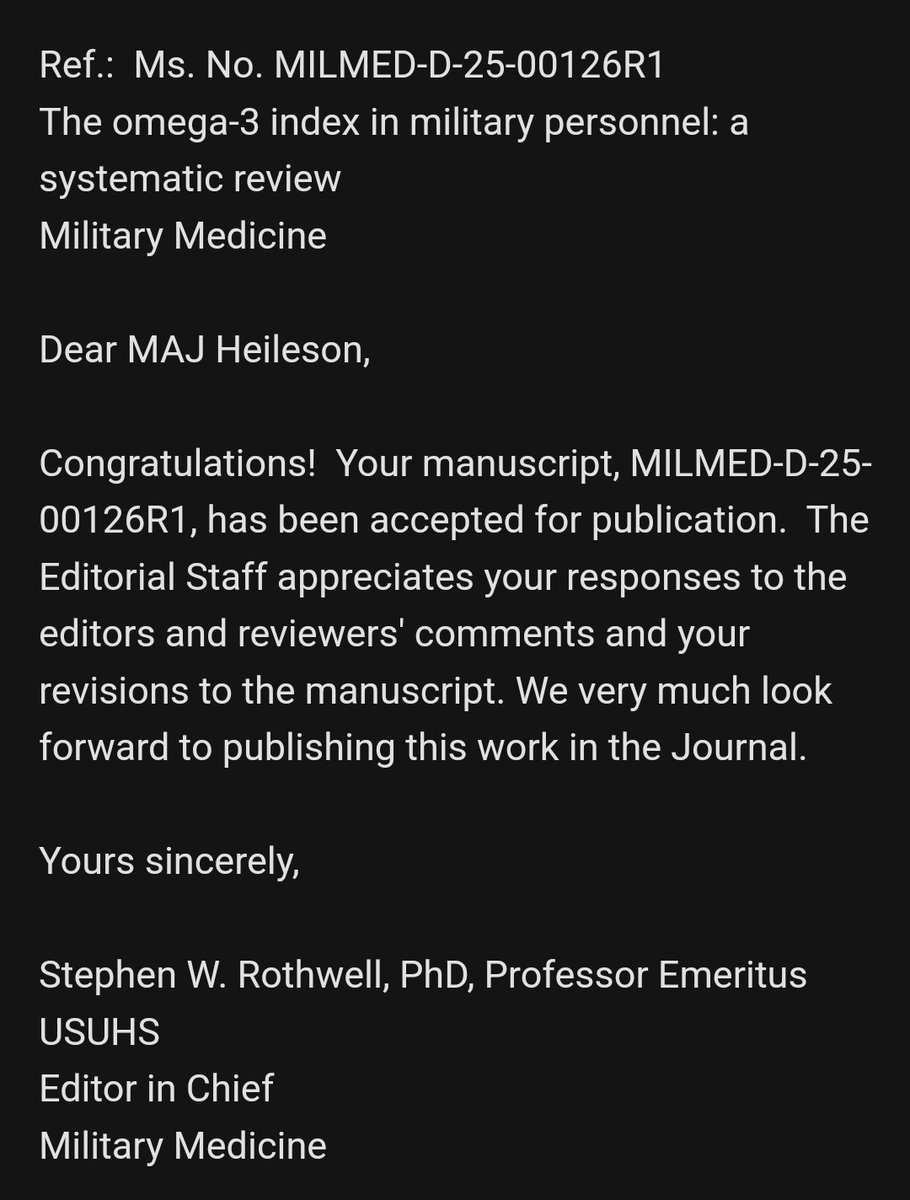
The Omega-3 Index (O3i) is a measure of EPA+DHA status in red blood cells. Our review of the O3i in military personnel was just accepted for publication and effectively highlights a notable nutritional gap that should be addressed by Defense organizations. I'll share asap!
Jeffery L. Heileson, PhD, RD tweet media
English
1
0
4
264
Andrew Jagim, PhD retweetledi
Daniel Berglind, PhD
Daniel Berglind, PhD@DanielBerglind·
Meta-analysis: To avoid reductions in total sleep time 😴: ☑️coffee (107 mg per 250 mL) should be consumed at t 8.8 h prior to bedtime ☑️ pre-workout supplement (217.5 mg) should be consumed at least 13.2 h prior to bedtime pubmed.ncbi.nlm.nih.gov/36870101/
English
0
21
72
2.8K
Evan Scales
Evan Scales@evanxscales·
@_MLFootball Front squatting** At first I didn’t get the hype, 450 isn’t crazy (yes it’s strong but hit by many) Then I saw the bar on the front shoulders 😭😭 boy this was crazy
English
4
1
989
34.9K
MLFootball
MLFootball@MLFootball·
INSANE: #Chargers tackle Rashawn Slater squatting 450 pounds at his pro day. 🤯🤯🤯 Freak athlete — turned into NFL Pro Bowler and star.
English
325
198
11.5K
3M
Andrew Jagim, PhD retweetledi
Christopher Camp, MD
Christopher Camp, MD@ChrisCampMD·
Excited to announce a project we've been working on for quite some. The "Mayo Clinic Human Optimization Project" launches tomorrow (Mar 4). Follow along to hear from experts on how you can become the best human you can be. New topics released weekly...
English
4
4
58
4.3K
William A. Wallace, Ph.D.
William A. Wallace, Ph.D.@WilliamWallace·
I post about creatine-related research once weekly. The reason is obvious in that I am an advocate of raising awareness for increasing intake and/or its use as a supplement for a large percentage of people who visit my page. Currently, legislative efforts are underway to restrict the sale of creatine to minors, despite over 680 peer-reviewed studies confirming its safety, necessity, and benefits across all age groups. Creatine is a critical component of cellular energy metabolism, supporting muscle function, brain health, and overall physiological performance—and restricting access could have negative consequences on health and development. Yesterday, the @IntSocietySN issued a press release outlining the following: ✔️ The body requires 2-4g of creatine per day, sourced from endogenous synthesis and dietary intake (primarily from meat and fish). ✔️ Growth & Development: Higher creatine intake (>1.5g/day) is associated with greater height, lean mass, and improved bone density, particularly in children and adolescents. ✔️ Cognitive & Mental Health: Low creatine intake (<0.95g/day) correlates with poorer cognitive performance and a higher risk of depression. ✔️ Adequate Intake for Infants: - 0–6 months: 7 mg/day (via breast milk) - 7–12 months: 8.4 mg/day ✔️ Clinical Applications: Creatine supplementation has demonstrated neuroprotective properties, improved muscle recovery, and benefits in disease management, including conditions such as sarcopenia, neurodegenerative disorders, and metabolic syndromes. Despite misconceptions, there is no scientific evidence linking creatine supplementation to adverse health outcomes or eating disorders. On the contrary, restricting creatine access may negatively impact growth, performance, and neurological health, particularly in youth populations. ⬇️For the full press release see below and share this post if you feel compelled to. sportsnutritionsociety.org/PDFuploads/ISS…
William A. Wallace, Ph.D. tweet media
English
4
16
69
4.8K