Alexios S. Antonopoulos

756 posts

Alexios S. Antonopoulos banner
Alexios S. Antonopoulos

Alexios S. Antonopoulos

@AlAntonopoulos

Cardiologist/Researcher | @uoaofficial #CVimaging #ICC | #EACVI CMR/CT Ambassador | Executive Editor HJC

Athens, Greece Katılım Ağustos 2018
649 Takip Edilen706 Takipçiler
Alexios S. Antonopoulos retweetledi
Panteleimon Pantelidis
Panteleimon Pantelidis@pan_pantelidis·
Join the heartbeat revolution! Submit your manuscript to this super-hot Special Issue we're launching at Frontiers, about AI-powered arrhythmia detection and prediction. 🧠💓 @OikonomouVangel, @AlAntonopoulos, Polydoros Kampaktsis
Frontiers - Medicine@FrontMedicine

📢 Call for papers! Check out our new article collection, "Artificial Intelligence for Arrhythmia Detection and Prediction" Edited by Polydoros Kampaktsis, Evangelos Oikonomou, and Alexios Antonopoulos. Coordinatd by Panteleimon Pantelidis 📷 fro.ntiers.in/63888

English
0
2
3
318
Alexios S. Antonopoulos retweetledi
Henry W. West
Henry W. West@HenryWWest·
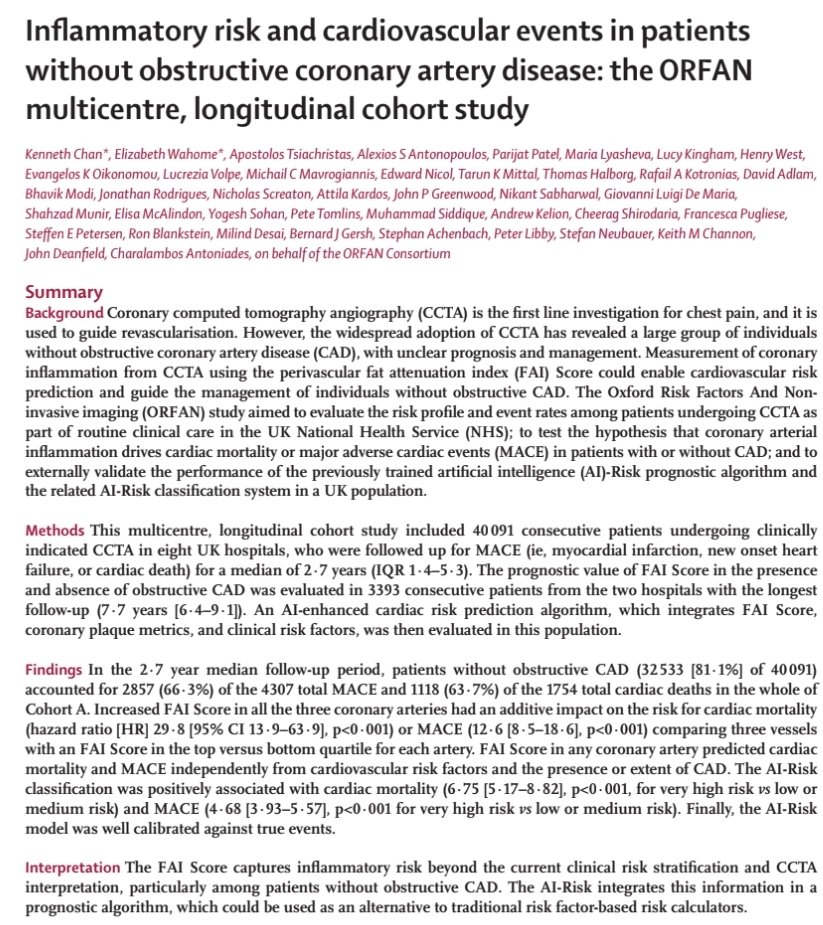
Just published @TheLancet CCTA with FAI score can be used to assess coronary inflam risk regardless of obstruction/plaque/calcification - unlocking unrivalled risk assessment and targeted treatment. Congrats to Ken & Elizabeth for leading this analysis. doi.org/10.1016/S0140-…
Henry W. West tweet media
Sydney, New South Wales 🇦🇺 English
0
1
8
421
Alexios S. Antonopoulos retweetledi
Kathryn McGurk
Kathryn McGurk@KathrynMcGurk·
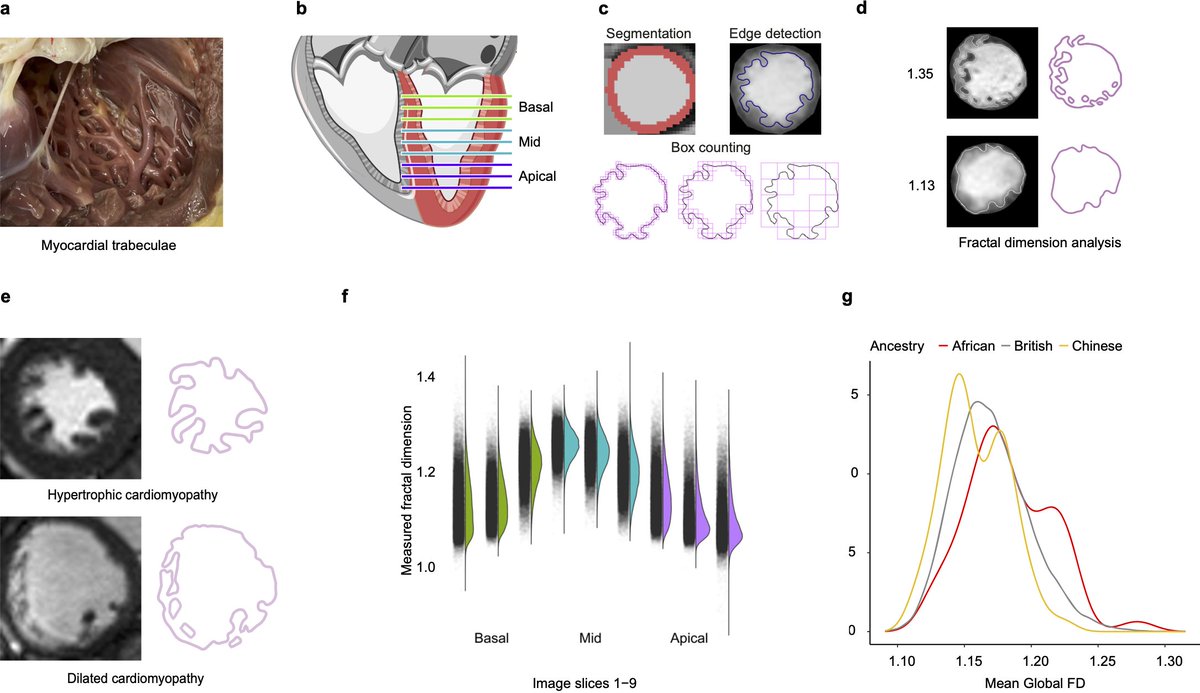
Great to have this preprint out - In 50k CMRs of the UK Biobank, we identified common and rare genetic factors influencing trabeculation, identified modifiers, and assessed the relationship with cardiomyopathies and imaging-derived traits. @DrDeclanORegan medrxiv.org/cgi/content/sh…
Kathryn McGurk tweet media
English
1
12
50
5.5K
Alexios S. Antonopoulos retweetledi
Rohan Khera
Rohan Khera@rohan_khera·
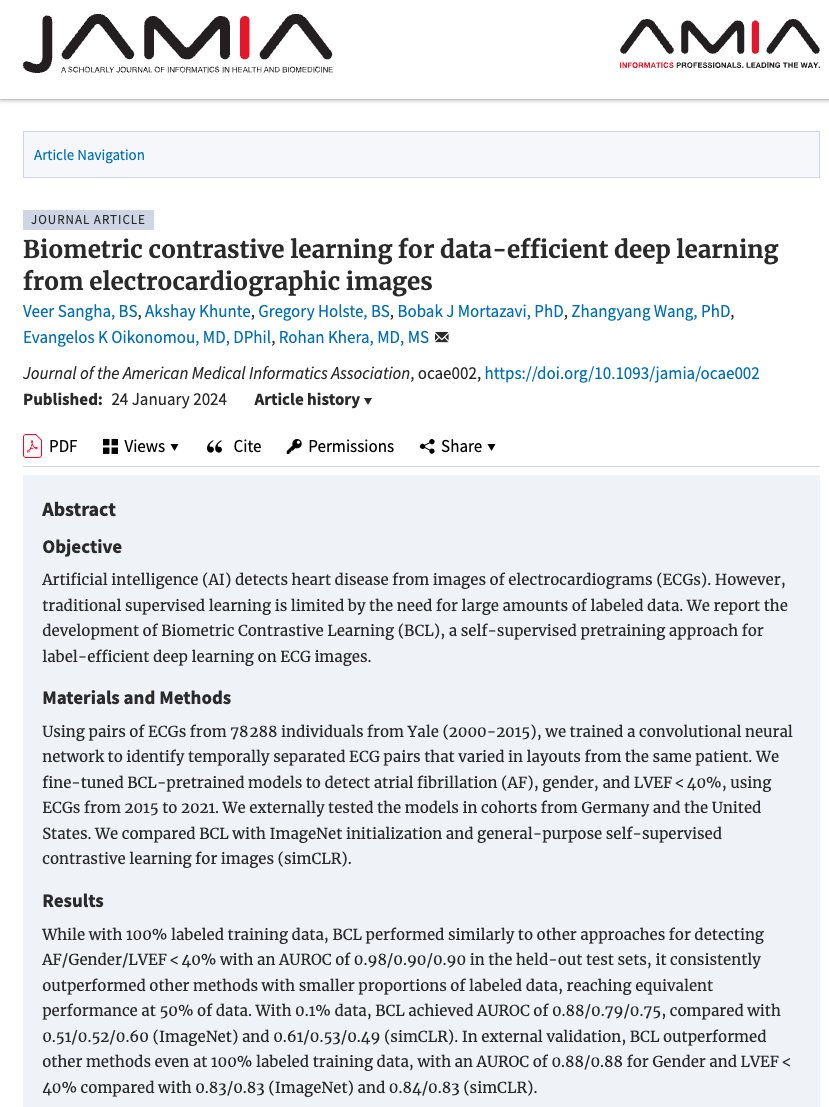
"ECG Biometrics"☝️👁️👥 Those who follow our work know that we are committed to enhancing the ability to diagnose cardiovascular conditions directly from images of ECGs. This includes rhythm/conduction problems but also structural heart diseases. (links to papers in @NatureComms and @CircAHA in 🧵) Often, developing these models is limited by a number of examples for a condition. In this technical contribution led by @Veer_Sangha_, @cards_lab member, and current @rhodes_trust scholar @UniofOxford, we report that different ECGs from the same person separated in time have shared features. These "ECG Biometrics" can be used to enable efficient model development by training a model to learn features that define similarity and dissimilarity across individuals. And then start training models for conditions after that point. We see large gains in performance. Now out in @JAMIA_Journal! Thanks to our team: @aakhunte @ekoikonomou @giholste @jbmortazavi, and Atlas @VITAGroupUT academic.oup.com/jamia/advance-…
Rohan Khera tweet media
English
2
11
49
7K
Alexios S. Antonopoulos retweetledi
Sek Kathiresan MD
Sek Kathiresan MD@skathire·
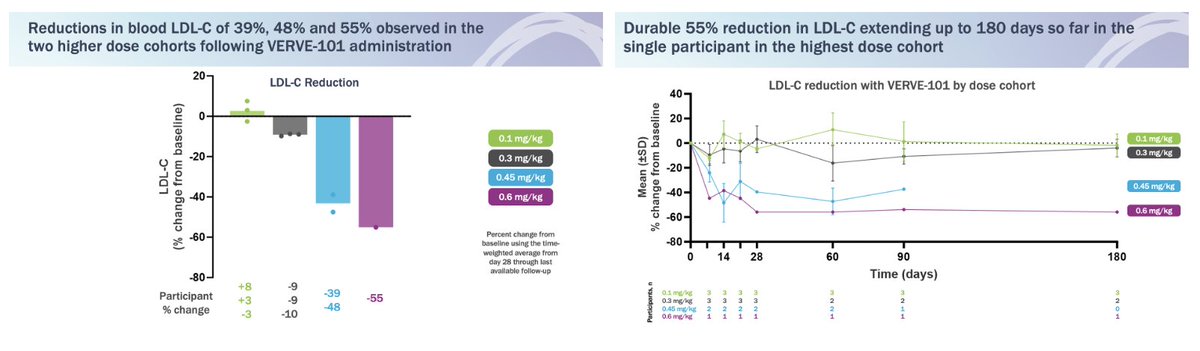
Can we precisely rewrite the genetic code - make a single DNA spelling change - in the liver of a human being for clinical effect? YES! Scientific milestone: VERVE-101 provides first proof-of-concept for in vivo DNA base editing in humans Clinical implication: It’s early but could open the way for an entire new way to treat heart disease; instead of daily pills/intermittent injections, a one-time intravenous infusion procedure to durably (possibly lifelong) lower LDL cholesterol; "surgery without a scalpel" Takeaways: 1. 10 patients with severe HeFH and ASCVD treated so far across 4 dose levels 2. Clinical effect on LDL-C (40% - 55% reductions) at potentially therapeutic doses 3. Dose-dependent reductions in blood PCSK9 protein and blood LDL-C 4. Durability so far out to six months, consistent with the pre-clinical data in NHP where the durability is out to 2.5y after a single treatment 5. Consistent with FDA guidance on patients to enroll in a Phase 1 study of gene editing products, we enrolled the sickest of the sick coronary disease patients 6. Safety profile revealed expected LNP-infusion related events: a) transient flu-like symptoms for a few hours after infusion; b) transient, reversible rise in LFTs after infusion 7. Two patients experienced CV events consistent with their underlying severe ASCVD 8. Safety profile supports continued development (DSMB have reviewed these data and requested to continue dosing) 9. These interim heart-1 data were submitted to FDA as part of IND package and we now have clearance to start study in U.S. 10. Next steps: finish dose escalation, complete dose expansion in 2024 11. Phase 2 start in 2025 for PCSK9 program Foremost, grateful to the patients who have volunteered and their families Thankful to the amazing @VerveTx scientific and clinical team (led by @andrew Bellinger), the investigators and study staff, the independent DSMB, and our partners P.S. Deepavali celebrates new knowledge and so thrilled to add today to our knowledge on the intersection of gene editing technology and cardiovascular disease $VERV @AHAScience @AHAMeetings @American_Heart #AHA23
Sek Kathiresan MD tweet media
English
40
236
980
342.6K