
Alan Clements
1.3K posts
Alan Clements
@AlanClementscom
Former Buddhist monk, investigative journalist, author, performing artist, & human rights activist committed to freedom and ending totalitarianism, everywhere.
Ubud Bali Katılım Ağustos 2014
782 Takip Edilen276 Takipçiler

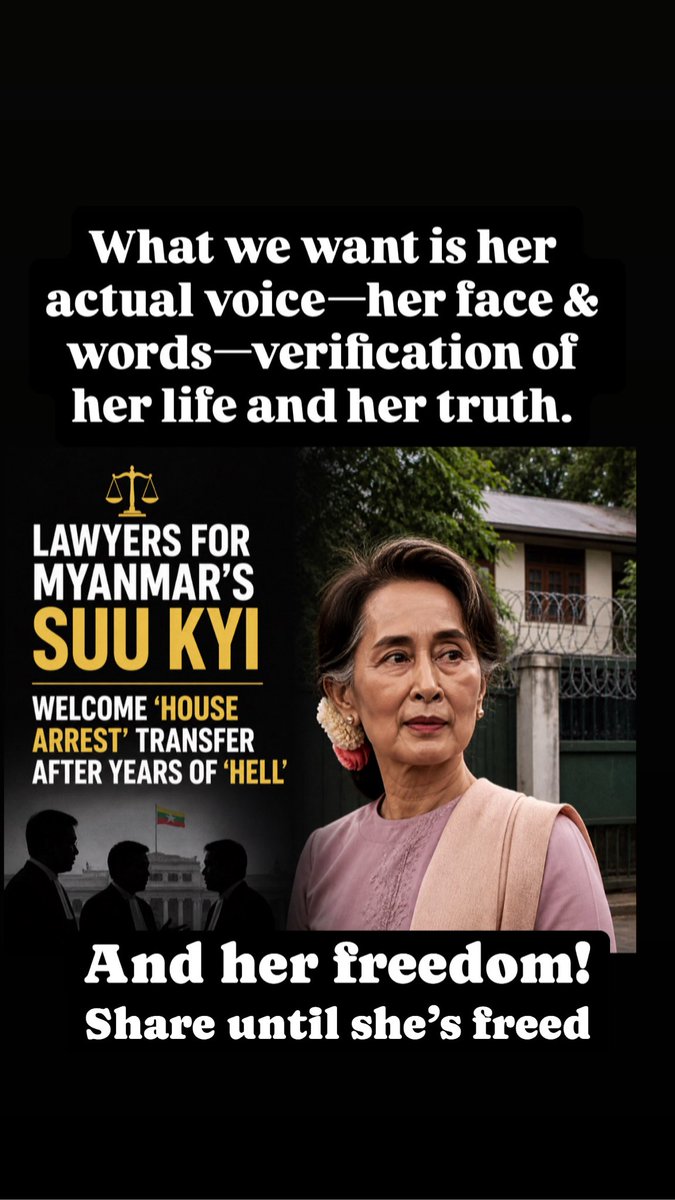
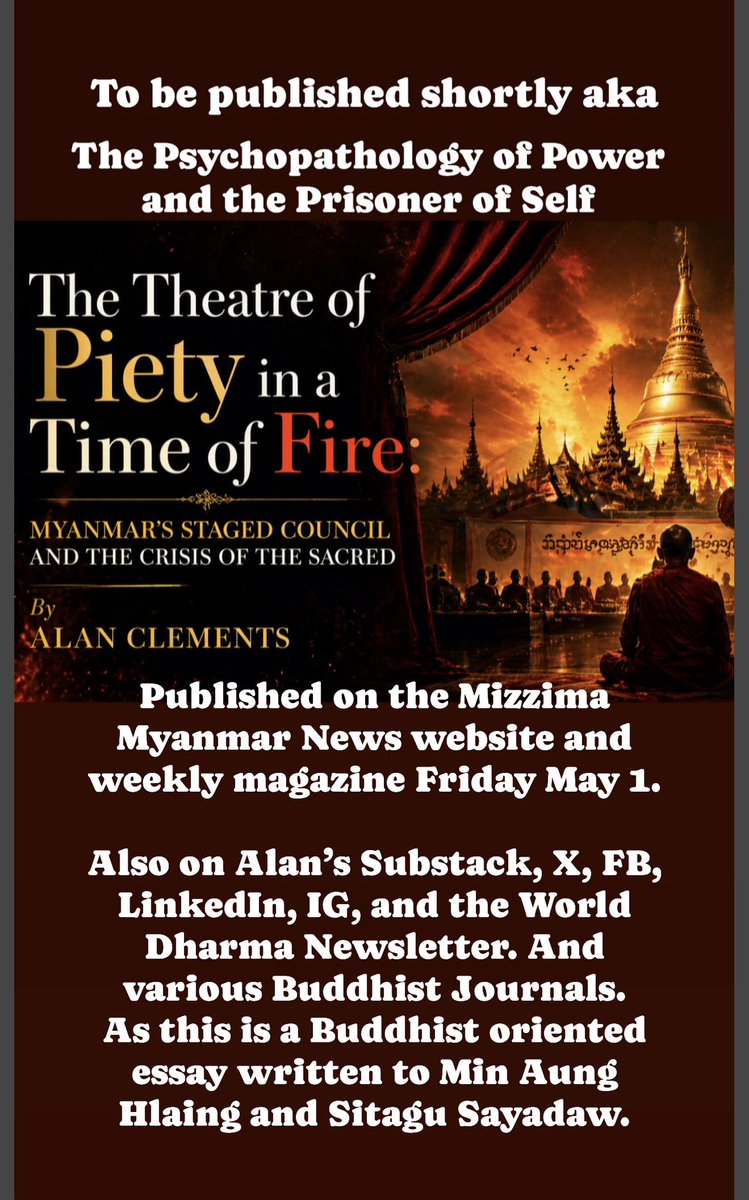
The Theatre of Piety in a Time of Fire: Myanmar’s Staged Council and the Crisis of the Sacred
A Transfer Without Transparency: The Urgent Call for Proof of Life
Alan Clements
May 02, 2026
Alan’s Substack is a reader-supported publication. To receive new posts and support my work, consider becoming a free or paid subscriber.
Read on Alan’s Substack alanclements.substack.com/p/the-theatre-…
From April 30 to May 2, 2026, in Yangon—within the vast, cavernous stillness of the Maha Pasana Cave at the Kaba Aye Pagoda complex—a grand commemoration unfolds: the seventieth anniversary of the Sixth Buddhist Council. Yet to begin with the ceremony alone is to misread not only the event, but the moral architecture that gives it meaning. One must begin, instead, with the man whose vision first consecrated this sacred space with its enduring resonance: U Nu.
U Nu, Burma’s first Prime Minister, was not merely a political leader gesturing toward religion as cultural inheritance; he was a practitioner for whom the Dhamma constituted an interior discipline rather than a public pose. His role in convening the original Sixth Council in 1954 emerged from a deeper aspiration: to align the fragile emergence of democratic governance with the ethical clarity of the Buddha’s teaching. This was not symbolism—it was an attempt, however fragile, to wed power with conscience.
This was no abstraction for me. It was lived continuity.
U Nu’s association with Mahasi Sasana Yeiktha—one of the most important centers of satipaṭṭhāna vipassanā bhāvanā (the disciplined cultivation of mindful awareness and insight into the nature of reality) in the modern Theravāda world—was not ceremonial. It was experiential, rooted in practice, discipline, and direct inquiry into mind and reality. Years later, I was ordained and lived within that very monastery. And in a convergence of history that continues to humble me, I was given residence in the very room where U Nu himself had once lived and practiced as a yogi.
There was nothing outwardly remarkable about the room. No inscription, no shrine to mark its significance. And yet, in its quiet austerity, something unmistakable lingered—the residue of attention, the architecture of stillness, the ethical gravity of a man who understood that neither democracy nor Dhamma can be performed into existence. They must be lived—privately, rigorously, without audience and without illusion.
He sat there not as Prime Minister, but as a human being subject to impermanence, to suffering, and to the discipline of seeing clearly. And in that simple fact lies a truth more radical than any ceremony: that the legitimacy of power—political or spiritual—begins and ends in the integrity of one’s own mind.
That experiment was decisively interrupted in 1962, when Ne Win seized control in a military coup, imprisoned U Nu, and inaugurated a lineage of authoritarian rule that would come to define Myanmar’s modern history. What followed was not merely a transfer of power, but the normalization of fear as a governing principle—an architecture sustained through arbitrary detention, the silencing of dissent, the disappearance of bodies into prisons, the use of torture as instrument, and the quiet, unrecorded violence that rarely enters official narratives.
The arc of that lineage extends through Than Shwe and Thein Sein, and culminates, in the present moment, in the rule of Min Aung Hlaing. It is not simply a succession of regimes, but a continuity of method—a recursive psychology in which power sustains itself through the management of perception, the strategic deployment of fear, and the selective appropriation of the sacred as a veil over acts that, when named plainly, reveal themselves as violence against both body and truth.
To understand the gravity of the present commemoration, one must hold these histories together. For what is being staged today at the Maha Pasana Cave is not simply a religious observance; it is an act of representation—a deliberate projection of moral authority at a time when the legitimacy of the state is under profound strain. The spectacle, with its recitations of the Tipiṭaka, choreographed processions, curated exhibitions, and the anticipated sermon of Sitagu Sayadaw, seeks to assert that Myanmar remains, at its core, a harmonious Buddhist nation guided by leaders aligned with the preservation of the Sasana.
Yet the dissonance between this image and lived reality is not subtle. It is structural, pervasive, and sustained through force. Since the coup of 2021, the country has been plunged into a state of protracted conflict marked by aerial bombardment, scorched-earth campaigns, the burning of villages, and the systematic targeting of civilian populations. Political prisoners remain detained in the tens of thousands, many without charge, many without access to legal recourse, many subjected to conditions that erase them not only from public life but from the possibility of being accounted for at all.
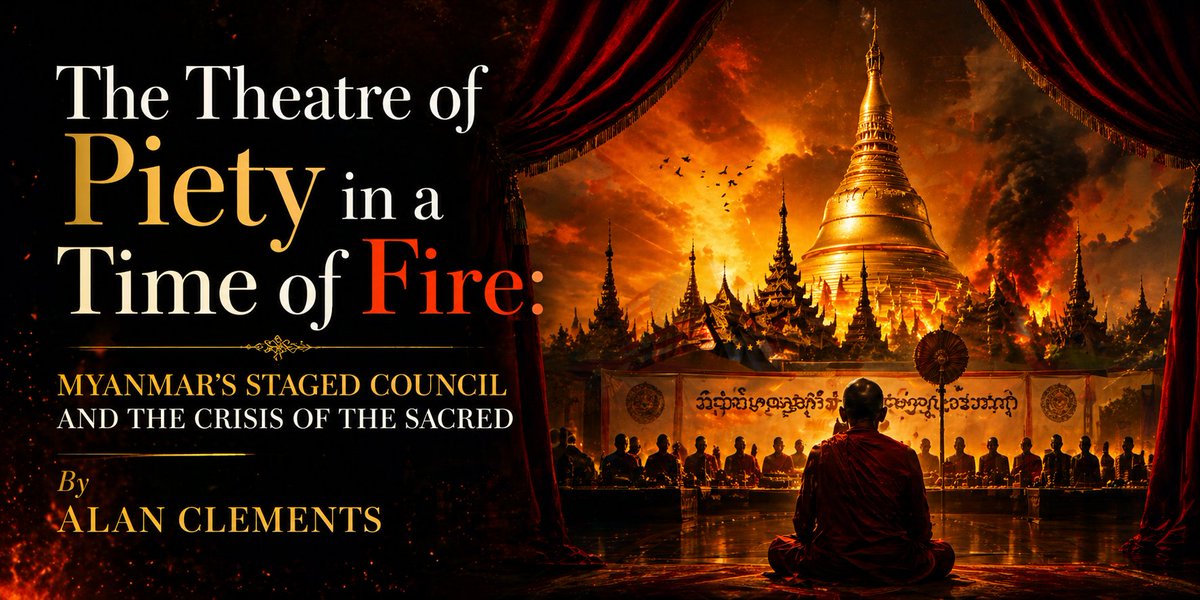
Among them is Aung San Suu Kyi—held in isolation, removed from public view, with no independently verified proof of life for over three years. Her absence is not merely symbolic; it is an engineered silence, a void maintained as an instrument of control.
We are told she has been moved to house arrest—a gesture offered as evidence of moderation, even mercy. But without independent verification—without access, without medical confirmation, without image or witness beyond the regime’s control—this claim does not resolve the silence; it extends it. A transfer is not transparency. It is a reframing. And until there is incontrovertible, independently verified proof that Aung San Suu Kyi is alive, safe, and treated with dignity, the world is not witnessing change. It is witnessing theatre. The demand remains: proof of life—nothing less.
The institutions of democratic life have not simply been weakened; they have been dismantled, hollowed out, and replaced by structures that operate through coercion rather than consent. What remains is not governance in any meaningful sense, but administration through fear—an order sustained by the capacity to detain, to disappear, and, when necessary, to kill without consequence.
The ceremony, in this context, does not unfold in the shadow of violence. It unfolds within it. It is not an interruption of conflict, nor a reprieve from it, but a parallel construction—an image projected precisely because the underlying reality cannot withstand unmediated exposure. The spectacle exists because the truth cannot be shown.
The history of the Buddhist councils offers a lens through which to examine this tension with clarity. The First Council, convened after the Buddha’s passing in Rajgir, was an act of urgent preservation. The teachings were recited collectively to prevent distortion. There was no display—only fidelity to the Dhamma.
The Second Council, in Vaishali, confronted ethical deviation within the Sangha. It gathered not to affirm unity but to correct deviation.
The Third Council, under Ashoka in Pataliputra, addressed ideological infiltration and the misuse of doctrine. It purified the Dhamma by separating it from power’s distortions.
The Fourth Council, in Alu Vihara, responded to existential threat by committing the teachings to writing—an act of preservation born of vulnerability.
The Fifth Council, in Mandalay, inscribed the canon into marble—not for spectacle, but for endurance.
And the Sixth Council, convened in this very cave, gathered the Theravāda world to verify, refine, and unify the Dhamma—its authority rooted not in the state, but in the collective conscience of the Sangha.
Across twenty-five centuries, every council answered the same call: truth must be protected from distortion. And so, the question now arises—not rhetorically, not symbolically, but with moral precision sharpened by history itself: every Buddhist council in history was convened to rescue truth from distortion. The question is whether this gathering preserves that lineage—or quietly betrays it.
For what unfolds today risks something more subtle than contradiction. It approaches inversion. It is not that the forms are absent; it is that they are intact. And it is precisely their intactness that conceals the transformation of their function.
There exists, in the oral recollections of those trained under Mahasi Sayadaw, a story rarely told in public discourse: a devotee who became the unexpected conduit for a deva from Tavatimsa Heaven—an emergence not staged, not curated, not designed. There was no performance, no amplification, no architecture of authority. Awakening occurred through direct encounter. The event did not announce itself as sacred; it revealed sacredness by refusing the conditions of spectacle altogether.
Truth required no theater. Only the right conditions.
And so, we arrive—not at a conclusion—but at a threshold, a point at which imagination becomes a form of moral inquiry. What if, in this moment of choreography, the discourse were to break open? What if the Dhamma spoke—not in alignment with power, but through it, despite it, beyond it?
A Modern Sutta for a Time of Delusion
Thus have I heard.
At a time when rulers adorned themselves in the language of virtue while the earth beneath them trembled with suffering, there arose a question—not from the halls of power, but from the field of conscience itself.
And the voice spoke:
“Those who rule, listen not with authority, but with vulnerability. You have mistaken permanence for construction, believing that what is built in stone will endure, while what is built in truth remains neglected. Yet all structures founded upon harm carry within them the inevitability of collapse, for they are sustained not by reality, but by denial.
You believe that by invoking the sacred you purify your actions. Yet no word, however ancient, however revered, can cleanse an unwholesome deed. The Dhamma is not sound. It is consequence.
You believe that control brings stability. Yet control rooted in fear multiplies the instability it seeks to conceal. For fear does not obey; it accumulates, and in its accumulation, it transforms into that which cannot be governed.
Know this clearly, without remainder: violence cannot be hidden inside ritual. Injustice cannot be sanctified by chanting. Power does not become truth by declaring itself so.
The Dhamma is not an instrument of statecraft. It is a mirror. And in that mirror, all things are revealed precisely as they are.
Those who imprison the innocent, those who silence the freely chosen voices of a people, bind themselves to consequences that no decree can undo. The continued confinement of those entrusted by the will of the people, including Aung San Suu Kyi and all democratically elected leaders, stands not merely as a political act, but as a moral obstruction to the arising of peace.
Therefore, release them. Release Aung San Suu Kyi. Release all democratically elected leaders. Release all political prisoners held hostage by fear. Release them not as concession, not as negotiation, not as performance, but as recognition.
For no prison has ever contained truth. And no ruler has ever secured peace through fear.
Monks, speak not to please, but to liberate. Leaders, govern not through dominance, but through understanding. People, do not surrender clarity to spectacle.
The path is not hidden. It has never been hidden. Where there is honesty, there begins freedom. Where there is non-harm, there ends fear. Where there is relinquishment, there is peace.
Walk this path not tomorrow, not in ceremony, but now. For time does not wait. And consequence does not forget.
Thus is the way.”
If such a discourse were spoken fully, without compromise, it would require no endorsement, no amplification, no ceremony to validate it. Its authority would arise not from who speaks, but from what is seen.
The ceremony will proceed. The recitations will be heard. The images will circulate. The narrative will be offered. But beneath it—quieter than ritual, more enduring than spectacle—another question will remain: not whether the Dhamma is being invoked, but whether it is being lived.
And it is within that distinction—subtle, uncompromising, irreversible—that the future of Myanmar, and perhaps the moral credibility of the sacred itself, will ultimately be decided.
Alan’s Substack is a reader-supported publication. To receive new posts and support my work, consider becoming a free or paid subscriber.
About the Author
Alan Clements is an author, former Buddhist monk ordained in Burma, and longtime human-rights advocate whose life’s work has centered on conscience, nonviolence, and the struggle against authoritarian rule. He is the author of seventeen books, including Conversation with a Dictator, Unsilenced: Aung San Suu Kyi—Conversations from a Myanmar Prison, and Politics of the Heart: Nonviolence in an Age of Atrocity. For more than three decades he has worked closely with Burmese democracy leaders, former political prisoners, monks, and civil-society voices. His essays and interviews have appeared in international media across Asia, Europe, and the United States.
Thanks for reading Alan’s Substack! This post is public so feel free to share it. alanclements.substack.com/p/the-theatre-…
English

Myanmar Regime Plans Buddhist Spectacle as Min Aung Hlaing Seeks to Project Piety irrawaddy.com/news/burma/mya…
English
When a Regime Invites Dialogue, the First Question Is Whether It Means Freedom by Alan Clements
Read on Alan's Substack and if moved, Subscribe, offered freely alanclements.substack.com/.../when-a-reg…...
Read on Mizzima Myanmar News eng.mizzima.com/2026/04/28/335…
Or read below, and kindly share.
When a Regime Invites Dialogue, the First Question Is Whether It Means Freedom
By Alan Clements
The Myanmar Embassy in London has issued an invitation for May 14 to what it calls an “Open Dialogue on Myanmar.” On its face, the announcement is civil, polished, and familiar in tone: an appeal to understanding, peace-making, conflict resolution, democracy, and human rights. Such language belongs to the accepted grammar of diplomacy. It suggests seriousness, maturity, and an interest in national healing. Under ordinary circumstances, one might receive it with gratitude.
But Myanmar is not living through ordinary circumstances, and language detached from political reality quickly becomes performance. When language is severed from reality, it ceases to describe events and begins to stage them.
The country remains under military rule through a proxy civilian façade led by former military strongmen, following the military overthrow of a democratically elected government. All civilian leaders were arrested, imprisoned, disappeared, or executed. Parliament was nullified. Journalists were detained. Protesters were shot. Villages were bombed. Millions have lived under the unremitting trauma of terror, displacement, surveillance, and war.
Daw Aung San Suu Kyi, Myanmar’s former State Counsellor and Nobel Peace Laureate, remains imprisoned (with no independently verified proof of life for more than three years) after having been chosen by the electorate in repeated landslide victories. Thousands of political prisoners remain hostages behind bars. Entire generations have been taught that to speak plainly may carry erasure. A nation can be ruled not only by prisons, but by the memory of prisons.
This is the atmosphere in which the phrase “open dialogue” must now be examined.
I write not as a casual commentator but as someone whose life has been deeply shaped by Burma, as many of us still call it with affection and historical memory. I was ordained there as a Buddhist monk and trained under the late Mahasi Sayadaw and Sayadaw U Pandita, teachers whose lives embodied uncommon rigor, humility, and moral clarity.
Over decades I returned many times, developing enduring relationships with monks, writers, dissidents, artists, former political prisoners, members of the democracy movement, and ordinary citizens whose courage under pressure remains one of the defining moral educations of my life.
I also came to know Aung San Suu Kyi during decisive years of her nonviolent struggle. Our recorded conversations became The Voice of Hope, a title that now carries an unintended poignancy. Whatever history’s final verdict on any public figure, it remains true that she is among the most consequential democratic leaders of modern Asia. Her continued imprisonment is not a side note to this story. It is the story’s central fact. It is the hinge upon which the larger tragedy turns.
When a government imprisons the winners of an election and then invites international guests to discuss democracy, it cannot reasonably expect to be judged by its wording alone. It must be judged by the contradiction it asks others to ignore.
This does not mean dialogue should be rejected. Quite the opposite. Dialogue is essential. Nations do not heal through monologue, propaganda, or force. They heal when truth becomes speakable, when adversaries become audible to one another, when fear loosens enough for reality to enter the room. If Myanmar is ever to emerge from its present tragedy, it will do so through some form of courageous conversation joined to concrete reform.
The issue is not whether dialogue matters. The issue is whether the proposed event deserves the name.
If the authorities behind this invitation wish to persuade the world that something meaningful is underway, the path is not obscure. It does not require clever messaging or diplomatic varnish. It requires visible acts of seriousness.
Release political prisoners.
Provide independently verified proof of life, health, and humane treatment for Aung San Suu Kyi.
Permit international journalists to attend freely.
Allow the proceedings to be live-streamed.
Accept unscripted questions.
Invite critics, not merely guests.
Include representatives of ethnic nationalities, civil society, humanitarian groups, democratic opposition voices, and the Burmese diaspora.
Most importantly, if the phrase “open dialogue” is intended literally rather than cosmetically, include those whose absence defines the crisis itself.
Why not invite Aung San Suu Kyi to join by secure video link?
Why not invite President Win Myint?
Why not include representatives of the National Unity Government?
Why not allow Burmese citizens inside the country to watch and participate digitally?
Why not let the world witness a conversation rather than infer one from a press release?
These are not maximalist demands. They are the minimum thresholds of credibility.
Too often in modern politics, especially under authoritarian systems, language is used not to reveal reality but to soften it. Elections are promised after elections have been voided. Stability is invoked while violence spreads. Peace is praised while warplanes fly. Reform is announced while prisons remain full. Dialogue is offered while the principal voices of dissent are absent by design. Vocabulary becomes camouflage.
The danger is not only deception. It is exhaustion.
Citizens and observers alike grow weary of symbolic gestures that ask to be mistaken for substance.
Yet cynicism alone is inadequate. It is possible that this invitation reflects genuine internal recognition that rule by force has limits. No state can indefinitely govern against the will of its people without deforming itself.
Fear is expensive. Surveillance is expensive. War against one’s own population is expensive. Legitimacy, by contrast, is efficient. Trust lowers costs that coercion endlessly multiplies.
Some within the system may understand this. Some diplomats tasked with presenting a polished exterior may privately know that no conference in London can substitute for reconciliation at home. Some officials may recognize that a nation cannot bomb its way into moral authority. If so, they should be encouraged—not with gullibility, but with standards.
Myanmar possesses cultural and spiritual resources far deeper than its present political condition suggests. It has given the world traditions of mindfulness, compassion, ethical discipline, and interior freedom. But compassion without justice becomes ornament.
Harmony without truth becomes choreography. Peace without liberty becomes managed silence.
The current rulers therefore face a distinction from which no public-relations strategy can rescue them. Do they seek applause for appearing open, or the harder honor of becoming open? One is theatre. The other is transformation.
If I were to consider attending such an event, I would need answers to simple questions. Will criticism be tolerated? Will participants be monitored? Will devices be searched or confiscated? Will independent journalists be free to report? Will political prisoners be discussed by name? Will proof of life for Aung San Suu Kyi be offered? Will Burmese citizens be able to witness the proceedings without fear? Will truth be permitted to interrupt the script?
These are not hostile questions. They are the minimum architecture of trust.
To the diplomats hosting this gathering in London, there is still an opportunity to elevate this event beyond ceremony. Insist privately and firmly that symbolism has reached its limit. Ask for measures the world can verify. Use diplomacy not as decoration, but as leverage.
To foreign governments and observers, invitation is not transformation. Attendance without standards risks lending borrowed legitimacy to unresolved repression. Presence without conditions can become endorsement by implication.
To Myanmar’s military authorities, if seriousness is desired, act seriously. Release the elected leaders. Let the imprisoned be seen. Open the room to scrutiny. Let the people speak.
And to the people of Myanmar, whose courage has repeatedly exceeded the vocabulary available to honor it, many across the world still understand that sovereignty does not reside in uniforms, prisons, or decrees. It resides where it always has: in the conscience and consent of the people themselves.
An open dialogue worthy of the name would begin there. Anything less is staging.
About the Author
Alan Clements is an author, former Buddhist monk ordained in Burma, and longtime human-rights advocate whose life’s work has centered on conscience, nonviolence, and the struggle against authoritarian rule. He is the author of seventeen books, including Conversation with a Dictator, Unsilenced: Aung San Suu Kyi—Conversations from a Myanmar Prison, and Politics of the Heart: Nonviolence in an Age of Atrocity. For more than three decades he has worked closely with Burmese democracy leaders, former political prisoners, monks, and civil-society voices. His essays and interviews have appeared in international media across Asia, Europe, and the United States.

English
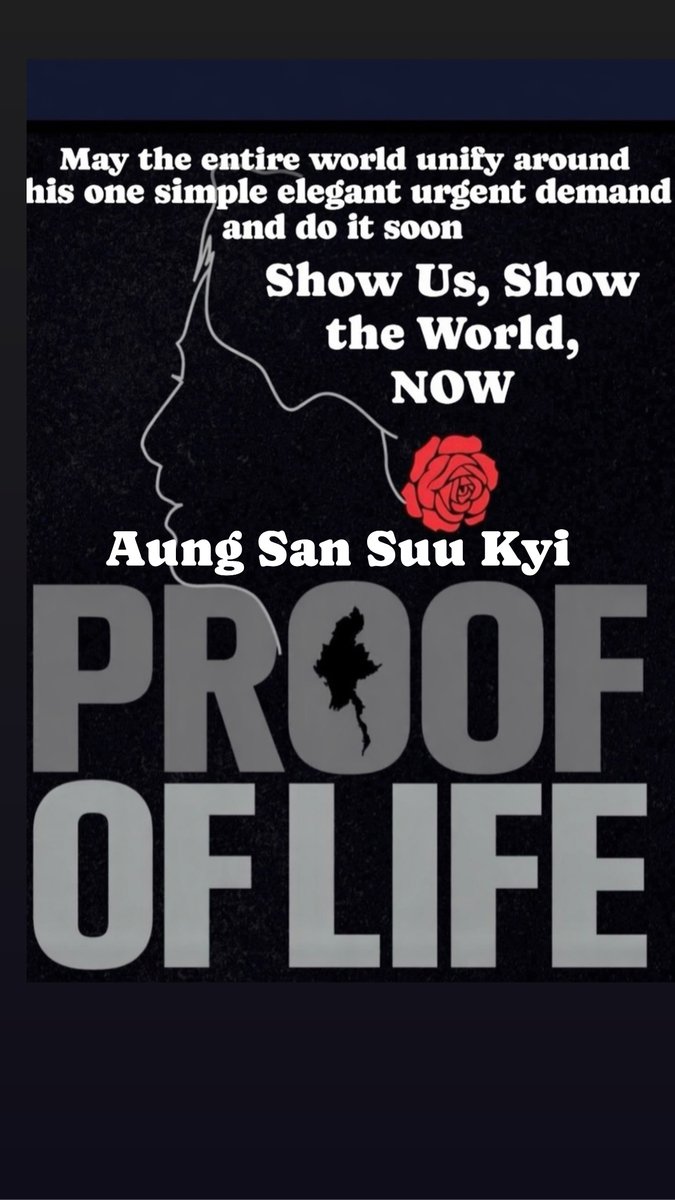
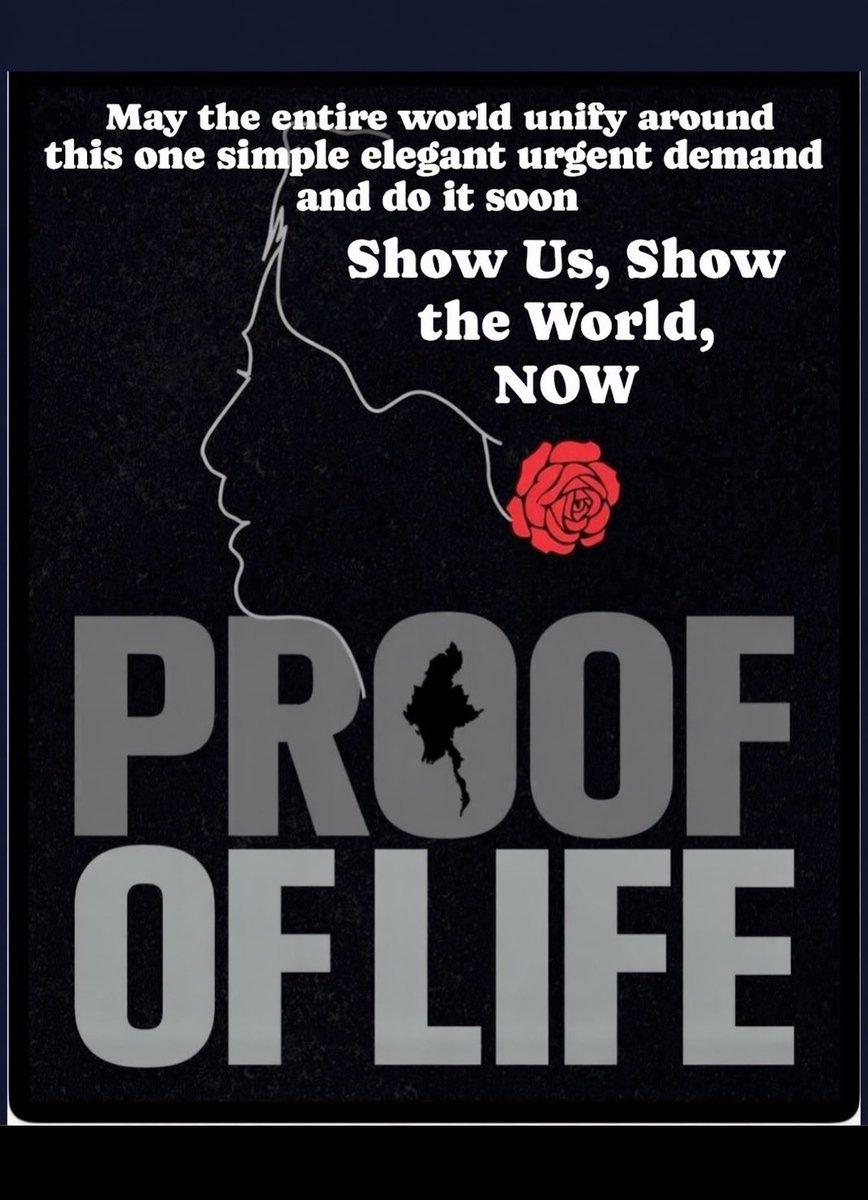
Proof of Life for Aung San Suu Kyi
A Leaderless Global Call for Freedom, Justice, and Human Dignity
Alan Clements
In solidarity, please share widely.
This is our moment.
Victory draws near if we join hands and hearts.
In recent weeks, Myanmar’s generals have staged yet another theatre of deception.
The architect of a military coup, a man who overturned a democratic election, imprisoned elected leaders, bombed villages, shattered civil society, and plunged a nation into fear, now seeks to reinvent himself in civilian clothing. The dictator attempts to shed the uniform, cloak himself in presidential language, and sanctify power through sham elections no free people could recognize.
This is not transition. It is costume change.
At the same time, the regime releases Win Myint, the legitimately elected president it unlawfully imprisoned, while continuing to hold the most recognized democratic voice in Myanmar behind closed doors.
The sentence imposed on Aung San Suu Kyi has been structured with chilling intent: to bury her life in captivity, to let time become executioner, to ensure that if she lives to one hundred, prison walls remain her horizon.
Thanks for reading Alan’s Substack! This post is public so feel free to share it.
Alan’s Substack is a reader-supported publication. To receive new posts and support my work, consider becoming a free or paid subscriber.
And yet the regime has made a fatal miscalculation.
It believes silence is control.
It believes secrecy is strength.
It believes the world has moved on.
But something new is rising.
The Proof of Life Campaign
The emerging Proof of Life campaign is far more than a request for information. It is becoming a rare and powerful moment of global solidarity around one simple, undeniable moral demand:
Show the world verifiable proof that Aung San Suu Kyi is alive, safe, and receiving humane care.
That is all.
And that is everything.
For years, Myanmar has endured brutality, disinformation, imprisonment, and democratic theft. With no credible public evidence of her condition, the absence of truth has become its own form of violence.
Why This Campaign Matters
This movement is powerful precisely because it is:
* Leaderless
* Decentralized
* Global
* Open to all
* Morally clear
No one person leads it.
No single organization owns it.
No gatekeepers control it.
That is its genius.
Just as Myanmar has been forced into a kind of leaderless resistance in the absence of its elected civilian leadership, this campaign mirrors that reality: a people-powered uprising of conscience.
A Human Blockchain of Truth
Think of it as a cognitive blockchain of compassion:
* one image shared
* one post created
* one voice added
* one act of witness multiplied
No center.
No hierarchy.
No permission required.
By design, it belongs to everyone who values:
* freedom
* democracy
* justice
* diversity
* unity
* human dignity
Why It Can Unite the World
Some causes divide. This one clarifies.
Like Live Aid or the worldwide movement to free Nelson Mandela, the Proof of Life campaign carries a message so simple it crosses ideologies, religions, and borders.
You do not need to agree on politics to agree that no elderly political prisoner should vanish into secrecy.
You do not need to be Burmese to care.
You only need a heart.
What To Do
Create your own graphic.
Share an existing one.
Post a candle.
Write the words
Proof of Life for Daw Suu.
Speak to friends.
Tag leaders.
Refuse silence.
Every act matters.
This Is Our Moment
Myanmar’s revolution has suffered fragmentation, fatigue, and global distraction. This campaign offers something rare:
* a unifying symbol
* a clear demand
* a worldwide point of focus
If enough people join hands and hearts now, silence can be broken.
And when silence breaks, history moves.
And when history moves, prison doors open.
And our beloved political prisoners come home.
Myanmar’s Theatre of Power: The Release of an Elected President by an Imposter Regime--The Possibility of Conscience in an Age of Manufactured Reality
By Alan Clements
Mizzima Myanmar News —Read more:
eng.mizzima.com/2026/04/20/333…
English

@matthewfsmith @FortifyRights Greetings Mathew. Although we have not met or spoken, thank you for your tireless support for the people of Myanmar. I have read your reply to Fergus’s carefully researched and written article. A response to your rebuttal
is being crafted by Fergus.
Forthcoming shortly.
English
@AlanClementscom It’s important to debate the facts of Aung San Suu Kyi’s record. But if you’re going to engage in that debate, you need to get the facts straight.
I wrote this reply to Harlow’s piece, which made a false claim about the work of @FortifyRights: eng.mizzima.com/2026/04/16/331…
English
READ on Alan's SUBSTACK
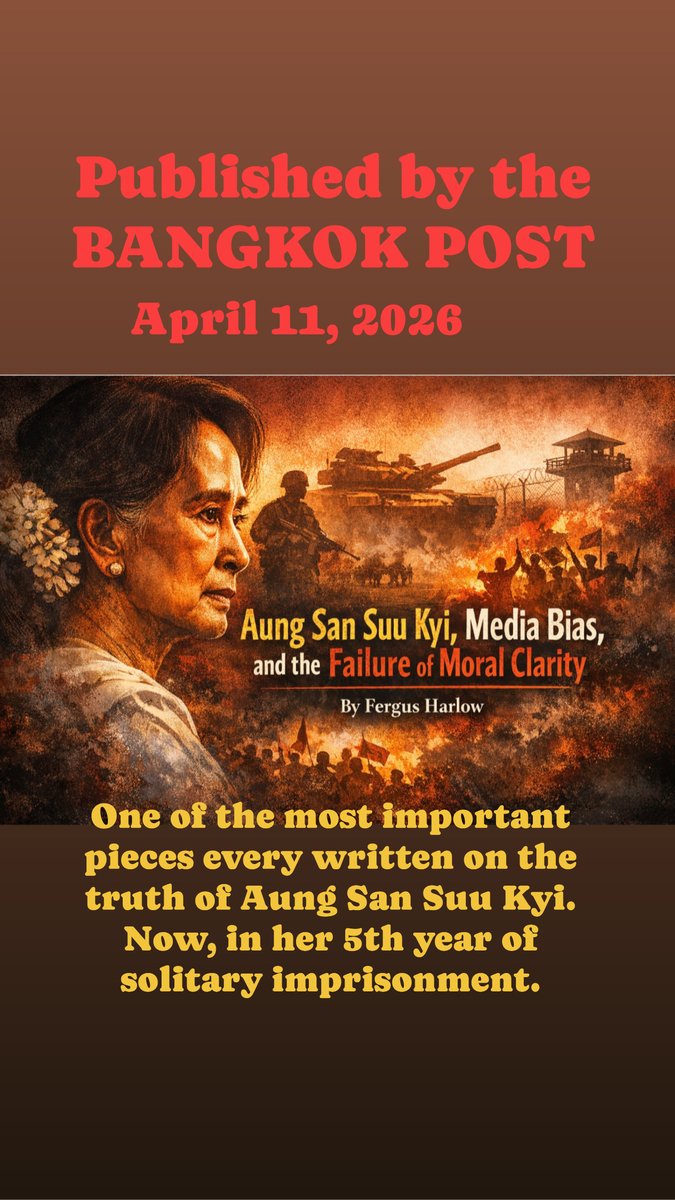
Aung San Suu Kyi, Media Bias, and the Failure of Moral Clarity alanclements.substack.com/.../aung-san-s…...
There are stories the world gets wrong and then there are stories the world gets wrong at a cost measured in human lives.
What follows is an introduction to a critical op-ed by my long-time colleague, Fergus Harlow, published yesterday in the Bangkok Post, a piece grounded in years of relentless investigation into Myanmar’s democratic movement and the forces aligned against it. It exposes not only a political failure, but a deeper one: the erosion of truth itself.
There are moments, rare and unsettling, when a piece of writing does more than inform. It restores. It interrupts the slow violence of distortion. It returns the reader to a ground of reality that has, for years, been buried beneath noise, accusation, and the peculiar seduction of simplified narratives.
What you are about to read is one of those pieces.
I say that not lightly.
For over four decades, I have lived in, reported from, and returned again and again to Myanmar. As a former Buddhist monk trained in the country, as a journalist working under surveillance and threat, and as a witness to both the luminous courage and unspeakable suffering of its people, I have devoted a significant portion of my life to documenting what Aung San Suu Kyi and her people have long called a revolution of the spirit.
Over the years, I have conducted hundreds of hours of interviews with political prisoners, monastics, dissidents, and members of the National League for Democracy, often at great personal risk. Fergus’s work, from his office in Edinburgh, and deeply aligned as a long-time colleague in purpose, draws from this same field of lived history and primary-source inquiry. What emerged from that work was not commentary, but record. Not opinion, but testimony.
This essay arises from that same discipline.
I have read and reread Fergus’s final draft several times. It is clean, stark, unflinching. And, in its restraint, it is quietly devastating. It does what so few pieces have managed to do in the years since the 2021 coup: it cuts through the accumulated fog of misinformation and restores a sense of proportion, context, and moral precision to the story of Aung San Suu Kyi and the democratic movement she came to embody.
Let me be direct: much of what has passed as accepted truth in international discourse about Myanmar, particularly regarding Aung San Suu Kyi’s alleged “silence” or complicity, has not withstood serious evidentiary scrutiny. This matters. Not as an abstract debate, but because narrative failure has consequences. It shapes policy. It erodes solidarity. It prepares the ground, as we have now seen, for the total consolidation of power by a military regime that has never relinquished its appetite for control.
Fergus writes from the inside of this history, not as a distant observer, but as someone who, like myself, sat with the architects of Myanmar’s fragile experiment in democracy, listened, recorded, verified, and returned again and again to the primary sources.
No one did what he did. No one did what we did together.
What follows is not the final word. But it is, I believe, a necessary correction, one grounded in evidence, shaped by proximity, and guided by a simple, unfashionable commitment: to tell the truth as it is, not as it is preferred.
Read it slowly.
What is at stake is not only the reputation of one woman, but the integrity of how we, collectively, bear witness to a nation still fighting for its freedom.
If moved, please share. And consider subscribing to my Substack, offered freely, from my heart to yours.
Alan Clements
READ on Alan's SUBSTACK
Aung San Suu Kyi, Media Bias, and the Failure of Moral Clarity alanclements.substack.com/.../aung-san-s…...
English
Myanmar’s Theatre of Power
The Release of an Elected President by an Imposter Regime
The Possibility of Conscience in an Age of Manufactured Reality
By Alan Clements
READ on Alan's SUBSTACK
alanclements.substack.com/p/myanmars-the…

English


UN Human Rights@UNHumanRights
#Myanmar: Relieved by long overdue release of President Win Myint & other prisoners from arbitrary detention, as well as commutation of death sentences. All those detained unjustly since the coup – including State Counsellor Aung San Suu Kyi – need to be released immediately and unconditionally. There must be an end to the unrelenting violence against all of Myanmar’s people - @volker_turk
ZXX
A Lesson for Humanity
The Silent War We Wage With Words—and the Woman Who Refused to Fight It
By Alan Clements
Read on the DVB—Democratic Voice of Burma’s website: english.dvb.no/the-silent-war…

English

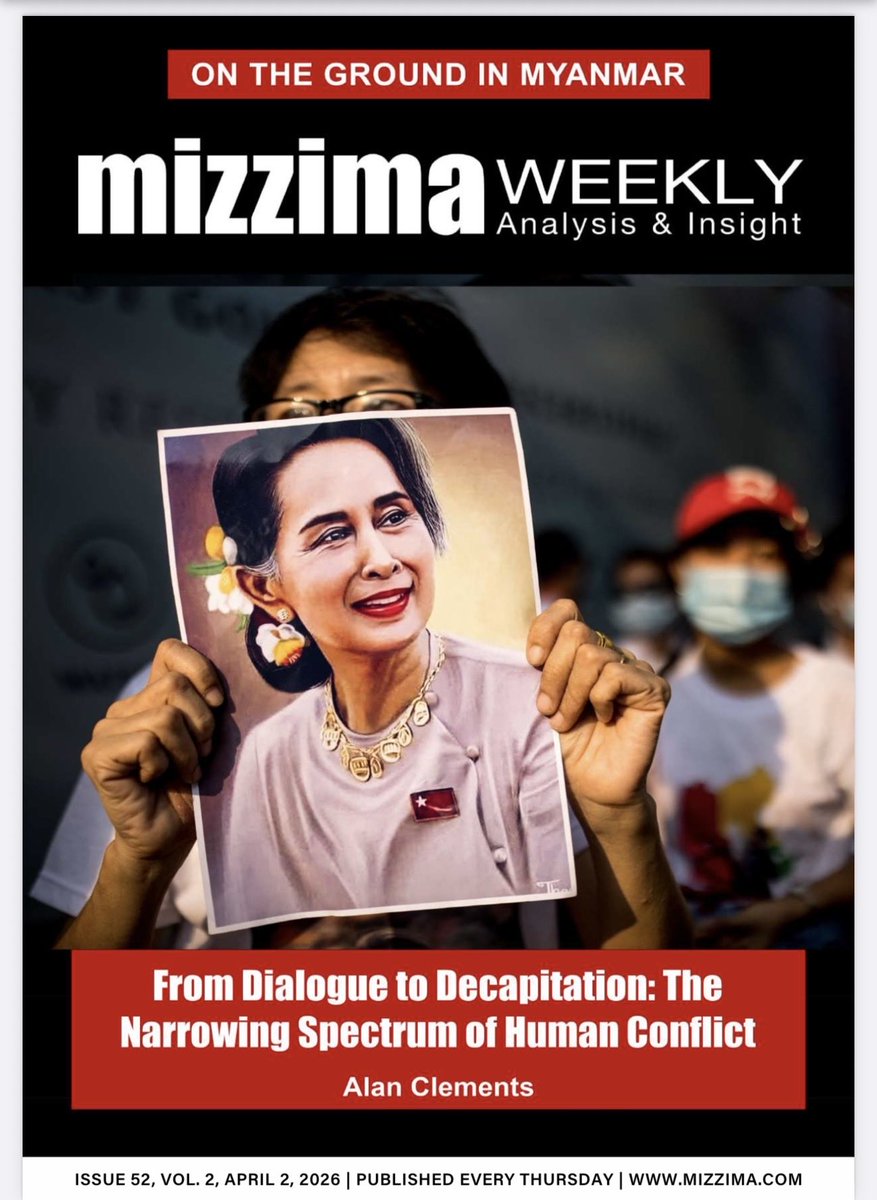
From Dialogue to Decapitation: The Narrowing Spectrum of Human Conflict: A Reflection on Power, Nonviolence, and the Disappearing Middle Ground
By Alan Clements
April 2, 2026
Read on Mizzima Myanmar News share.google/IHwrByzVBw6BXQ…
English
When dialogue disappears, violence does not hesitate—it takes over.
Warm greetings, friends,
This essay grows out of decades of lived experience in Burma—years spent in close relationship with the people’s struggle for freedom, and in long association with Aung San Suu Kyi, along with her principle colleagues, mentors, and teachers.
What I witnessed there was not abstract. It was a lived commitment to something rare: the insistence on mindful dialogue in the face of fear, repression, and the constant proximity of violence.
That spirit—the refusal to let conflict collapse into hatred, retaliation, or destruction—shaped my understanding of what is at stake when dialogue disappears.
Because when it does, conflict does not end. It mutates. It hardens. It moves toward force.
This essay is a reflection on that threshold—from dialogue to decapitation—and the consequences now unfolding across the world.
If this moves you, please share. And of course, subscribe. It’s offered freely, and it allows me to write uncensored on social media.
Thank you, from my heart,
Alan Clements
Alan’s Substack is a reader-supported publication. To receive new posts and support my work, consider becoming a free or paid subscriber.
READ the Essay on Alan's Substact (and share and subscribe if moved; it is offered freely) alanclements.substack.com/p/from-dialogu…
English
Myanmar News, News
Defend Myanmar, Defend Democracy: A Call to World Leaders Before It’s Too Late by Alan Clements
March 22, 2026
eng.mizzima.com/2026/03/22/324…
English