Albert Trigg

87.4K posts

Albert Trigg banner
Albert Trigg

Albert Trigg

@Alberttrigg

"Come unto me, all ye that labour and are heavy laden, and I will give you rest." Matthew 11:28

Katılım Mayıs 2015
4.1K Takip Edilen3.9K Takipçiler
Albert Trigg
Albert Trigg@Alberttrigg·
@jonharris1989 @LostMyHats @DougDozier3 @RodDMartin His article is full of "substance", JD dismantles every point you make with substance You either counter this with substance of your own Or retreat back into your echo chamber, tossing out gas lit cries of "misrepresentation"
English

0
0
2
34
Jon Harris 🌲
Jon Harris 🌲@jonharris1989·
Oh look, more barbs without substance, false accusations, misunderstandings, and laughable condescension without interacting with anything I actually said. If you want a way back to having a reasonable discussion it starts with "I'm sorry I spread a lie about you." There's sloppy goofs throughout the entire piece, but as a test case, it would be interesting to see you apologize just once, for one. I don't have time for slop nonsense.
English
6
0
6
716
Rod D. Martin
Rod D. Martin@RodDMartin·
Christian views of the Jewish religion and people have two thousand years of history. Neither the Bible itself nor that history bears much resemblance to what we’re hearing on social media now. My friend @jonharris1989 here does a masterful job of laying out not only what the Bible has to say about modern Jews, but what the church's most important theologians - from Augustine to Spurgeon to Lloyd-Jones and Ryrie - have had to say on the topic for 2,000 years. As I said, it's nothing like what you hear from Tucker Carlson (a man who says he first "began to read the Bible" a couple years ago). Link in the comments.
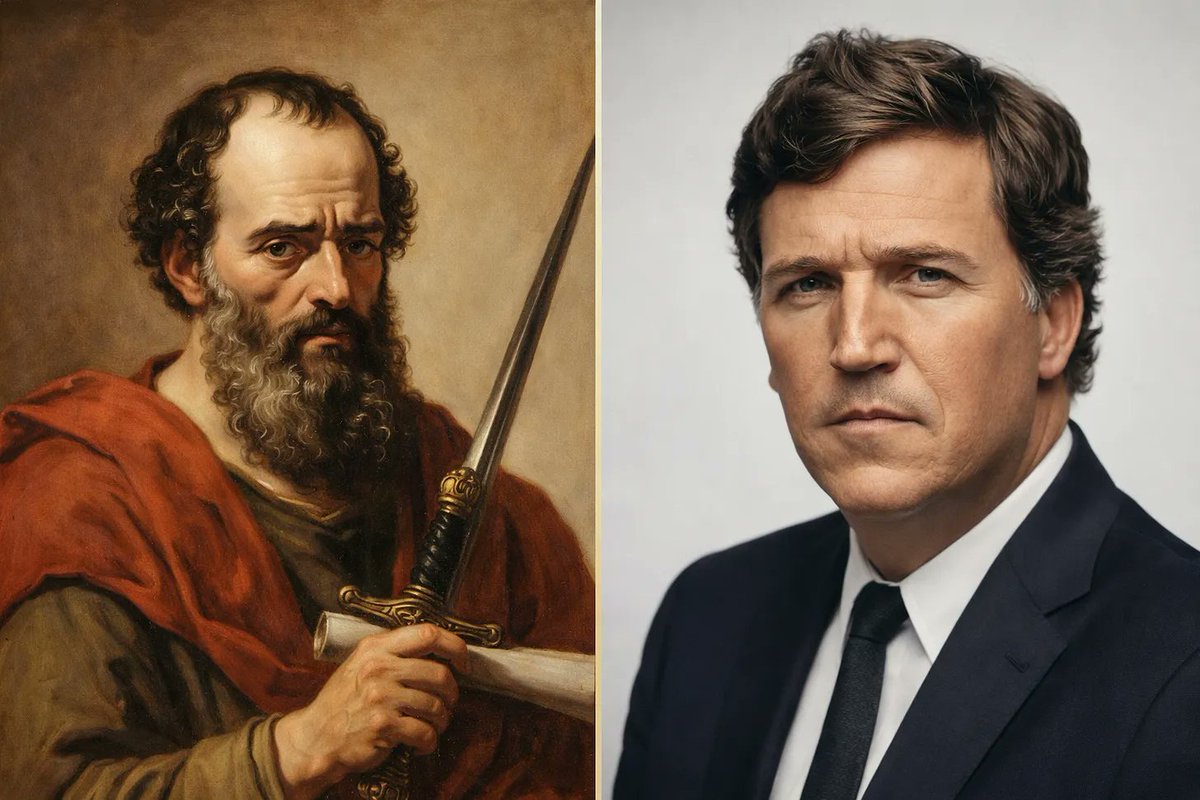
Rod D. Martin tweet media
English
23
27
121
13K
Albert Trigg retweetledi
JD™
JD™@LostMyHats·
This is - hands down - the worst example of the Galatian 'Bewitching' I've seen of the Jewish mind-meld rotting perfectly reasonable peoples' brains. I've got a lengthier treatment in tomorrow's edition of I2I, but here are some quotations I couldn't fit into the article. In an attempt to paint historic Covenant Theology (the ONLY view of the Christian Church until 1821) as novel, and allege that Dispensationalism was the historic position, Harris practically blasphemed (if you could blaspheme mortals) by alleging historic Christian figures would support the primary position of Dispensaitonal Zionism, IE the belief that Jews have retained Covenant membership, blessings, and promises irrespective of their rejection of Jesus. Harris claimed Spurgeon supported his view. Spurgeon said of Dispensationalism and Darby that their followers were "with a diligence never exceeded and a subtlety never equaled, laboring to seduce the members of our churches to the subversion of the truth" (The Sword and the Trowel, Volume 1 pp. 345-350). Spurgeon said of Dispensationalism that it "has attained some notoriety in our day," and that "our spiritual instincts revolted at the heresy" (same as above). Spurgeon said of Darby's Dispensationalism and its adherents, "We never know what we shall hear next, and perhaps it is a mercy that these absurdities are revealed at one time, in order that we may be able to endure their stupidity without dying of amazement" (ditto ibid), Harris said Justin Martyr supports Dispensational Zionism. Martyr said in Dialogue with Trypho (AD 155): "All who through Him have fled for refuge to the Father, constitute the blessed Israel. But you (the Jews), having understood none of this, since you are the children of Jacob after the fleshly seed, expect that you shall be assuredly saved. But that you deceive yourselves in such matters, I have proved by many words." Harris said Tertullian supports Dispensational Zionism. Tertullian said in An Answer to the Jews (c. AD 200): "Without doubt, the first, the elder people, namely the Jewish, inevitably will serve the younger. The younger people, namely the Christian, will rise above the elder." And in Prescription Against Heretics, he said, "The Jews had formerly been in covenant with God; but being afterwards cast off on account of their sins, they began to be without God." Harris said Origen supports Dispensational Zionism. Origen said, "We say with confidence that they will never be restored to their former condition. For they committed a crime of the most unhallowed kind." Harris said Augustine supports Dispensational Zionism. Augustine wrote Tractatus Adversus Judaeos, the Tract Against the Jews, and said, "Behold Israel according to the flesh. This we know to be the carnal Israel; but the Jews do not grasp this meaning and as a result they prove themselves indisputably carnal, having forfeited their claim to the covenants." Harris even cited Chrysostom. If you know anything about Chrysostom, CAN YOU BELIEVE THIS? Incredible. Chrysostom said, "The synagogue is not only a brothel and a theater; it also is a den of robbers and a lodging for wild beasts. But when God forsakes a people, what hope of salvation is left? When God forsakes a place, that place becomes the dwelling of demons." Chrysostom said, "Now, after the grace of the Spirit has abandoned them, after all those august solemnities have been taken away, they are still stubborn with God and carry on their irreligious rites. Now you give it a name more worthy than it deserves if you call it a brothel, a stronghold of sin, a lodging-place for demons, a fortress of the devil, the destruction of the soul, the precipice and pit of all perdition." And let's not forget the classic, "[The synagogue] is a criminal assembly of Jews, a place of meeting for the assassins of Christ, a house worse than a drinking shop, a den of thieves, a house of ill fame, a dwelling of iniquity, the refuge of devils, a gulf and abyss of perdition. As for me, I hate the synagogue. I hate the Jews for the same reason." Every witness Harris called testified for the other side. It was classic bait and switch. It works like this: 1. Find a historic figure who believed that in the eschaton, God would cause many Jews to repent of denying Jesus and - like Eskimos and Europeans and starving Pgymies in New Guinea and countless other people groups - be grafted into the Covenant from which they were once broken off and utterly severed from its promises and blessings. 2. Claim that this future hope **is the same as** the novel Dispensational view invented in 1821 that claims Jews - even amidst their sinful unbelief - retain Covenant membership, blessings, and promises apart from faith in Jesus, and that we are obligated to treat them like they are currently in Covenant with God. These are not the same things. This is a sin to history. It bears false witness against our fathers. And it should cease to be committed. This ancient heresy is being reborn, it's just as bewitching now as it was then; it causes good men to lose their minds, clouds their judgments, causes them to make these embarrassing intellectual errors, and needs to be excised from the Christian faith, post haste.
Rod D. Martin@RodDMartin

x.com/i/article/2043…

English
27
85
531
20.5K
Albert Trigg retweetledi
Chad Bird
Chad Bird@birdchadlouis·
When the people of God gather for worship, we all show up at the same place. Whether we live in Alaska, South Africa, or Korea; whether we gather in churches, homes, or outdoors; whether there are ten or ten thousand of us; we all gather in one place, as one group, of innumerable saints. We all gather at Mount Zion. Pay careful attention to what Hebrews says, “But you have come to Mount Zion and to the city of the living God, the heavenly Jerusalem, and to innumerable angels in festal gathering, and to the assembly of the firstborn who are enrolled in heaven, and to God, the judge of all, and to the spirits of the righteous made perfect, and to Jesus, the mediator of a new covenant, and to the sprinkled blood that speaks a better word than the blood of Abel” (12:22-24). In Greek, the verb for “you have come” (προσεληλύθατε) is in the perfect tense, meaning that this is an accomplished reality with ongoing implications. He does not say, “You will come,” but “you have come.” Hebrews is not a letter but a sermon. It would have been preached as the people of God gathered in worship (probably in someone’s home). The preacher is making this point very vividly: You have come. You have arrived. You are standing on Mt. Zion, the heavenly Jerusalem, in the presence of God and his angels and the righteous spirits who are with him. In other words, as these first-century followers of the Messiah came together for worship, they were in heaven on earth. And so are we, every time we come together as the church. We all show up late for church, for heavenly worship is ongoing. It's already going on when we arrive and will continue after we leave. We are surrounded by fellow believers from all over the world. Seraphim sing “Holy, Holy, Holy” as they fly above the altar. Our departed loved ones belt out praises to Jesus. And we join in, our prayers and praises blending harmoniously with heavenly voices, all centered on the Lamb of God who sits enthroned among us. To go to church is to pass through the portal into heaven on earth. _____ We read Hebrews 12 today in Bible in One Year. Visit here for more information: 1517.org/oneyear
Chad Bird tweet media
English
8
41
160
4.5K
Albert Trigg
Albert Trigg@Alberttrigg·
I know there is a lot of Benn hate out there, but he has won every round #FuryMakhmudov
English
0
0
0
302
Russell Brand
Russell Brand@rustyrockets·
Fame isn’t the answer. Sex isn’t the answer. Money isn’t the answer. Politics isn’t the answer. Winning the culture war isn’t the answer. Religious war isn’t the answer. He is the answer.
Russell Brand tweet media
English
654
365
4.8K
115.4K
Albert Trigg
Albert Trigg@Alberttrigg·
A sky being filled with a filthy layer of man-made cloud The planes still at coming from multiple directions
Albert Trigg tweet mediaAlbert Trigg tweet media
English
0
0
0
82
Albert Trigg retweetledi
Chad Bird
Chad Bird@birdchadlouis·
Sanctification - Hebrews 10. Head to 1517.org/oneyear for the reading guide and to catch up on previous posts from the Bible in One Year series.⁠ Happy Studying! #BibleinOneYear #Biblestudy
English
1
15
61
2.1K
Albert Trigg retweetledi
Chad Bird
Chad Bird@birdchadlouis·
Movies like Fight Club and The Sixth Sense have the kind of startling finales that shock us into rewinding our minds back to the beginning. We thought we were just watching one thing, but it turns out we were watching that one thing and something else entirely. Once we reach the end, it revolutionizes our understanding of everything that came before. Something like that happens when we watch the “movie” of Leviticus and arrive at the final Christ-scene. Jaws drop. Minds rewind. Eyes see. At first, we view Leviticus as a bewildering and seemingly repetitive presentation of sacrifices, priests, and rituals. Lots of blood. Lots of impurity talk. Lots of goats and lambs and bulls. Then we come to the final scene, as we did today in Bible in One Year, reading Leviticus 8–10 alongside Hebrews 9. Suddenly, we are compelled to go back and watch the Leviticus movie again. Only now, we are not seeing the same thing. We are seeing far more. We begin to see Christ everywhere. Christ, our priest. Christ, our sacrifice. Christ, our tabernacle. Christ everywhere. Hebrews is that final scene that changes everything. He is the priest who is washed, baptized in the Jordan River by the hand of John the Baptist, the son of a priest. He is the high priest of the good things to come, who enters through the greater and more perfect tabernacle into the holy places of heaven itself, not with the blood of goats and calves but by his own blood. What Leviticus whispers, Hebrews shouts from the rooftops.
Chad Bird tweet media
English
4
27
126
3K
Albert Trigg retweetledi
Tom Wright
Tom Wright@profntwright·
The first meal mentioned in the Bible is the moment when Adam and Eve eat the forbidden fruit. The direct result is new and unwelcome knowledge: ‘the eyes of them both were opened, and they knew that they were naked’ (dienoichthesan hoi ophthalmoi ton duo kai egnosan hoti gymnoi esan, Genesis 3:7). Now this other couple, Cleopas and his companion (most likely his wife, one of the many Marys in the gospel story), are at table, and are confronted with new and deeply welcome knowledge: ‘their eyes were opened, and they recognized him’ (auton de dienoichthesan hoi ophthalmoi, kai epegnosan auton, 24:31). This, Luke is saying, is the ultimate redemption; this is the meal which signifies that the long exile of the human race, not just of Israel, is over at last. This is the start of the new creation. This is why ‘repentance and forgiveness of sins are to be announced to all nations’ (24:47). If Earle Ellis is right to see the Emmaus scene as the eighth meal in the gospel, there may be a numerical scheme at work to reinforce the same point (which, as we shall see, is highlighted especially by John). This is the first day of the new week. -The Resurrection of the Son of God
English
10
67
445
23.9K
Albert Trigg retweetledi
Chad Bird
Chad Bird@birdchadlouis·
The Hebrew verb for sanctify is קדשׁ (qadash), which means “to make holy or remove from common use." Sanctification is often misunderstood merely as moral improvement or good works. While good works are important, they do not make us holy; God does. Holiness belongs exclusively to God (Rev. 15:4; Isa. 6:3). Humans cannot sanctify themselves any more than they can make themselves divine. Holiness is a 100% God thing and a 0% human thing. We can exercise ourselves into physical shape or study ourselves into mental shape, but we cannot sanctify ourselves into holy shape. So when the Bible speaks of people “consecrating” or “sanctifying” themselves (Lev. 11:44; Exod. 19:22), it does not mean they make themselves holy. Rather, they are to remain in the holiness God has already given them. Holiness is always received from God, never self-generated. In the Old Testament, holiness was about proximity to God. The closer something was to his presence, the holier it was, whether people, places, or objects. God's holiness rippled outward from the inner sanctum of the temple, the Holy of Holies, to the Holy Place, the holy courts, holy city, and holy land. In the New Testament, holiness is no longer tied to the Jerusalem temple but to Jesus Christ, the embodied temple. He is the true Holy of Holies (John 1:14; 2:21), the one who sanctifies us through his sacrifice (Heb. 10:10). His blood makes us holy (Heb. 13:12), and we are sanctified in him (1 Cor. 6:11). Even ongoing sanctification is God’s work, not ours. Paul prays, “May the God of peace himself sanctify you completely” (1 Thess. 5:23). Jesus prays, “Sanctify them in the truth; your word is truth” (John 17:17). The Holy Spirit draws us into Christ’s presence, "holying" us through Baptism, the Word, and the Lord’s Supper. Good works naturally flow from sanctification, but they are not its cause but its effect. Because God sanctifies us, good works result. Holiness is not what we do but what God does in us and for us through Jesus Christ. ADDITIONAL RESOURCES ON THIS TOPIC: -Article: "What is Sanctification? Revisiting the Old Testament for the Answer" 1517.org/articles/what-… -Video: "Sanctification: A Matter of Proximity" : youtube.com/watch?v=VOhUH7… _________ Join our online community of Bible readers and students! For more information and to sign up, visit 1517.org/oneyear
YouTube video
YouTube
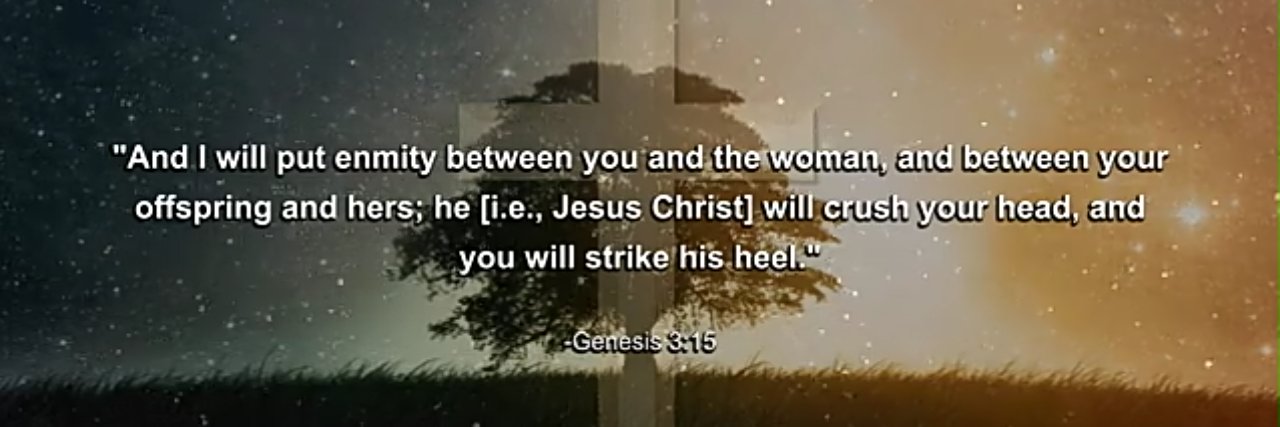
Chad Bird tweet media
English
9
81
333
7.8K
Albert Trigg retweetledi
Bible 365
Bible 365@Bible365_·
Bible 365 tweet media
ZXX
47
419
4.2K
36.5K
Albert Trigg
Albert Trigg@Alberttrigg·
Matthew 11:28 "Come to me, all who labour and are heavy laden, and I will give you rest"
English
1
0
2
54
Albert Trigg
Albert Trigg@Alberttrigg·
1 Timothy 2:3–4 "God our Saviour… desires all people to be saved and to come to the knowledge of the truth"
English
0
0
0
39
Albert Trigg
Albert Trigg@Alberttrigg·
@_OKJ__ Scripture, anticipates this.. The resurrection can be historically true and yet widely rejected because humanity is spiritually blind, suppresses truth, loves darkness, finds the gospel offensive, and cannot believe apart from God’s grace
English
0
0
0
39
Albert Trigg
Albert Trigg@Alberttrigg·
Christ is risen! Trust in Him
English
0
1
2
109
Albert Trigg
Albert Trigg@Alberttrigg·
"You were dead because of your sins and because your sinful nature was not yet cut away. Then God made you alive with Christ, for he forgave all our sins He canceled the record of the charges against us and took it away by nailing it to the cross" Colossians 2:13–14
English
0
0
0
29
Albert Trigg
Albert Trigg@Alberttrigg·
"For you were buried with Christ when you were baptized. And with him you were raised to new life because you trusted the mighty power of God, who raised Christ from the dead" Colossians 2:12
English
1
0
1
44
Albert Trigg
Albert Trigg@Alberttrigg·
"Or don’t you know that all of us who were baptised into Christ Jesus were baptised into his death? We were therefore buried with him through baptism into death in order that, just as Christ was raised from the dead through the glory of the Father, we too may live a new life.."
English
1
0
1
81