Alex Hu 🐮

1.1K posts

Alex Hu 🐮 banner
Alex Hu 🐮

Alex Hu 🐮

@AlexHu5_

Building @Mentavainc to help smart kids break through the glass ceiling. Prev. built schools from scratch; started @efaglobal to help rural kids fight poverty

Toronto, Ontario Katılım Kasım 2020
304 Takip Edilen1.2K Takipçiler
Sabitlenmiş Tweet
Alex Hu 🐮
Alex Hu 🐮@AlexHu5_·
The moment I realized schools were never optimized for learning was when I started researching pedagogy and realized that there are decade-long, known-good practices (some of which date to the 1960s) that have yet to enter classrooms
Justin Skycak@justinskycak

It’s shocking how much we know about how learning happens, all the way down to the mechanics of what’s going on in the brain. And it’s not just how learning happens, but also, what we can do to improve learning. There are plenty of learning-enhancing practice strategies that have been tested scientifically, numerous times, and are completely replicable. They might as well be laws of physics. For instance: we know that actively solving problems produces more learning than passively watching a video/lecture or re-reading notes. (To be clear: active learning doesn’t mean that students never watch and listen. It just means that students are actively solving problems as soon as possible following a minimum effective dose of initial explanation, and they spend the vast majority of their time actively solving problems.) Another finding: if you don’t review information, you forget it. You can actually model this precisely, mathematically, using a forgetting curve. I’m not exaggerating when I refer to these things as laws of physics – the only real difference is that we’ve gone up several levels of scale and are dealing with noisier stochastic processes (that also have noisier underlying variables). Okay, but aren’t these findings obvious? Yes, but… Yes, but in education, obvious strategies often aren't put into practice. For instance, plenty of classes that still run on a pure lecture format and don't review previously learned unless it's the day before a test. Yes, but there are plenty of other findings that replicate just as well but are not so obvious. Here are some less obvious findings. -- The spacing effect: more long-term retention occurs when you space out your practice, even if it's the same amount of total practice. -- A profound consequence of the spacing effect is that the more reviews are completed (with appropriate spacing), the longer the memory will be retained, and the longer one can wait until the next review is needed. This observation gives rise to a systematic method for reviewing previously-learned material called spaced repetition (or distributed practice). A "repetition" is a successful review at the appropriate time. -- To maximize the amount by which your memory is extended when solving review problems, it's necessary to avoid looking back at reference material unless you are totally stuck and cannot remember how to proceed. This is called the testing effect, also known as the retrieval practice effect: the best way to review material is to test yourself on it, that is, practice retrieving it from memory, unassisted. -- The testing effect can be combined with spaced repetition to produce an even more potent learning technique known as spaced retrieval practice. -- During review, it's also best to spread minimal effective doses of practice across various skills. This is known as mixed practice or interleaving -- it's the opposite of "blocked" practice, which involves extensive consecutive repetition of a single skill. Blocked practice can give a false sense of mastery and fluency because it allows students to settle into a robotic rhythm of mindlessly applying one type of solution to one type of problem. Mixed practice, on the other hand, creates a "desirable difficulty" that promotes vastly superior retention and generalization, making it a more effective review strategy. -- To free up mental processing power, it's critical to practice low-level skills enough that they can be carried out without requiring conscious effort. This is known as automaticity. Think of a basketball player who is running, dribbling, and strategizing all at the same time -- if they had to consciously manage every bounce and every stride, they'd be too overwhelmed to look around and strategize. The same is true in learning. -- The most effective type of active learning is deliberate practice, which consists of individualized training activities specially chosen to improve specific aspects of a student's performance through repetition (effortful repetition, not mindless repetition) and successive refinement. However, because deliberate practice requires intense effort focused in areas beyond one's repertoire, which tends to be more effortful and less enjoyable, people will tend to avoid it, instead opting to ineffectively practice within their level of comfort (which is never a form of deliberate practice, no matter what activities are performed). -- Instructional techniques that promote the most learning in experts, promote the least learning in beginners, and vice versa. This is known as the expertise reversal effect. An important consequence is that effective methods of practice for students typically should NOT emulate what experts do in the professional workplace (e.g., working in groups to solve open-ended problems). Beginners (i.e. students) learn most effectively through direct instruction. Now, this might seem like a lot of new information -- a common reaction is “Wow, the field of education is experiencing a revolution!” But here’s the thing: Most key findings have been known for many decades. It’s just that they’re not widely known / circulated outside the niche fields of cognitive science & talent development, not even in seemingly adjacent fields like education. These findings are not taught in school, and typically not even in credentialing programs for teachers themselves – no wonder they’re unheard of! But if you just do a literature review on Google Scholar, all the research is right there – and it’s been around for many decades. Naturally, this leads us to the following question: Why aren't these key findings being leveraged in classrooms? Why do they remain relatively unknown? Here are a handful of reasons that I’m aware of. 1. Leveraging them (at all) requires additional effort from both teachers and students. In some way or another, each strategy increases the intensity of effort required from students and/or instructors, and the extra effort is then converted into an outsized gain in learning. This theme is so well-documented in the literature that it even has a catchy name: a practice condition that makes the task harder, slowing down the learning process yet improving recall and transfer, is known as a desirable difficulty. Desirable difficulties make practice more representative of true assessment conditions. Consequently, it is easy for students (and their teachers) to vastly overestimate their knowledge if they do not leverage desirable difficulties during practice, a phenomenon known as the illusion of comprehension. However, the typical teacher is incentivized to maximize the immediate performance and/or happiness of their students, which biases them against introducing desirable difficulties and incentivizes them to promote illusions of comprehension. Using desirable difficulties exposes the reality that students didn’t actually learn as much as they (and their teachers) “felt” they did under less effortful conditions. This reality is inconvenient to students and teachers alike; therefore, it is common to simply believe the illusion of learning and avoid activities that might present evidence to the contrary. 2. Leveraging cognitive learning strategies to their fullest extent requires an inhuman amount of effort from teachers. Let’s imagine a classroom where these strategies are being used to their fullest extent. -- Every individual student is fully engaged in productive problem-solving, with immediate feedback (including remedial support when necessary), on the specific types of problems, and in the specific types of settings (e.g., with vs without reference material, blocked vs interleaved, timed vs untimed), that will move the needle the most for their personal learning progress at that specific moment in time. -- This is happening throughout the entirety of class time, the only exceptions being those brief moments when a student is introduced to a new topic and observes a worked example before jumping into active problem-solving. Why is this an inhuman amount of work? -- First of all, it's at best extremely difficult, and at worst (and most commonly) impossible, to find a type of problem that is productive for all students in the class. Even if a teacher chooses a type of problem that is appropriate for what they perceive to be the "class average" knowledge profile, it will typically be too hard for many students and too easy for many others (an unproductive use of time for those students either way). -- Additionally, to even know the specific problem types that each student needs to work on, the teacher has to separately track each student's progress on each problem type, manage a spaced repetition schedule of when each student needs to review each topic, and continually update each schedule based on the student's performance (which can be incredibly complicated given that each time a student learns or reviews an advanced topic, they're implicitly reviewing many simpler topics, all of whose repetition schedules need to be adjusted as a result, depending on how the student performed). This is an inhuman amount of bookkeeping and computation. -- Furthermore, even on the rare occasion that a teacher manages to find a type of problem that is productive for all students in the class, different students will require different amounts of practice to master the solution technique. Some students will catch on quickly and be ready to move on to more difficult problems after solving just a couple problems of the given type, while other students will require many more attempts before they are able to solve problems of the given type successfully on their own. Additionally, some students will solve problems quickly while others will require more time. In the absence of the proper technology, it is impossible for a single human teacher to deliver an optimal learning experience to a classroom of many students with heterogeneous knowledge profiles, who all need to work on different types of problems and receive immediate feedback on each attempt. 3. Most edtech systems do not actually leverage the above findings. If you pick any edtech system off the shelf and check whether it leverages each of the cognitive learning strategies I’ve described above, you’ll probably be surprised at how few it actually uses. For instance: -- Tons of systems don't scaffold their content into bite-sized pieces. -- Tons of systems allow students to move on to more material despite not demonstrating knowledge of prerequisite material. -- Tons of systems don't do spaced review. (Moreover, tons of systems don't do ANY review.) Sometimes a system will appear to leverage some finding, but if you look more closely it turns out that this is actually an illusion that is made possible by cutting corners somewhere less obvious. For instance: -- Tons of systems offer bite-sized pieces of content, BUT they accomplish this by watering down the content, cherry-picking the simplest cases of each problem type, and skipping lots of content that would reasonably be covered in a standard textbook. -- Tons of systems make students do prerequisite lessons before moving on to more advanced lessons, BUT they don't actually measure tangible mastery on prerequisite lessons. Simply watching a video and/or attempting some problems is not mastery. The student has to actually be getting problems right, and those problems have to be representative of the content covered in the lesson. -- Tons of systems claim to help students when they're struggling, BUT the way they do this is by lowering the bar for success on the learning task (e.g., by giving away hints). Really, what the system needs to do is take actions that are most likely to strengthen a student's area of weakness and empower them to clear the bar fully and independently on their next attempt. Now, I’m not saying that these issues apply to all edtech systems. I do think edtech is the way forward here – optimal teaching is an inhuman amount of work, and technology is needed. Heck, I personally developed all the quantitative software behind one system that properly handles the above challenges. All I’m saying is that you can’t just take these things at face value. Many edtech systems don’t really work from a learning standpoint, just as many psychology findings don’t hold up in replication – but at the same time, some edtech systems do work, shockingly well, just as some cognitive psychology findings do hold up and can be leveraged to massively increase student learning. 4. Even if you leverage the above findings, you still have to hold students accountable for learning. Suppose you have the Platonic ideal of an edtech system that leverages all the above cognitive learning strategies to their fullest extent. Can you just put a student on it and expect them to learn? Heck no! That would only work for exceptionally motivated students. Most students are not motivated to learn the subject material. They need a responsible adult – such as a parent or a teacher – to incentivize them and hold them accountable for their behavior. I can’t tell you how many times I’ve seen the following situation play out: -- Adult puts a student on an edtech system. -- Student goofs off doing other things instead (e.g., watching YouTube). -- Adult checks in, realizes the student is not accomplishing anything, and asks the student what's going on. -- Student says that the system is too hard or otherwise doesn't work. -- Adult might take the student's word at face value. Or, if the adult notices that the student hasn't actually attempted any work and calls them out on it, the scenario repeats with the student putting forth as little effort as possible -- enough to convince the adult that they're trying, but not enough to really make progress. In these situations, here’s what needs to happen: -- The adult needs to sit down next to the student and force them to actually put forth the effort required to use the system properly. -- Once it's established that the student is able to make progress by putting forth sufficient effort, the adult needs to continue holding the student accountable for their daily progress. If the student ever stops making progress, the adult needs to sit down next to the student again and get them back on the rails. -- To keep the student on the rails without having to sit down next to them all the time, the adult needs to set up an incentive structure. Even little things go a long way, like "if you complete all your work this week then we'll go get ice cream on the weekend," or "no video games tonight until you complete your work." The incentive has to be centered around something that the student actually cares about, whether that be dessert, gaming, movies, books, etc. Even if an adult puts a student on an edtech system that is truly optimal, if the adult clocks out and stops holding the student accountable for completing their work every day, then of course the overall learning outcome is going to be worse.

English
72
2.1K
21.3K
1.2M
Alex Hu 🐮 retweetledi
Aadit Sheth
Aadit Sheth@aaditsh·
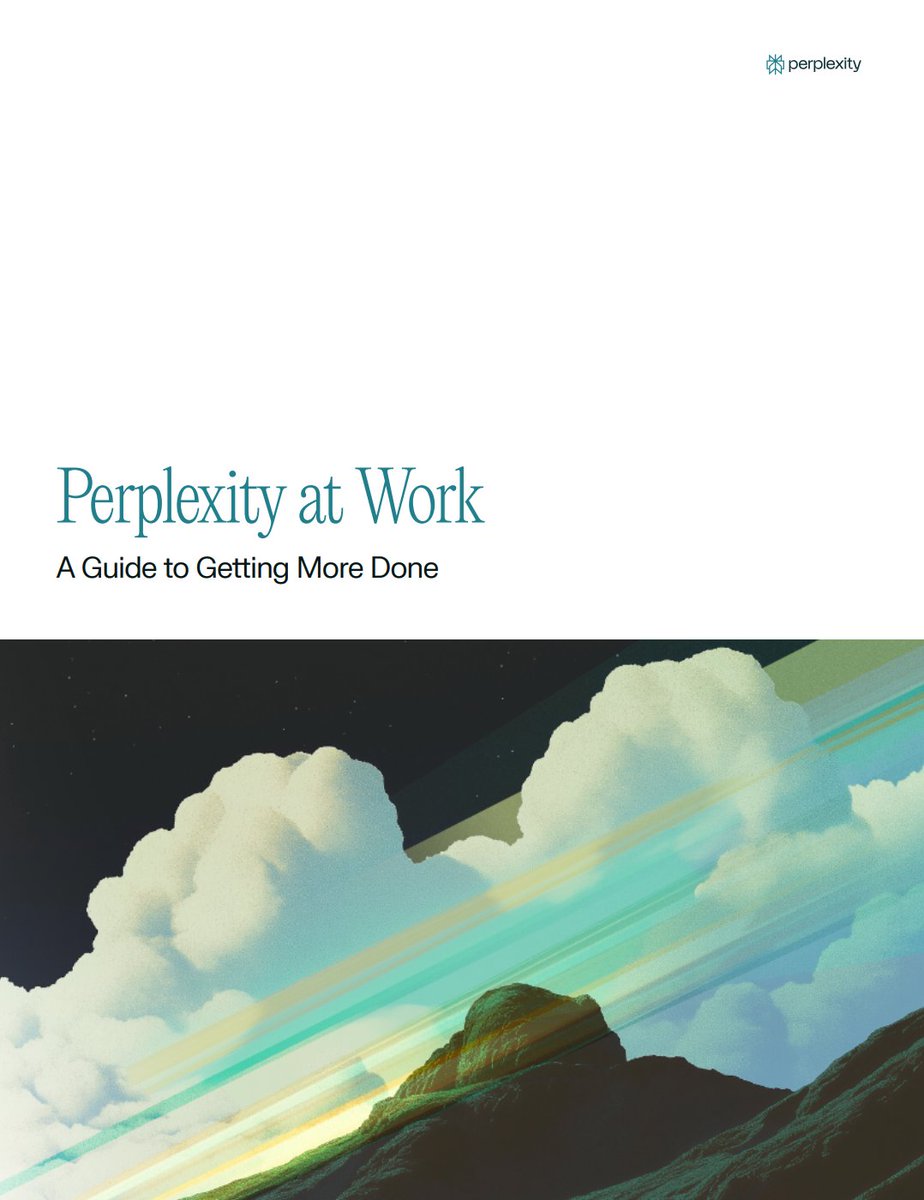
Perplexity just quietly dropped a 42-page internal guide on how they actually use AI at work. What I found most useful: → How they automate the small stuff. Email, meeting prep, research (all done by AI) → Using AI to amplify your curiosity, not replace it. → Their prompting playbook is simple, practical, and genuinely good. Comment “AI” and I’ll send it to you for free.
Aadit Sheth tweet mediaAadit Sheth tweet media
English
6K
1.4K
13.1K
1.6M
Alex Hu 🐮
Alex Hu 🐮@AlexHu5_·
If you want your boy to meet girls outside of school, get him to volunteer or start his own NGO. Girls are disproportionately represented, especially in education NGOs which can be 90% girls. Source: I ran an education NGO throughout high school and college
Chrisman@chrisman

Trying to persuade the 11yo to drop out of 6th grade and return to homeschool. He agrees school is a colossal waste of his time and potential. However, he makes the following (admittedly strong) counterpoint: It has girls.

English
2
0
9
741
Alex Hu 🐮
Alex Hu 🐮@AlexHu5_·
I build startups, yet I live in luxury. Today’s been a long day. I’ve talked for 8 hours straight in an unfamiliar place, and I sprinted for 15 mins to catch the last bullet train. I’m dehydrated, I haven’t eaten anything, and I’m sitting in a pool of my own sweat. But then the lady comes with a cart, asking “Anything from the trolley?” Of course, I remark back “We’ll take the lot!” Like Harry 🧙, I did not hesitate to satisfy my base needs for only $5.50 (¥40 RMB). But if I was in the US, and forced to pay $15 for a cold burrito, I may have abstained and suffered for the next 2 hours until I got home at 11 pm. Even if I bought the burrito, my mind would try to anxiously justify it to myself. But I now write this with a full belly and calm mind. This is what true luxury looks like.
Alex Hu 🐮 tweet media
English
0
0
3
302
Alex Hu 🐮
Alex Hu 🐮@AlexHu5_·
Duolingo is the chief culprit of “edutainment” apps that make you practice every day, just to boost user retention numbers. It’s not serious about learning; it is intended to make you feel good about practicing. It’s why people can have year-long streaks and never become fluent. Beyond a certain age, language learning requires overcoming huge knowledge gaps that are painful to face. Duolingo sells the illusion that you can learn without overcoming these gaps.
Eric Jiang@veggie_eric

Has anyone actually successfully learned a language using Duolingo Seems like a lot of cute graphics and satisfying sound effects but I'm not buying that it actually works...

English
1
4
37
5.4K
Alex Hu 🐮
Alex Hu 🐮@AlexHu5_·
Travelling through airports is a good reminder to study the theory of constraints and bottlenecks
English
0
0
2
154
Alex Hu 🐮
Alex Hu 🐮@AlexHu5_·
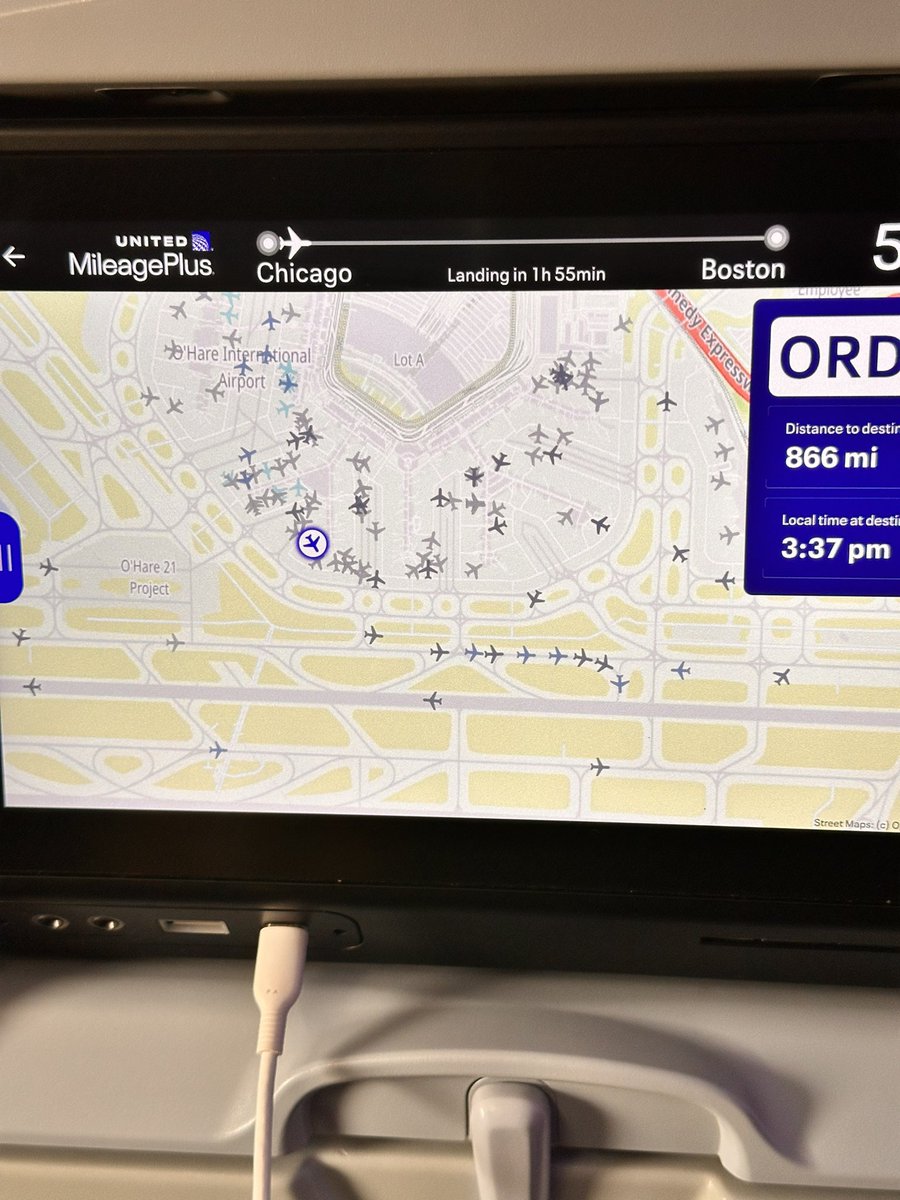
Video game UI predicts consumer UI. My flight is tracking planes in real time. You could watch individual planes take off, land, and wait in line. This feels like playing The Sims.
Alex Hu 🐮 tweet media
English
0
0
4
201
Mark Hanna
Mark Hanna@MarkHHanna·
@AlexHu5_ Been teaching my toddler that failure is the greatest teacher, getting hard problems right can be more fun then easier ones and if you fail at first, try again (trial and error). My favorite is when I hear him repeating them to his mom or little sister.
English
1
0
0
42
Alex Hu 🐮
Alex Hu 🐮@AlexHu5_·
A mom just told me, "I'm not here to give my kid hedonic happiness. I'm here to prepare my kid for their real life. That means facing failure early." This is not a tiger mom mentality - it's a realistic take on the challenges of being a parent. We shy away from exposing kids to the horrors of adulthood. We naturally want to protect our kids' innocence and let them lead happy childhoods. But happiness isn't always experiencing joy. It's how we pick ourselves back up from the inevitable challenges we'll face. That may mean letting kids do hard things, seeing them fail, and giving them the space to pick themselves up. This demands immense strength from the parent too; it's difficult to watch your kid fail and resist the urge to immediately solve their problems for them. If you want to teach resilience to your kids: – Let them try hard things – Normalize failure as part of growth – Step back so they can step up What lessons from your childhood made you resilient?
English
1
0
10
500
nori
nori@n0rizkitty·
i’m finally returning to SF and staying at The Inventors of @theresidency. my dream has always been to be an investor. this time, I’m thrilled to bring my baby, rebrowse.me. my experiment started with a simple question: “what if we could replicate the entire creation process of making crazy AI videos from X posts - with one click?” no more prompts, just record. one click to run a complex browser flow on cloud and local. 🤯
English
18
4
101
14.1K
Alex Hu 🐮
Alex Hu 🐮@AlexHu5_·
Kids don’t passively “absorb knowledge” like a sponge. Most people think that learning through exposure is enough. But babies are actually constantly thinking and interpreting the world around them. Many so-called “educational” videos will overstimulate and shut down kids’ abilities to think, which is why brain rot exists. If your kid can sit in front of something for hours, chances are it’s more entertainment and less education.
Rohan Paul@rohanpaul_ai

🎯 Andrej Karpathy on how to learn.

English
0
1
5
479
Anything
Anything@anything·
Introducing Anything Agent that ships mobile apps & web. Designs that don't look AI made. Everything you need built in. Live now, reply for 1 week of free credits
English
4.8K
604
7.8K
3.4M
Alex Hu 🐮 retweetledi
Joe Lim
Joe Lim@joelimmmmm·
I left quant trading to chase music. Somewhere along the way, I built a platform that now posts 15,000+ TikToks a day for labels like Universal & Warner. Here’s who I am, what I value, and why I’m looking for a cofounder. I grew up in a white suburb on Long Island. I was the quiet Korean kid with no friends - known as the dumb Asian (I thought to be cool you had to be bad in school 😭) I barely got into Indiana University but I ended up with a $200k/year job offer, being the first quant trader in my schools history. Six months in, I realized I wanted to do more and quit to become a… rapper. I wrote 350+ songs, battled bipolar disorder and lost my cousin, a 21-year-old rapper, to an overdose. That’s what changed everything. I started coding tools to seed music into videos. Those tools became a platform. That platform became a business. Last month we did $80K in revenue. I want to scale this into the go-to infrastructure for artists, brands, and creators to go viral every day. Now I’m looking for someone who’s creative, thinks for themselves, and learns fast to join as a cofounder and CTO. If you’re obsessed with virality, culture, and building something unforgettable — let’s talk.
Joe Lim tweet media
English
32
15
201
23.7K
the residency
the residency@theresidency·
more people should chase their dreams. delta is your nudge.   ✈️ free flights to SF
 🏠 3-month fully funded residency
 💸 up to $1M in funding apply now 🔗👇
English
106
145
1.6K
187.9K