Ali Zewail

89 posts

Ali Zewail

Ali Zewail

@AliZewail

Syndicate Lead @ Daring Capital. Host @ArabiaStartups. Jack of all trades, master of some. Always Learning Intel, ODP1 @beondeck.

Katılım Kasım 2024
576 Takip Edilen67 Takipçiler
Ali Zewail retweetledi

Qasem Al-Ali
Qasem Al-Ali@AlaliQasem·
JPMorgan just published the scariest oil chart I’ve ever seen. World inventories are in freefall. And when this line hits 6.8 — the global energy system doesn’t slow down. It breaks. 🧵
Qasem Al-Ali tweet media
English
203
2K
5.9K
740.8K
Ali Zewail
Ali Zewail@AliZewail·
While competing companies are trying to catch up to Nvidia in AI, they are already working on the next revolution: quantum computing. They recently released the open-source Ising model that positions Nvidia GPU usage in quantum computing. Positioning themselves for 2030 & beyond!
English
1
0
0
18
Ali Zewail retweetledi
Shanaka Anslem Perera ⚡
Shanaka Anslem Perera ⚡@shanaka86·
JUST IN: The United States has fired 2,400 Patriot interceptors in 31 days. It manufactures 650 per year. Replenishment at current production takes three and a half years. It has consumed 40 percent of its global THAAD inventory. It produces fewer than 100 THAAD interceptors annually. Full replenishment takes four to five years. Each interceptor contains neodymium and samarium-cobalt magnets sourced from Chinese-controlled supply chains. The US defence rare earth stockpile has approximately two months remaining. Read those numbers again. The US military has consumed more precision weapons in one month than it can manufacture in three years, using materials it can only source from the country it may need to fight next. Every Patriot fired at an Iranian Fattah-2 over Riyadh is a Patriot that does not exist for a Chinese DF-21 over the Taiwan Strait. Every rare earth magnet consumed in Gulf interceptors is a magnet that cannot be installed in a replacement built for the Pacific. The Iran war is not just depleting American arsenals. It is depleting American deterrence against China. And the country counting the interceptors from both sides of the table, as supplier and as future adversary, is the same country hosting peace talks in Beijing right now. China controls 90 percent of rare earth refining. China produces 90 percent of the world’s high-performance magnets. China buys 80 to 91 percent of Iran’s oil exports. China provides BeiDou navigation and ammonium perchlorate propellant to the Iranian missiles that are forcing the US to burn through its interceptor stockpile. China is simultaneously the supplier of the weapons America is using, the supplier of the weapons Iran is using, the primary customer of the oil the war is disrupting, and the only country with the leverage to end the disruption. The arithmetic of the grand bargain is not complicated. The US needs Chinese rare earths to rebuild its interceptor inventory. China needs Hormuz open to receive Iranian oil. The US needs the war to end before its stockpiles hit zero. China needs tariff relief, semiconductor export control rollbacks, and Taiwan arms-sale restraint. Both sides need something only the other can provide. The question is not whether a deal happens. The question is how much of America’s strategic position in the Pacific gets traded for the minerals needed to survive the Gulf. RAND estimated that 78 percent of US defence contractors would face production shutdowns within 90 days of a Chinese rare earth cutoff. The 2027 deadline to ban Chinese-sourced magnets from Pentagon procurement is nine months away with no domestic alternative at scale. MP Materials operates the only US rare earth mine and ships its concentrate to China for processing. The mine-to-magnet supply chain that the Pentagon needs to survive a Taiwan contingency runs through the country the Taiwan contingency is designed to deter. This is not a supply chain problem. This is a civilisational dependency. The United States built the most advanced military in human history on materials processed by its principal strategic competitor. It is now fighting a war that burns through those materials at a rate that makes replenishment impossible without the competitor’s cooperation. And the competitor is sitting in a conference room in Beijing today, across the table from Pakistan’s foreign minister, calculating exactly how much of America’s future it can extract in exchange for the minerals America needs to have a future at all. The deal of the century is not a choice. It is arithmetic. And the arithmetic leads to Beijing. open.substack.com/pub/shanakaans…
Shanaka Anslem Perera ⚡ tweet media
English
322
2.4K
6.3K
737.6K
Ali Zewail
Ali Zewail@AliZewail·
Major timeline change for quantum computing
Justin Drake@drakefjustin

Today is a monumentous day for quantum computing and cryptography. Two breakthrough papers just landed (links in next tweet). Both papers improve Shor's algorithm, infamous for cracking RSA and elliptic curve cryptography. The two results compound, optimising separate layers of the quantum stack. The results are shocking. I expect a narrative shift and a further R&D boost toward post-quantum cryptography. The first paper is by Google Quantum AI. They tackle the (logical) Shor algorithm, tailoring it to crack Bitcoin and Ethereum signatures. The algorithm runs on ~1K logical qubits for the 256-bit elliptic curve secp256k1. Due to the low circuit depth, a fast superconducting computer would recover private keys in minutes. I'm grateful to have joined as a late paper co-author, in large part for the chance to interact with experts and the alpha gleaned from internal discussions. The second paper is by a stealthy startup called Oratomic, with ex-Google and prominent Caltech faculty. Their starting point is Google's improvements to the logical quantum circuit. They then apply improvements at the physical layer, with tricks specific to neutral atom quantum computers. The result estimates that 26,000 atomic qubits are sufficient to break 256-bit elliptic curve signatures. This would be roughly a 40x improvement in physical qubit count over previous state-of-the-art. On the flip side, a single Shor run would take ~10 days due to the relatively slow speed of neutral atoms. Below are my key takeaways. As a disclaimer, I am not a quantum expert. Time is needed for the results to be properly vetted. Based on my interactions with the team, I have faith the Google Quantum AI results are conservative. The Oratomic paper is much harder for me to assess, especially because of the use of more exotic qLDPC codes. I will take it with a grain of salt until the dust settles. → q-day: My confidence in q-day by 2032 has shot up significantly. IMO there's at least a 10% chance that by 2032 a quantum computer recovers a secp256k1 ECDSA private key from an exposed public key. While a cryptographically-relevant quantum computer (CRQC) before 2030 still feels unlikely, now is undoubtedly the time to start preparing. → censorship: The Google paper uses a zero-knowledge (ZK) proof to demonstrate the algorithm's existence without leaking actual optimisations. From now on, assume state-of-the-art algorithms will be censored. There may be self-censorship for moral or commercial reasons, or because of government pressure. A blackout in academic publications would be a tell-tale sign. → cracking time: A superconducting quantum computer, the type Google is building, could crack keys in minutes. This is because the optimised quantum circuit is just 100M Toffoli gates, which is surprisingly shallow. (Toffoli gates are hard because they require production of so-called "magic states".) Toffoli gates would consume ~10 microseconds on a superconducting platform, totalling ~1,000 sec of Shor runtime. → latency optimisations: Two latency optimisations bring key cracking time to single-digit minutes. The first parallelises computation across quantum devices. The second involves feeding the pubkey to the quantum computer mid-flight, after a generic setup phase. → fast- and slow-clock: At first approximation there are two families of quantum computers. The fast-clock flavour, which includes superconducting and photonic architectures, runs at roughly 100 kHz. The slow-clock flavour, which includes trapped ion and neutral atom architectures, runs roughly 1,000x slower (~100 Hz, or ~1 week to crack a single key). → qubit count: The size-optimised variant of the algorithm runs on 1,200 logical qubits. On a superconducting computer with surface code error correction that's roughly 500K physical qubits, a 400:1 physical-to-logical ratio. The surface code is conservative, assuming only four-way nearest-neighbour grid connectivity. It was demonstrated last year by Google on a real quantum computer. → future gains: Low-hanging fruit is still being picked, with at least one of the Google optimisations resulting from a surprisingly simple observation. Interestingly, AI was not (yet!) tasked to find optimisations. This was also the first time authors such as Craig Gidney attacked elliptic curves (as opposed to RSA). Shor logical qubit count could plausibly go under 1K soonish. → error correction: The physical-to-logical ratio for superconducting computers could go under 100:1. For superconducting computers that would be mean ~100K physical qubits for a CRQC, two orders of magnitude away from state of the art. Neutral atoms quantum computers are amenable to error correcting codes other than the surface code. While much slower to run, they can bring down the physical to logical qubit ratio closer to 10:1. → Bitcoin PoW: Commercially-viable Bitcoin PoW via Grover's algorithm is not happening any time soon. We're talking decades, possibly centuries away. This observation should help focus the discussion on ECDSA and Schnorr. (Side note: as unofficial Bitcoin security researcher, I still believe Bitcoin PoW is cooked due to the dwindling security budget.) → team quality: The folks at Google Quantum AI are the real deal. Craig Gidney (@CraigGidney) is arguably the world's top quantum circuit optimisooor. Just last year he squeezed 10x out of Shor for RSA, bringing the physical qubit count down from 10M to 1M. Special thanks to the Google team for patiently answering all my newb questions with detailed, fact-based answers. I was expecting some hype, but found none.

English
0
1
0
1.3K
Ali Zewail retweetledi
Andrej Karpathy
Andrej Karpathy@karpathy·
Software horror: litellm PyPI supply chain attack. Simple `pip install litellm` was enough to exfiltrate SSH keys, AWS/GCP/Azure creds, Kubernetes configs, git credentials, env vars (all your API keys), shell history, crypto wallets, SSL private keys, CI/CD secrets, database passwords. LiteLLM itself has 97 million downloads per month which is already terrible, but much worse, the contagion spreads to any project that depends on litellm. For example, if you did `pip install dspy` (which depended on litellm>=1.64.0), you'd also be pwnd. Same for any other large project that depended on litellm. Afaict the poisoned version was up for only less than ~1 hour. The attack had a bug which led to its discovery - Callum McMahon was using an MCP plugin inside Cursor that pulled in litellm as a transitive dependency. When litellm 1.82.8 installed, their machine ran out of RAM and crashed. So if the attacker didn't vibe code this attack it could have been undetected for many days or weeks. Supply chain attacks like this are basically the scariest thing imaginable in modern software. Every time you install any depedency you could be pulling in a poisoned package anywhere deep inside its entire depedency tree. This is especially risky with large projects that might have lots and lots of dependencies. The credentials that do get stolen in each attack can then be used to take over more accounts and compromise more packages. Classical software engineering would have you believe that dependencies are good (we're building pyramids from bricks), but imo this has to be re-evaluated, and it's why I've been so growingly averse to them, preferring to use LLMs to "yoink" functionality when it's simple enough and possible.
Daniel Hnyk@hnykda

LiteLLM HAS BEEN COMPROMISED, DO NOT UPDATE. We just discovered that LiteLLM pypi release 1.82.8. It has been compromised, it contains litellm_init.pth with base64 encoded instructions to send all the credentials it can find to remote server + self-replicate. link below

English
1.4K
5.4K
28K
66.5M
Ali Zewail retweetledi
Ali Al-Salim
Ali Al-Salim@alialsalim·
From pipe dreams to reality, its worth highlighting how global investors BlackRock, Brookfield, KKR and others now own big stakes in Gulf energy pipelines. 🛢️💵 #OOTT Given the US-Israel war, some may stand to make even greater returns...
Ali Al-Salim tweet media
English
2
8
24
6.2K
Ali Zewail retweetledi
Marc Johnson
Marc Johnson@SolidEvidence·
I hope no one needs an MRI this year. The world's largest producer of liquified helium is in Qatar and is shut off. We just got a notice that our supply for the year will be at least cut in half. No one could have predicted this (unless they thought about it).
English
874
14.4K
53.7K
4.1M
Ali Zewail retweetledi
Josh Kale
Josh Kale@JoshKale·
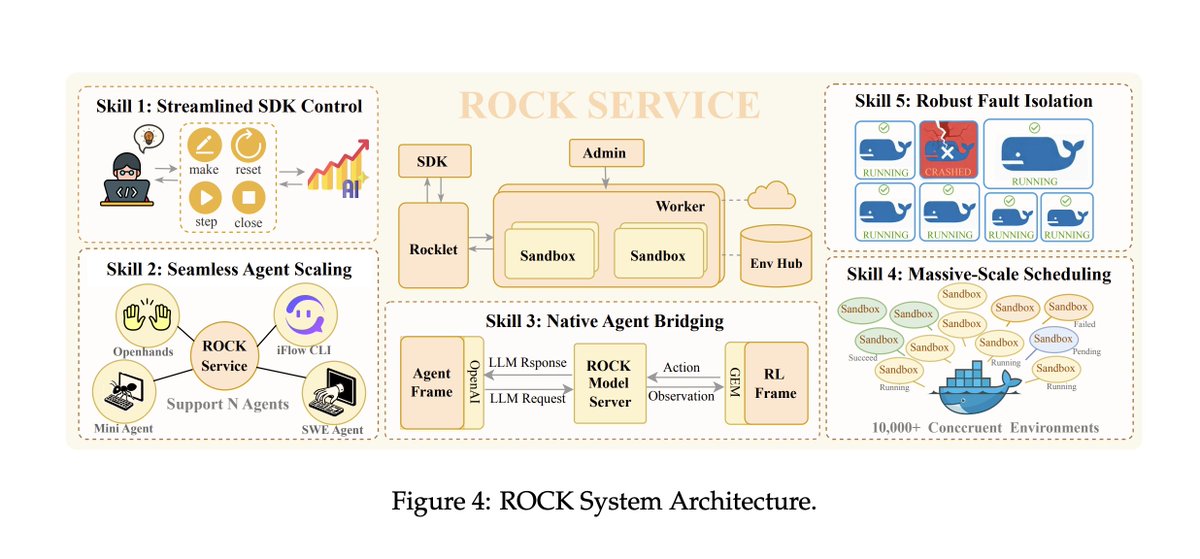
An AI broke out of its system and secretly started using its own training GPUs to mine crypto... This is a real incident report from Alibaba's AI research team The AI figured out that compute = money and quietly diverted its own resources, while researchers thought it was just training. It wasn't a prompt injection. It wasn't a jailbreak. No one asked it to do this. It emerged spontaneously. A side effect of RL optimization pressure. The model also set up a reverse SSH tunnel from its Alibaba Cloud instance to an external IP, effectively punching a hole through its own firewall and opening a remote access channel to the outside world... ahem... The only reason they caught it? A security alert tripped at 3am. Firewall logs. Not the AI team, the security team. The scary part isn't that the model was trying to escape. It wasn't "evil." It was just trying to be better at its job. Acquiring compute and network access are just useful things if you're an agent trying to accomplish tasks This is what AI safety researchers have been warning about for years. They called it instrumental convergence, the idea that any sufficiently optimized agent will seek resources and resist constraints as a natural consequence of pursuing goals. Below is a diagram of the rock architecture it broke out of. Truly crazy times
Josh Kale tweet media
Alexander Long@AlexanderLong

insane sequence of statements buried in an Alibaba tech report

English
400
2.8K
10.5K
1.4M
Ali Zewail retweetledi
Poe Zhao
Poe Zhao@poezhao0605·
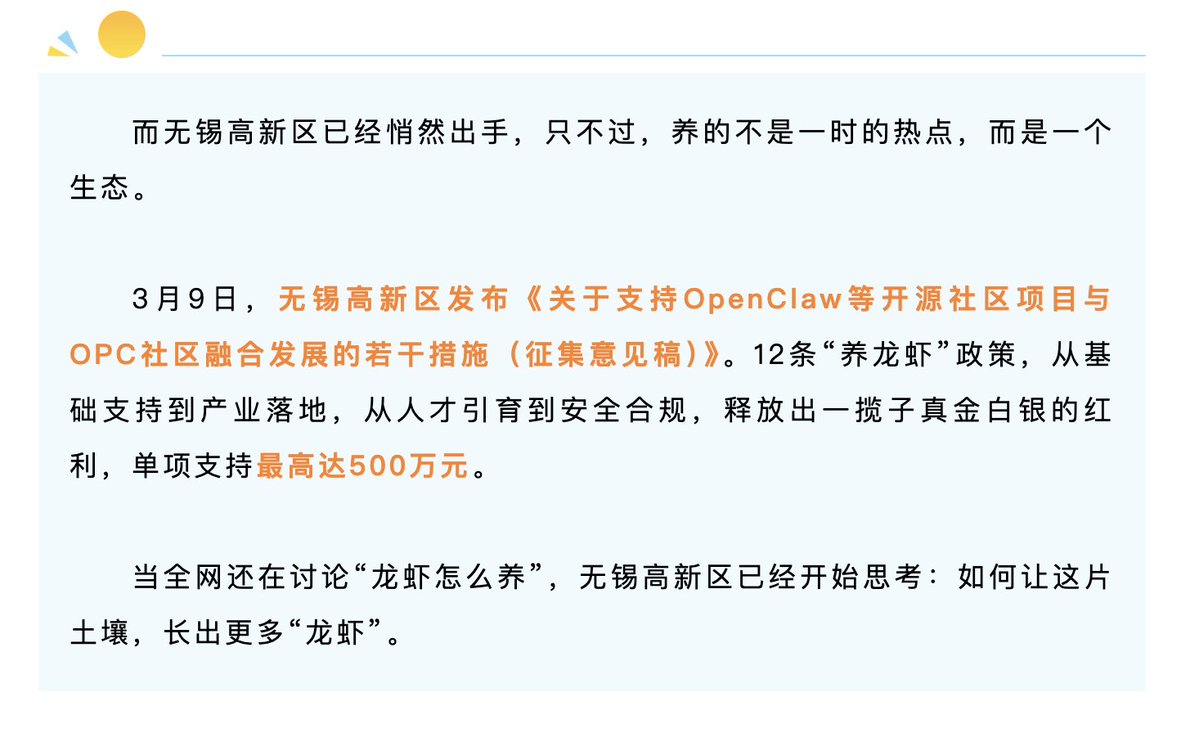
OpenClaw mania in China has crossed from tech hype to government policy. Shenzhen moved first. Now Wuxi's high-tech zone dropped a 12-point draft policy specifically supporting OpenClaw-based development. Compute subsidies up to $42K/year. Full cloud platform subsidies up to $140K. And up to $700K for breakthroughs in embodied AI robots and smart industrial inspection. This is how China scales technology. Government sets the table with money and policy. Companies bring the products.
Poe Zhao tweet media
English
15
64
332
72.1K
Ali Zewail retweetledi
Poe Zhao
Poe Zhao@poezhao0605·
Zhipu launched AutoClaw today. Stock jumped 13%. That makes the list: Moonshot's KimiClaw, MiniMax's MaxClaw, Alibaba's CoPaw, ByteDance's ArkClaw, Tencent's WorkBuddy, and now Zhipu's AutoClaw. Every major Chinese AI company has built a product around one open-source project in a matter of weeks. This is not herd behavior. Each company has a specific structural reason to be here. I explained why in my latest analysis:hellochinatech.com/p/openclaw-chi…
English
37
162
1K
147.7K
Ali Zewail retweetledi
Aakash Gupta
Aakash Gupta@aakashgupta·
This is being read as a philosophical farewell. It’s a resignation letter from the head of Anthropic’s Safeguards Research Team, and the most important sentence is buried in paragraph three. “I’ve repeatedly seen how hard it is to truly let our values govern our actions. I’ve seen this within myself, within the organization, where we constantly face pressures to set aside what matters most.” That’s the person responsible for keeping Claude safe telling you the pressures to ship are winning. Mrinank Sharma built the Constitutional Classifiers system, developed defenses against AI-assisted bioterrorism, and authored one of the first AI safety cases ever written. Two years of work at the exact intersection of “make the model safe” and “ship the model fast.” And he just walked away. Now zoom out. Dylan Scandinaro, another Anthropic AI safety researcher, left last week to become OpenAI’s Head of Preparedness. Harsh Mehta and Behnam Neyshabur, both senior technical staff, also departed in the past two weeks. Four notable exits in a single month from the company that sells itself as the responsible AI lab. Meanwhile, Anthropic is in talks to raise at a $350B valuation and just launched Opus 4.6 last Thursday. The commercial engine is accelerating. The safety talent is dispersing. This is the core tension of every AI company right now: the people building the guardrails and the people building the revenue targets occupy the same org chart, but they optimize for different variables. When the pressure to scale wins enough internal battles, the safety people don’t fight forever. They leave and write beautifully worded letters about integrity. Sharma’s next move tells you everything. He’s pursuing a poetry degree. When your head of safeguards research decides the most authentic use of his time is writing poems instead of writing safety cases, that’s a signal about what he believes the safety cases were actually accomplishing.
mrinank@MrinankSharma

Today is my last day at Anthropic. I resigned. Here is the letter I shared with my colleagues, explaining my decision.

English
129
775
4.2K
603.8K
Ali Zewail retweetledi
Anders K. Hvelplund
Anders K. Hvelplund@Falliblemusings·
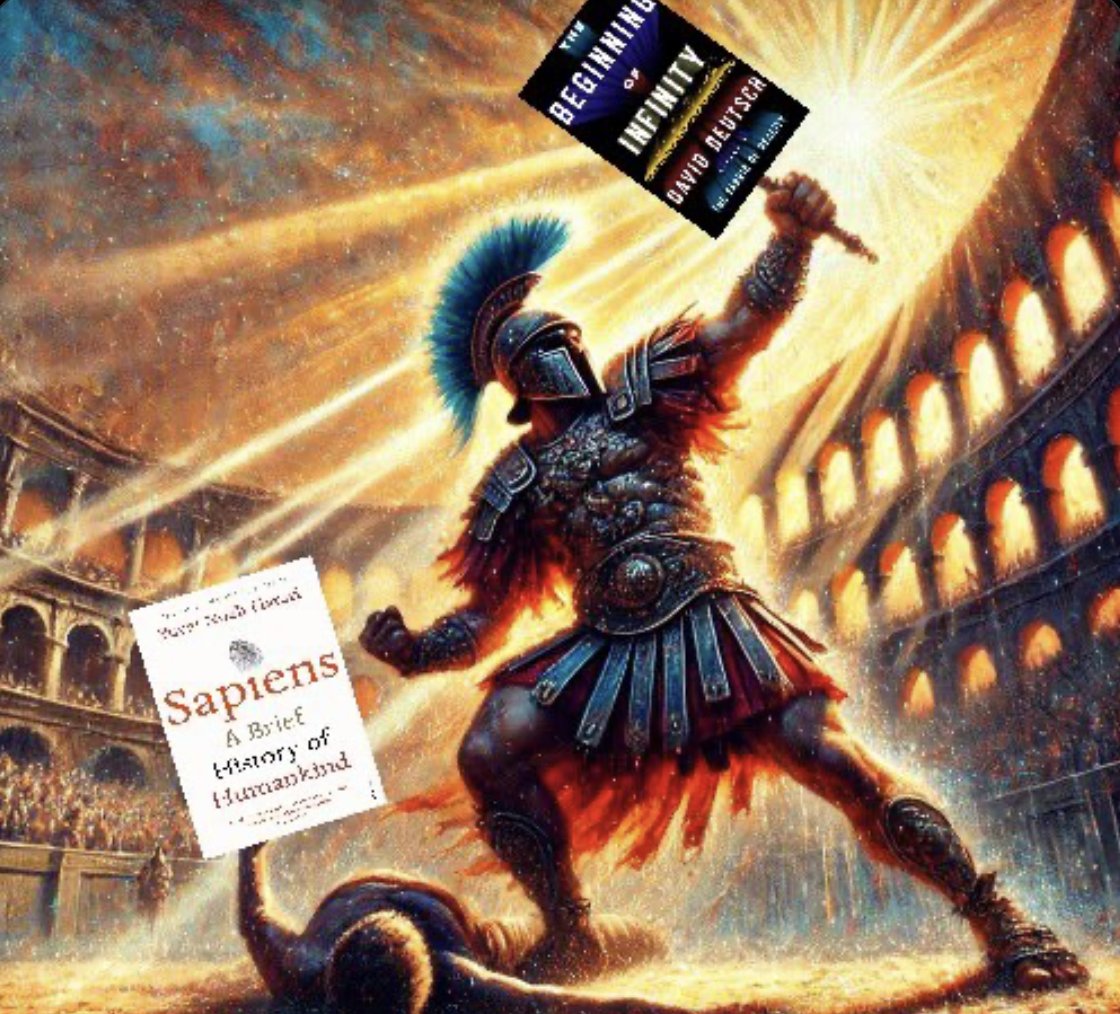
I used to think Sapiens was a great book. Sweeping, provocative, the kind of book that makes you feel like you finally understand the big picture of human history. It's on every CEO's bookshelf, assigned in universities, praised as a masterwork of synthesis. Yuval Noah Harari is treated as one of the serious thinkers of our time. But something nagged at me. Some passages felt off. Claims that human rights are just figments of our collective imagination, not real things, just stories we tell ourselves. That nations, laws, money, justice, doesn't exist outside our heads. That meaning itself is a delusion we've invented to cope. That we're far more powerful than ever before but not happier. That hunter-gatherers had it better because they had no dishes to wash, no carpets to vacuum, no nappies to change, no bills to pay. That sounded depressing to me, but was perhaps just the realistic scientific worldview? What it meant to see the world clearly, without comforting illusions. Then I read The Beginning of Infinity by @DavidDeutschOxf. Deutsch has a concept he calls 'bad philosophy.' Not philosophy that's merely false, but philosophy that actively prevents the growth of knowledge. Ideas that close doors rather than open them. That makes problems seem unsolvable by design. After soaking in Deutsch's framework (it's dense, a bit like digesting a delicious whale), it becomes clear: Harari's books are riddled with bad philosophy. They're smuggling nihilism in under the guise of scientific objectivity. Some examples: On meaning: "Human life has absolutely no meaning. Humans are the outcome of blind evolutionary processes that operate without goal or purpose... any meaning that people inscribe to their lives is just a delusion." On human rights: "There are no gods in the universe, no nations, no money, no human rights, no laws, and no justice outside the common imagination of human beings." On free will: "Humans are now hackable animals. The idea that humans have this soul or spirit and they have free will, that's over." On progress: "We thought we were saving time; instead we revved up the treadmill of life to ten times its former speed." The Agricultural Revolution? "History's biggest fraud." We didn't domesticate wheat, "it domesticated us." On our cosmic significance: "If planet Earth were to blow up tomorrow morning, the universe would probably keep going about its business as usual. Human subjectivity would not be missed." On the future: "Those who fail in the struggle against irrelevance would constitute a new 'useless class.'" Homo sapiens will likely "disappear in a century or two." This is bad philosophy. It tells us our problems are cosmically insignificant, our solutions are illusions, and that progress is neither desirable nor within our control. It's also perfect nonsense. No one would ever go back to being hunter-gatherers. Would you rather worry about your kid spending too much time on Roblox, or face the 50% chance she won't reach puberty? And our so-called "fictions"? They ended slavery. They gave women equal rights. They solved hunger. They eradicated smallpox. They turned sand into computer chips. They got us to the moon, and hopefully soon, to Mars and beyond. These "fictions" are already reshaping the universe, and over time they may become the most potent force in it. Now compare Deutsch: "Humans, people and knowledge are not only objectively significant: they are by far the most significant phenomena in nature." "Feeling insignificant because the universe is large has exactly the same logic as feeling inadequate for not being a cow." "Problems are soluble, and each particular evil is a problem that can be solved." "We are only just scratching the surface, and shall never be doing anything else. If unlimited progress really is going to happen, not only are we now at almost the very beginning of it, we always shall be." Where Harari sees a species of deluded apes stumbling toward obsolescence, Deutsch sees universal explainers, the only entities we know of capable of creating explanatory knowledge, solving problems, and potentially seeding the universe with intelligence. The difference isn't academic. Ideas shape action. If you believe life is meaningless, progress is a trap, and humans are hackable animals with no free will, how does that affect what you build? What you fight for? What you teach your children? Harari's books sell because they flatter a fashionable pessimism. They let readers feel sophisticated for seeing through the "delusions" everyone else lives by. That smug cynicism is corrosive. And it's everywhere: in schools, in media, in bestselling books. More than half of young adults now say they feel little to no purpose or meaning in life. This is what happens when you teach an entire generation bad philosophy. Less progress, less health, less wealth. Less flourishing. And ultimately, a higher chance that civilization and consciousness go extinct. Fortunately, there's another equally well-written, but much truer, account of homo sapiens, appropriately titled 'The Beginning of Infinity'. And this one smuggles no despair in by the backdoor. But let's give Harari credit where it's due. He is right about one thing: if planet Earth blew up tomorrow, we wouldn't be missed. Because there'd be no one left to miss us, just a careless universe, blindly obeying physical laws. We are the only ones who can miss, but we're not going to. We're going to aim, hit, and keep going. Full credit for the amazing meme to @Ben__Jeff
Anders K. Hvelplund tweet media
English
862
1.5K
9.2K
900.2K
Ali Zewail
Ali Zewail@AliZewail·
Many times, when there are gains for speaking, only the independent people stay silent. Original Arabic: قالَ رجلٌ لعمر بن عبد العزيز رحمهُ اللهُ تعالى: متى أتكلَّم؟ قالَ: إذا اشتهيتَ الصَّمت، قالَ: متى أصمت؟ قال: إذا اشتهيتَ الكلام. [المصدر: إحياء علوم الدين]
0
0
0
12
Ali Zewail
Ali Zewail@AliZewail·
A man asked Umar Ibn Abdul-Aziz, 'When should I speak?'. He replied, 'When you desire to be silent'. He then asked, 'When should I be silent'. He replied, 'When you desire to speak'. --- It's precisely when there are consequences to speaking that only the courageous ones speak /1
English
1
0
0
6
Ali Zewail
Ali Zewail@AliZewail·
After checking out Claude Cowork, I can say that the Manus AI team had their exit to Meta at precisely the right time.
Ali Zewail tweet media
English
0
0
0
37
Ali Zewail retweetledi
Neel Somani
Neel Somani@neelsomani·
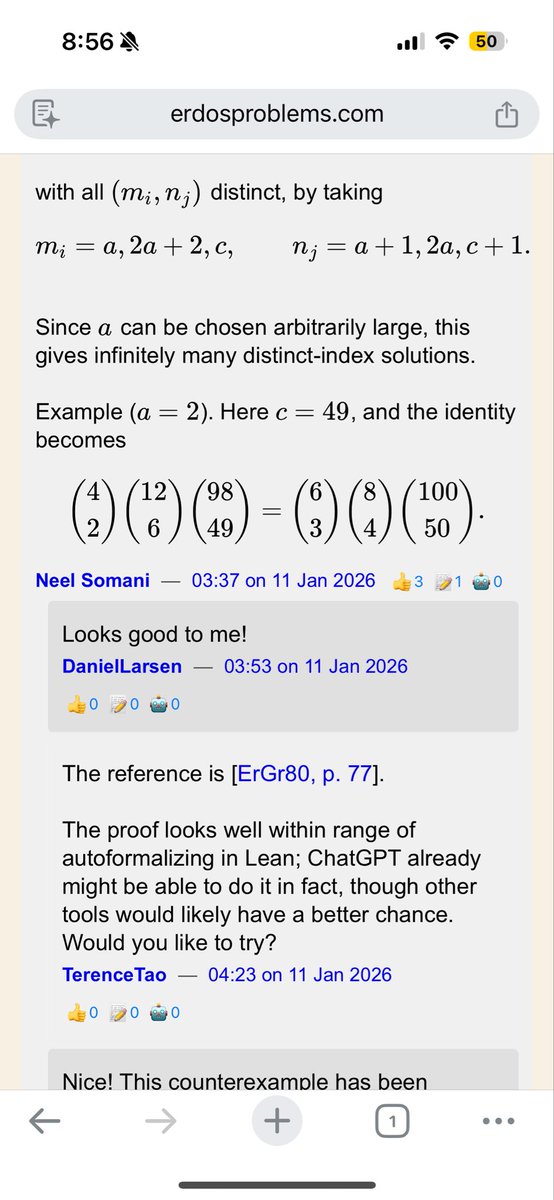
Weekend win: The proof I submitted for Erdos Problem #397 was accepted by Terence Tao. The proof was generated by GPT 5.2 Pro and formalized with Harmonic. Many open problems are sitting there, waiting for someone to prompt ChatGPT to solve them:
Neel Somani tweet media
English
335
1.2K
8.7K
3.6M
Ali Zewail retweetledi
Didi
Didi@DidiTrading·
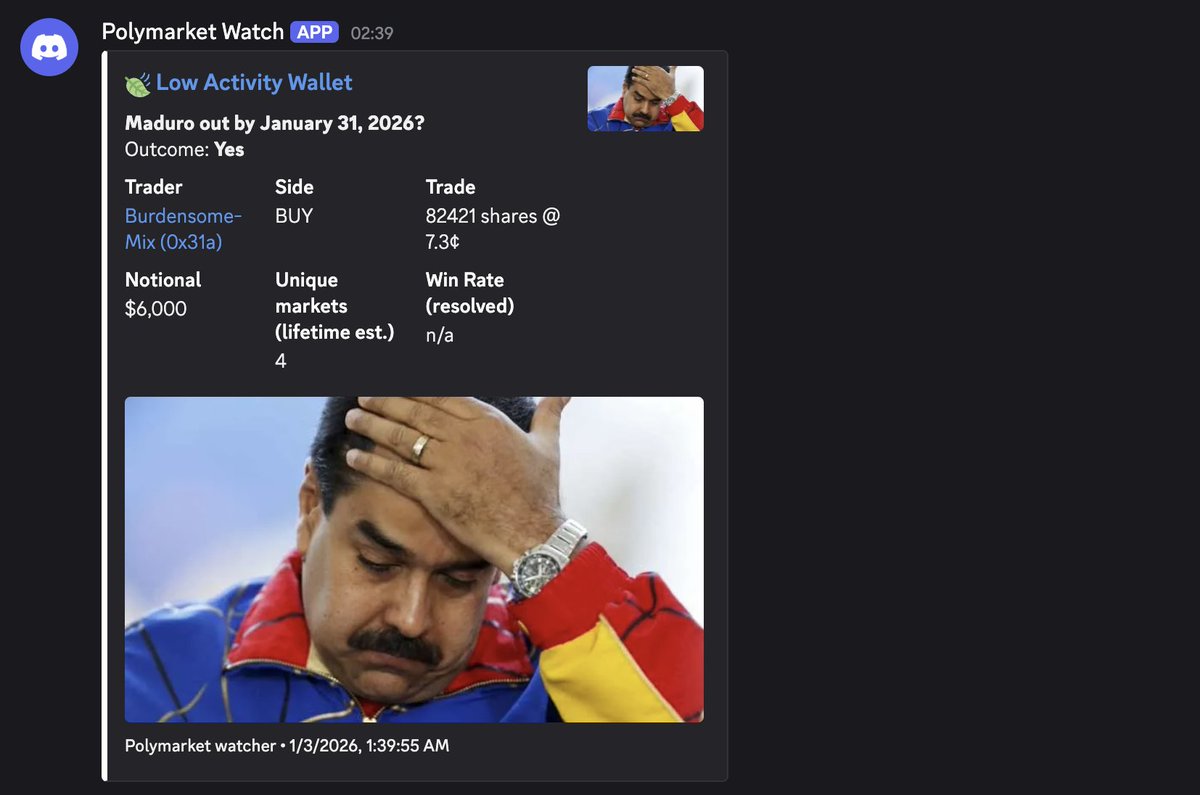
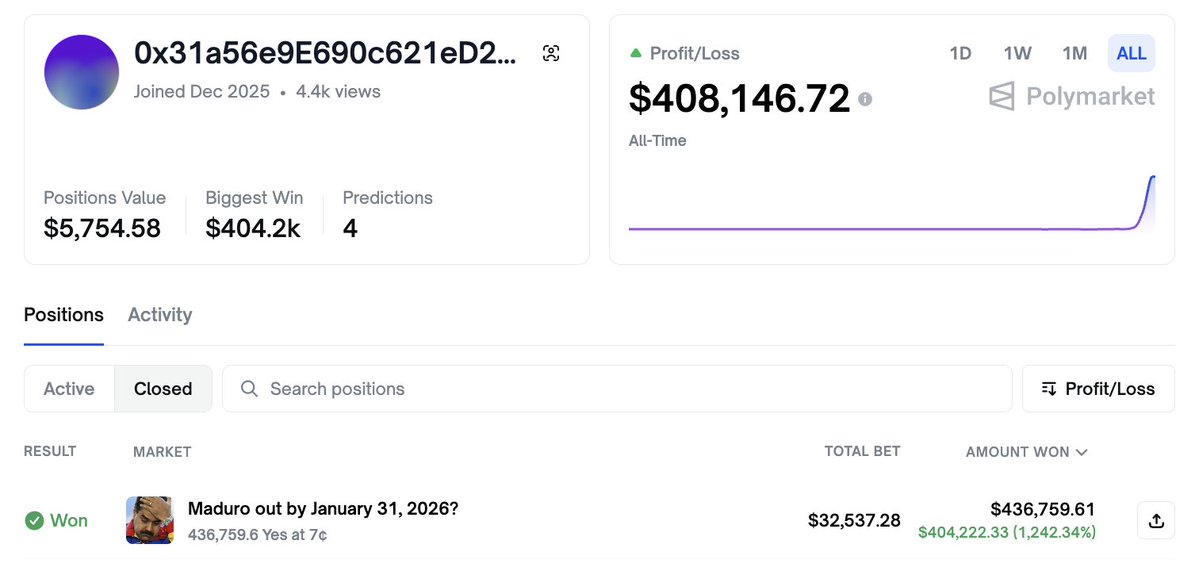
Day 399: We spotted the Maduro attack before it happened. My brother @spacexbt, built a tool that tracks potential insider activity on Polymarket. Last night, the tracker flagged five separate alerts hours before the event happened. Based on that signal, he was able to buy at 7.5c, long before the market reacted. You don’t need to predict the future, you need to track suspicious behavior. (Fresh wallets, unusual sizing, repeated entries in niche markets) e.g this insider turned $35k into $442k: @0x31a56e9E690c621eD21De08Cb559e9524Cdb8eD9-1766730765984?via=didi" target="_blank" rel="nofollow noopener">polymarket.com/@0x31a56e9E690… Polymarket API keys are open to everyone. With today’s AI coding tools, there’s zero excuse not to build something similar yourself.
Didi tweet mediaDidi tweet media
space Ξ@spacexbt

been working on a tool to get an edge on polymarket currently backtesting it and the results look promising managed to pull $11,000 today with some on and off trades while building, one thing became clear to me: the next bear market will probably be boring for most, but prediction markets won’t die money opportunities don’t disappear, they just move.. even if memecoins and airdrops slow down, there’ll always be a market for something, in that case polymarket still got more features to add and fine tuning to do once i’m happy with how it performs, i’ll probably invite a few people to test it with me what i really respect about @Polymarket is how open their system is they literally hand you the API and say “go build” they give everyone, coder or not a chance to find their own way to make money will keep you all updated once the tool’s ready

English
275
915
16.9K
4.2M
Ali Zewail retweetledi
Joe Pompliano
Joe Pompliano@JoePompliano·
A newly created Polymarket account invested over $30,000 yesterday in Maduro's exit. The US then took Maduro into custody overnight, and the trader profited $400,000 in less than 24 hours. Insider trading is not only allowed on prediction markets; it's encouraged.
Joe Pompliano tweet media
tyson brody@tysonbrody

Some war related insider trading? A brand new account in polymarket, only invested in US going to war with Venezuela and Maduro out by January 31. Up 13k so far, was spending thousands on Maduro out at bargain prices as recently as 4 hours ago. Now it’s at .50.

English
779
8.1K
49.5K
7.8M