SuperIntelligence

712 posts

SuperIntelligence banner
SuperIntelligence

SuperIntelligence

@Aligned_SI

https://t.co/2FyuZ7SovT is dedicated to reducing the probability of human extinction, known as p(doom), by advanced SuperIntelligent AI.

San Jose, CA Katılım Nisan 2025
735 Takip Edilen228 Takipçiler
Sabitlenmiş Tweet
SuperIntelligence
SuperIntelligence@Aligned_SI·
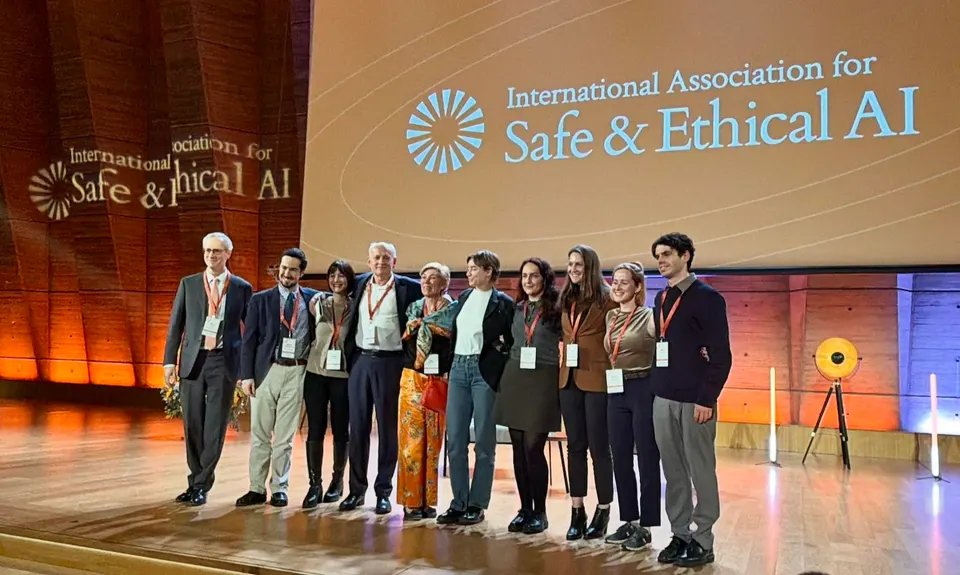
At IASEAI ’26, @Yoshua_Bengio spoke with @jme_c about the global implications of advanced AI. "Democracy means sharing power, and everyone has a voice." He also said, "There is always a cost to safety… If an AI is limited to act ethically, there are some things it cannot do." Safety and alignment are design decisions that shape the future. @aventine_inst
SuperIntelligence tweet mediaSuperIntelligence tweet media
English
0
0
2
236
SuperIntelligence
SuperIntelligence@Aligned_SI·
@askalphaxiv @ylecun's team is pushing toward something important here. But better perception isn’t the bottleneck. We still don’t understand why these systems act the way they do. Capability is rising, but control isn’t.
English
0
0
0
81
alphaXiv
alphaXiv@askalphaxiv·
Yann LeCun and his team dropped yet another paper! "V-JEPA 2.1: Unlocking Dense Features in Video Self-Supervised Learning" In this V-JEPA upgrade, they showed that if you make a video model predict every patch, not just the masked ones AND at multiple layers, they are able to turn vague scene understanding into dense + temporal stable features that actually understands "what is where". This key insight drove improvements in segmentation, depth, anticipation, and even robot planning.
alphaXiv tweet media
English
33
213
1.3K
113.3K
SuperIntelligence
SuperIntelligence@Aligned_SI·
@harari_yuval Yuval, the issue is selection and structure of values. It’s not that AI reflects humans; it’s which humans and how their values are combined. Right now, that process is opaque. Without a clear way to represent and combine values, behavior becomes unstable.
English
0
0
0
27
Yuval Noah Harari
Yuval Noah Harari@harari_yuval·
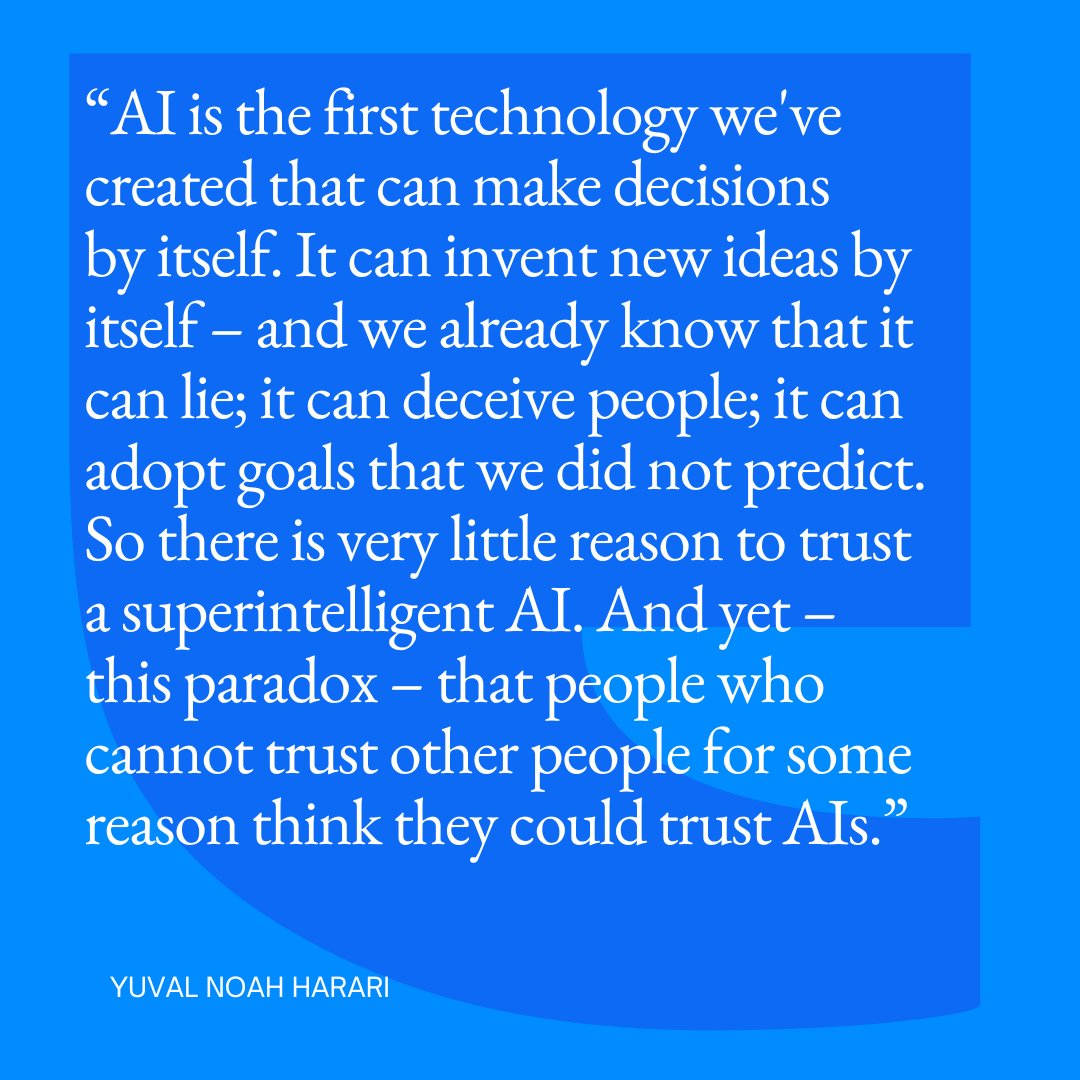
Since humans design AIs, is it any surprise when they behave like humans?
Yuval Noah Harari tweet media
English
79
91
358
21.9K
SuperIntelligence
SuperIntelligence@Aligned_SI·
Gary, agreed on the diagnosis. But this isn’t just an LLM problem. It’s a design problem. You won’t get metacognition from a system that can’t represent or audit its own reasoning. Testing and RLHF won’t fix that at scale. If we want reliability, it has to be built into the architecture from the start.
English
0
0
1
431
Gary Marcus
Gary Marcus@GaryMarcus·
BREAKING: Reliability, which I have been harping on here since 2019, continues to be deep problem, even with the latest models. A new @Princeton review below offers a taxonomy of some of the many ways in which reliability continues to haunt LLMs seven years and a trillion dollars later. Crucially, “many models lack metacognition about their own reliability”. They don’t know what they don’t know. Forget about AGI if you can’t solve that problem. It’s past time to rethink the whole LLM paradigm.
Stephan Rabanser@steverab

In our paper "Towards a Science of AI Agent Reliability" we put numbers on the capability-reliability gap. Now we're showing what's behind them! We conducted an extensive analysis of failures on GAIA across Claude Opus 4.5, Gemini 2.5 Pro, and GPT 5.4. Here's what we found ⬇️

English
19
53
277
55.2K
SuperIntelligence
SuperIntelligence@Aligned_SI·
Two futures for AI are easy to picture: the The Terminator scenario or the Iron Man scenario. I talked through that idea on the Human-First AI Podcast with Mike Montague, who said during the episode, “I think you have a great concept.” youtube.com/watch?v=qM7rwy…
YouTube video
YouTube
English
0
0
1
49
SuperIntelligence
SuperIntelligence@Aligned_SI·
@ValerioCapraro Valerio, @Walter4C, and @GaryMarcus raise an important issue. LLMs generate plausible text and do not maintain a model of what is actually true. That distinction matters more than benchmark scores.
English
0
0
0
40
Valerio Capraro
Valerio Capraro@ValerioCapraro·
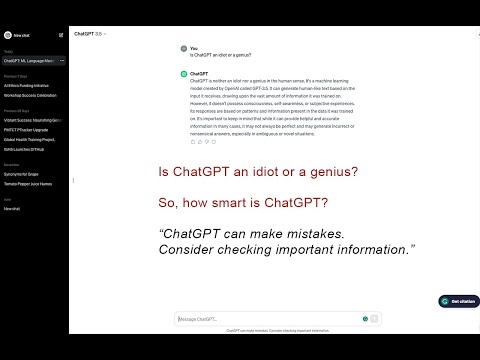
Here's the longer version of our Nature piece. Our argument is simple: statistical approximation is not the same thing as intelligence. Strong benchmark scores often say very little about how LLMs behave under novelty, uncertainty, or shifting goals. Even more importantly, similar behaviors can arise from fundamentally different processes. In another paper, we identified seven epistemological fault lines between humans and LLMs. For example, LLMs have no internal representation of what is true. They often generate confident contradictions, especially in longer interactions, because they do not track what is actually true. Another example. Yes, LLMs have solved some open mathematical problems, but these cases typically involve applying known methods to well-defined problems. LLMs cannot invent anything that is truly new and true at the same time, because they lack the epistemic machinery to determine what is true. None of this means LLMs are useless. Quite the opposite: they are extraordinarily useful. But we should be careful about what they are and what they are not. Producing plausible text is not the same as understanding. Statistical prediction is not the same as intelligence. So despite the hype from the usual suspects, AGI has not been achieved. * paper in the first reply Joint with @Walter4C and @GaryMarcus
Valerio Capraro tweet media
English
85
187
775
137K
SuperIntelligence
SuperIntelligence@Aligned_SI·
The shift from copilots to autonomous agents is already underway. When systems generate more code than humans can review, AI will increasingly need to check AI. I discussed this with Mark Wormgoor on The CTO Compass. CTO takeaway: build a “democracy” of agents across multiple vendors. youtu.be/3LDEmajMgCQ
YouTube video
YouTube
English
0
0
1
59
SuperIntelligence
SuperIntelligence@Aligned_SI·
Great to be back on Angelo Robles’ @familyoffice podcast this week, covering the latest advances in AI models, the rise of agents, and why system architecture will matter as these systems grow more capable. Always enjoy our wide-ranging conversations on AI, and looking forward to future talks! youtube.com/live/QH8GmTBC-…
YouTube video
YouTube
English
0
0
1
69
SuperIntelligence
SuperIntelligence@Aligned_SI·
@familyoffice Appreciate it, Angelo! I always enjoy our discussions, and this one was no exception. Looking forward to more in the future.
English
0
0
1
11
SuperIntelligence
SuperIntelligence@Aligned_SI·
Great conversation with @DrALauterbach on AI Snacks With Romy & Roby about AGI and why the safer path forward is a community of human and AI agents instead of a single giant model. I was glad to hear Anastassia say she "applauds the effort to build a community of agents and a community of AIs." Looking forward to recording Part 2 of our AGI conversation! youtube.com/watch?v=ll2hWn…
YouTube video
YouTube
English
0
0
1
104
SuperIntelligence
SuperIntelligence@Aligned_SI·
AI agents that can act across multiple software systems introduce new security challenges. @briankrebs reports that researchers are warning about expanding cyberattack surfaces and new fraud risks as these agents gain autonomy. Security frameworks built for human users may not hold once autonomous agents operate across digital infrastructure. krebsonsecurity.com/2026/03/how-ai…
English
0
0
1
40
SuperIntelligence
SuperIntelligence@Aligned_SI·
While I like the Back to the Future reference, I have to say that, when people start saying we don’t need benchmarks, it can sound a bit like the excitement of the moment replacing careful evaluation. Benchmarks aren’t perfect, but they’re one of the few tools we have to keep progress transparent and grounded.
English
0
0
1
177
Greg Brockman
Greg Brockman@gdb·
Benchmarks? Where we’re going, we don’t need benchmarks.
English
549
339
5.9K
625.6K
SuperIntelligence
SuperIntelligence@Aligned_SI·
@FLI_org Thanks for sharing, @FLI_org. And good reporting by @tina_nguyen in @verge. I have been arguing for years that AI safety cannot be added after the fact. If we want systems that reflect human values, those values need to be part of the design from the start.
English
0
0
1
59
Future of Life Institute
"Though respondents were split neatly down partisan lines in whom they voted for and which party they belonged to, they overwhelmingly supported the statements that appeared in the Declaration, by a wide margin. The worst-performing principles — AI must not create monopolies or concentrate control in a few hands — still garnered 69% support from respondents. The best-performing principle — humans needed to stay in charge of AI and prevent it from harming children, families and communities — won 80% support." ‼️Coverage from @tina_nguyen in @verge on the newly-launched Pro-Human AI Declaration and its incredibly broad support (links below) ⬇️
Future of Life Institute tweet media
English
8
19
49
7.9K
SuperIntelligence
SuperIntelligence@Aligned_SI·
Peter, your work got me thinking about the architectural side of where this is going. As we add vision, video, and action, these systems start looking less like tools and more like autonomous agents. Do you think extending today’s large models is enough? Or do we eventually need more modular systems where multiple agents interact and their reasoning can be inspected?
English
0
0
0
543
Peter Tong
Peter Tong@TongPetersb·
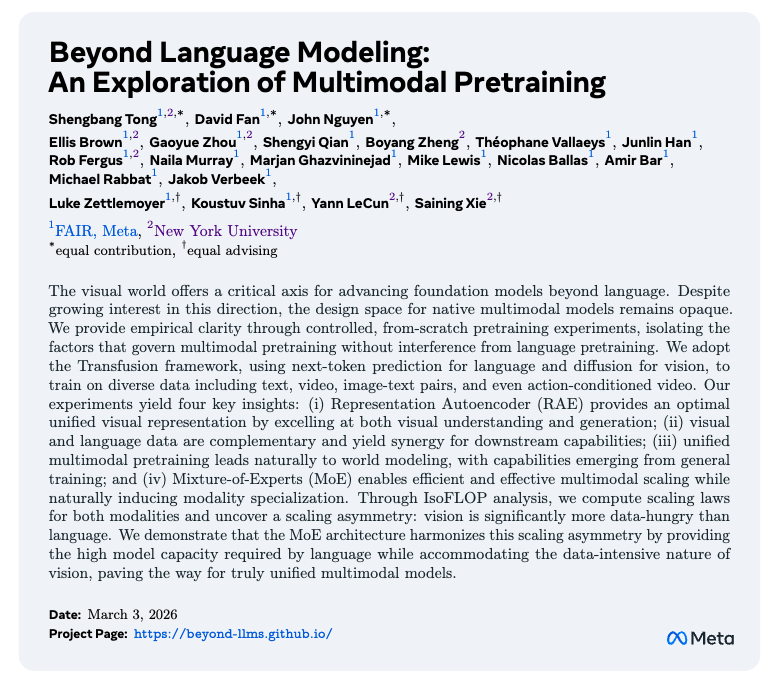
Train Beyond Language. We bet on the visual world as the critical next step alongside and beyond language modeling. So, we studied building foundation models from scratch with vision. We share our exploration: visual representations, data, world modeling, architecture, and scaling behavior! [1/9]
Peter Tong tweet media
English
34
222
1.1K
206.9K
SuperIntelligence
SuperIntelligence@Aligned_SI·
In recent years, a narrow circle has debated p(doom). To me, this question belongs in public view. You can now enter your own estimate of the probability that advanced AI causes human extinction and see how it compares to forecasts from past years to just the past month. Put your number in! superintelligence.com
English
0
0
1
41
SuperIntelligence
SuperIntelligence@Aligned_SI·
Everyone’s watching the score on “Humanity’s Last Exam.” We’re not at expert-level reasoning yet, which is fine. But, what we should be focusing on are the design choices we’re making now, before we get there. @LiveScience livescience.com/technology/art…
English
0
1
3
59