
Nitin Kumar
167 posts

@AllLivingActive
Living Active Soft Matter, Associate Professor, Physics Department, IIT Bombay (Active and Living Matter Lab)


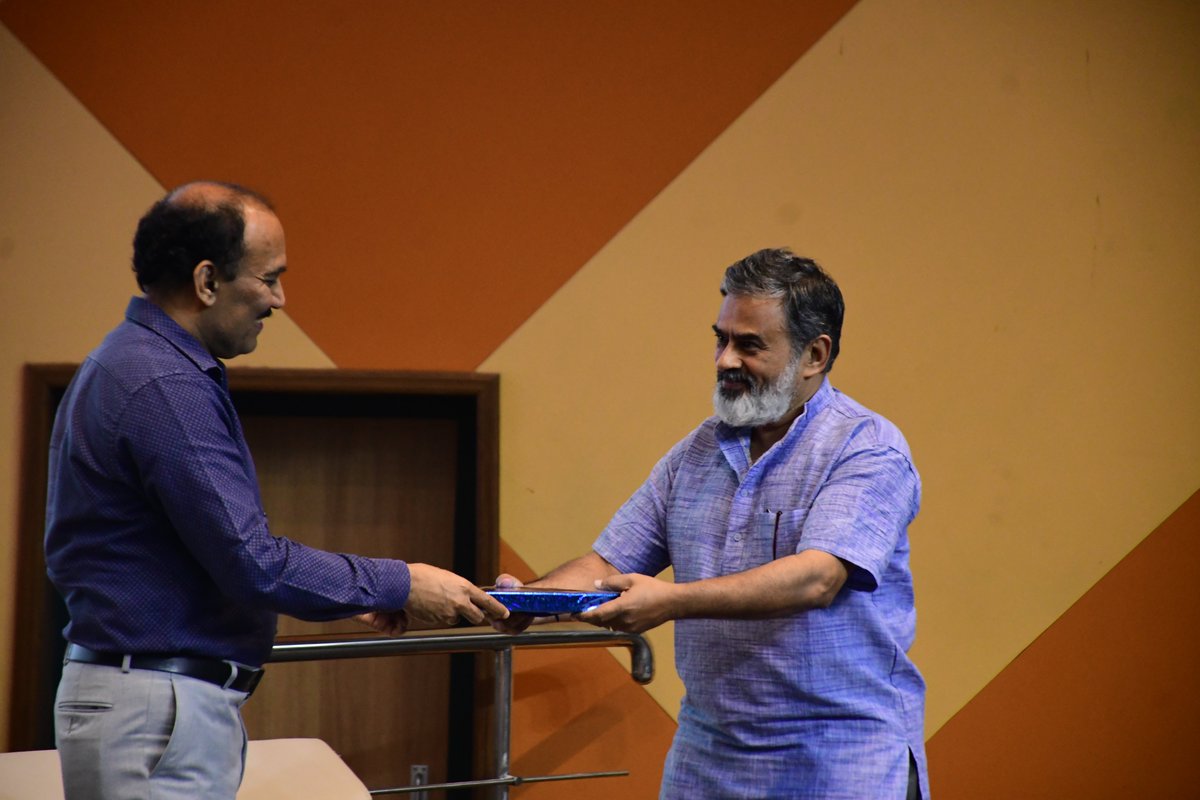
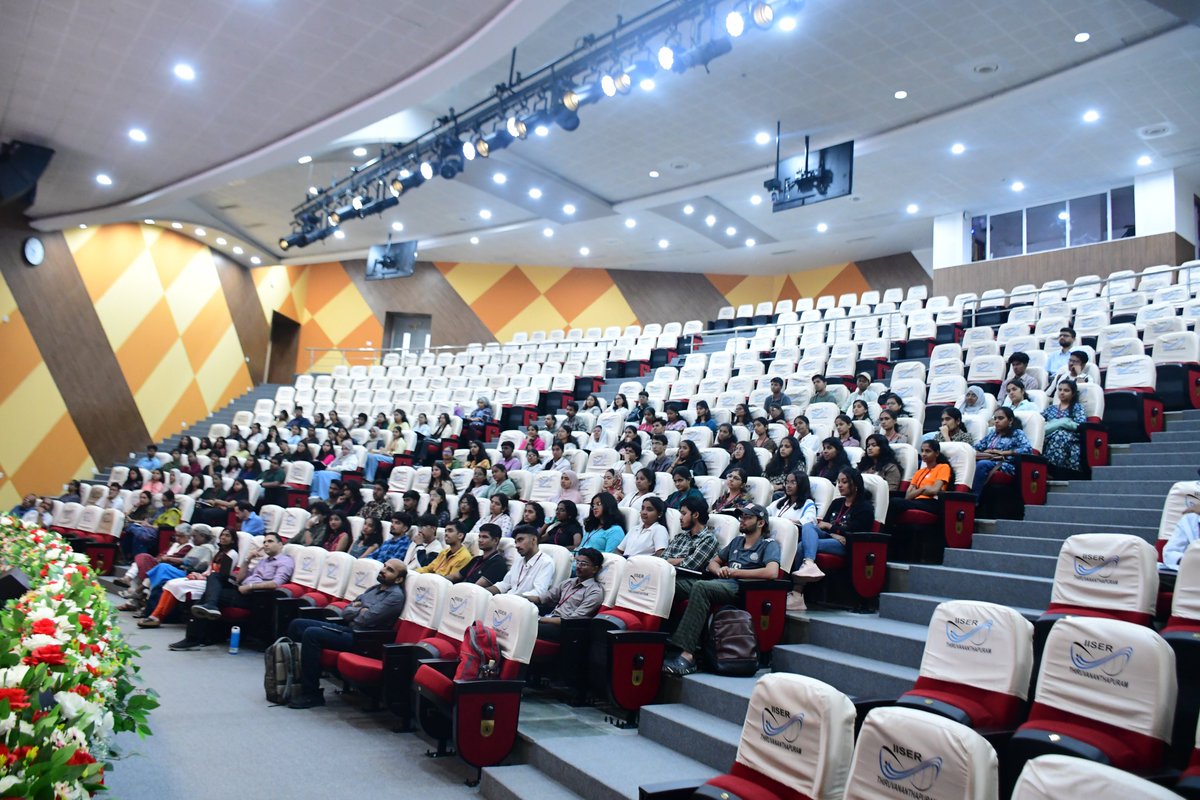
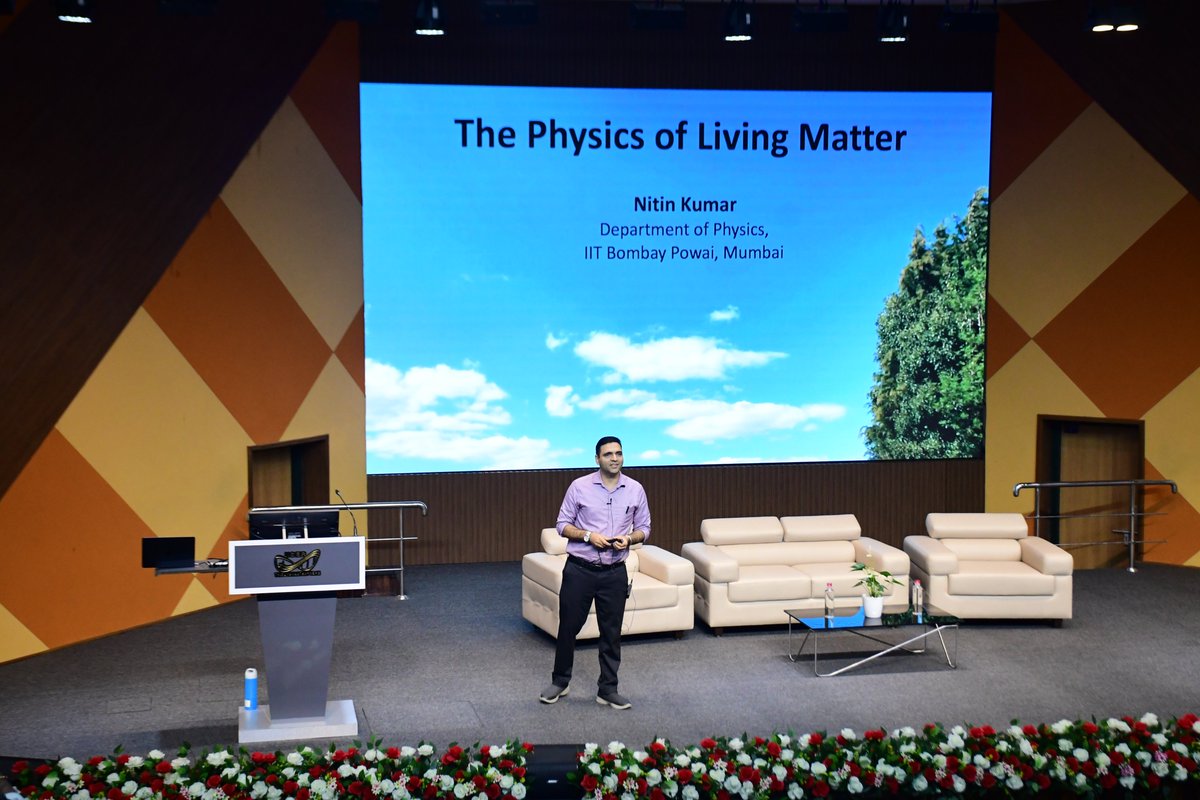
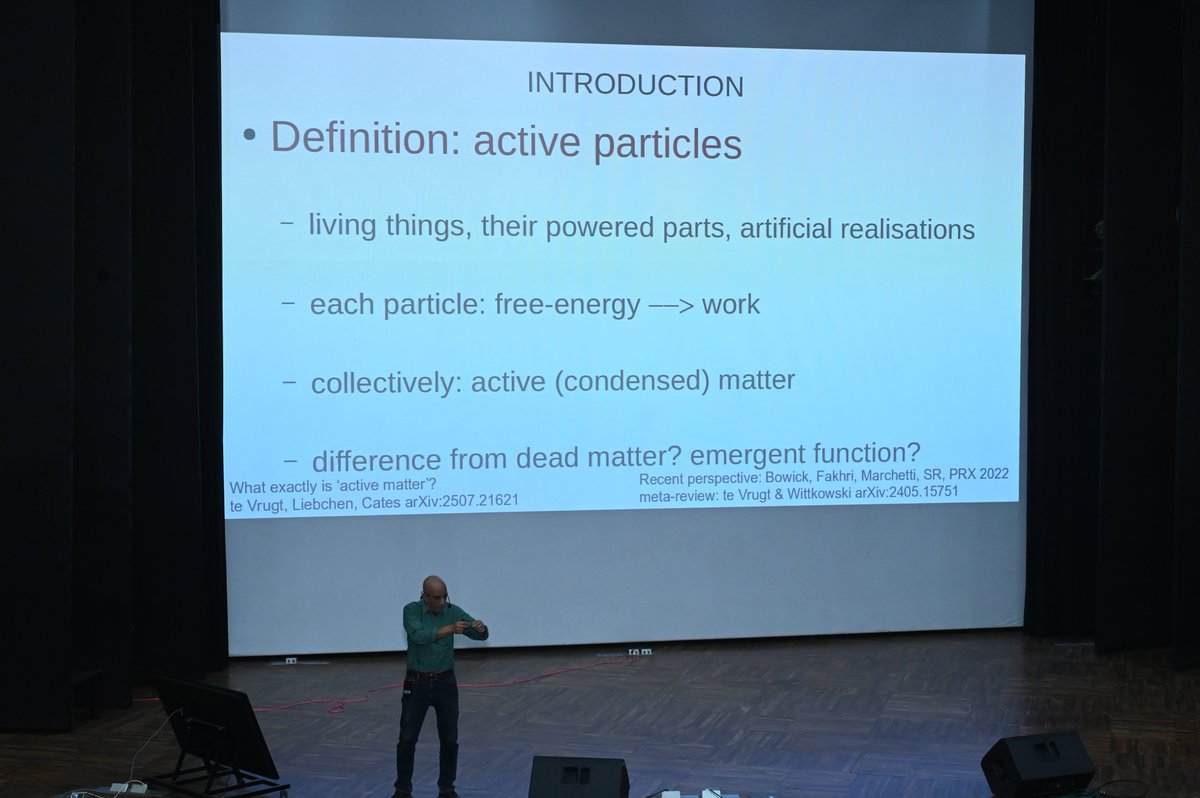
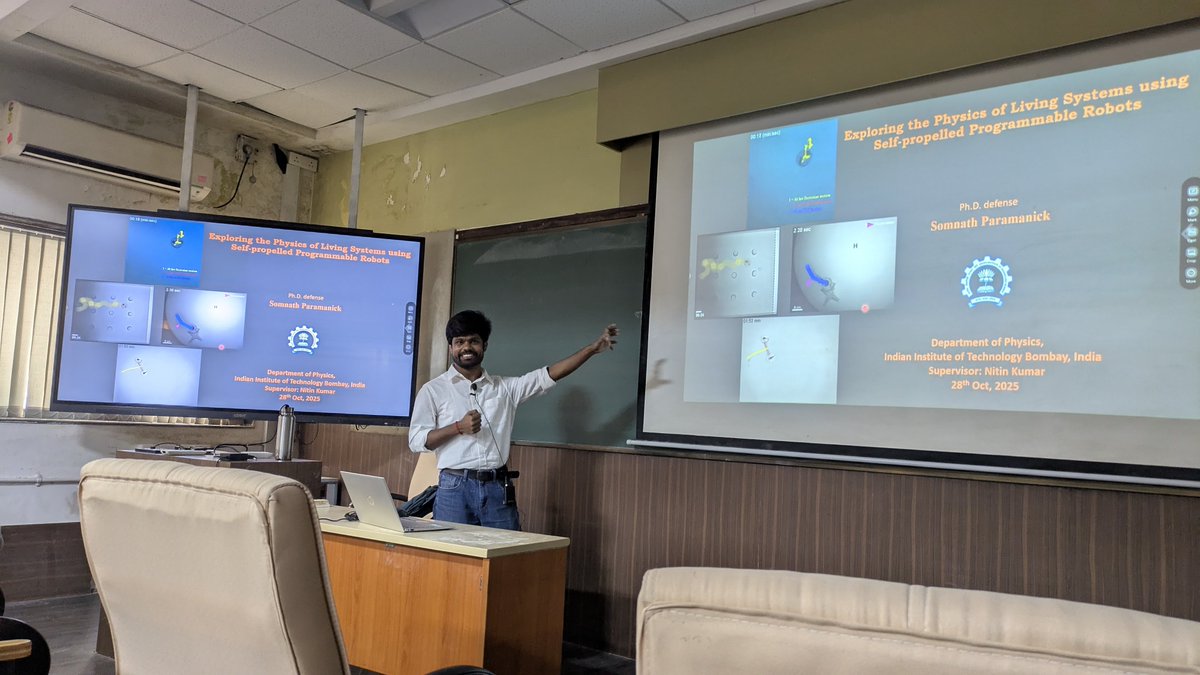
Today, Professor Nitin Kumar from IIT Bombay delivered an engaging departmental seminar on "Exploring the Physics of Living Systems Using Programmable Self-Propelled Robots." @IiserMohali @iitbombay

Researchers from the Department of Physics, Indian Institute of Technology Bombay and School of Physical Sciences, IIT Mandi designed a pair of coupled robots that, for the first time in an artificial setting, accurately replicated the run-and-tumble (RT) motion exhibited by microswimmers such as the alga Chlamydomonas reinhardtii. Lead authors, Somnath Paramanick (IIT Bombay) and Umashankar Pardhi (IIT Mandi), worked under the guidance of Prof. Nitin Kumar (IIT Bombay) and Prof. Harsh Soni (IIT Mandi) for this study, which could help us better understand one of the most fundamental aspects of life: motility, or the ability to move. Their study was published in the journal Physical Review Letters. iitb.ac.in/research-highl…


(1/6) 📢Excited to share our latest work in collaboration with @harshIITMandi's group at IIT Mandi on an artificial robotic system 🤖, in experiment and theory, mimicking run-and-tumble (RT) motion seen in microorganisms 🦠. 🧵⏬@Somnath73831947 @iitbombay arxiv.org/abs/2502.01257


👋 Welcome Sujit Datta (@TheSquishyLab), new chief editor of @APS_RMP. He’s a professor at @Caltech exploring #SoftMatter physics, #FluidDynamics, and complex systems. Sujit’s award-winning research bridges #physics, #engineering, and #biophysics. 🔗 go.aps.org/4mxplPQ


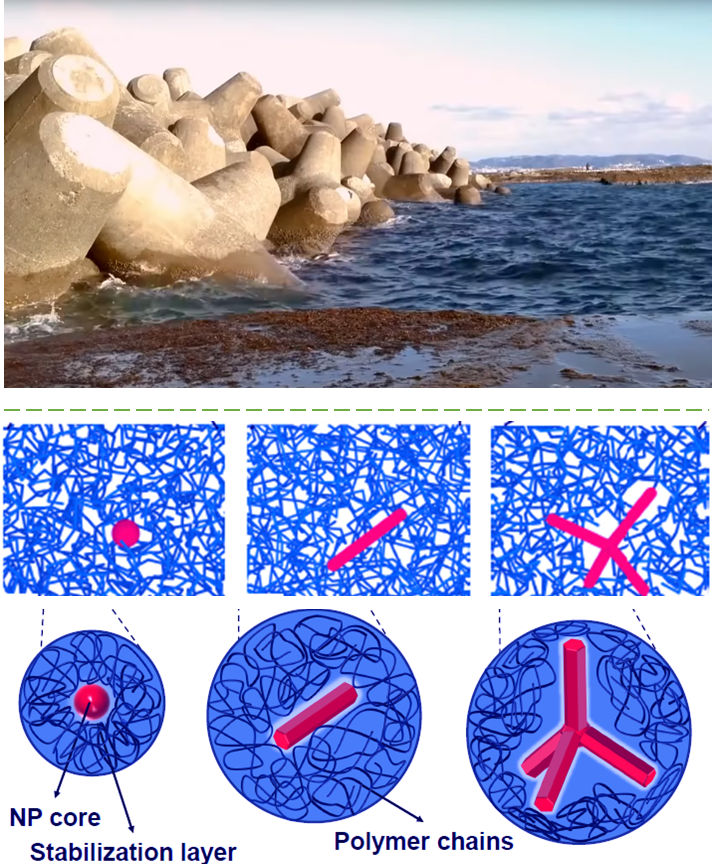
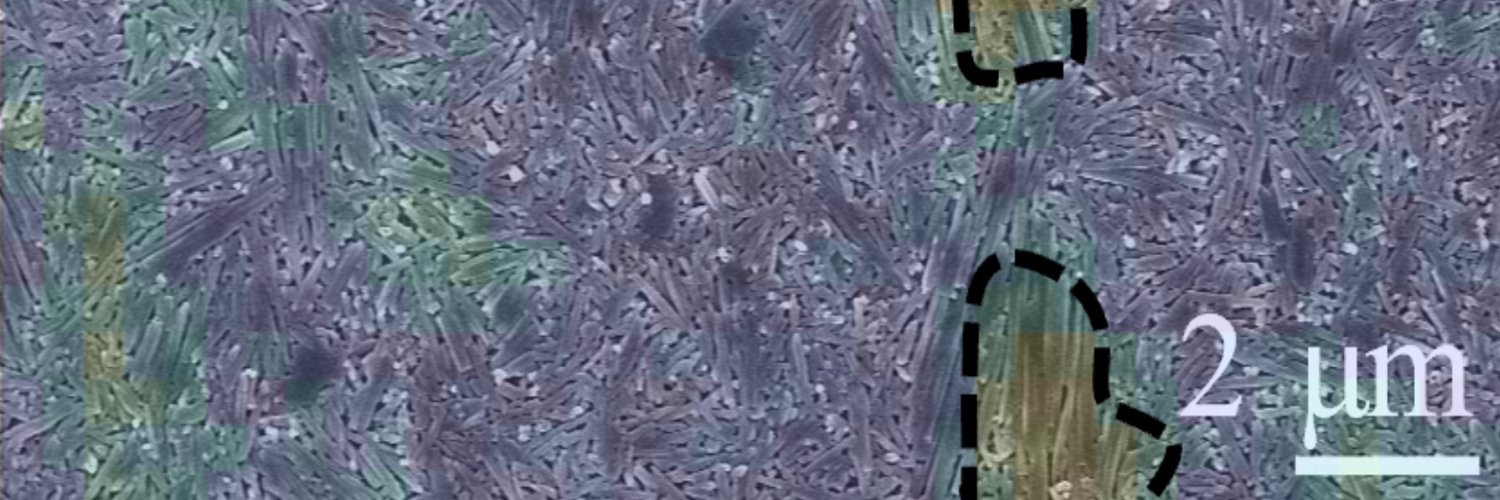
Preprint alert 📣! We provide an experimental protocol to align clay nanotubes over the entire dried deposit in spite of huge size-polydispersity. Experiments by my postdoc Arun. In collaboration with @PrasherM. Supported by @iitbombay @IndiaDST arxiv.org/html/2505.0371…


A female falcon was equipped with a GPS tracker during her journey from South Africa to Finland. She covered approximately 230 km per day, flying in a straight line across African lands until she reached the desert in the north. She then followed the path of the Nile River over Sudan and Egypt, avoiding flying over the Mediterranean Sea. Instead, she crossed over Syria and Lebanon, also steering clear of the Black Sea—because if she got thirsty, she wouldn’t be able to drink from it. She continued in a straight line and reached Finland after 42 days. More details/photos: beautyofplanet.com/incredible-jou…

CRSI is pleased to announce the names of 2026 medallists, award winners and endowment lecturers. Congratulations!!! Emails will be sent individually by the CRSI office in about 2 weeks.