
Sabitlenmiş Tweet
Allan
345 posts



@karrisaarinen So, the models are brilliant and growing even more so but it’s… product thinking… that will stump them?
English
The obvious path for designers in the AI age is to move closer to code.
But the more valuable path may be upstream: closer to the customer, the business, and the problem.
If everyone can prompt agents to code, the scarce skill becomes knowing why, what, and how to build.
English

I think at some rate product designers lost the plot. We were meant to be inventors, thinkers, and a bridge between humans and the message or invention.
We aren’t meant to merely declutter, simplify, or make things pretty.
Designers are meant to make the very thing humans will be working with, in every imaginable way possible.
We are not rectangle builders, we are not pixel pushers, we are inventors and builders pushing to communicate to humans or let humans communicate to our inventions.
joshpuckett@joshpuckett
I think this is worth some nuance. In recent history, many companies have employed 'product designers' whose primary activity and output has been the creation of software interface facsimiles, e.g. mockups in a drawing tool like Figma. Those making mockups have of course been doing more than just that, to varying extents leading or more commonly participating in the process of deciding what to build and why. But there was value in that tangible output itself. I think @gokulr is directionally correct that the role of someone whose primary output is the creating of an interface mockup is quickly disappearing. But the role of someone who figures out what needs to exist, why, how it should work, how it should should be positioned, differentiated and made memorable has never been more in demand. I speak with founders on a near weekly basis (many of them in Gokul's own portfolio) desperate for this kind of person. His conclusions though I agree with almost entirely: there will always be an opportunity to specialize in the creation of visual interfaces, but more broadly most product designers who want to be employees (totally fine) should take on more responsibilities that have historically been done by PMs or Engineers, to varying degrees. From my POV, this is just what a product designer is and what we should have been doing the whole time, but that's another post.
English
@tylerangert @parkerhendo Sir we are making software conscious and all powerful
English

Technologists used to create things like UNIX and the GUI. Today the average NYU computer science grad still thinks that making a sticky note canvas app with jiggly css effects is the height of software creativity
lucas gelfond@gucaslelfond
we must end the quirk chungus terrible creative technology project industrial complex (i’m in the @clereviewbooks today about the arts collaborations at Bell Labs and RAND in the 70s!)
English

Allan retweetledi

You can build interactive applications with gpt-realtime-1.5, so users can control app state more naturally with voice.
Hi Chappy 👋
English
I see many other roles die before design does.
Anyone who makes anything meaningful should never outsource design unless it’s very ephemeral, standalone (brand visual, campaign websites) or contained.
There is even a path where there is just design and software architects (feel and function), and all the other roles disappear.
English

DESIGN: THE FIRST AI CASUALTY
I'm increasingly sure that 2026 signals the end of product design as a full-fledged stand-alone function within companies. If so, it will be the first role / function to be eliminated by AI on a go-forward basis.
Instead of hiring FT designers, startups are hiring / will hire design consultants to create a design system that the founder likes (this takes a few weeks max). Once the design system is finalized, PM/Eng feed it into their AI tool of choice to generate prototypes. The design system is refreshed annually by the same consultant.
Larger companies will likely not backfill design roles and will do some targeted attrition to reduce the design department to 20% the size it is today.
If you're a designer, I think you have two choices:
1. Become an entrepreneur: Start a design agency and become the go-to resource for design systems for startups and even larger companies. This can be a good recurring revenue business.
2. Become a builder: Add PM/Eng responsibilities to become a product builder.
Would suggest you embrace this proactively vs waiting for the other shoe to drop.
I'm really sorry about this - some of my best friends and the people I admire most and have learnt the most from are designers - but it seems inevitable.
English
@Christojt @bryan_johnson The brain bugs have absolutely dogshit taste in coffee
English
@bryan_johnson Dude this study was done on Nescafé instant coffee.
English

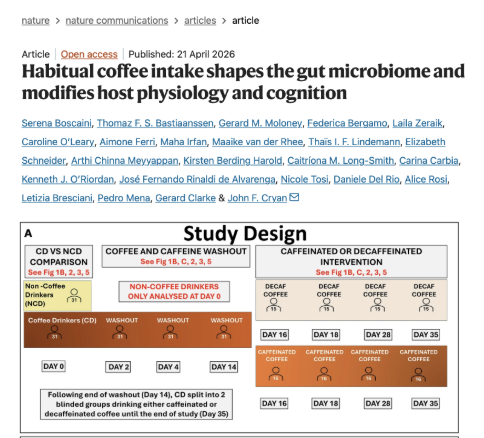
Surprising new findings about coffee: you are drinking coffee for the gut bugs that run your brain.
> coffee affects the gut which then affects your brain
> it's the coffee bean, not the caffeine, doing most of the work
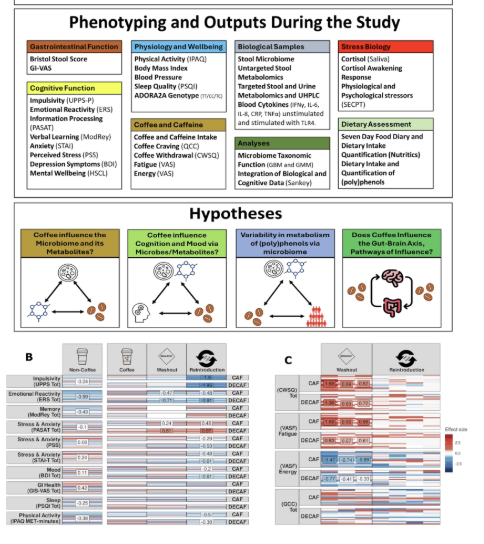
> polyphenols feed gut microbes, microbes send chemical messages, brain responds
> both coffees lowered inflammation, caffeine drove it further down (IL6, IL10)
> decaf raised systemic inflammation markers (hs-CRP, TNF-alpha)
> decaf uniquely fed the protective gut microbes
> caffeine blocked those gains by pushing food through too fast for the Clostridia bacteria to finish their work
> at baseline, coffee drinkers sat in the bottom 25 to 30 percent for protective gut metabolites compared to non-drinkers
> coffee lifted mood, cut depression and stress
> caffeine specifically lowered anxiety.
> the stress hormone story people tell about coffee does not hold up, cortisol did not budge
Study details:
62 people, 14-day coffee washout, then 21 days randomized double-blind to caffeinated or decaf. They measured gut bacteria, stool and urine chemistry, cognition, mood, blood inflammation, and cortisol.
What to do
Caffeinated in the morning for focus and lower anxiety. Decaf in the evening for memory and gut. One cup 6 hours before bed still acts like half a cup at bedtime. Less is better than more either way.
The takeaway
You are drinking coffee for the bugs that run your brain.
English


@webflow @leinwand @yenkel @evaferreira92 @marianabeldi You guys dodged a bullet there, I had a good reply locked and loaded.
English

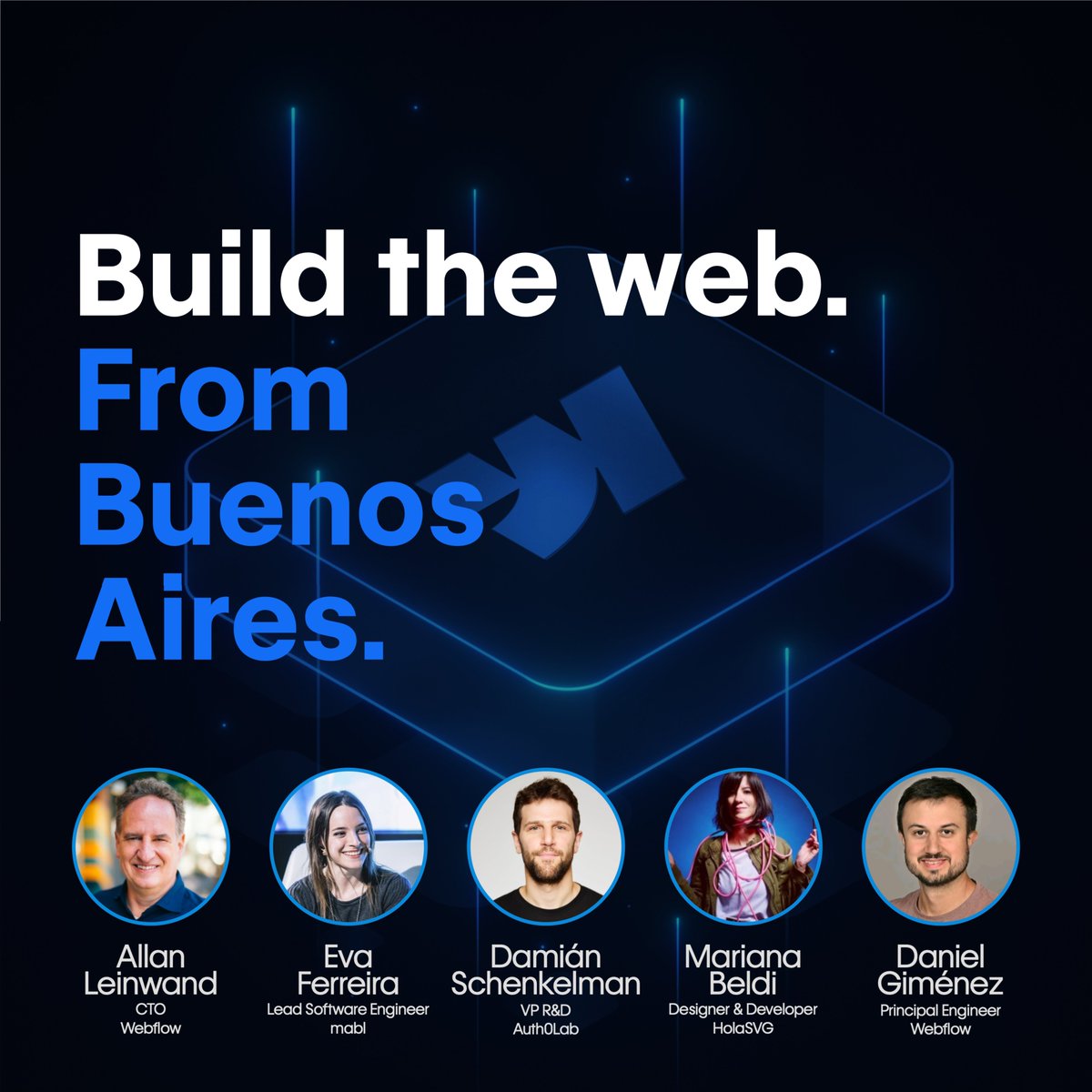
Our first tech talk in Buenos Aires is happening April 23.
Our CTO @leinwand keynotes on agentic AI at Webflow, followed by a panel with @yenkel, @evaferreira92, @marianabeldi, and Daniel Gimenez.
Spots are limited → luma.com/wbfnvu46
English

Ok ok we’ve had our fun now but the ASCII and halftone effects have to stop.
English
@johnpalmer Mine is a SUV sized robot dog that you can sit on top of and it’ll ride you around town and stuff.
English

my billion dollar hardware idea is a NEO robot but it’s six inches tall and just hangs out on your desk
English