The Alpha Investor

393 posts

The Alpha Investor

The Alpha Investor

@AlphaInvestors

Independent investor focused on finding bargains using Fundamental Analysis, a la Graham/Buffet value analysis and GARP. Buy/Sell made using Technical Analysis.

Katılım Eylül 2013
1K Takip Edilen171 Takipçiler
The Alpha Investor
The Alpha Investor@AlphaInvestors·
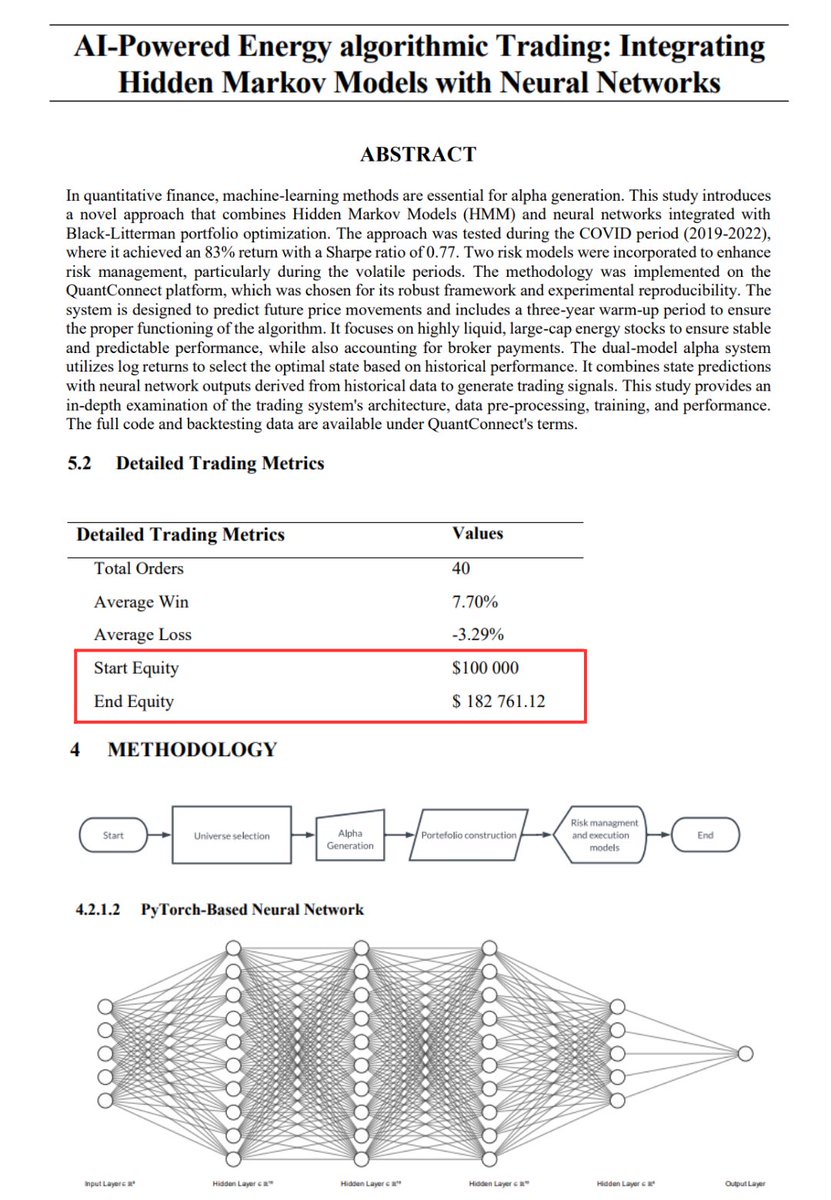
@RohOnChain I agree that this underperforms the benchmark, AND it is much more volatile. However, I do like seeing papers like this. “We did some research, it did not meet our goals, it still has potential, here is the paper.”
English
0
0
0
102
Roan
Roan@RohOnChain·
A researcher turned $100,000 into $182,761 with an 83% return using Neural Networks & Hidden Markov Models on real markets. And published the exact framework for free. Bookmark this & study it, then read the complete breakdown in the article below before someone takes it down.
Roan tweet media
Roan@RohOnChain

x.com/i/article/2048…

English
32
158
1.1K
135.4K
Josh
Josh@JoshTradeOption·
Lesson 6: Sometimes taking a loss is better than rolling
English
1
0
6
679
Josh
Josh@JoshTradeOption·
Things I learned helping hundreds of option sellers. ​I used to think: just collect money and hope. So I wrote down what really works. After helping hundreds, these simple lessons turned guessing into steady monthly income. They separate the winners from the losers. A thread:
English
13
3
31
6.2K
Jason Luongo
Jason Luongo@JasonL_Capital·
@vutruongart You could always set a stop and change the r/r profile….
English
2
0
0
462
Jason Luongo
Jason Luongo@JasonL_Capital·
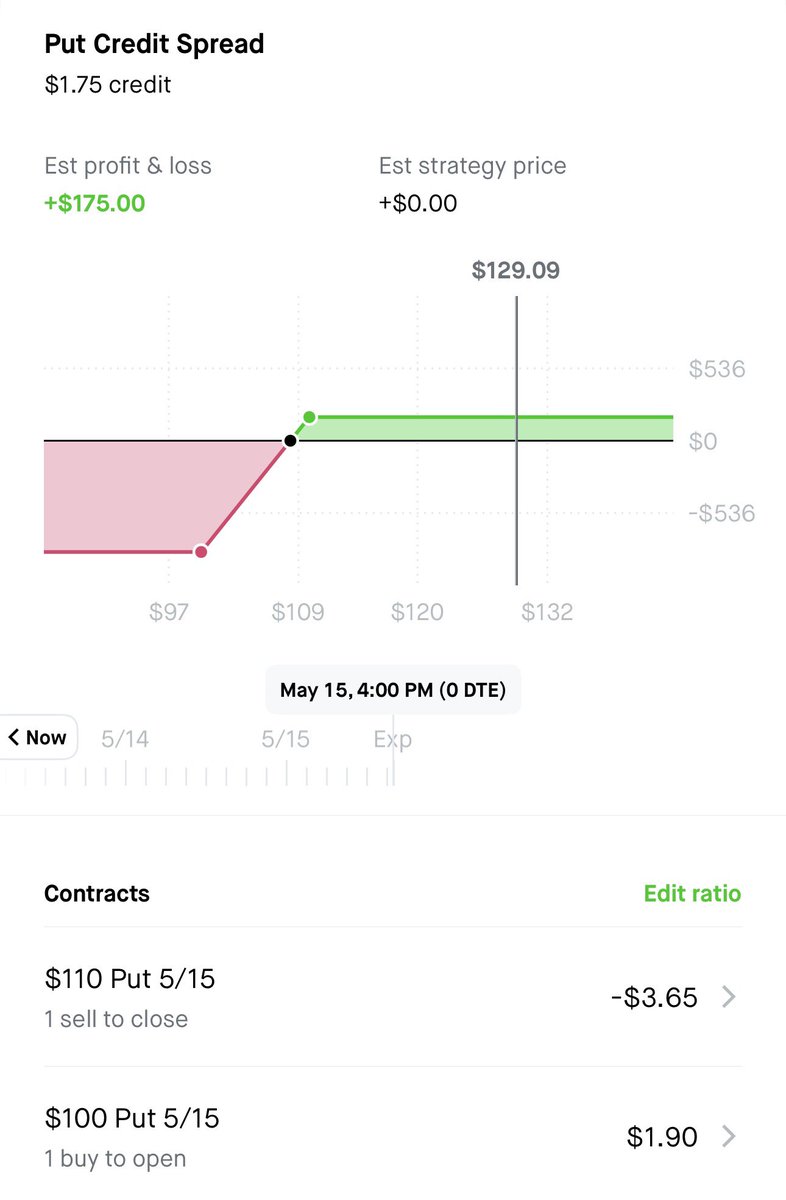
A cash-secured put on $PLTR right now ties up over $12,000. A put credit spread risks $825. Same bet. Here's how it works. You sell a put at a higher strike and buy a put at a lower strike. Same expiration. The difference is your max risk. The credit you collect is your max profit. Real example: $PLTR trading at $129.09. Sell the $110 put 5/15. Buy the $100 put 5/15. Collect $1.75 credit. Max profit: $175 (the credit) Max risk: $825 (spread width minus credit) Breakeven: $108.25 Stock stays above $110 by May 15? You keep the full $175. You're still selling premium. You're still using probability. You just need less money to do it. The tradeoff: your profit is capped and you can't roll as easily as a CSP. But if you're working with a smaller account, this gets you in the game.
Jason Luongo tweet media
English
23
25
247
31.7K
Bourbon Capital
Bourbon Capital@BourbonCap·
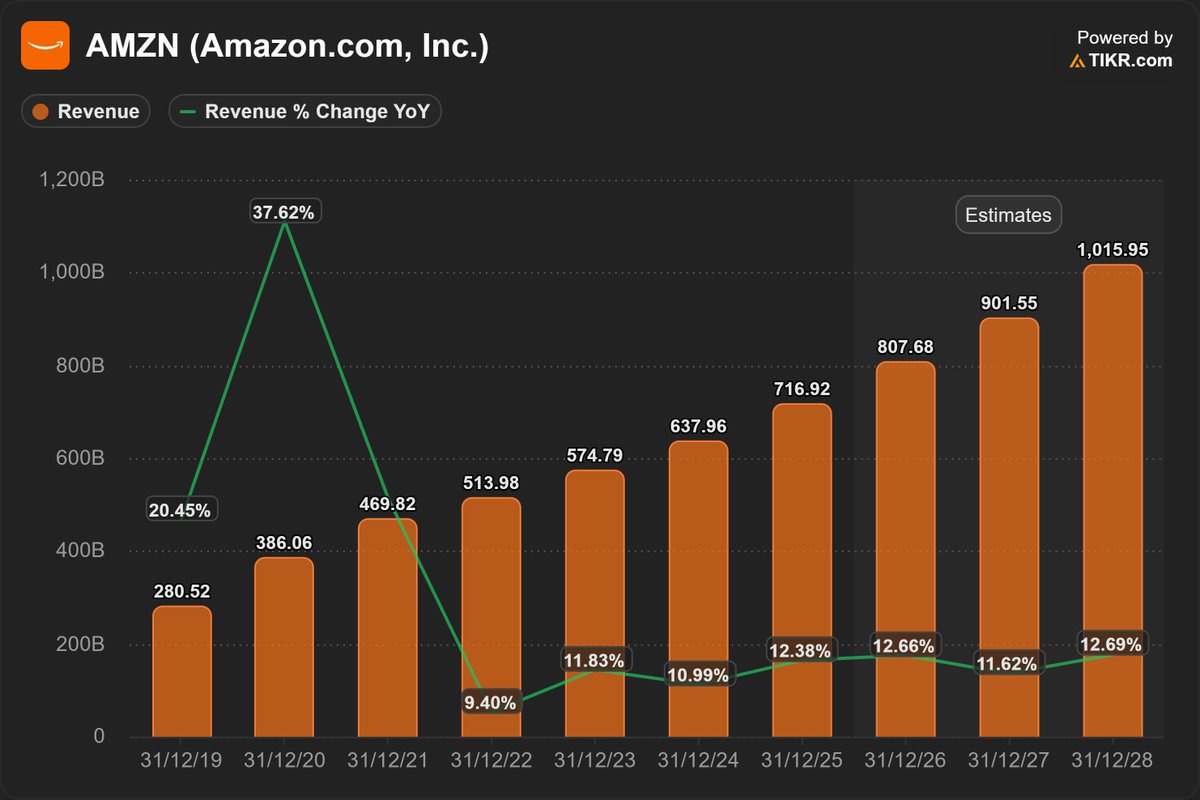
8 Undervalued stocks to buy and hold in the next decade 1. $AMZN - Amazon Amazon’s global fulfillment and last-mile logistics network represent one of the most formidable competitive advantages in modern commerce. Decades of infrastructure investment have created a moat that supports fast delivery, low unit costs, and unmatched scale. AWS remains the backbone of global cloud computing, operating at an annual revenue run rate of approximately $142 billion. It offers one of the broadest sets of cloud capabilities, security features, and enterprise integrations available. More than 90% of AWS top customers use Graviton processors, which deliver up to 40% better price-performance. Amazon Bedrock has reached multi-billion-dollar ARR with rapid adoption, while Trainium2 chips are ramping faster than any previous AWS silicon, offering 30–40% better price-performance than traditional GPUs. Amazon’s 250+ million Prime members globally create recurring revenue, high retention, and powerful cross-selling leverage across retail, media, and services. The company is also expanding in grocery and quick commerce. Grocery delivery now covers more than 1,000 U.S. cities with a target of 2,300 locations, while Amazon Now is driving higher shopping frequency in India and gaining traction in Western markets. Advertising has become another major profit driver. Prime Video ads reach approximately 315 million viewers across 16 countries, and AI-powered tools are improving advertiser returns and campaign efficiency. Despite its stock price having been flat over the past year, Amazon is expected to reach $1 trillion in revenue by 2028 while delivering more than 10% YoY revenue growth.
Bourbon Capital tweet media
English
18
79
664
220.9K
The Alpha Investor
The Alpha Investor@AlphaInvestors·
@JasonL_Capital Many of these are fantastic advice. A couple are conflicting. RSI oversold on multiple timeframes all but guarantees IV not being low.
English
0
0
0
45
Jason Luongo
Jason Luongo@JasonL_Capital·
10 rules for profitable LEAP trades: 1. Only buy on stocks you'd own for years 2. Wait for RSI oversold on multiple timeframes 3. Buy when IV is low 4. Enter at meaningful support levels 5. 360+ days to expiration minimum 6. Cheap premium doesn't mean good deal 7. Tight spreads or skip the trade 8. Size it so you can lose it all and be fine 9. Exit plan before 60 DTE 10. A handful per year max Comment "LEAP" and I'll send you my free cheat sheet.
Jason Luongo tweet media
English
214
37
355
39.5K
InvestIQ
InvestIQ@GetInvestIQ·
@Investingcom $MU – HBM sold out 2026, AI memory supercycle torque. Still early vs hype names. Yours? 🚀
English
1
0
2
444
Investing.com
Investing.com@Investingcom·
⚠️IF YOU HAD TO BUY AND HOLD JUST ONE STOCK FOR THE REST OF THE YEAR, WHAT WOULD IT BE? $SPY $QQQ
Investing.com tweet media
English
68
9
72
25.6K
The Alpha Investor
The Alpha Investor@AlphaInvestors·
@jgreyfriend Druckenmiller used RI (real intelligence) which is a) rare, b) cannot be replaced by AI
English
0
0
0
241
Grey
Grey@jgreyfriend·
In 2021, Stanley Druckenmiller explained how he compounded at 30% for 30 years straight. He broke down why: - Winning isn’t about being right - Markets reward puzzle-solvers - Entitlements threaten youth 12 lessons from Druckenmiller on markets, risk and the future of America:
English
38
406
2.2K
245.2K
The Alpha Investor
The Alpha Investor@AlphaInvestors·
@Guy45Justa @HertzyTrades If you think you need a stop loss when trading options you don’t understand them very well. If you want protection sell a Put Credit Spread instead of a cash secured put. That way your risk is defined.
English
0
0
0
3
WFman01
WFman01@Guy45Justa·
@HertzyTrades What would be your stop loss and take profit?
English
2
0
2
234
hertzy
hertzy@HertzyTrades·
Most traders overcomplicate options. The cheat code is simple: Sell 30–45 DTE Target 0.15–0.25 delta Stick with quality tickers Do this weekly and your edge compounds.
English
26
14
238
26.6K
Writser
Writser@thewritser·
Got quite a few new followers from a recommendation by @InvestSpecial . Thanks! To all my those followers: prepare to be disappointed. I hardly tweet.
English
2
0
12
1.3K
Generals & Workouts
Generals & Workouts@gw_investing·
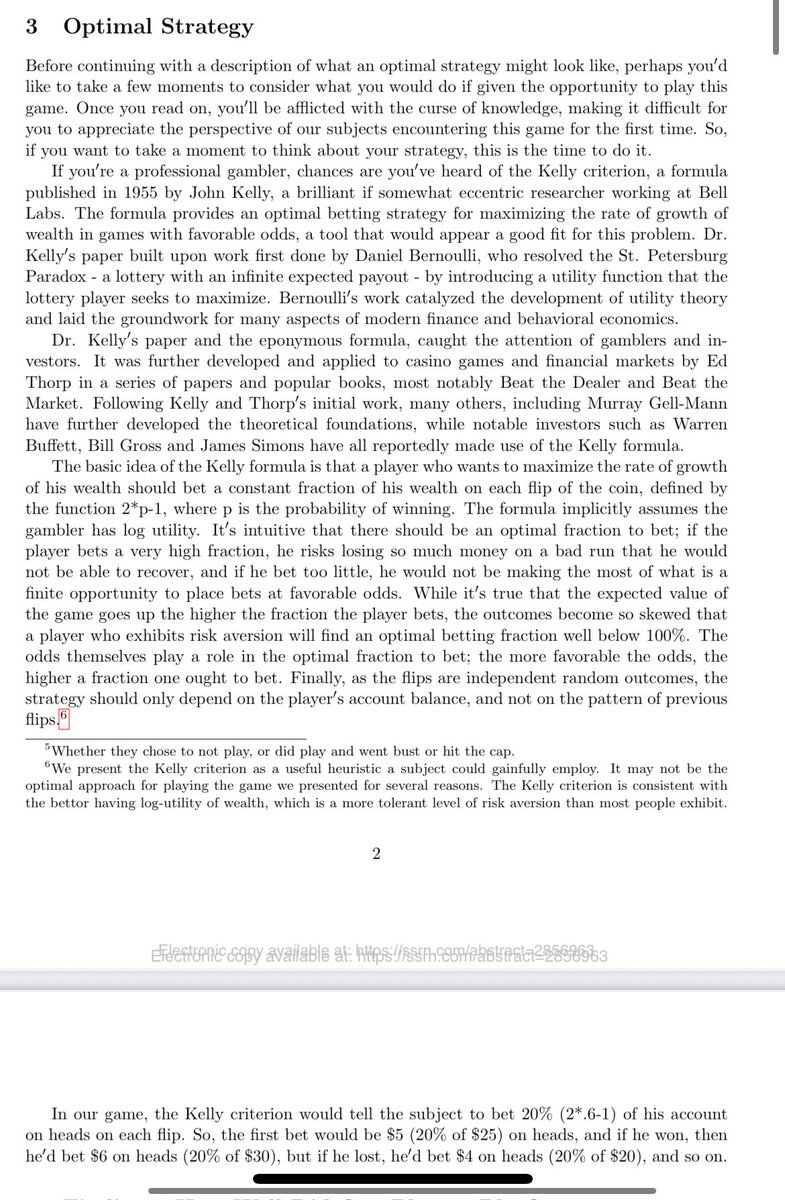
Here is the discussion on betting strategy from @ElmWealth’s paper. The Kelly Criterion suggests betting 20% of your bankroll on each flip (full Kelly), but many gamblers would take a fraction of that to reduce volatility, e.g. half Kelly (10% each flip)
Generals & Workouts tweet media
English
1
1
4
2.5K
Generals & Workouts
Generals & Workouts@gw_investing·
Assume you are given $25 and are able to bet on a coin flip with a 60% chance of landing on heads. You double your bet each successful flip. You have 30 minutes (time for ~300 flips) and can bet any way you want. How much would you bet? (And no cheating by AI/Google)
English
9
1
16
12K
LEAPTRADER
LEAPTRADER@LEAPTRADER_·
If you had to bet on one of these stocks for 2026, which would it be? 🟢 $AMZN at $240 🟢 $AVGO at $325 🟢 $BMNR at $28 🟢 $GOOGL at $335 🟢 $HOOD at $108 🟢 $IREN at $53 🟢 $META at $671 🟢 $MU at $390 🟢 $NBIS at $94 🟢 $NFLX at $86 🟢 $NVDA at $187 🟢 $OSCR at $16 🟢 $PATH at $15 🟢 $PLTR at $169 🟢 $RKLB at $83 🟢 $SOFI at $26 🟢 $TSLA at $440 🟢 $ZETA at $21
LEAPTRADER tweet media
English
44
14
110
38.2K
The Alpha Investor
The Alpha Investor@AlphaInvestors·
@KrisAbdelmessih My order of learning Greeks was different because I am primarily an option seller. I learned Theta after Delta, then the non- Greek, Implied Volatility before Gamma.
English
0
0
1
440
Matt Giannino
Matt Giannino@MarketMovesMatt·
6 steps to buy LEAP options that actually make money: Step 1: Only buy 3 times per year (patience is key) Step 2: Wait for RSI under 30 (the "uber smart" zone) Step 3: Choose 360+ DTE (time is your friend) Step 4: Go 10% OTM (maximize leverage) Step 5: Sell half at 100% gain (take initial capital out) Step 6: Let half run until 60 days left (ride the trend) This system: • Tesla: 300% gain • MSTR: 400% gain • Pepsi: 100% gain in 2 weeks Quality over quantity. Always.
English
29
66
578
56.8K
The Alpha Investor
The Alpha Investor@AlphaInvestors·
@JoshTradeOption I also diversify like you. Across sectors, specific stocks, and also strike sets and expirations. Just as an example, I had 78 options for Fridays expiration across a dozen symbols.
English
0
0
0
18
The Alpha Investor
The Alpha Investor@AlphaInvestors·
@JoshTradeOption I sell put credit spreads instead, which gives me another level of protection. That allows me to target 35 delta for the short strike and 45ish days to expiration.
English
2
0
1
110
Josh
Josh@JoshTradeOption·
I typed up my strategy on selling cash secured puts and covered calls. I follow this guide daily. Josh’s Key Entry Rules for Selling Puts (Cash-Secured): Only sell puts on days when the underlying stock is down (red/close lower than open or previous close). Only sell puts on stocks I would genuinely be happy to own long-term if assigned at the chosen strike price (strong fundamentals, good balance sheet, sector I believe in). Target a delta range of -0.16 to -0.23 (approximately 16–23 delta). This keeps the position roughly 77–84% out-of-the-money probability at entry—far enough to offer a solid edge while still collecting meaningful premium. I avoid anything higher (closer to ATM) to reduce the frequency of being tested. Aim for 14–30 days to expiration (DTE). This sweet spot balances rapid theta decay with manageable gamma risk and gives time for the position to work. Choose a strike price that sits below at least two clear levels of support visible on the monthly chart (e.g., prior swing lows, moving averages, trendlines, or round numbers). This adds an extra layer of technical protection against immediate downside breaches. Additional Portfolio & Position Management Rules: Keep position sizes small (typically 1–5 contracts per trade) and spread across multiple uncorrelated sectors (e.g., tech, healthcare, consumer staples, energy). Diversification helps ensure that if one sector experiences a sharp drawdown, others may remain stable or even benefit. For covered calls (when assigned shares from a put): Only sell them on green/up days to capture better premiums when momentum is positive and the stock is elevated. Exit & Risk Management Rules: Close (buy to close) both puts and covered calls when 50–70% of maximum profit has been realized. This locks in gains early, reduces exposure to late adverse moves, and frees up capital for new trades. Always close or roll out positions well before earnings announcements to avoid unpredictable volatility spikes and gap risk. Exit (or aggressively manage) positions ahead of major sector-specific catalysts or high-volatility events (e.g., Fed announcements impacting financials, regulatory news in biotech, or commodity shocks in energy). By consistently applying these filters and rules—emphasizing high-probability setups, technical confluence, diversification, and disciplined profit-taking—I have found that my overall options trades end profitably more than 90% of the time over an extended sample of trades. If you found this helpful, give me a follow!
English
21
33
318
23.6K