Alpha Talkz

23 posts

Alpha Talkz

Alpha Talkz

@AlphaTalkz

https://t.co/QGin76bNIE

Katılım Kasım 2021
9 Takip Edilen145 Takipçiler
Alpha Talkz
Alpha Talkz@AlphaTalkz·
@WesleyLHuff Wes Huff’s claim that the Jewish canon neatly lines up with the Protestant Old Testament sounds tidy but it only works if you read Jewish history backwards through a Protestant lens. That is the bias. there was no single fixed Jewish canon at the time Christianity emerged.
English
0
0
0
84
Wes Huff
Wes Huff@WesleyLHuff·
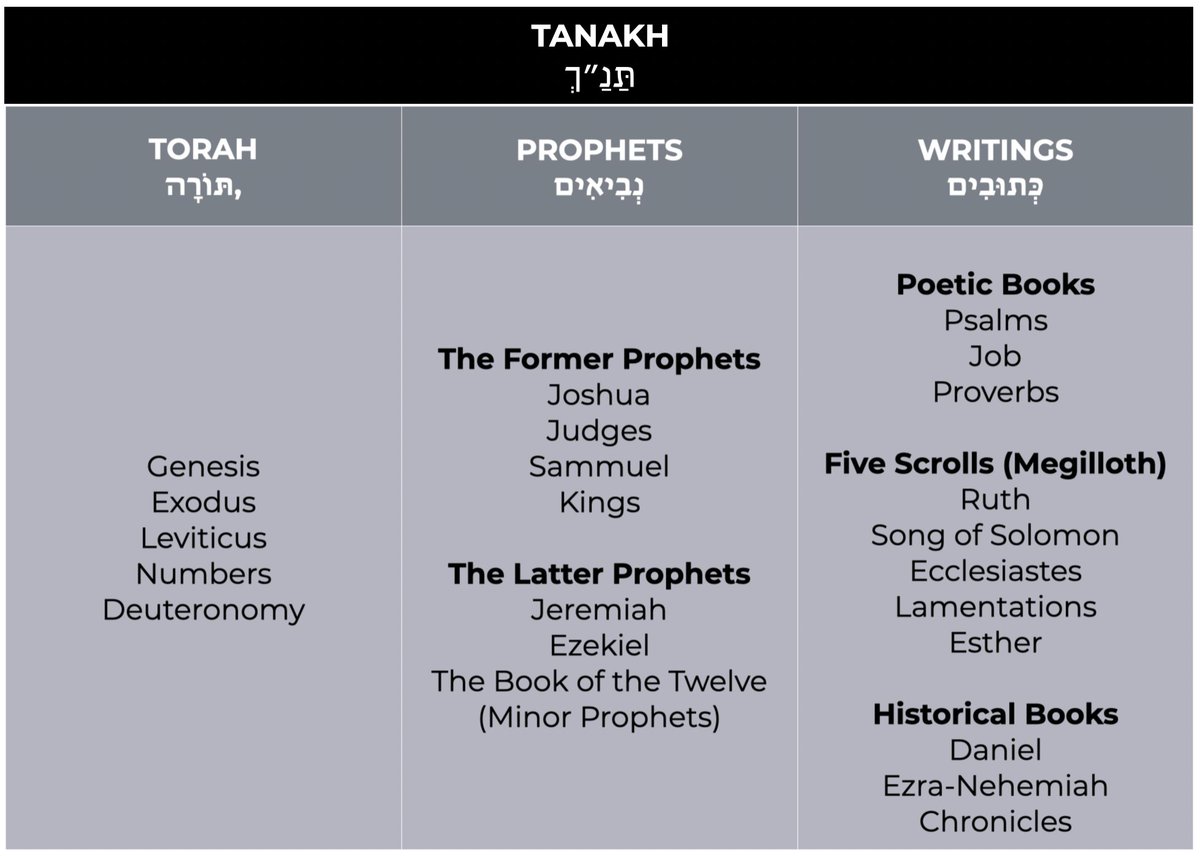
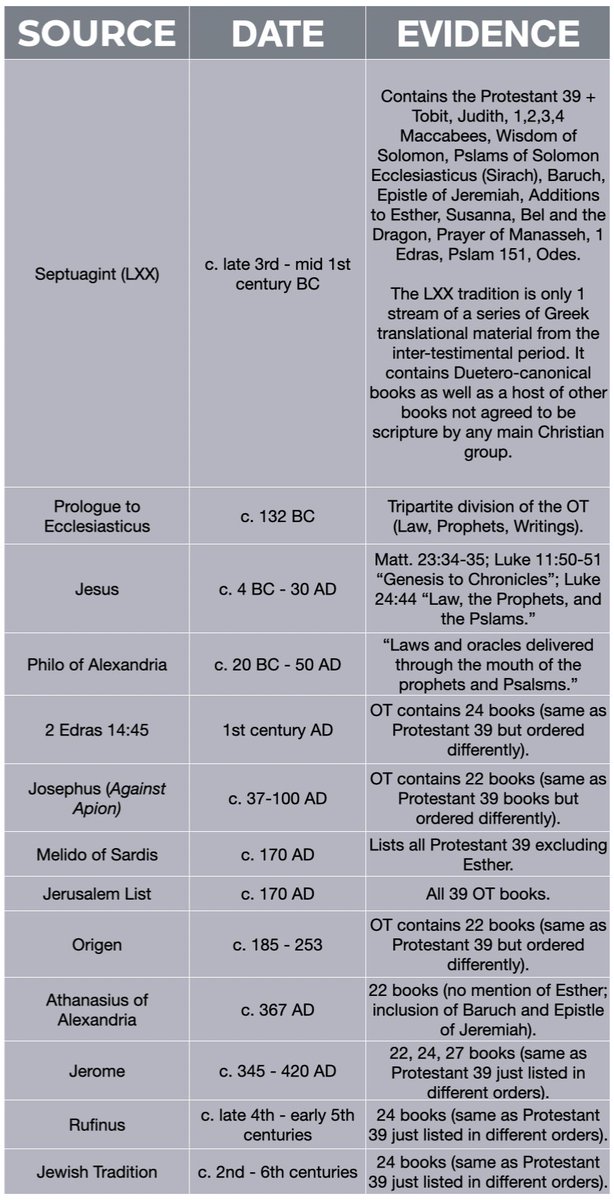
Some further content and context on early canon lists that align and/or approximate a 39 book OT canon and where that comes from. Just a reminder that ancient Jewish lists match the modern Protestant 39 book canon but list the order differently. The traditional Jewish count of 24 books emerges when Samuel, Kings, Ezra-Nehemiah, and Chronicles are recognized as originally single works, and the Minor Prophets are counted as one book, yielding the Law (5), Former Prophets (4), Latter Prophets (4), and Writings (11). Josephus, who explicitly limits the books to 22, organized as the Law (5), Prophets (13), Hymns and moral pieces (4). Josephus likely grouped historical writings with the Prophets and treated Ruth and Lamentations as appendices to Judges and Jeremiah respectively. Both the 22 book and 24 book traditions were inherited by the Christian church, though the 22 book count predominated, especially in the East. Some lists expanded the 22 books to 27 by separating the “double books” into individual parts, while others raised the count to 34 by similarly dividing the Minor Prophets. We see 22,24, and 27 referenced by Jerome in his lists, all referring to the same (39) books but in a different order. The OT discussion was quite active leading up to the Protestant Reformation. Pope Gregory the Great made his argument against apocryphal books in Moralia in Jobum, Book 19, Chapter 17, where he introduced testimony from 1 Maccabees with a preliminary explanation stating: “Concerning this matter (namely, being wary of pride), we are not acting out of order if we apply testimony out of books that, though not canonical, nevertheless have been published for the edification of the people.” Cardinal Ximenes's position in the Complutensian Polyglot preface (the first printed Greek New Testament completed in 1517) stated that apocryphal books “are outside of the Canon, and are received by the Church as useful reading, not as authoritative for doctrine.” Even Cardinal Cajitan, who interrogated Luther in 1518 for heresy, aligned himself with Jerome’s preference for the smaller Hebrew canon of the Old Testament. In his dedication to Pope Clement VII accompanying his treatise on the historical books of the OT, he declared this distinction to be an established principle of the church. What makes Cajetan’s stance particularly significant is that the Roman church took no formal action against such views until after his death in 1534. The nuanced positions of those like Pope Gregory, Ximenes, and Cajitan allowed the Church to benefit from these texts without granting them the same authority as the biblical canon, a distinction that remained operative until the Council of Trent formally altered the Church’s official stance on the matter.
Wes Huff tweet mediaWes Huff tweet media
Wes Huff@WesleyLHuff

Today’s #manuscriptmonday is the Crosby-Schøyen Codex which contains a letter of Melito of Sardis, a Christian author in the 2nd century. Melito wrote out a list of Old Testament books he considered scripture that aligns quite closely with the Protestant Old Testament. Melito’s list from around 170 AD included all Old Testament books except possibly Esther, whereas the standard Protestant Old Testament contains thirty-nine books. Since Melito excluded Esther, his collection would have contained approximately thirty-eight books—only one fewer than the Protestant canon. Along with the lack of Esther Melito inverted the order of Numbers and Leviticus compared to traditional Jewish arrangement, suggesting he may have reorganized material based on his own theological priorities. Despite these variations, Melito’s fundamental agreement with the Protestant canon on which books belong to Scripture demonstrates remarkable early Christian consensus. A Jerusalem list from the same period (c. 170) included all thirty-nine Old Testament books, suggesting that by the late 2nd century, the core content of the Protestant Old Testament was already widely recognized as authoritative, even if questions about Esther and organizational schemes remained unsettled.

English
98
73
687
109.9K
Alpha Talkz
Alpha Talkz@AlphaTalkz·
@WhiteVoltt Yes very soon I have been very busy with my new management Job.
English
0
0
2
34
Raiden
Raiden@WhiteVoltt·
@AlphaTalkz Are you still making videos on YouTube? If so when’s the next one?
English
1
0
0
34
Alpha Talkz
Alpha Talkz@AlphaTalkz·
@Seaotter369 Thank you for the share I'm rarely on Twitter. But thank you
English
1
0
1
21