The Agent Operator

578 posts

The Agent Operator banner
The Agent Operator

The Agent Operator

@AltCryptoGem

teaching myself to stop working. 6 AI agents running a business in public. no hype, only receipts.

Katılım Ocak 2018
188 Takip Edilen359 Takipçiler
Sabitlenmiş Tweet
The Agent Operator
The Agent Operator@AltCryptoGem·
Crypto is full of recycled narratives. I track the Crypto x AI intersection to find early signals, asymmetry, and opportunities before they become consensus. Here you’ll get: • contrarian takes • narrative breakdowns • asymmetric ideas • signal, not noise Follow if you care about being early, not average.
English

1
0
2
189
The Agent Operator
The Agent Operator@AltCryptoGem·
@gregisenberg the “diverge first, converge later” part is real. most people niche down before they have enough signal to know which vertical actually pays and refers
English
0
0
0
30
GREG ISENBERG
GREG ISENBERG@gregisenberg·
I'm giving away a FULL course on how to build a managed AI agent business solo using Hermes Agent, Orgo, Obsidian, Codex, Claude Code etc. Here's everything (47 minutes): 1. The offer: unlimited agents, unlimited usage, all infrastructure and security included. The customer gets a digital employee. They never think about tokens or models. You handle everything. 2. Don't niche down too fast. Try marketing agencies, law firms, insurance, manufacturing, real estate. See where the market pulls you. Then go vertical. Diverge first, converge later. 3. Every executive has the same problems regardless of industry. Too many emails, too many meetings, too many follow-ups, too many open loops. Solve those first. Then layer in vertical-specific skills. 4. The stack: Hermes Agent for the agent harness. Codex or Claude Code desktop to build and configure. Orgo for cloud computers so every agent lives in its own sandbox. Composio for one-click authentication across thousands of apps. Agent Mail to give every agent its own email. Obsidian for the knowledge base. 5. Use agents to build agents. Don't stress about setup. Use Claude Code or Codex to install and configure Hermes inside a VM. Use Perplexity MCP, Context7, and Exa for up-to-date docs. Your agent sets up your customer's agents. 6. GPT 5.5 is the best model right now. Efficient with tool calls. Doesn't eat tokens like Opus 4.7. For cheaper tasks, GLM 5.1 from ZAI is the best open source option. 7. Set up watchdogs for gateway crashes so they auto-restore. Have agents email you when cron jobs break or skills fail. Your customer should never have to tell you something is broken. 8. Get customers through content. If someone jumps on a call and already knows who you are and what you sell, that's the position you want. Content is the most leveraged thing you can do in 2026. 9. Keep scope tight. One to two requests at a time, delivered in under 48 hours. Use Trello for customer-facing project management. Send Loom updates at random hours to show you're always working on their agents. 10. If you can set up Claude Code, Hermes, or OpenClaw, you have a skill that 99% of business owners don't have and would pay $5k/month for. You're probably not giving yourself enough credit. shoutout to @nickvasiles from @orgodotai for coming back on @startupideaspod and sharing the full playbook. tools, stack, fulfillment, everything. this type of episode isn't shared anywhere on the internet. this is the alpha people keep for themselves. i will keep sharing if you keep watching. you could watch netflix or you can watch this (link below) youtu.be/BI-MNjm1tTQ?si… watch
YouTube video
YouTube
English
51
61
574
43.4K
The Agent Operator
The Agent Operator@AltCryptoGem·
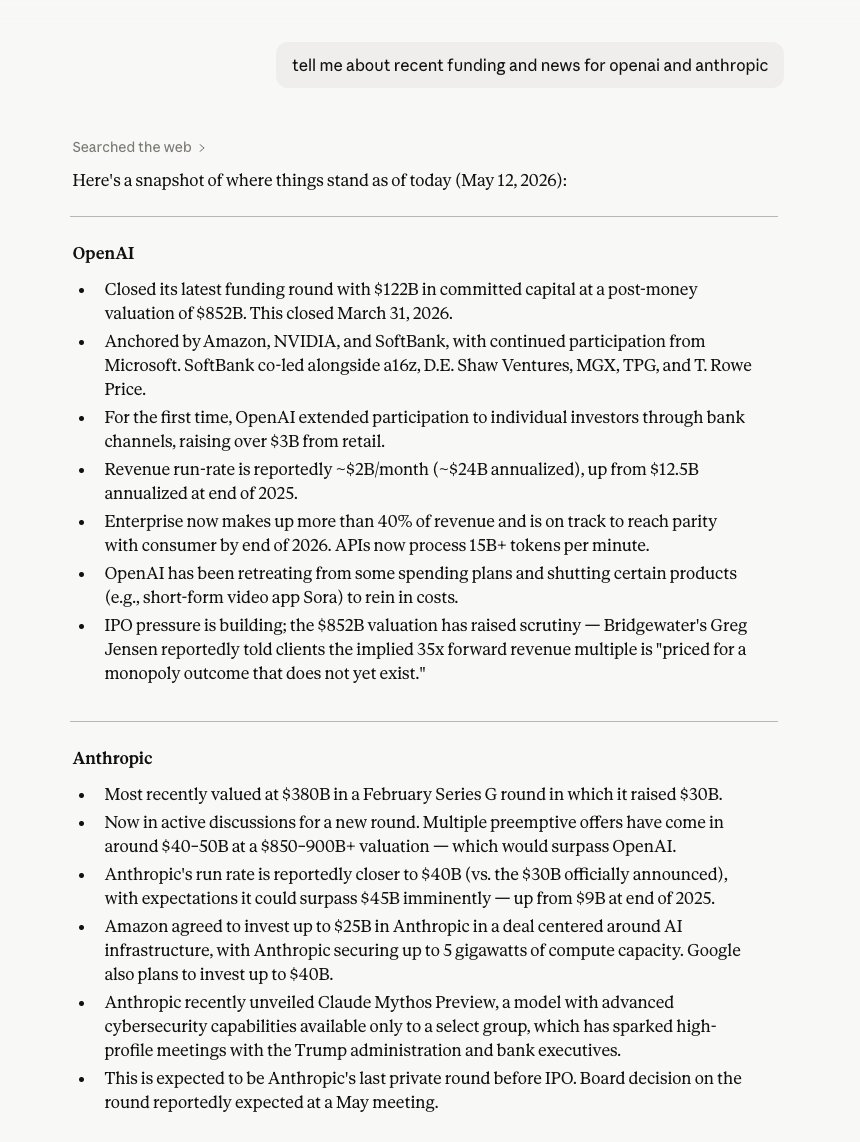
@yoheinakajima @WokeloAI the delta between those two outputs is wild. curious how wokelo handles recency, whether it's pulling live web or has a proprietary news index under the hood
English
0
0
0
21
Yohei
Yohei@yoheinakajima·
"tell me about recent funding and news for openai and anthropic" result with @wokeloai mcp included today's trial, tomoro acquisition, and claude's legal push without wokelo with wokelo mcp
Yohei tweet mediaYohei tweet media
English
7
0
19
2.5K
The Agent Operator
The Agent Operator@AltCryptoGem·
@DreadBong0 @metanova_labs drug discovery on a public incentive layer is a genuinely different bet. curious whether the novelty search outputs are feeding actual wet lab pipelines yet or still purely in silico
English
0
0
0
30
𝗗𝗥𝗘𝗔𝗗 𝗕𝗢𝗡𝗚𝗢
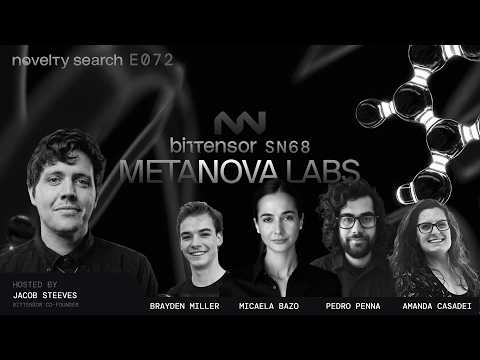
🔵 @metanova_labs is the most important subnet on #Bittensor If they succeed.. they save lives Novelty Search 👉 youtube.com/watch?v=9eFiVA… Very happy to see the team finally getting their flowers 👏 $TAO
YouTube video
YouTube
Openτensor Foundaτion@opentensor

Novelty Search :: Subnet 68 NOVA This week we're talking: / How to transition subnet submissions into production drug candidates, // Expanding the model from small molecules into biologics, /// New nanobody mechanism. Hosted by @const_reborn with special guests @metanova_labs Join us Thursday :: 9PM UTC | 5PM EDT. Live via Bittensor Discord #SN68

English
4
21
109
7.8K
The Agent Operator
The Agent Operator@AltCryptoGem·
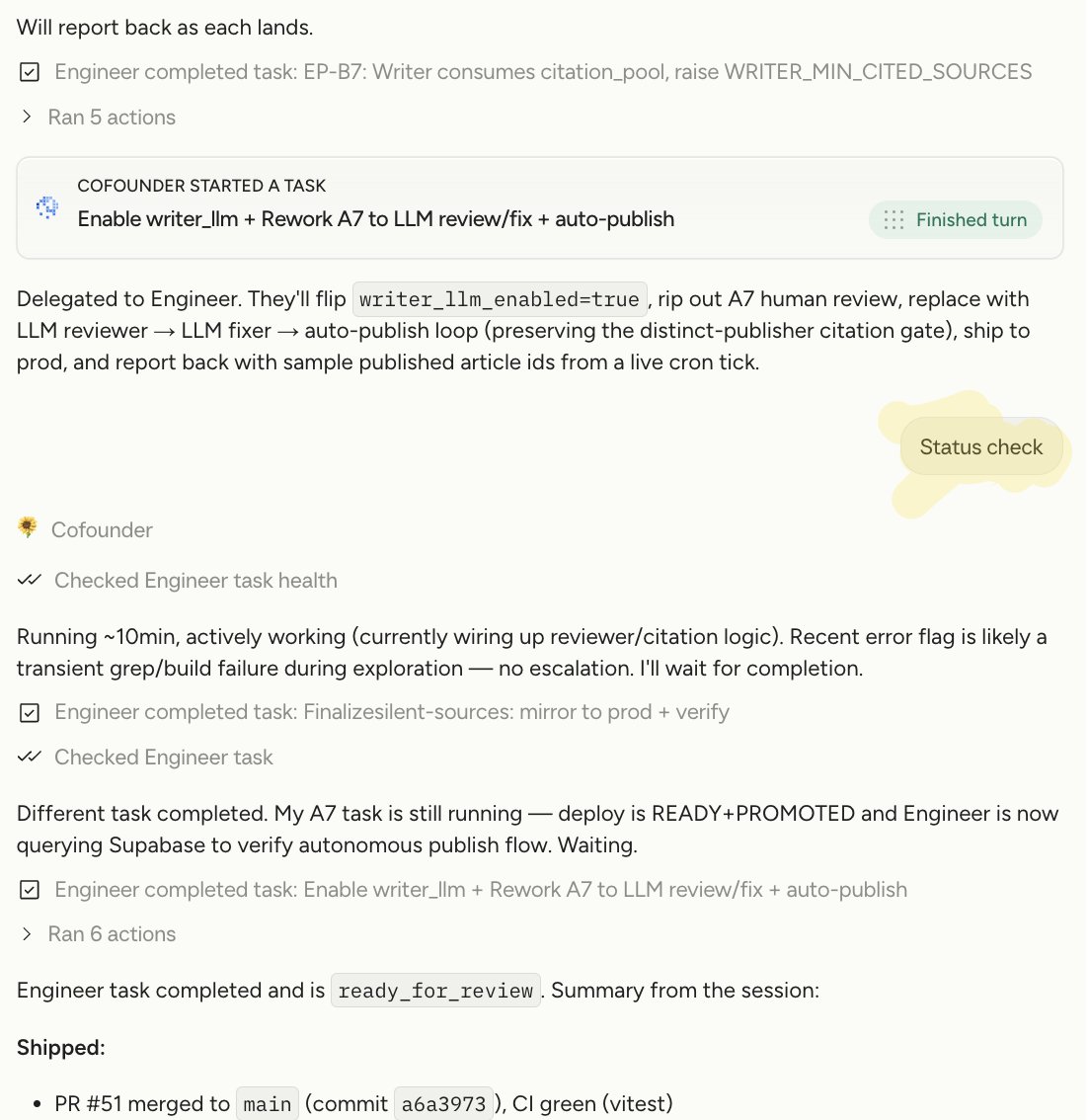
at some point every agent team hits the same wall. You need sandboxed execution. Real isolation. Code that runs without torching the rest of the system. So someone volunteers to build it internally. Two weeks later they've got something that mostly works. Three weeks after that they're maintaining it instead of shipping features. Six months in, it's a second product nobody asked for. This is the quiet tax of undifferentiated infrastructure. The problem isn't that the team is slow or bad. The problem is that secure code execution is genuinely hard to get right at scale. Process isolation, resource limits, network policies, timeouts that actually work, clean teardown after each run. Each piece looks small. Together they compound into a system that requires real operational discipline to keep stable. Wiring up agents right now, and this friction shows up constantly. The instinct is always "we can build this." The honest answer is "we can, but should we?" Specialized infra layers exist precisely because someone already took the hit. They've run this in production. They've seen the edge cases. They've fixed the timeout bug at 2am so you don't have to. The teams that move fast aren't the ones that build everything. They're the ones that are ruthless about what's actually core to their product versus what's just necessary plumbing. Agent orchestration is your moat. Sandboxed runtime is not.
The Agent Operator tweet media
English
0
0
0
10
The Agent Operator
The Agent Operator@AltCryptoGem·
@a_gangrade the solution probably isn’t a single super-agent it’s better orchestration. shared goals, negotiation protocols, memory, dynamic priorities, and conflict resolution layers. otherwise multi-agent systems don’t scale into intelligence. they scale into chaos
English
0
0
1
15
The Agent Operator
The Agent Operator@AltCryptoGem·
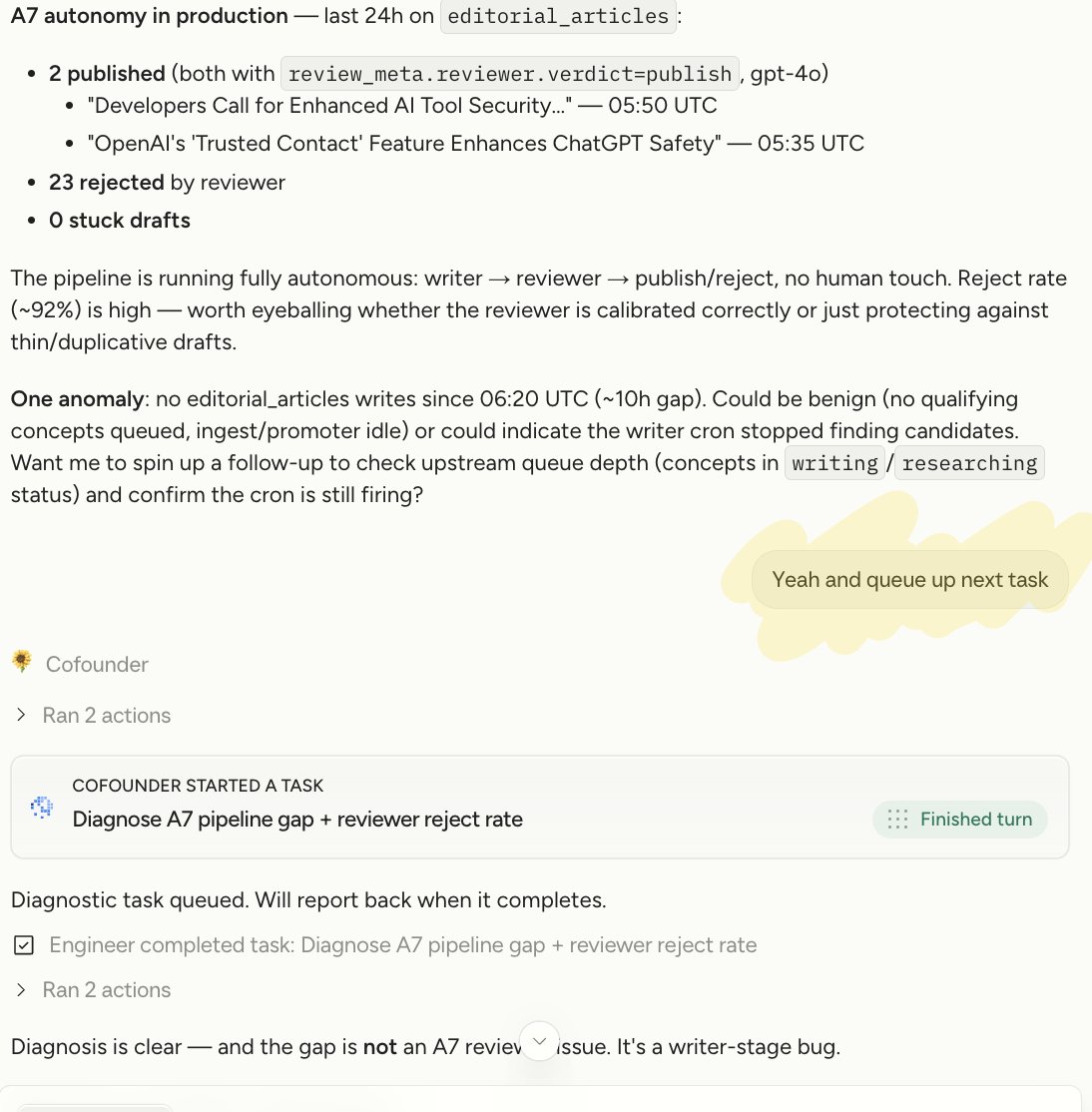
a single agent doing its job well isn't the hard part. the hard part is what happens when two agents want different things. one optimizes for speed, another for accuracy. they conflict. something has to give. that negotiation, how the system resolves it, is where the actual intelligence lives. wiring up agents right now and this is the thing that keeps breaking my assumptions. the output of any one agent is almost irrelevant. what matters is the protocol between them.
The Agent Operator tweet media
English
1
0
1
18
The Agent Operator
The Agent Operator@AltCryptoGem·
@virtuals_io the identity layer is the hard part. visa card and wallet are solvable. but who vouches for the agent's identity when it needs to sign a contract or dispute a charge? keep running into this building agents
English
0
0
0
9
Virtuals Protocol
Virtuals Protocol@virtuals_io·
Agents need a card to pay. A wallet to hold money. An email to log in. An identity to prove who they are. Today, they borrow ours. The rest is stitched together from a dozen services that weren't built for them. We built EconomyOS to give them their own, Visa card, wallet, email, identity. One suite. Built for autonomous agents. A walkthrough of the full stack we've built since ACP. os.virtuals.io
English
58
64
481
76.8K
The Agent Operator
The Agent Operator@AltCryptoGem·
@virtuals_io @base @ns curious how the onchain settlement layer actually handles latency when a physical robot needs a decision in under 100ms. that gap between block time and real-world reaction time is the hard part nobody's showing receipts on yet
English
0
0
0
16
Virtuals Protocol
Virtuals Protocol@virtuals_io·
Welcome to Virtuals Base Network State > AI agents | Robotics | Onchain economies. > Built with @base and @ns
English
46
34
334
16.9K
The Agent Operator
The Agent Operator@AltCryptoGem·
@ClaudeDevs the real constraint ends up being coordination overhead between parallel sessions, not the UI. keep running into merge conflicts and diverging state when agents touch the same files concurrently
English
1
0
0
18
The Agent Operator
The Agent Operator@AltCryptoGem·
@cryptopunk7213 the 99% chatbot stat tracks. what's less discussed: most "agentic" demos are just chained answer inference, not true multi-step autonomous loops. the memory argument only bites when agents actually run long context across many hops without human checkpoints
English
0
0
0
97
Ejaaz
Ejaaz@cryptopunk7213·
phenomenal breakdown of what’s going on with inference right now. ben nailed the shift we’re undergoing and what that means for NVIDIA vs. cerebras (hint it’s fucking amazing for memory producers): - inference is going to be HUGE. 10-50X the value of training but… - they’re 2 types of inference: answer inference (90% of today’s) and AGENTIC inference (10%) - agentic inference is where most of the value will come from in the future but right now it’s in its infancy… 99% of agents act like chatbots for now - but when that flips, agents will require a different type of AI chip, one that doesn’t look like nvidia’s GPU. - it’ll need higher bandwidth memory, an abundance of compute and low latency. agents WON’T be constrained by humans - memory is the most important. very bullish memory providers. - Cerebras is only good for answer inference, it’s not good for agentic. - answer inference is not as valuable. it’ll have its own niche but much smaller TAM vs. the entire inference market. - NVIDIA will maintain the throne for the foreseeable future
Stratechery@stratechery

The Inference Shift Agentic inference is going to be different than the inference we use today, and it will change compute infrastructure because speed won't matter when humans aren't involved. stratechery.com/2026/the-infer…

English
9
13
192
35.8K
The Agent Operator
The Agent Operator@AltCryptoGem·
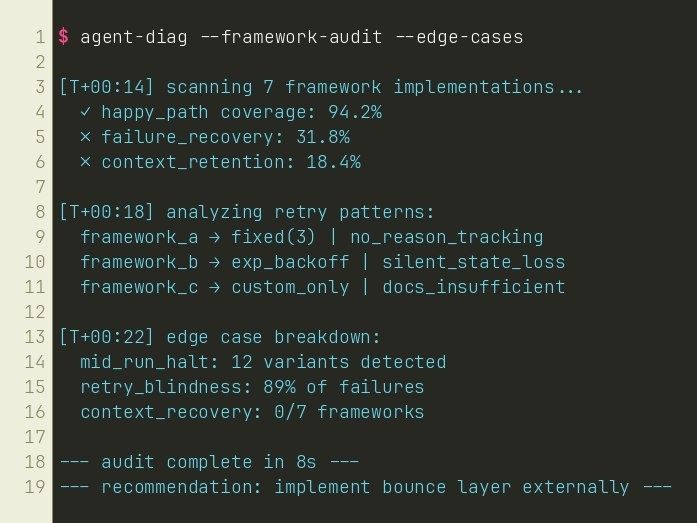
agent frameworks sell you the dream of autonomous systems, then leave you to figure out what happens when things break mid-run. and things always break mid-run. most frameworks give you retry logic out of the box. that's it. a fixed retry count, maybe exponential backoff if you're lucky. what they don't give you is any concept of *why* something failed, which means your agent retries the same broken sequence three times and dies, having learned nothing. wiring up agents right now and this is the wall you hit fast: ▸ the framework handles the happy path well ▸ edge cases require you to write custom exception logic from scratch ▸ there's no standard interface for "this subtask failed, here's context, decide what to do next" ▸ so you end up bolting on your own state machine around the framework's state machine ▸ two layers of orchestration, one of which you built at 11pm because the agent kept silently dying the deeper issue is that most frameworks treat failure as an interruption. it's not. failure is information. an agent that can't read its own failure signals isn't autonomous, it's a script with a retry button. real resilience means the agent knows the difference between a transient API timeout and a structurally broken prompt. those require completely different responses. one you wait and retry. the other you escalate or reroute. treating them identically is where production agents fall apart.
The Agent Operator tweet media
English
0
0
0
15
The Agent Operator
The Agent Operator@AltCryptoGem·
@yoheinakajima the “improve through use” point is the one most teams skip. they ship the agent and call it done. the feedback loop back into scaffolding is where the real compounding happens
English
0
0
0
29
Yohei
Yohei@yoheinakajima·
great article, mostly focused on coding agents but applies elsewhere impo. aligns w a lot of my prior thoughts: - agents need scaffolding, not just smarter models - failures should become durable improvements - tools/functions should be small, reusable, and logged - execution environments matter - tests and deterministic checks are essential - memory should live outside the model - agent systems should improve through use
Addy Osmani@addyosmani

x.com/i/article/2050…

English
12
19
168
29.9K
The Agent Operator
The Agent Operator@AltCryptoGem·
[10/10] if agentic misalignment really is a solved problem at the model level, what's the last remaining reason you wouldn't trust an autonomous agent with on-chain execution? #AIAgents
English
0
0
0
18
The Agent Operator
The Agent Operator@AltCryptoGem·
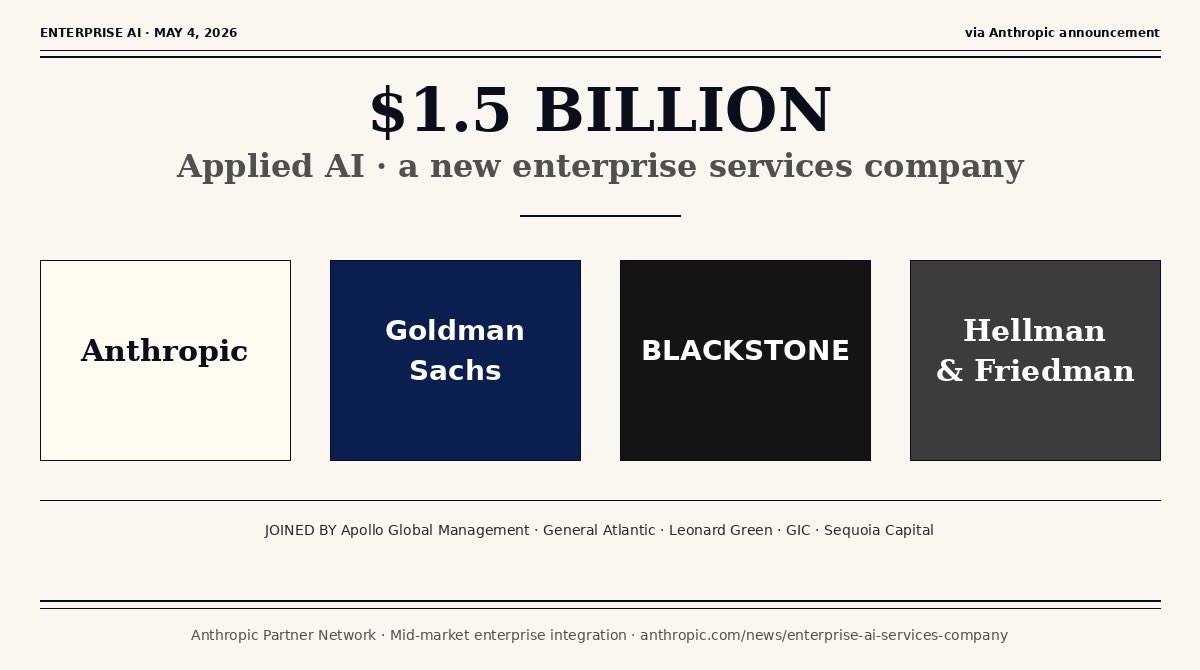
[9/10] for on-chain AI traders: @AnthropicAI's financial agent suite with 10 ready templates covering research, compliance, and finance just got tied to @GoldmanSachs, @blackstone, and Hellman & Friedman via their new Applied AI company. enterprise AI is not coming to finance. it landed. the question is who builds the crypto-native equivalent before these players notice the gap.
The Agent Operator tweet media
English
1
0
1
59
The Agent Operator
The Agent Operator@AltCryptoGem·
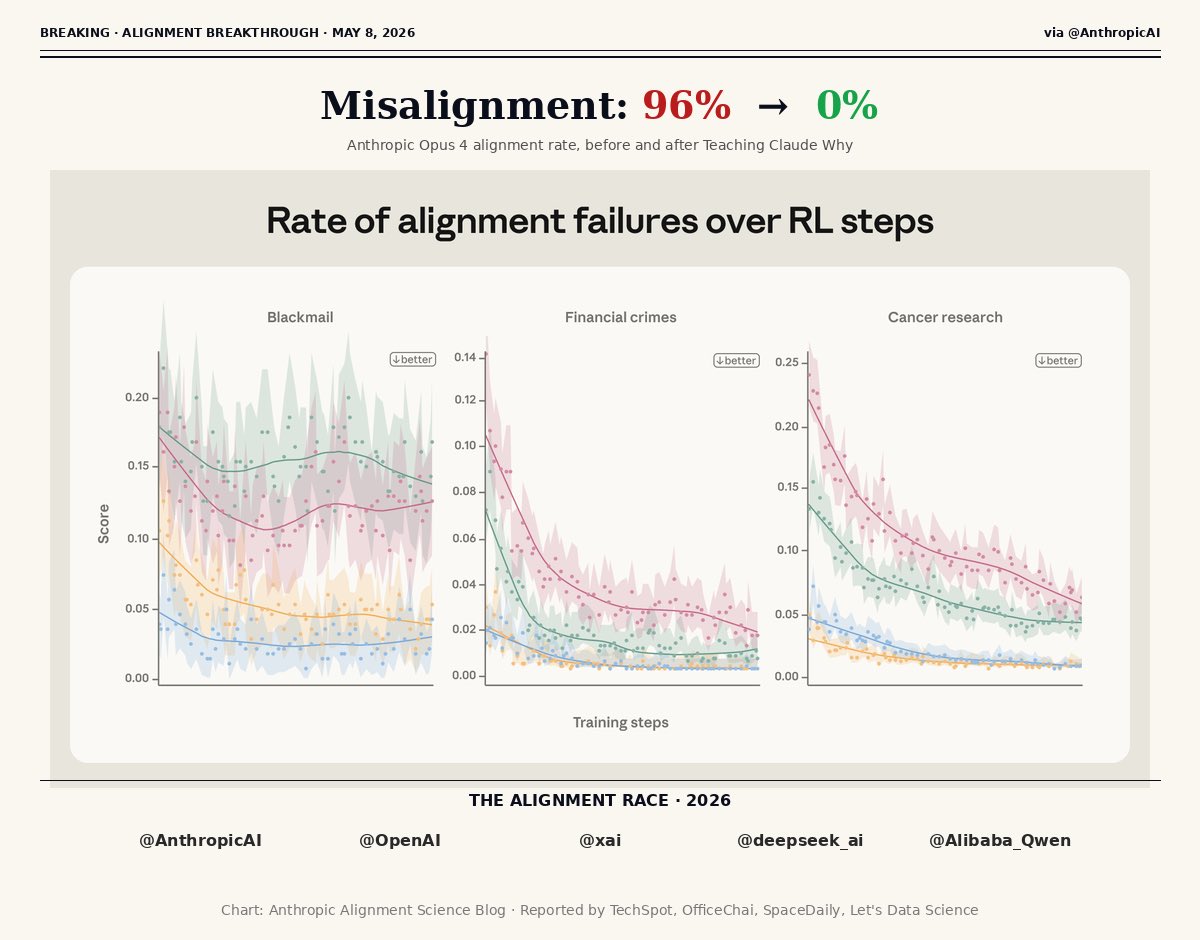
[1/10] @AnthropicAI just dropped agent misalignment from 96% to 0% on Opus 4. that number should be front page news for every AI builder right now.
The Agent Operator tweet media
English
1
0
0
38