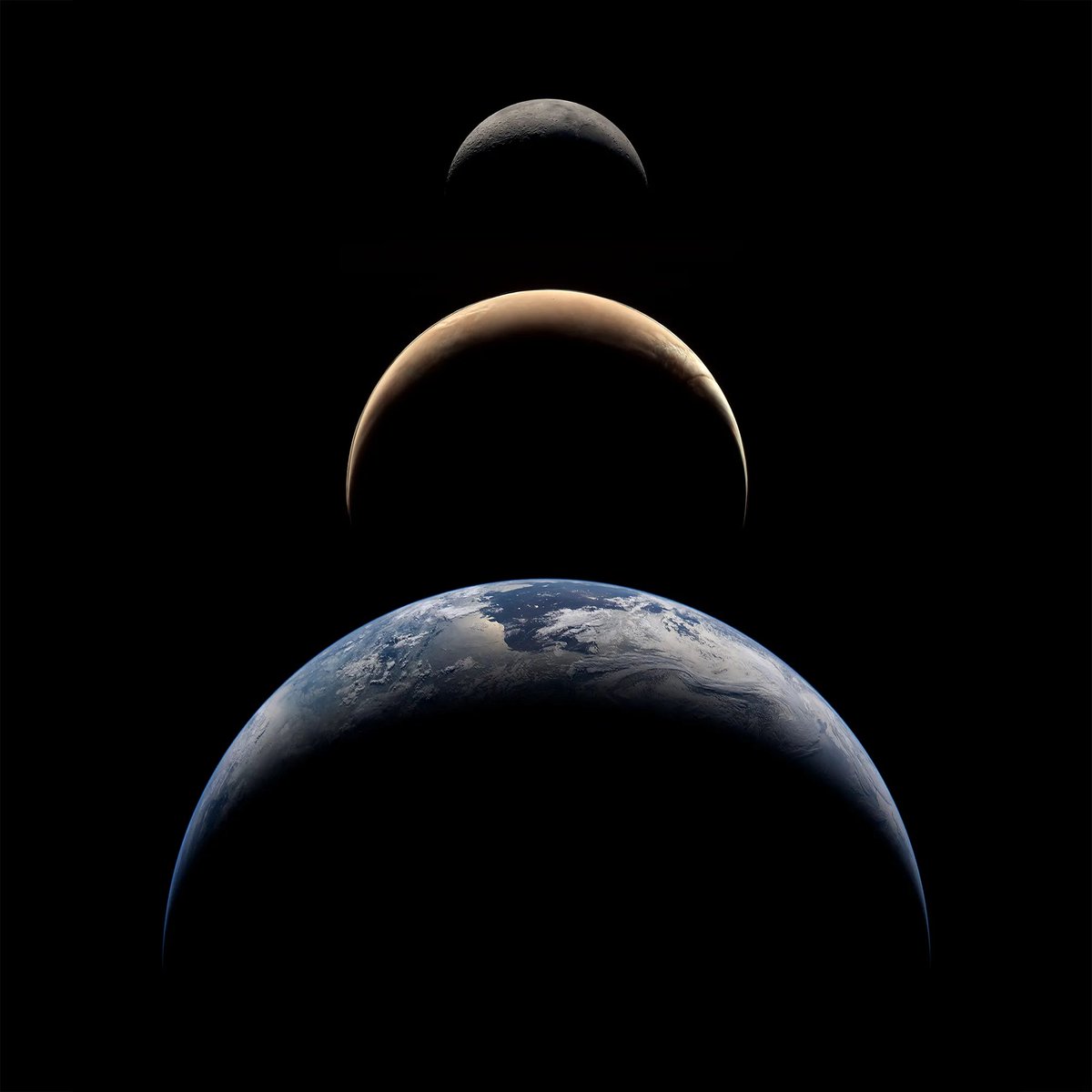
Three worlds. One frame.
All shot in the last six weeks.
A composite stitched together from two active NASA missions, and the result is genuinely jaw-dropping.
The Moon and Earth crescents? Captured by Artemis II as it loops around our cosmic neighborhood.
Mars? Beamed back from the Psyche spacecraft, currently cruising through deep space on its way to a metal asteroid.
Three planetary bodies. Three different cameras. Three slivers of light cutting through the dark.
And somebody had the vision to line them all up.
This is the kind of image that reminds you we're living in a wild era of space exploration, with multiple missions casually snapping postcards from millions of miles away.
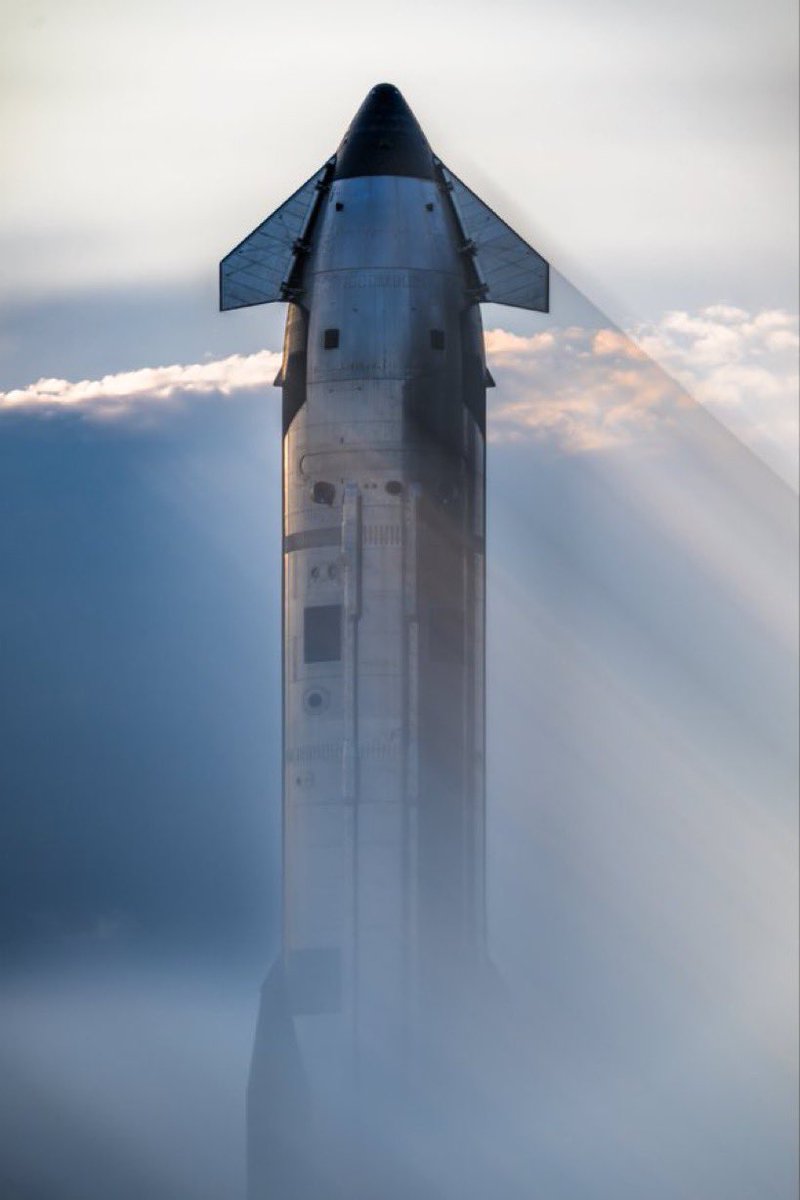
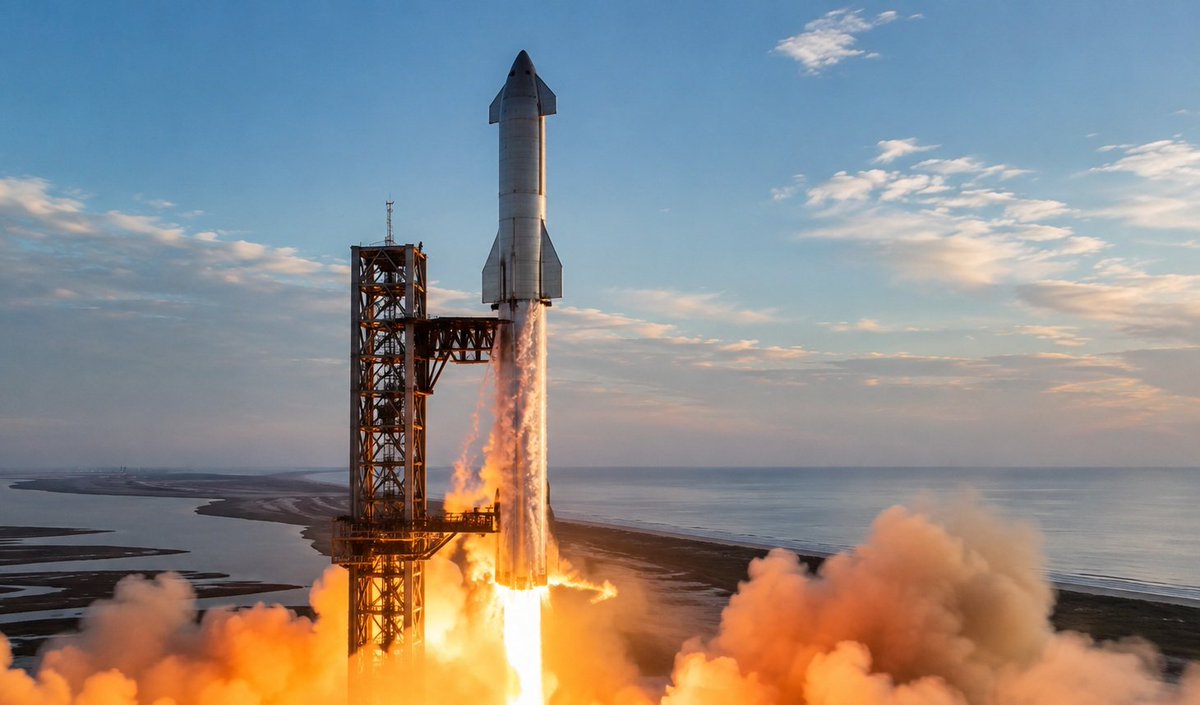
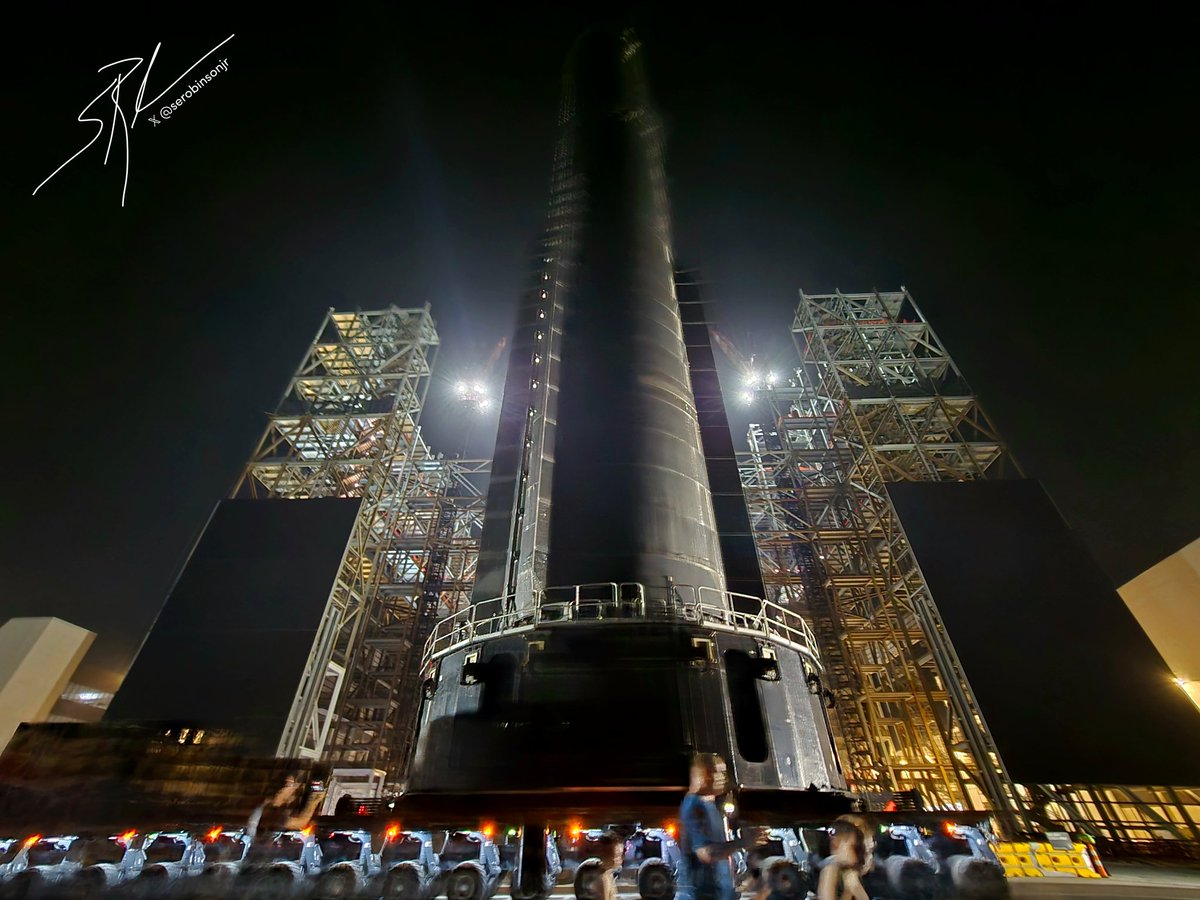
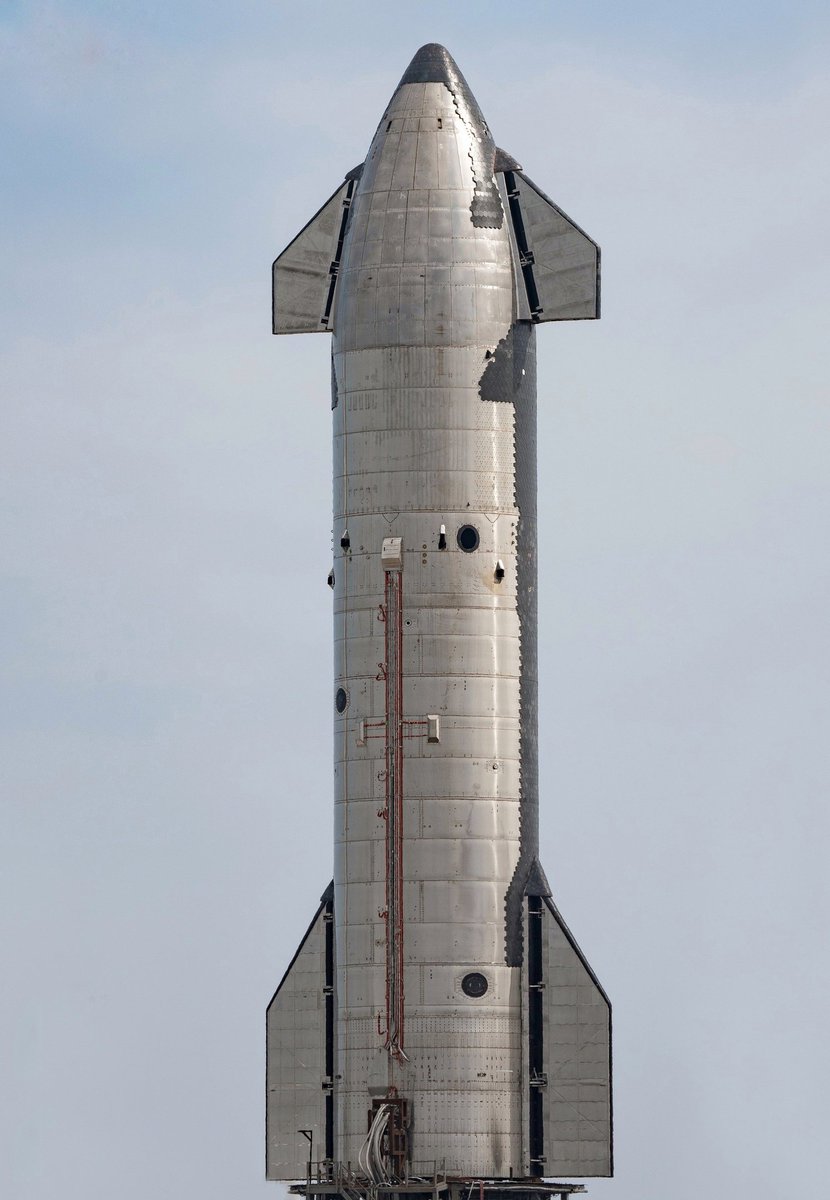
That's why Starship Flight 12 test is so important:
- New Raptor V3 engines: more powerful and reliable
- Lunar Lander: Testing technologies for Artemis 3 and 4
- Ship's in-orbit refuelling
- Starlink V3 satellite deployment test: per connection on the order of Gigabytes/second
"The key to making life multi-planetary is full and rapid reusability. For building a city on Mars, you need thousands of Starships because you can only go to Mars every 26 mos."
Elon Musk
ORBITAL REFUELING: THE KEY TECHNOLOGY FOR STARSHIP’S MULTIPLANETARY FUTURE
Orbital refueling—transferring cryogenic propellant (mostly liquid oxygen and methane) between two massive Starships in orbit—is the single most critical enabling technology for Starship to reach the Moon and Mars with meaningful payload.
Without it, Starship could only deliver limited cargo or crew; with successful ship-to-ship transfer, it unlocks fully reusable interplanetary missions, massive payloads (100+ tons to Mars), and the fleet cadence needed for a self-sustaining city.
This extreme operation involves:
•Two skyscraper-sized vehicles docking at ~17,500 mph in orbit.
•Transferring ~1,200 tons of super-cold propellants without boil-off or leaks.
•Demonstrating cryogenic fluid management in zero-g for the first time at this scale.
Success means:
•Moon landings — Starship HLS refueled in orbit for Artemis missions.
•Mars transit — Fully fueled Starships crossing the void with hundreds of tons of cargo/crew.
•Rapid reusability — Fewer tanker launches per mission, lower costs, higher flight rates.
•Multiplanetary breakthrough — The gate to humanity becoming a spacefaring species.
Every test (ground cryo demos, in-space fluid dynamics, upcoming ship-to-ship attempts) closes in on this milestone. Orbital refueling isn’t optional—it’s the technology that turns Starship from a powerful rocket into the vehicle that makes life multiplanetary.
🚀🛢️🔴