Ami Daniel

1.2K posts

Ami Daniel banner
Ami Daniel

Ami Daniel

@AmiDaniel1

Raised by the ocean, sailed in the ocean. Now builds for the ocean. co-founder/ CEO of Windward.

Katılım Mayıs 2014
1.2K Takip Edilen981 Takipçiler
JH
JH@CRUDEOIL231·
Insurance isn't the real bottleneck here. The real issue is that shipowners and captains are genuinely terrified of physical attacks. Think about it—why would they even bother taking the risk? They can make pretty good money just by leasing their ships as floating storage in the Persian Gulf. There’s no reason to put their lives on the line when they can just sit tight and collect a paycheck.
English
6
13
130
19.7K
Ami Daniel
Ami Daniel@AmiDaniel1·
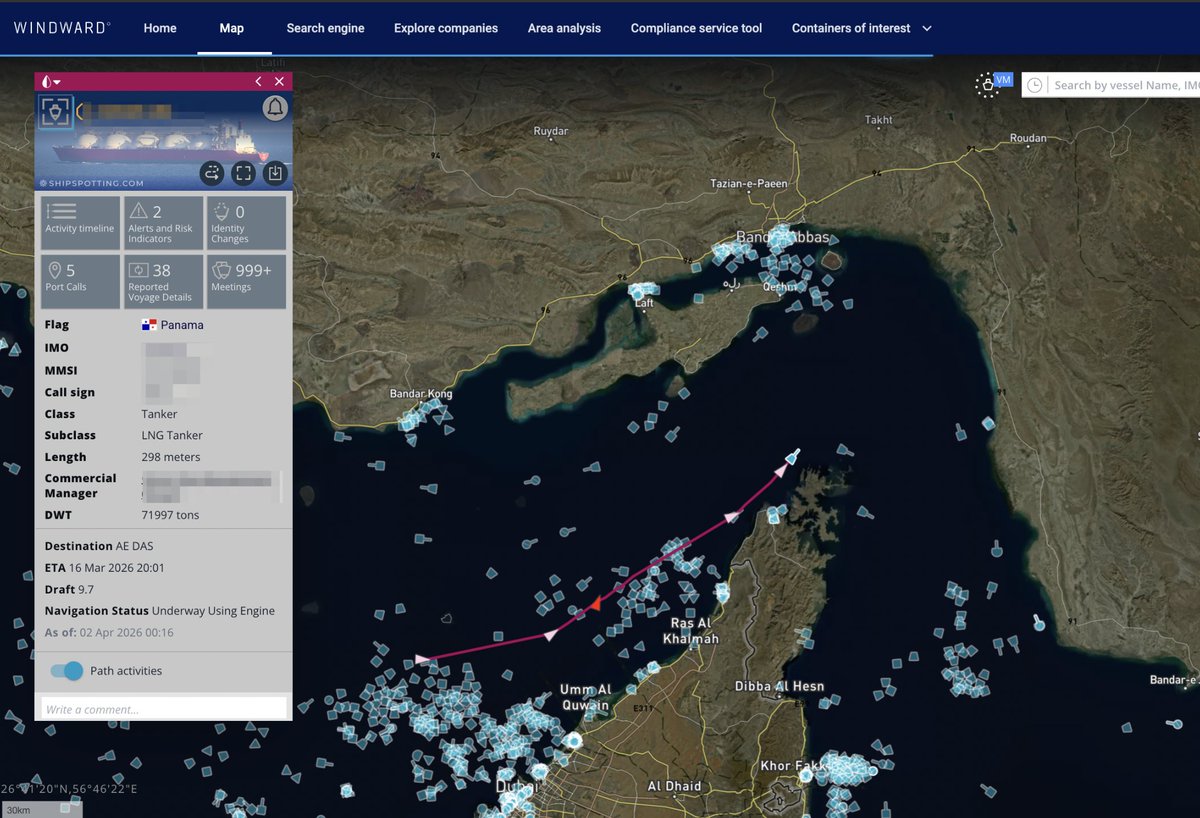
First LNG tankers are out of the Straits and not via the IRGC Northern Toll Booth , according to @WindwardAI data
Ami Daniel tweet media
English
0
0
3
181
George S Franklin
George S Franklin@GeorgeSFrankl·
@AmiDaniel1 What if the Saudi's start sinking Iranian tankers unless they pay Saudi $4 million/ship? I mean, c'mon, it works both ways.
English
2
0
3
494
Ami Daniel
Ami Daniel@AmiDaniel1·
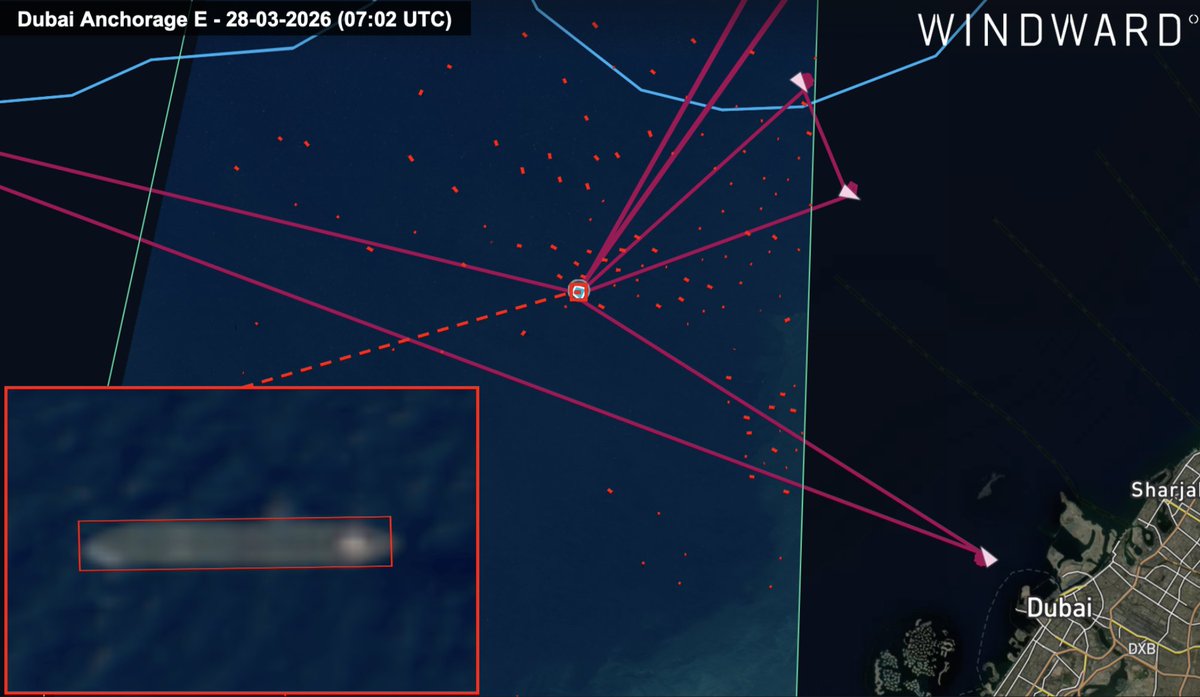
I'm going to take a risk here. And ask the BIG question: What if the situation in the Straits of Hormuz ain't going back to what it was? What if the Iranian "Toll Booth " is there to stay? First, some math: - According to today's freight prices, a VLCC goes for approximately 700k per day (10x what it was) . For a 30 day AG -- China voyage- that's $21m. - Throw on top of that 1-3% of hull value (yes you can buy insurance , it's harder but doable) - -that's another 3m or so. - Cargo value would be 2 million barrels * 120USD = =$240M. So the overall deal is $240M+ $21M + $3M + [IRANIAN TOLL BOOTH CHARGE $2M] = $266M USD. Out of which less than 1% is for Iran. I think many charterers and shipping companies will end up paying that, just like they paid the Houthis or they pay the Suez Canal in a very ROI driven analysis as an alternative to going around the Cape of Good Hope. So what's the way out? I think we've all learned a lesson in resilience. The Straits of Hormuz are structurally not resilient. So what should the world do? 1. Double down on Yanbu. Grow the pipe from 5m barrels a day to 7m and later to more. Maybe build another pipe to West Coast Red Sea. 2. Fujairah as an export hub has really been on a tear with approximately 1.8m barrels. I assume the UAE can scale that more. 3. Oman and Salalah- we've reported that actually Oman has been the great benefactor of all of this situation, with 3000%+ more vessels on the way. Despite a crane being hit by a drone and things slowing down a bit. These are sure-fire ways to make the world's supply chains more resilient. We can't all depend on one small straits, or we might end up with a very long show of the Dire Straits. [Image: @WindwardAI data shows the vessel "Al Salimi" hit within the E Anchorage off Dubai, where you have approximately 49 other 250m + vessels waiting]
Ami Daniel tweet media
English
16
20
69
13K
Sal Mercogliano (WGOW Shipping) 🚢⚓🐪🚒🏴‍☠️
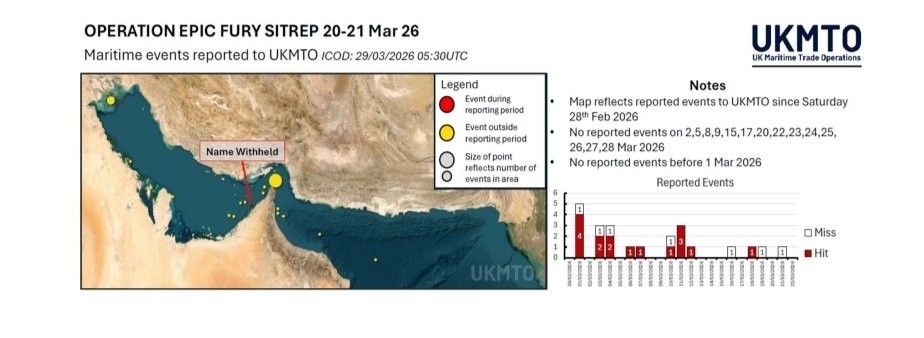
The Strait of Hormuz just hit double digits transits since the beginning of March, a total of 11 on March 27 & 28. It should be noted that these numbers are largely due to bulk carriers delivering food to Iran. In the meantime, Iranian tankers are running the Strait dark.
Sal Mercogliano (WGOW Shipping) 🚢⚓🐪🚒🏴‍☠️ tweet mediaSal Mercogliano (WGOW Shipping) 🚢⚓🐪🚒🏴‍☠️ tweet media
UKMTO Operations Centre@UK_MTO

UPDATE 025 - JMIC ADVISORY NOTE Click here to view the full advisory note⤵️ #MaritimeSecurity #MarSec
English
21
164
569
115K
Ami Daniel
Ami Daniel@AmiDaniel1·
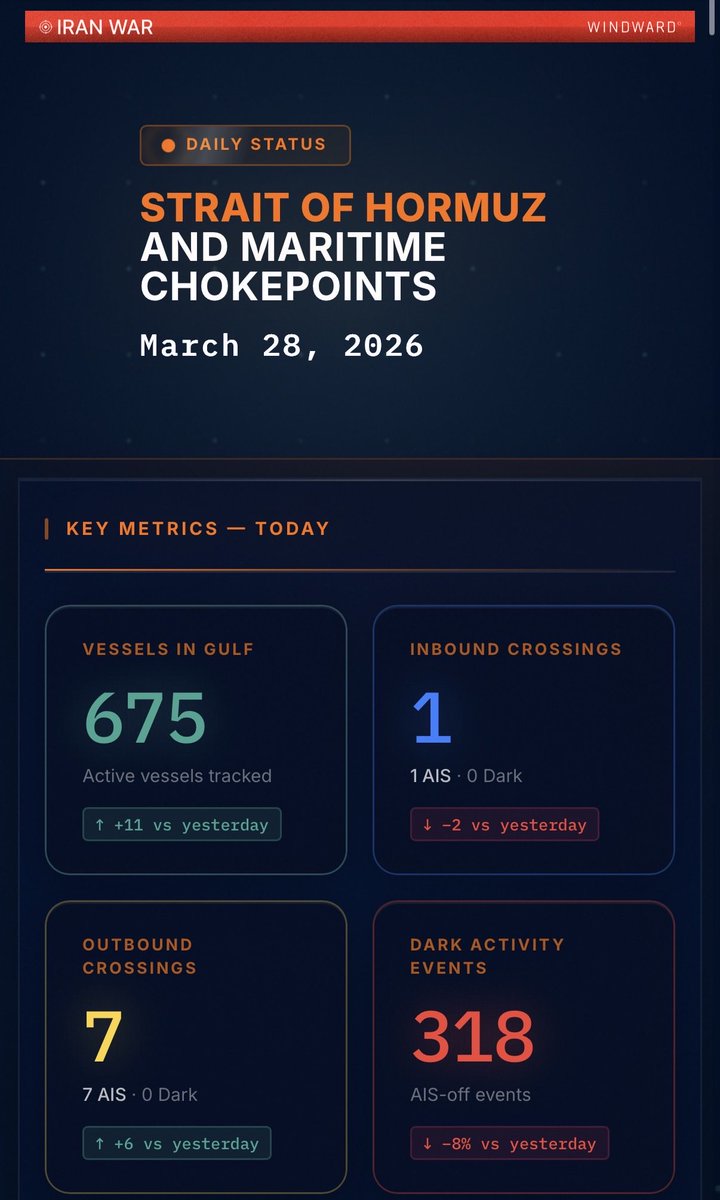
Everyone has been asking us the same questions every day: -“ How many vessels transited the Hormuz Straits today?” - “Where are they going ?” - “which flags are allowed to transit ?” - “how many Western vessels are locked in the Gulf?” From now on, you can have the answers at your fingertips, powered by @WindwardAI proprietary data. Just browse here and let us know your feedback : insights.windward.ai
Ami Daniel tweet media
English
2
11
31
16.3K
Ami Daniel
Ami Daniel@AmiDaniel1·
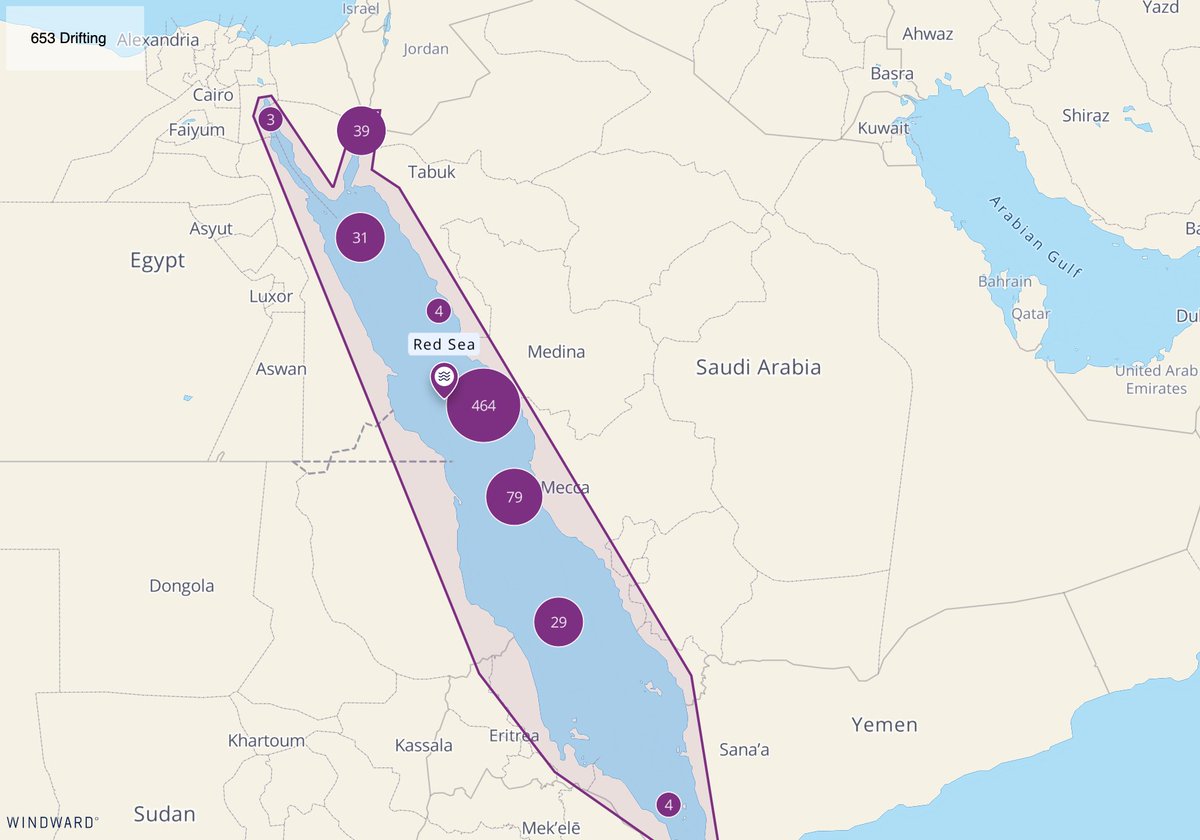
The Houthis have announced they are going in to actively take part in the war. What does that mean? There are a few key impacts that I think we can definitely point at : 1. The biggest of course is a threat to the exports from Yanbu at Saudi Arabia. The alternative export port, which has seen record exports in the recent weeks - getting to 7m barrels per day - - is directly in the range of Houthi drones and missiles. This is equally right for the vessels in the port waiting area and those loading in the terminal. If the Houthis attack with ballistic missiles that'll be a significant challenge. 2. According to @WindwardAI , there is an all time record number of vessels "drifting" - - i.e. considering / waiting for orders in the Red Sea. I suspect some are reconsidering how safe is the passage through Bab el Mandeb Straits, which the Houthis have effectively already closed before for traffic. 3. This would make export routes from Asia to Europe even longer as it will require them to go around the Cape of Good Hope. I don't think there is a key impact on the US as this isn't a major export route. 4. It might impact Israel more than the US due to the port of Eilat in the Red Sea- - a port already significantly hit as it was the major import port for cars/ roros. Israel also imports via the Suez Canal / Red Sea so that's expected to have a hit as well.
Ami Daniel tweet media
English
0
0
2
135
Ami Daniel
Ami Daniel@AmiDaniel1·
I kinda hate being right , right now. I predicted last few days that the Iran Toll Booth will scale passages quickly to set concrete facts and drive income . This income is paid in Yuan, bitcoin or Rubel. So from one or two passages a day, we see at least 7 now according to Windward . These include : - sanctioned containerships in and out of Iran - Agri products inbound to Iran - Iranian oil outbound - Brazil outbound - oil products exports to neighbouring countries - a lot of China/ Iran interests.
Ami Daniel tweet media
English
0
0
2
159
Ami Daniel
Ami Daniel@AmiDaniel1·
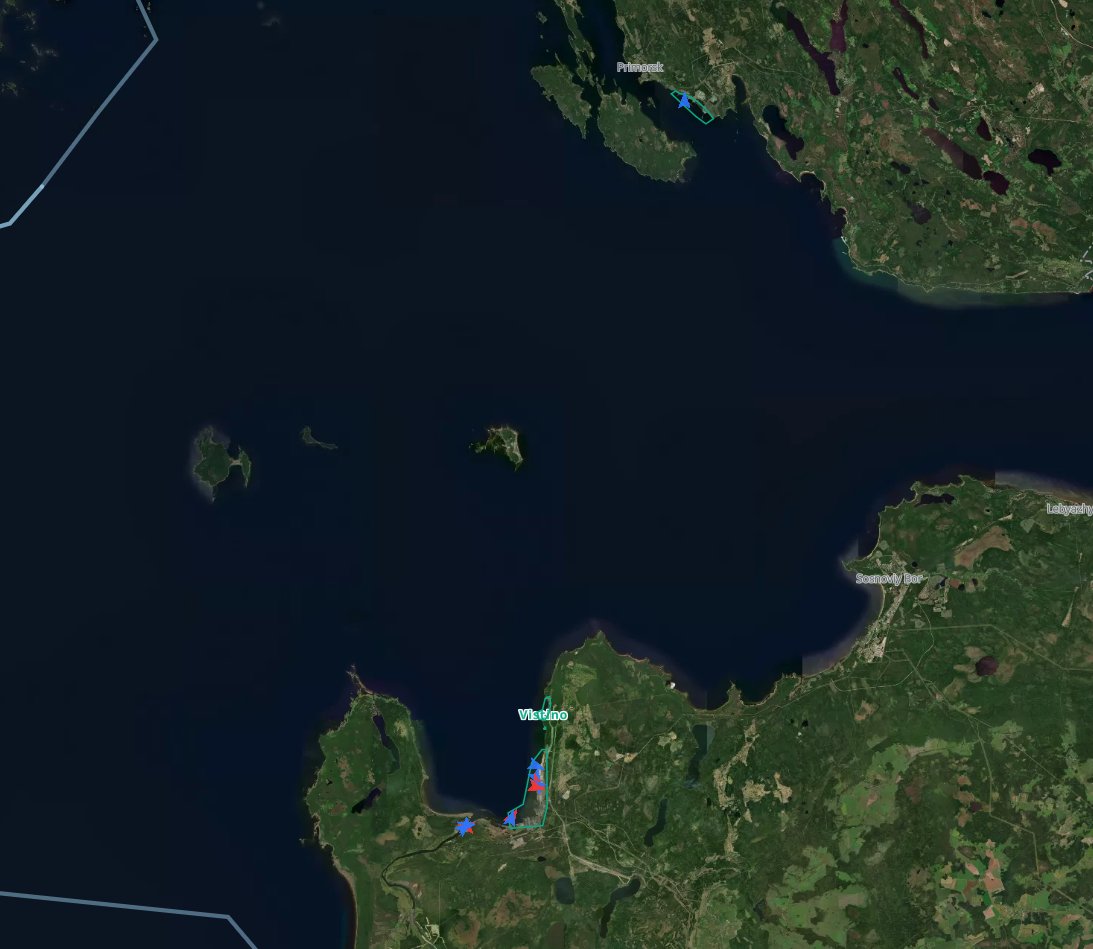
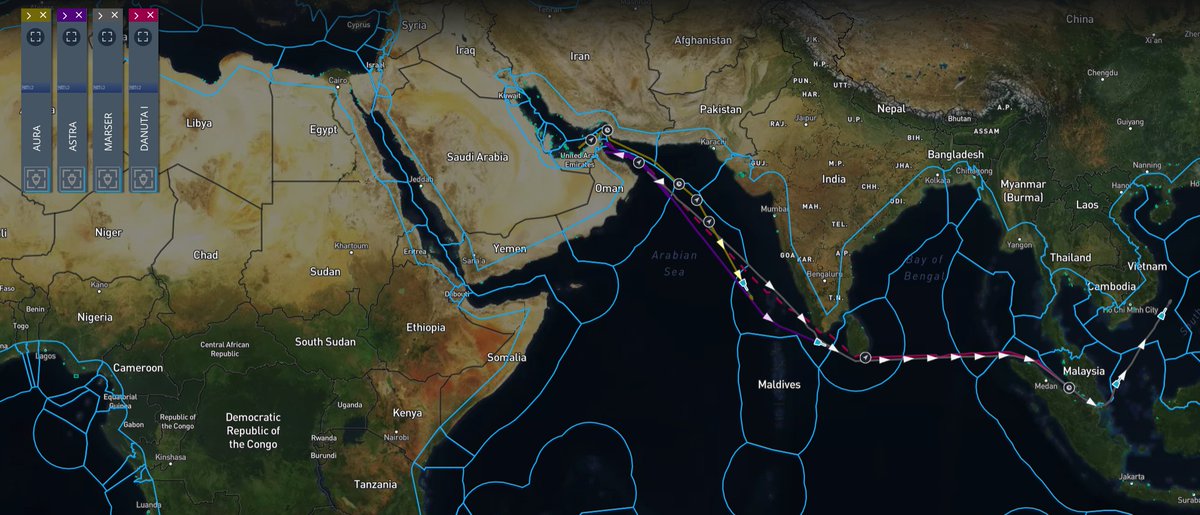
I think there are four big stories unfolding today, really: 1. Russian oil: According to Vortexa there are  Russian oil on water there approximately 250 M barrels of Russian oil on the water. However, according to Reuters the Ukrainian attacks in Ust Luga have halted some 40% of Russia's oil exports - some 4m barrels per day. To some extent this contradicts the US' relief of Russian oil sanctions . Iranian oil exports and oil on the water have remained consistent throughout the war and continue as we speak. This move by Ukraine does have the potential of moving the oil price up as it hurts potentially the continued supply of oil, as more and more countries buy Russian oil as agreed with the US. 2. Energy crisis: the Philippines is the first country in Asia to formally announce an energy state of emergency due to the war in the Middle East. Probably not the last one as buyers divert EU and US bound cargos to fill the gaps in Asia. 3. Oman as the winner? a 3500% + increase in vessels trading/ diverting to Oman show a real pattern change. Remember, Fujairah was a bunkering hub so vessels transiting from Asia to Europe or vice versa need to stop and fuel somewhere. 4. The UAE stands up to Iran: in an op-ed in the The Wall Street Journal , the UAE ambassador to the US demands a conclusive outcome. This is news, since until this point we haven't really heard the Gulf states take a decisive stance in this conflict (uae-embassy.org/news/ambassado…) . As China moved away from U.S. cargoes in 2025, it ramped up term contracts with ADNOC (UAE), making the UAE as the official most stable partner in the Gulf, however, according to @WindwardAI data, given the Iranian strikes on ADNOC Production facilities, ADNOC Halted production, resulting in only 1 LPG tanker “in-transit” to China with only 270K bbl originating from the UAE.
Ami Daniel tweet mediaAmi Daniel tweet mediaAmi Daniel tweet media
English
0
0
2
163
Michelle Wiese Bockmann
Michelle Wiese Bockmann@Michellewb_·
Good morning Malta! Here for @WindwardAI at the Global Forum of Maritime Fusion Centres Heads of Centre meeting. Already met some familiar faces across the commercial and government sector. Maritime domain awareness has never been so important and leveraging AI and agentic workflows to head off threats at sea is prominent on the agenda
Michelle Wiese Bockmann tweet mediaMichelle Wiese Bockmann tweet mediaMichelle Wiese Bockmann tweet media
English
3
0
10
802
Ami Daniel
Ami Daniel@AmiDaniel1·
@mikeeisenberg this is another development from what we have spoke about in the Invested podcast.
English
0
0
0
44
Ami Daniel
Ami Daniel@AmiDaniel1·
A couple of weeks ago, I predicted that the "ransom" process the Houthis have installed in the Red Sea will happen again in the Straits of Hormuz. That prediction I think is now reality with up to $2m per passage. Based on @WindwardAI remote sensing intelligence and our MIOC analysis, there are approximately 10 ships off the North end of the straits of Hormuz (Larkan Island) preparing probably to pass. If you read very carefully the Iranian announcement you'll see that it leaves a lot of room for interpretation. It's clear they won't let "Israeli" or "US " vessels through - but how many of these are there in the Gulf right now? Will exports to Europe or Nato countries continue? exports to Japan, or The Philippines (who just announced a state of emergency due to energy shortage)? I suspect will see some of the trade start to flow to more and more countries in Asia. This will be vessels transiting near the Northern part of the Straights (as you can see in the image) - - so Iran can control that in much of an easier way. The Straits are 21m wide, but the Northern passage is a few miles alone from Iran, who , to its announcement, is a "lawful coastal country operating according to international law" (which law is that?). This is meant to help them govern much more easily who transits. So theoretically, the main area of the Strait could be mined, and you have no choice but pay them. I think this still leaves the end game of the US saying that "it won" and pull back. And the Iranians receiving their compensation for the war with this (relatively low) "ransom" , just like the Suez Canal toll. What do you think? I hope I'm wrong though...
Ami Daniel tweet mediaAmi Daniel tweet mediaAmi Daniel tweet mediaAmi Daniel tweet media
English
1
0
1
115
Michael Eisenberg
Michael Eisenberg@mikeeisenberg·
The Straits of Hormuz and maritime generally is THE story of the war with Iran. Iran cannot be left in charge of the Straits and choke the world. I recorded a special episode of Invested with @AmiDaniel1, founder & CEO of Maritime AI company @WindwardAI about the choke point and economic effects. Link to full Episode 👇
English
7
7
32
4K
Ami Daniel
Ami Daniel@AmiDaniel1·
@AtlasShrug1 @mikeeisenberg @aleph i did hear there is crazy variance in insurance proposals, from X to 20x. so what you're saying makes sense and I'd try another broker.
English
0
0
0
19
John Ʌ Konrad V
John Ʌ Konrad V@johnkonrad·
Today I had four books open, all my notes & a dozen AI agents doing hard research. My conclusion? The vast majority of takes on X regarding the shipping crisis & Hormuz were wrong 2 weeks ago Today every single account I read is wrong about something important. Every one. Including me.
English
76
82
1.2K
175.8K
Ami Daniel
Ami Daniel@AmiDaniel1·
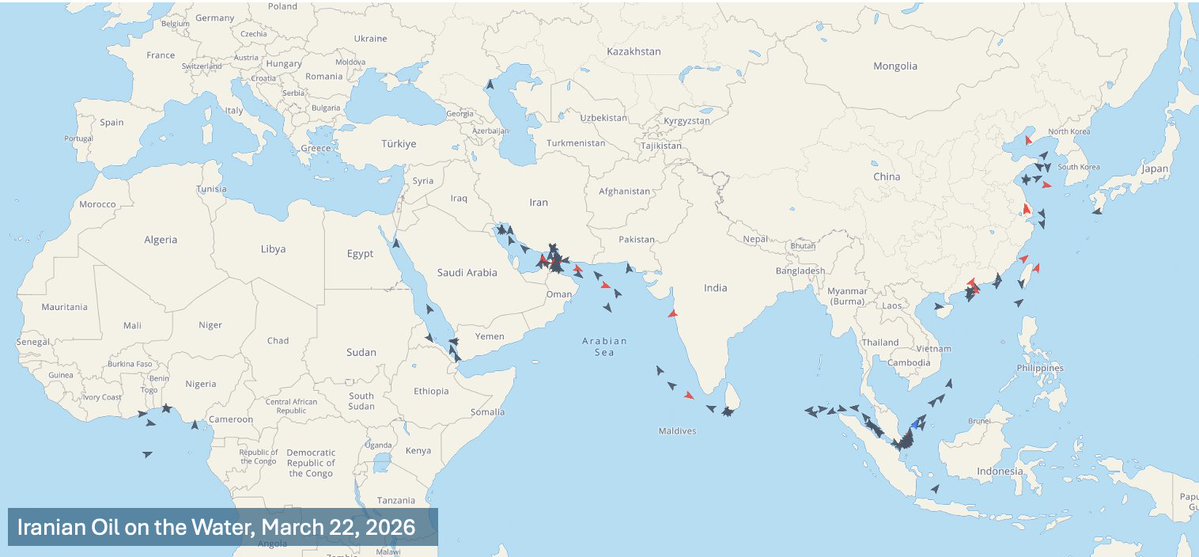
Let's talk about oil. We've seen three dramatic steps by the IEA and the international community led by the US. First, some basics: the world produces approximately 103m barrels per day of crude. Out of which about 11m are produced by Russia, around 1.4m by Venezuela, and 3.2m ish by Iran. That means that pre-war you're talking about 15.6m out of 103m barrels a day which are sanctioned or restricted to Western markets. The straits of Hormuz are the key artery for some 20-21m barrels per day. You take it out + the sanctioned numbers and you're basically out 36/103m barrels per day. That's not sustainable for the global economy and that's why oil markets are reeling (and all other derived products). To relieve that, the US and its allies took three main steps: 1. Releasing 400m barrels from strategic reserves by different nations. This is relatively straightforward. 2. Making Russian oil (even on sanctioned vessels) that was afloat on March 12 "tradable". It should be noted that as the price cap for Russian oil is 44.10USD and the price is ±100USD effectively everyone can trade Russian oil... This is about 159m barrels currently. 3. Making Iranian oil afloat also tradable. This is approximately 120m barrels. So the US and its allies are pushing to have 400m + 159m + 120m = 679m barrels flood the markets, which is about 19 days of "missing" (679m divided by 36m barrels a day which are missing and blocked by the Straits of Hormuz). Or in other words: its buying time. Valuable time, but less than three weeks of time. And that's even if traders can actually buy and sell Russian and Iranian oil (for example, sanctioned entities can't get USD). Images: Iranian and Russian Oil on the Water by Windward
Ami Daniel tweet mediaAmi Daniel tweet media
English
4
12
40
7.4K
Ami Daniel
Ami Daniel@AmiDaniel1·
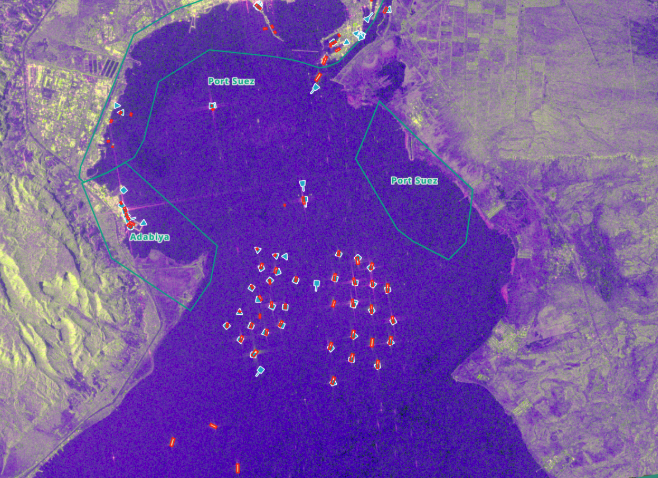
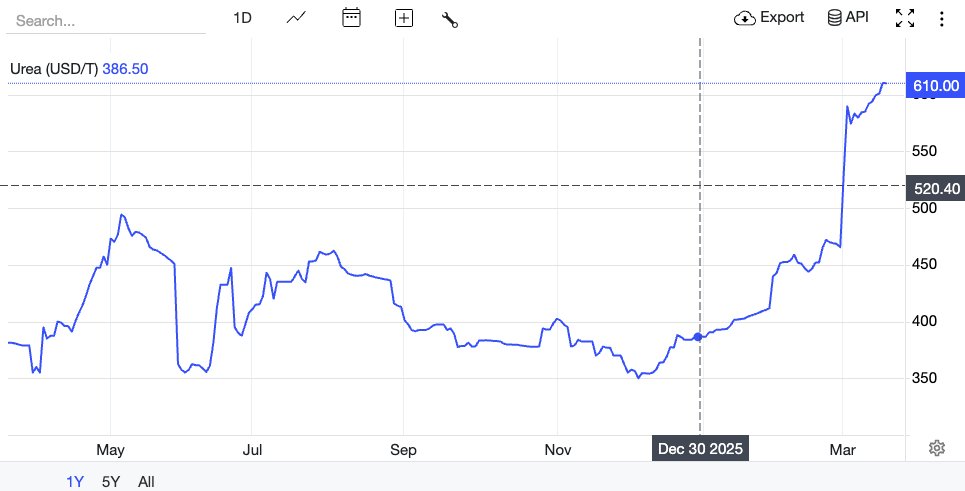
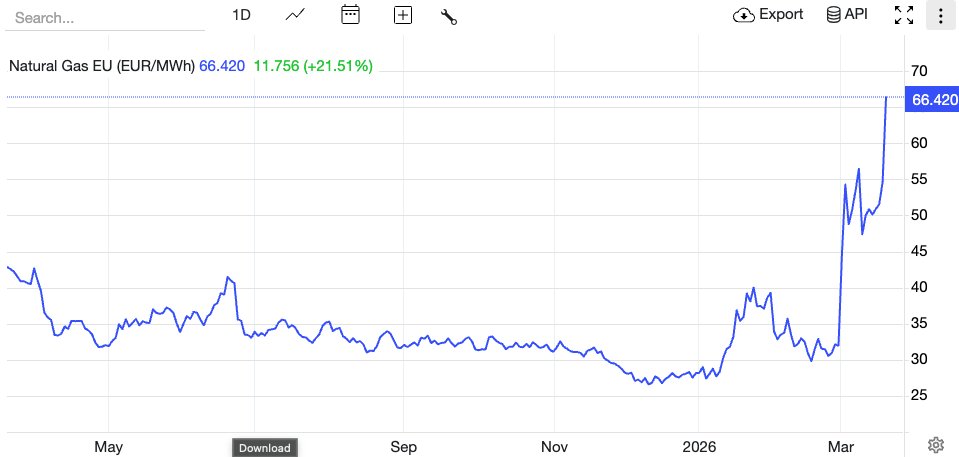
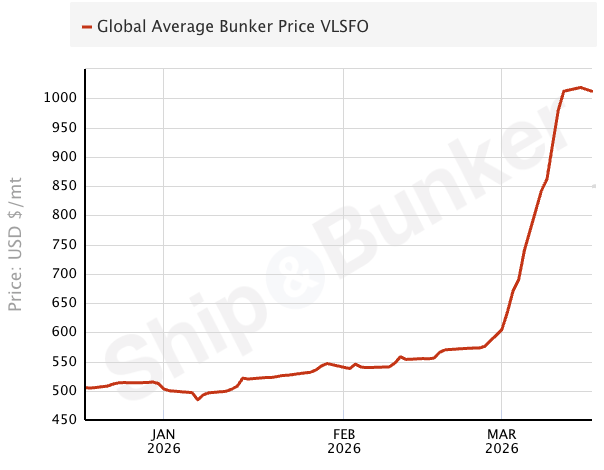
I think we're seeing a huge escalation. 1. The Straits of Hormuz are pretty much closed. Yes, some ships going out to India and to other places. But overall, as a global export artery it's closed. 2. Yanbu in Saudi was attached. Saudi moved to export approximately 5m barrels from Yanbu. As of March 18th, 2026, 57 VLCCs (Very Large Crude Carriers) are on their way to the Red Sea, Saudi Arabia - King Fahd Industrial Port, Yanbu. Over the past 12 months, only 18 VLCCs have called the port of King Fahd, Yanbu. Among them, only 7 have been flying foreign flags (non-Saudi). We will see where these exports go. 3. The attack on the Gas facilities in Qatar has big repercussions. It's on two elements: the gas exports will take time to recover as possibly the infra is hit. Could take a couple of years to build this back up. This has a domino effect on the Qatar Fertiliser Company (QAFCO), which operates the world’s largest single-site urea export facility in the same industrial complex. Qatar accounts for approximately 14%–15% of the world's urea exports. With gas production at Ras Laffan currently halted or severely restricted, QAFCO’s ability to produce its annual 5.6 million tonnes of urea and 3.8 million tonnes of ammonia is at high risk. Urea's price has risen 34.96%, and is up 59.79% compared to the same time last year, according to trading on a contract for difference (CFD) that tracks the benchmark market for this commodity. 4. European natural gas futures soared about 25% to above €68 per MWh on Thursday. This will make a big impact on Europe. 5. Global bunker prices (ship fuel) have soared to a 1000 USD per ton. This has an impact on ship fuels. Many of the ships can't access bunker fuel as Fujairah is almost closed. Hubs in Singapore , Cape Town and Rotterdam won't necessarily have enough bunker fuel. 6. Many of the brokers are reporting a freeze in deals. It's not just about oil, there is a lot of uncertainty across different market segments. 7. Secondary effects include Sri Lanka going for a 4 day work day due to lack of fuel, and I hear cars can't fuel already in Thailand. This will become bigger, very fast. 8. Suez canal: Following the launch of Operation EPIC FURY on 28 February 2026, the canal's traffic collapsed sharply. By mid-March 2026, daily transits had fallen to just 23 vessels/day (15 inbound, 8 outbound) - a ~39.5% drop from the already-suppressed pre-EPIC FURY baseline. 9. Russian sanctions: we have seen a relief in buying Russian oil that is "floating". this includes cargo on sanctioned vessels (!) . This is a big , unprecedented event in history, which is meant to provide relief . This is not very liked by EU partners who believe this effectively will kill the oil price cap (60$? on a price of $120) and will fuel the Russian War Machine. This is moving quick. If you are a Windward customer , you get access to daily MIOC analysis to make sense of the world.
Ami Daniel tweet mediaAmi Daniel tweet mediaAmi Daniel tweet mediaAmi Daniel tweet media
English
0
3
4
838