Billy Desai MBA CFA

280 posts

Billy Desai MBA CFA banner
Billy Desai MBA CFA

Billy Desai MBA CFA

@AnalogCapital

CFA | Founder @ Analog Capital Helping $1M–$10M investors optimize planning, taxes, risk, and returns Multi-asset portfolios not 60/40s ↓ Book intro call now

Get a second opinion ➜ Katılım Temmuz 2020
107 Takip Edilen62 Takipçiler
Billy Desai MBA CFA
Billy Desai MBA CFA@AnalogCapital·
That’s what happens when financing costs stay elevated while input costs, insurance, labor, and regulatory burdens all compound at once. Small businesses are often the real economic canary in the coal mine. The headline indexes may look fine, but underneath the surface, expansion appetite is fading fast. At Analog Capital Partners, we pay close attention to these second-order signals because they often matter more than the headline narratives.
English

0
0
0
7
Billy Desai MBA CFA
Billy Desai MBA CFA@AnalogCapital·
Gold isn’t “up” nearly as much as the dollar is down. When a house falls from 714 ounces of gold to 85 ounces, it forces you to ask: what’s actually changing in value? At Analog Capital Partners, we believe preserving purchasing power matters more than chasing nominal returns. That’s why we build portfolios across stocks, precious metals, real estate, bonds, and alternatives — not just dollars.
English
0
0
0
27
zerohedge
zerohedge@zerohedge·
Word from our sponsor, Monetary Metals The median U.S. home once cost 714 ounces of gold. Today? Closer to 85 ounces. Maybe everything didn’t get more expensive. Maybe the dollar just got weaker. zerohedge.com/sponsored-post…
English
10
20
129
45.2K
Billy Desai MBA CFA
Billy Desai MBA CFA@AnalogCapital·
@LynAlden_chat Asset allocation is key but no one actually knows about it. All weather strategic asset allocations are possible yet 99% of advisors never dare to rock the boat.
English
0
0
0
14
Billy Desai MBA CFA
Billy Desai MBA CFA@AnalogCapital·
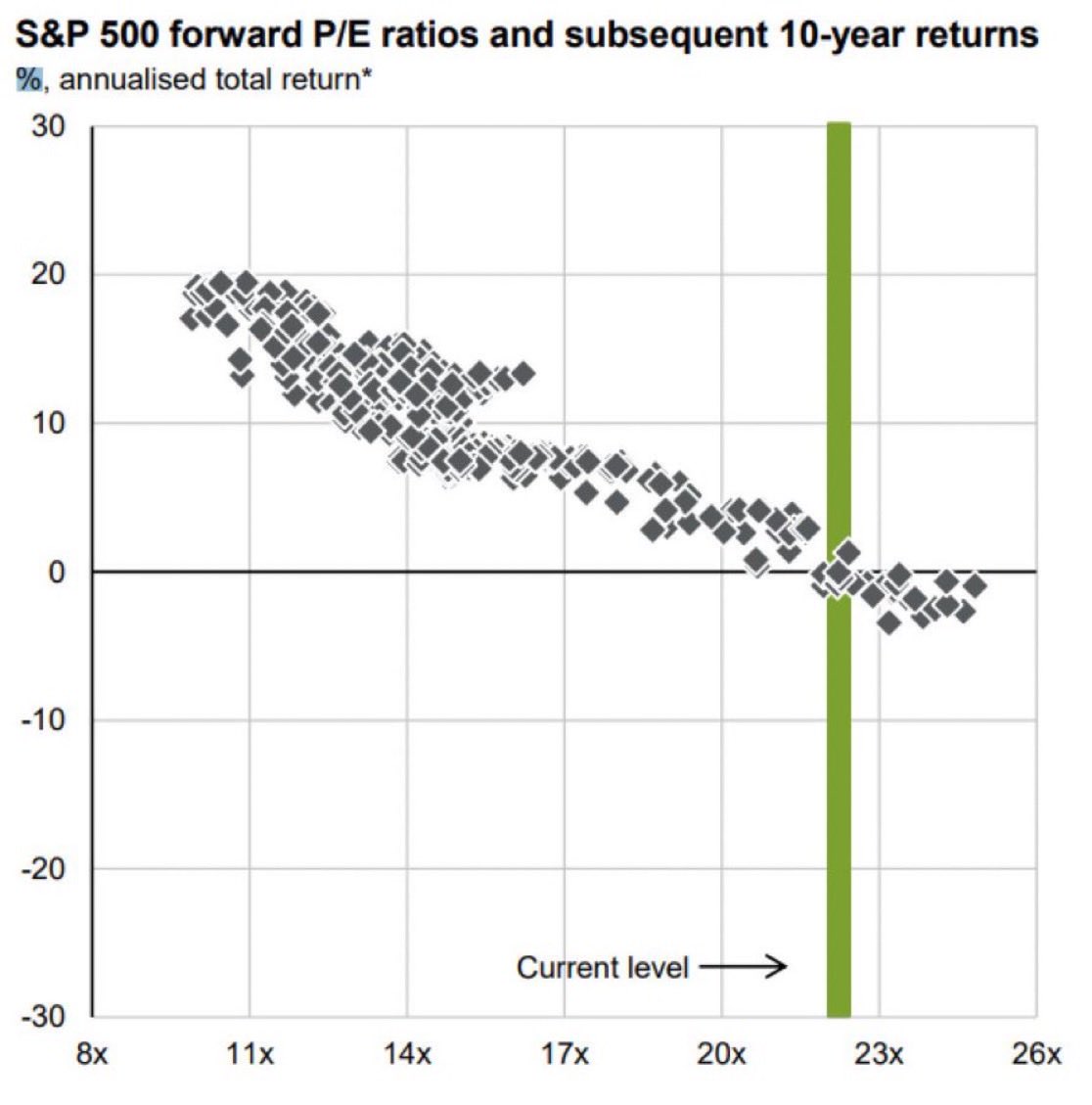
At today’s valuations, passive indexing may be far riskier than most investors realize. Starting valuation matters. A lot. Historically, buying the S&P 500 at ~23x earnings has led to a decade of flat-to-low real returns. That doesn’t mean stocks are “dead” — it means concentration risk and valuation risk matter. At Analog Capital Partners, we believe the next decade may reward broader diversification across: • equities • precious metals • REITs • alternatives • selective fixed income The 60/40 era was built during a 40-year bond bull market and falling rates. The next regime may look very different.
English
0
0
0
75
Steve Burns
Steve Burns@SJosephBurns·
"When you buy the S&P 500 at a 23x P/E, your 10-yr annualized return has always fallen between +2% and –2%, in every case!” — Howard Marks
Steve Burns tweet media
English
55
321
1.8K
444.2K
Billy Desai MBA CFA
Billy Desai MBA CFA@AnalogCapital·
This is what narrowing market leadership looks like. The index can keep grinding higher while fewer and fewer stocks actually participate underneath the surface. That works… until it doesn’t. At Analog Capital Partners, we pay close attention to breadth, correlations, and concentration risk — because cap-weighted indexes can hide a lot of fragility late in a cycle.
English
0
0
1
109
Bespoke
Bespoke@bespokeinvest·
After another day yesterday where the index closed higher on negative breadth, there are now fewer than half the stocks in the S&P 500 above their 50-DMAs even though the index itself is 7.8% above its 50-DMA: $SPY
Bespoke tweet media
English
4
17
58
8.2K
Billy Desai MBA CFA
Billy Desai MBA CFA@AnalogCapital·
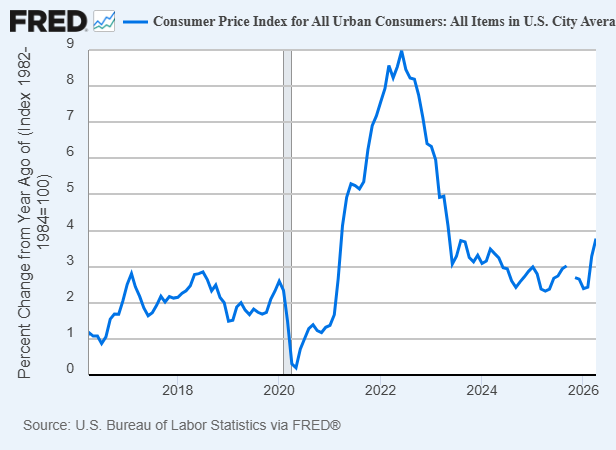
Inflation was never truly “transitory.” Years of monetary expansion, deficit spending, and asset inflation are now feeding directly into the real economy. The bigger risk is that inflation stays structurally higher while growth slows. That’s exactly why at Analog Capital Partners we focus on diversified multi-asset portfolios — not blind dependence on long-duration bonds or a traditional 60/40 allocation.
English
0
0
1
53
Billy Desai MBA CFA
Billy Desai MBA CFA@AnalogCapital·
The financial side of this is what gets overlooked. Many young people are taking on 6-figure debt, delaying investing for years, and missing the power of compounding… only to end up in careers unrelated to their degree. Education can absolutely be worth it. But at Analog Capital Partners, we believe families should evaluate it like any other major capital allocation decision: ROI, opportunity cost, and long-term flexibility.
English
1
0
0
35
Wall Street Mav
Wall Street Mav@WallStreetMav·
Only 7% of jobs require a college degree. 62% of high school students start college Those that graduate on average take 5 1/2 years About 2/3 of those that start eventually graduate with some sort of degree. 60% to 70% get a job completely unrelated to their degree.
English
94
138
1.1K
32.2K
Billy Desai MBA CFA
Billy Desai MBA CFA@AnalogCapital·
As an Indian American and founder of Analog Capital Partners, I’ll admit… there’s truth to this. In a lot of cultures, negotiation isn’t awkward — it’s a daily survival skill. You learn: • price is rarely final • confidence matters • silence has power • relationships matter more than spreadsheets Ironically, the same psychology shows up in markets and wealth management. The best investors I’ve met think independently, stay emotionally controlled under pressure, and understand human behavior better than financial theory alone.
English
0
0
3
2.1K
Codie Sanchez
Codie Sanchez@Codie_Sanchez·
The best negotiators I've ever worked with were Egyptian, Indian, and Israeli. They learn to be outrageous from the start, smile through the over-the-top offers, you want to get better at negotiating go learn from cultures that barter for a living.
English
143
124
2.1K
413.9K
Billy Desai MBA CFA
Billy Desai MBA CFA@AnalogCapital·
Most investors still think in nominal dollars. That’s the illusion. If your portfolio gains 8% while your currency loses 5-6% purchasing power annually, your real wealth barely moved. At Analog Capital Partners, we believe portfolios need multiple monetary regimes represented: • equities • precious metals • real assets • alternatives • selective fixed income The “risk-free asset” may actually be the riskiest long-term holding.
English
0
0
0
8
Rajat Soni, CFA
Rajat Soni, CFA@Rajatsoni·
Prices aren't going up because of capitalism They go up because fiat currencies are a terrible way to save Fiat currencies are designed to keep losing value forever In a truly capitalist system, prices would FALL over time
English
14
23
163
4.1K
Billy Desai MBA CFA
Billy Desai MBA CFA@AnalogCapital·
So far, its been a fascinating year. Let's summarize YTD asset class performance: Silver up 21.1% Nasdaq up 16.1% Gold up 9.7% REITs up 9.2% S&P 500 up 8.41% 10 Year Treasury down 1.58% Bitcoin down 6.4% At Analog Capital Partners, we use stocks, bonds, precious metals, REITs, and alternatives to build more resilient portfolios.
Billy Desai MBA CFA tweet media
English
0
0
0
89
Billy Desai MBA CFA
Billy Desai MBA CFA@AnalogCapital·
@unusual_whales Historically, major energy price spikes have often preceded economic slowdowns because energy functions like a broad tax on consumers and businesses. Higher fuel, shipping, electricity, and input costs compress margins and reduce discretionary spending simultaneously.
English
0
0
1
15
unusual_whales
unusual_whales@unusual_whales·
Kevin Hassett: High energy prices are very unlikely to cause a US recession
English
175
43
555
102.6K
Billy Desai MBA CFA
Billy Desai MBA CFA@AnalogCapital·
@unusual_whales Demographics may become one of the most underappreciated market forces of the next decade. An aging population simultaneously influences: • spending patterns • entitlement pressure • portfolio behavior • risk appetite • political incentives
English
0
0
1
12
unusual_whales
unusual_whales@unusual_whales·
Americans aged 70+ now own a record 17% of all U.S. equities and mutual fund shares outstanding, per Apollo.
English
118
53
653
101K
Billy Desai MBA CFA
Billy Desai MBA CFA@AnalogCapital·
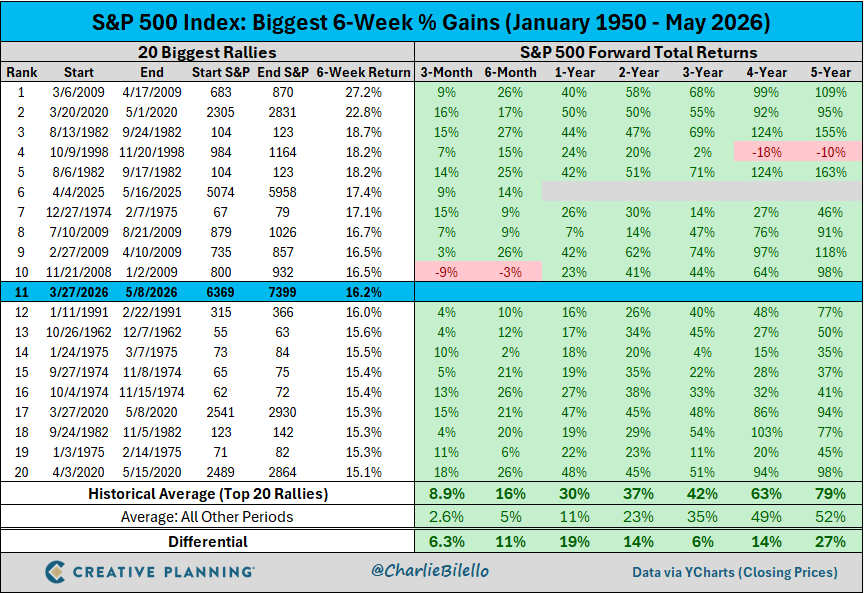
@charliebilello What’s interesting is that this rally appears driven less by economic cleansing and more by liquidity + narrative acceleration. Historically, explosive rallies often followed deep pessimism. This one is happening while valuations and positioning were already elevated.
English
1
0
2
234
Charlie Bilello
Charlie Bilello@charliebilello·
The 16% gain in the S&P 500 over the last 6 weeks is the 11th biggest 6-week gain for the index since 1950. What's unique about this rally? It's the only example in the top 20 that did not occur either during a bear market or soon after a bear market low.
Charlie Bilello tweet media
English
95
164
1K
113K
Billy Desai MBA CFA
Billy Desai MBA CFA@AnalogCapital·
I know you know Rick. The difficult reality is that sovereign defaults don’t always happen through explicit nonpayment. Historically, many governments “restructure” obligations through: • inflation • currency debasement • delayed retirement ages • reduced real benefits • financial repression • higher taxation The promise may be paid nominally while losing purchasing power in real terms.
English
0
0
1
33
Rick Rule
Rick Rule@RealRickRule·
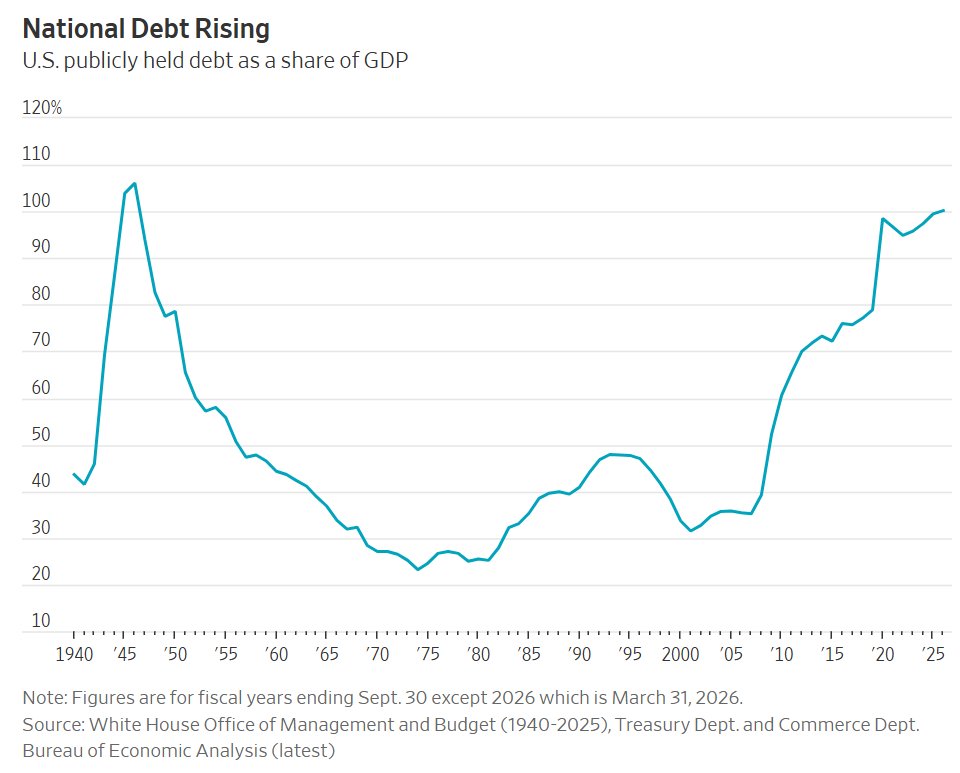
Sir, the worst part goes un noticed: The net present value of unfunded entitlement promises is quoted as being in excess of $120,000,000,000,000, more than three times the national debt. There is no money, will we default?
Robert Reich@RBReich

The national debt just crossed a once-unthinkable threshold: It now exceeds 100% of America’s GDP. But there's an important piece missing from the conversation about the debt that you should know about. Let me explain... robertreich.substack.com/p/what-no-one-…

English
7
7
42
6.1K
Billy Desai MBA CFA
Billy Desai MBA CFA@AnalogCapital·
The incentives are asymmetric. A hedge fund manager who misses upside may underperform. A hedge fund manager who ignores systemic risk and gets caught in a major drawdown can lose clients permanently. That tends to create a different psychological lens than long-only investing.
English
0
0
3
123
Billy Desai MBA CFA
Billy Desai MBA CFA@AnalogCapital·
@PeterSchiff One of the hardest political realities is that inflationary pressures are often treated with demand-side solutions. But if the constraint is energy supply, underinvestment, or currency weakness, the relief can become self-defeating over time.
English
0
0
2
40
Peter Schiff
Peter Schiff@PeterSchiff·
Since oil prices are likely to stay high or keep rising, Trump is considering suspending the federal gas tax to give consumers relief. But cheaper gas will increase demand, while lower taxes widen deficits amd weaken the dollar. The consequence will be even higher oil prices.
English
157
133
1.4K
64.1K
Billy Desai MBA CFA
Billy Desai MBA CFA@AnalogCapital·
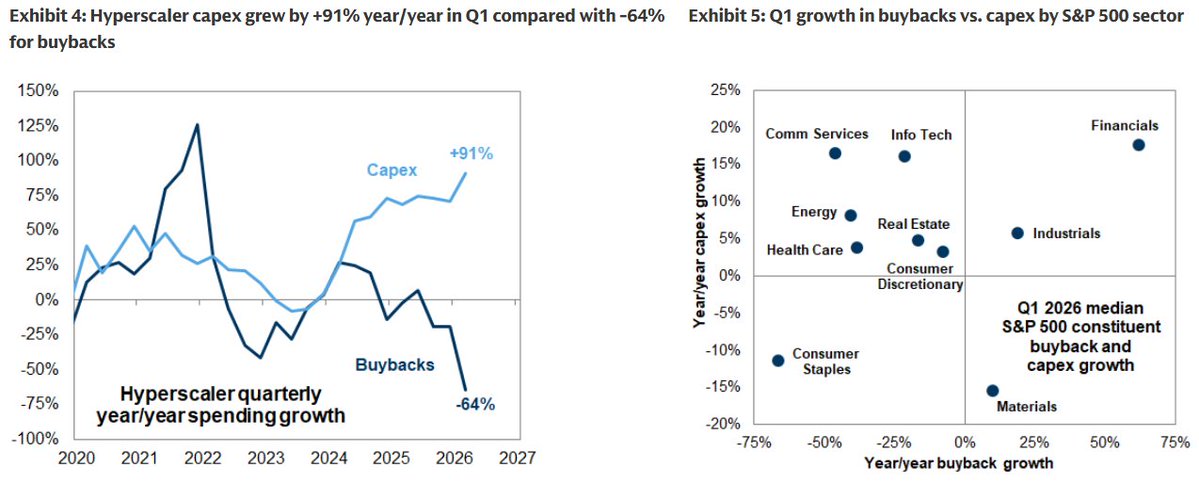
@zerohedge The interesting part is that we may be transitioning from a “financial asset” cycle to an “infrastructure” cycle. Buybacks dominated the zero-rate era. AI may require a level of real-world capital intensity the market hasn’t experienced in decades.
English
0
0
1
304
zerohedge
zerohedge@zerohedge·
Capex vs Buybacks
zerohedge tweet media
English
13
71
305
76.2K
Billy Desai MBA CFA
Billy Desai MBA CFA@AnalogCapital·
Because reserve currency status, financial repression, and monetary expansion can extend the cycle far longer than most people imagine. A debt crisis doesn’t necessarily arrive as an overnight collapse. Sometimes it arrives slowly through: • asset inflation • currency debasement • declining purchasing power • widening wealth inequality
English
0
0
0
8
Ben Carlson
Ben Carlson@awealthofcs·
Approximate US govt debt: 1930 - $16 bn 1940 - $43 bn 1950 - $257 bn 1960 - $286 bn 1970 - $368 bn 1980 - $845 bn 1990 - $3 tn 2000 - $6 tn 2010 - $12 tn 2020 - $23 tn Now - $39 tn Why has there never been a govt debt crisis? awealthofcommonsense.com/2026/05/a-gove…
Ben Carlson tweet media
English
22
8
69
25.5K
Billy Desai MBA CFA
Billy Desai MBA CFA@AnalogCapital·
@TheCompoundNews @awealthofcs The dangerous part of melt-ups is that real technological revolutions and speculative excess can exist at the same time. The internet changed the world. That didn’t stop massive mispricing along the way.
English
0
0
0
100