Ananth Rupanagudi

56.9K posts

Ananth Rupanagudi banner
Ananth Rupanagudi

Ananth Rupanagudi

@AnanthOnTrack

Passionate Railwayman, Compelling Storyteller; Compulsive traveller; Cultural Explorer. Watch out for Food posts and Lunchtime humour. Views strictly personal.

Katılım Haziran 2021
199 Takip Edilen27.6K Takipçiler
Sabitlenmiş Tweet
Ananth Rupanagudi
Ananth Rupanagudi@AnanthOnTrack·
Friends, finally, after some delay, my podcast with @kunalvijayakar on the History of the Bor Ghat railway line on @IVMPodcasts is live! It has come out well though the editing could have been a little better. I regret if there are any errors in the podcast. I would request you to watch it on YouTube in leisure (as it is 47 minutes long 🙂) and let me know how it came out! Thanks! 🙏 #podcast #IndianRailways #History youtu.be/wVF2NIsF-DM?si…

YouTube video
YouTube
English
9
10
61
39.4K
Ananth Rupanagudi
Ananth Rupanagudi@AnanthOnTrack·
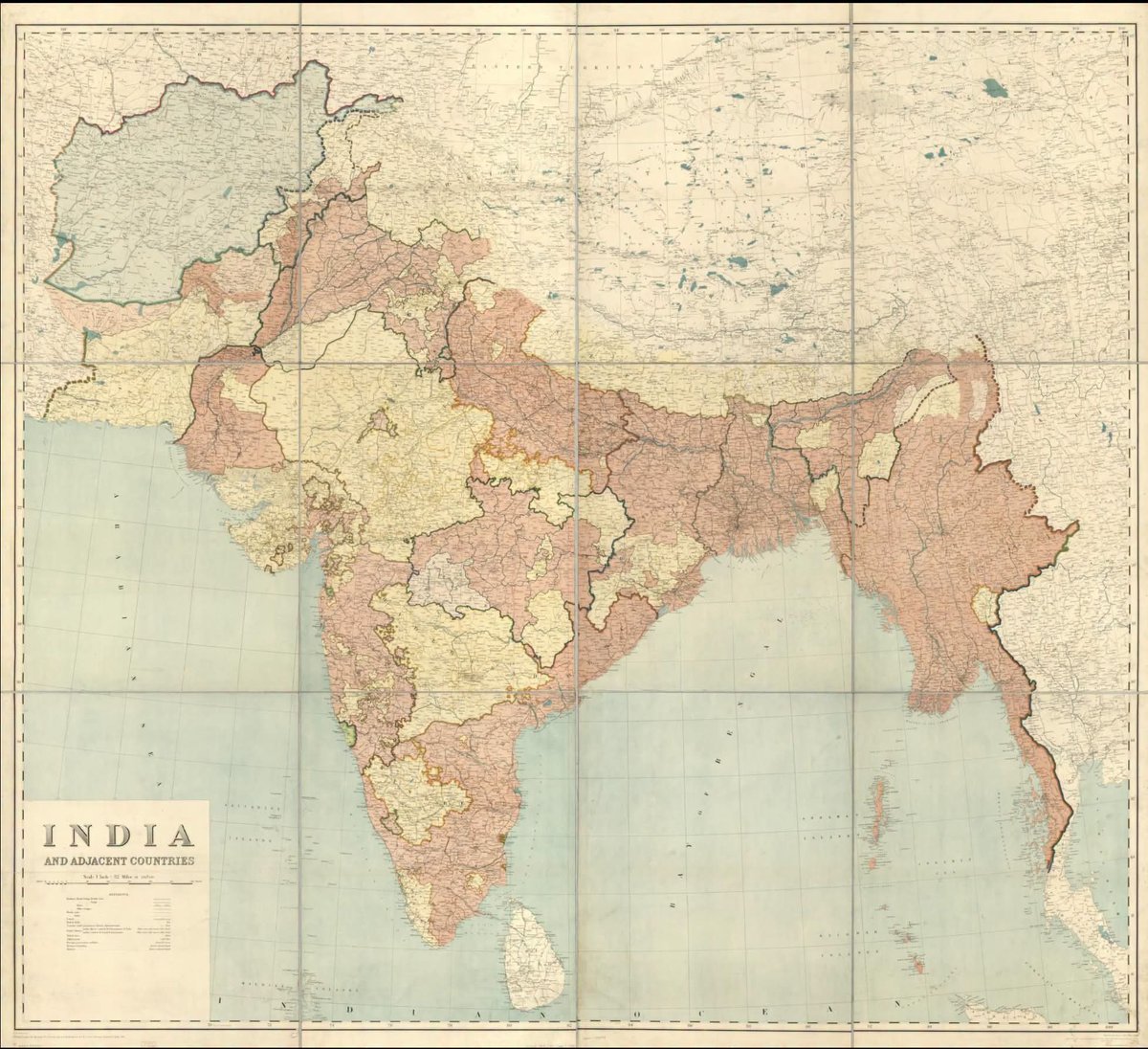
1915 - the map of India and adjacent countries published under the direction of Colonel Sir S.G. Burrard, K.C.S.I.R.E., F.R.S., Surveyor General of India. This was a huge wall map, printed on two sheets of cloth, to cover an entire wall. It shows Tibet to the north of India. India and China do not share boundaries. A large part of India is not directly under British control. Punjab is a small portion in the north west as is Bombay. Bengal, Burma and United Provinces form the largest British controlled regions. The territories of Hyderabad, controlled by the Nizam are massive. Independent Rajput states form a considerable chunk of northwest side of central India. #maps #history
Ananth Rupanagudi tweet media
English
2
2
9
332
Ananth Rupanagudi
Ananth Rupanagudi@AnanthOnTrack·
Priest of Jakhoo Temple Feeding Monkeys, Shimla, c. 1910! Jakhu Temple is an ancient Hindu shrine dedicated to Lord Hanuman, situated atop Jakhu Hill in Shimla, Himachal Pradesh. While the site has mythological origins dating back to the Ramayana epic, the first permanent structured temple was built in 1837, with the current building constructed in 1920. According to Hindu legend, Lord Hanuman stopped at this exact spot to rest while searching for the life-saving Sanjeevani Booti to revive Lakshmana. It is believed that a sage named Yaaku built the original shrine to honour Hanuman's visit. The present temple building was constructed in 1920 to match traditional Himachal architecture. In 2010, a colossal 108-foot (33-meter) statue of Lord Hanuman was unveiled on the temple premises. This statue towers above the trees and is visible across Shimla. #Shimla #temple #history
Ananth Rupanagudi tweet media
English
0
3
13
303
Ananth Rupanagudi
Ananth Rupanagudi@AnanthOnTrack·
Early 1860s, Apollo Gate, Bombay! It is one of the three original entrances to the historic walled settlement of Bombay Fort. In the 1700s, the British constructed the Bombay Fort walls and three main gateways—Apollo Gate, Church Gate, and Bazaar Gate—to protect the mercantile town from rival powers. The Apollo Gate was situated near the Apollo Bunder area. The term "Apollo" is believed to be an Anglicized corruption of Pollem, which in turn came from the Marathi Palla fish, which were historically sold at this specific pier. As Bombay's population exploded, the fortifications hindered urban expansion. Under Governor Sir Bartle Frere, the fort walls—including the Apollo Gate—were demolished in the early 1860s to open up the city. The pier, however, remained a bustling hub for cotton exports and passenger arrivals. #Mumbai #gates #history @mumbaiheritage @dhavalkulkarni
Ananth Rupanagudi tweet media
English
0
0
7
292
Ananth Rupanagudi
Ananth Rupanagudi@AnanthOnTrack·
Time is a companion that goes with us on a journey. It reminds us to cherish each moment because it will never come again. Good morning, friends, and have a great day ahead! 🙏 #WednesdayWisdom
English
2
1
7
281
Ananth Rupanagudi retweetledi
Ananth Rupanagudi
Ananth Rupanagudi@AnanthOnTrack·
Worth a read! 😍 My mom wanted to send me homemade pickles. But I said ‘no’. I was 27, living in New York, working on Wall Street. I didn't need pickles shipped across the world. The shipping would cost more than buying them here. Three years later, I read the psychologist take on what I'd actually done. When you reject someone's offer to help, you're not just declining assistance. You're declining their need to matter to you! Benjamin Franklin figured this out in 1736. He had a rival in the Pennsylvania legislature who hated him. Instead of trying to win him over with favors, Franklin asked the rival to lend him a rare book. The rival agreed. They became lifelong friends. It's called the Ben Franklin effect.When people do something for you, they convince themselves they must like you. Otherwise, why would they help? My mom didn't want to send pickles because I needed them. She wanted to send them because SHE needed to feel useful to me. To feel like despite the ocean between us, she still had a role in my life. Every time I said "I'll manage," I was taking that away from her. Here's what I learned after a decade of living away from home: → Accepting small favors isn't about you needing help. It's about letting people you love feel needed. Your dad wants to transfer ₹5000 even though you earn well? Let him. Your friend wants to pick you up from the airport even though Uber exists? Say yes. Your partner wants to make you tea even though you can make it yourself? Accept it. The people who love you don't want to solve your big problems. They want to matter in your small moments. Let them. #lifelesson
English
154
1.3K
5.6K
230.4K
Ananth Rupanagudi
Ananth Rupanagudi@AnanthOnTrack·
A beautiful photo of YP 2790 departing Jaipur with a westbound evening passenger service, captured in October 1988. Jaipur was a vital node in India’s vast historical metre gauge (MG) network. Centered around the iconic 'YP' class steam locomotive, the city connected the industrial hubs and royal estates of Rajasthan with major national corridors. Jaipur Junction served as a major shed and maintenance hub for these iconic coal-fired YP-class workhorses, which operated passenger and mixed-freight services. By the 1960s, seamless connectivity across the country meant freight and express trains could travel from Assam all the way to Rameswaram without breaking gauge. Jaipur was a crucial stopping point for these trans-regional routes. #IndianRailways #Jaipur #History
Ananth Rupanagudi tweet media
English
1
4
26
601
Ananth Rupanagudi
Ananth Rupanagudi@AnanthOnTrack·
Lunchtime humour - Two old men in a bar: 1st: “You look familiar… where are you from?” 2nd: “Delhi.” 1st: “No way! Me too! Which area?” 2nd: “Chandni Chowk.” 1st: “No way! What school?” 2nd: “St Xavier’s, class of 69.” 1st: “NO WAY! Me too!” . . . Another man enters:“Hey, barman! Anything interesting?” Bartender: “Not really… but the Singh twins are drunk again.” 😃😛😂
English
3
3
64
9.7K
Ananth Rupanagudi
Ananth Rupanagudi@AnanthOnTrack·
When a Nawab meets another member of the royalty, but in uniform - Nawab Mir Sir Himayat Ali Khan, the Prince of Berar, meeting Lt.General Maharaj Rajendrasinhji Jadeja of Sarodar. Swami Ramanand Tirtha, the President of Hyderabad State Congress, can also be spotted. c. 1948. The photograph captures a pivotal moment following Operation Polo (1948), the military action that led to the annexation of the princely state of Hyderabad into the Indian Union. Shri. K.M. Munshi, the Indian Agent-General to Hyderabad, who played a crucial role in negotiations leading to the surrender, can be seen in the center-right in a dark suit. General Maharaj Shri Rajendrasinhji Jadeja (1899–1964) was the first Chief of Army Staff of the Indian Army and the second Indian to become Commander-in-Chief. A royal scion of Nawanagar, he distinguished himself in World War II and later oversaw the execution of Operation Polo. #Hyderabad #royalty #IndianArmy
Ananth Rupanagudi tweet media
English
3
2
16
1K
Ananth Rupanagudi
Ananth Rupanagudi@AnanthOnTrack·
Long story alert! He was 31. No military rank. No weapons. No army. The men trying to stop him ran death camps across an entire country. They had trains, guards, guns, and orders from Berlin — then Hungary fell in March 1944. He printed fake papers and walked into deportation lines. Over 100,000 people are alive today because of what he did next. March 19, 1944. Budapest, Hungary. Nazi Germany invaded overnight. By morning, 750,000 Hungarian Jews were marked for deportation. The cattle cars started rolling within weeks. Auschwitz was the destination. Death came within hours of arrival. Sweden couldn't send soldiers. They were neutral. But they could send one person. His name was Raoul Wallenberg. A businessman and a diplomat. A 31-year-old with a briefcase and no combat training whatsoever. His plan had no legal foundation. He designed documents — Swedish protective passes. Official-looking papers with stamps, seals, crowned letterheads. They declared the bearer was a Swedish citizen awaiting repatriation. Immune from arrest. Immune from deportation. Every document was a forgery. The Nazis knew it. International law didn't recognise them. But Wallenberg understood something the lawyers missed. Bureaucracy is its own kind of fear. The papers looked official. Sweden was neutral. Sweden had diplomatic relationships with Germany. Arresting a Swedish citizen meant an international incident — paperwork, protests, complications. Nazi officers hesitated. Just long enough. Wallenberg handed passes out by the hundreds. To people standing in deportation lines. To families hiding in basements. To anyone who reached for one. They worked. He didn't stop at paper. Wallenberg rented 32 buildings across Budapest. He hung Swedish flags from every window. Declared them Swedish territory — extraterritorial zones outside Nazi jurisdiction. Then he filled them with people. Thousands packed into rooms, hallways, stairwells. Hungry. Terrified. But alive. The Nazis protested. These weren't real Swedish buildings. Wallenberg didn't move. "Touch them, and you're violating Swedish neutrality." They backed down. He bribed guards with cash and gold. He drove through the city at night, moving refugees between safe houses. He worked 18-hour days. He forged. He negotiated. He refused to stop. Then one afternoon he heard about a train. A deportation train sat at a Budapest station, bound for Auschwitz with hundreds of people locked inside the cars. Wallenberg climbed onto the roof. He walked across the top of the train, handing protective passes down through the ventilation gaps to the people locked inside. Nazi guards screamed at him. Threatened to shoot. He kept walking. "These are Swedish citizens. You have no authority here." The guards didn't shoot. Dozens walked off that train and lived. Wallenberg refused to accept what the Nazis had decided. He refused it in deportation lines. He refused it on train rooftops. He refused it in the offices of SS commanders who outranked him in every measurable way. He had no weapons. He used paperwork and nerve, and he refused — every single day — for months. By January 1945, the Soviet Army had liberated Budapest. The Nazis fled. The war in Hungary was over. Wallenberg had saved more than 100,000 people. One man. One briefcase. 100,000 lives. Survivors found him in the streets. Tears. Embraces. Families who existed because he had walked up to guards and lied, brilliantly, repeatedly, on their behalf. He had won. He had actually won. On January 17, 1945 — eight days after liberation — Wallenberg drove to Soviet military headquarters. A routine coordination meeting. Relief efforts. Rebuilding. He never came back. The Soviets arrested him at a checkpoint. Stalin was paranoid. A neutral Swede with connections across Budapest? That sounded like a Western spy. He was taken for interrogation. His family asked questions. Sweden asked questions. The Soviet government said: We don't have him. We never arrested him. They said this for 12 years. In 1957, the Soviet Union admitted the truth. Wallenberg had been in Lubyanka Prison. He died there on July 17, 1947. They said - heart attack. No body. No grave. No proof. In 2000, Russia stated he was likely executed. They refused to say when. They refused to say where he was buried. They still haven't. The man who saved 100,000 people was arrested by the side that won, held in secret for over two years, and probably killed. His family received no apology. No remains. No explanation. History barely noticed for decades. But the people he saved had children. Those children had children. Today, an estimated 300,000 people are alive because Raoul Wallenberg walked up to a deportation line with a stack of fake papers and refused to leave. 300,000 people. 300,000 families. 300,000 futures that exist because one man decided bureaucracy could be a weapon too. Israel named him Righteous Among the Nations. The United States made him an honorary citizen — only the second person in history to receive that honour, after Winston Churchill. Streets and schools carry his name across 30 countries. But his grave is still unknown. His final days are still classified in Russian archives. And right now, in 2025, Russia still holds documents about his death that it has never released. This matters today because people are still disappeared by governments that later deny it. Families still wait. Archives still stay locked. It is a method still in use. His story is the argument for why it must end. RAOUL WALLENBERG: The man who saved 100,000 people with forged papers — and was erased by the country he never fought against. #UnknownHeroes #WorldWarII #history
Ananth Rupanagudi tweet media
English
1
2
15
782
Ananth Rupanagudi
Ananth Rupanagudi@AnanthOnTrack·
This is such a beautiful drone video of trains passing through the scenic landscape of the Kuttanad region called the Rice Bowl of Kerala, in Thakazhi near Alappuzha, in the jurisdiction of @TVC138 in @GMSRailway! It is one of the only places on Earth where paddy farming takes place up to 2 meters below sea level, featuring vast paddy fields separated by rivers, canals, and backwaters. The region is fed by four major rivers—the Pamba, Meenachil, Achankovil, and Manimala—creating an extensive backwater network. It is a major attraction for houseboat cruises, offering views of rural country life, duck farming, and traditional toddy tapping. Video courtesy, Abdul Razak! #IndianRailways #Kerala @parvathimenon @PiyuNair
English
1
14
59
2K
Ananth Rupanagudi
Ananth Rupanagudi@AnanthOnTrack·
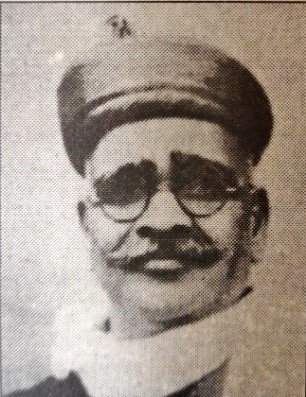
#DidYouKnow The first outdoor official flag hoisting of our National Flag took place on 15th Aug 1947, in Canberra, Australia at the residence of Sir Raghunath Paranype, the High Commissioner of India in Australia at that time. Sir Raghunath Purushottam Paranjpye (also spelled Paranjape) was a distinguished Indian mathematician, educationist, diplomat, and social reformer. He famously achieved historic renown as the first Indian Senior Wrangler at the University of Cambridge. The personal connection is that we share the same Alma Mater - Fergusson College, from where he passed out in 1896 (I passed out in 1993 🙂). He won a government scholarship to study at St. John's College, Cambridge, in 1896. In 1899, he topped the notorious Mathematical Tripos examination. Returning to India in 1902, he turned down lucrative administrative positions to serve as a professor of mathematics and principal at Fergusson College until 1924. His reputation drew mathematics students from across the country. He served as the Vice-Chancellor of Lucknow University (1932–1938) and later as the Vice-Chancellor of the University of Poona (1956–1959). In 1907, he became the first librarian of the newly founded Indian Mathematical Society. Under the Diarchy constitution, he was appointed the Minister for Education and Health for the Bombay Presidency (1921–1923), and later served briefly as the Minister for Excise and Forests (1927). The colonial government granted him a knighthood in 1942. He served as India's High Commissioner to Australia from 1944 to 1947. The famous film director, Sai Paranjpe, is the granddaughter of Sir Raghunath Paranjpe.
Ananth Rupanagudi tweet media
English
0
2
17
632
Ananth Rupanagudi
Ananth Rupanagudi@AnanthOnTrack·
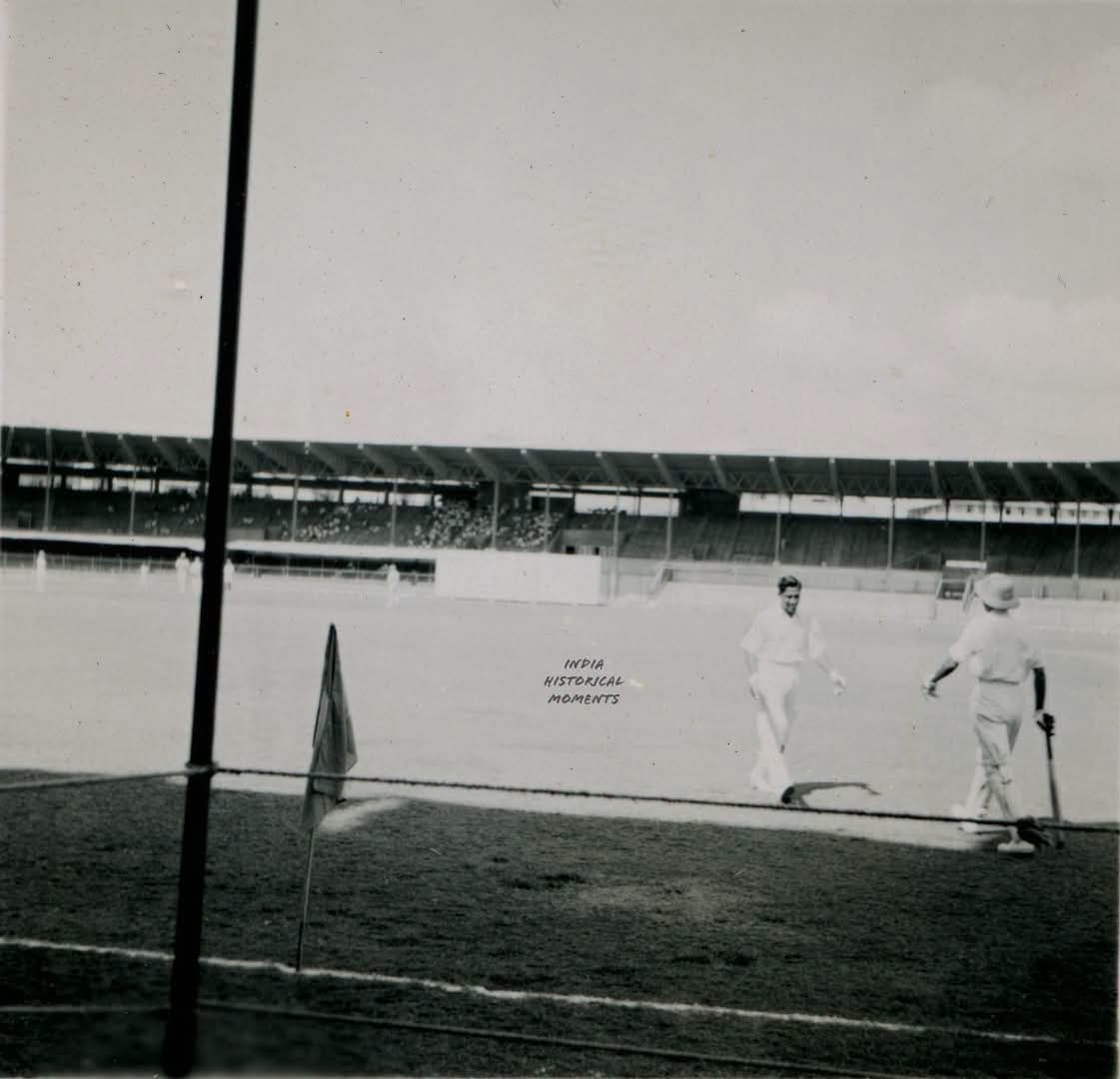
At the Brabourne Stadium, Bombay— 1951. Built in 1937, Mumbai's Brabourne Stadium is India's first permanent sporting venue. Located along Marine Drive in South Mumbai, it is owned by the Cricket Club of India (CCI). It hosted several international and domestic matches before shifting out of the spotlight following a dispute with the Bombay Cricket Association. The stadium was the brainchild of Neville de Mello, who envisioned creating the "Lord's of India". He negotiated with the Governor of Bombay, Lord Brabourne, convincing him to allot 90,000 square yards of reclaimed land along the sea front for the Cricket Club of India. The foundation stone was laid in May 1936, and the stadium officially opened in December 1937 with a match between the CCI and Lord Tennyson's team. Brabourne Stadium became the premier venue for domestic tournaments like the Bombay Pentangular and served as the venue for all international Tests in Mumbai from 1948 to 1973. Legends of Indian cricket, including Vijay Merchant and Vijay Hazare, dominated the domestic circuit here. It also served as the original headquarters of the Board of Control for Cricket in India (BCCI), housing its office and the 1983 World Cup trophy until 2006. In the early 1970s, constant disagreements over ticket allocations and revenue sharing between the CCI and the Bombay Cricket Association reached a breaking point. Feeling marginalized, BCA chief Sheshrao Wankhede spearheaded the construction of the Wankhede Stadium just 700 meters away. Opened in 1975, Wankhede soon became the primary international venue in the city, leading to a long hiatus for international matches at Brabourne. #Mumbai #cricket #history
Ananth Rupanagudi tweet media
English
2
1
19
778
Ananth Rupanagudi
Ananth Rupanagudi@AnanthOnTrack·
Early 1860s, Bazaar Gate, Bombay! Bazaar Gate was one of three main entryways into the walled English Fort of Bombay. Located near the present-day General Post Office, it opened into the bustling, Indian-inhabited northern section of the fort. Because the city was rapidly expanding, Governor Sir Bartle Frere ordered the defensive walls to be demolished in 1862. Locals often referred to the entryways as Teen Darwaza - Bazaar Gate, Apollo Gate and Church Gate. Indian sentries patrolled the gate and the gate was named after a vast colourful bazaar in the area. The removal of the Bazaar Gate and the fort's surrounding walls in the 1860s was a major turning point for the city. It marked the transition from a constrained mercantile town to an open, expanding commercial metropolis. #Mumbai #gates #HistoryMatters @mumbaiheritage @rushikesh_agre_ @dhavalkulkarni
Ananth Rupanagudi tweet media
English
0
1
16
666
Ananth Rupanagudi
Ananth Rupanagudi@AnanthOnTrack·
A duty which becomes a desire will ultimately become a delight. Good morning, friends, and have a great day ahead! 🙏 #TuesdayThoughts
English
2
2
15
828
Ananth Rupanagudi
Ananth Rupanagudi@AnanthOnTrack·
#DidYouKnow Finally, on August 15th, 1854, the first train service of EIR was flagged off without much fanfare, from Howrah to Hooghly, a distance of 24 miles. Howrah station just had a temporary tin shed with a single booking office, flanked by two platforms. #IndianRailways #History
Ananth Rupanagudi@AnanthOnTrack

#DidYouKnow There was a race between GIPR and East Indian Railway (EIR) to start the first train service in India. However, the former won as the first train ran from Bombay to Thana ran on April 16th, 1853. There were three factors due to which EIR lagged behind. Firstly, EIR faced delays in obtaining the permission from the French for the line to traverse their territory in Chandernagore. Secondly, the locomotive shipped from England got misdirected to Australia, and could be brought back only in 1854 aboard the ship 'Kedgeree'. Thirdly, the ship HMS Goodwin, carrying the coaches sank at the Sandheads near Diamond Harbour and they had to be assembled locally. These factors set the date to start the train service back by 16 months to August 15th, 1854. 🚉🚊 #IndianRailways #History

English
0
2
10
863