Andrea Chiampo

10.1K posts

Andrea Chiampo banner
Andrea Chiampo

Andrea Chiampo

@Andrea_Chiampo

• Creator from a 𝐅𝐔𝐓𝐔𝐑𝐄𝐃 𝐏𝐀𝐒𝐓 ~ Zero10 Miami / https://t.co/JLtgD4YLrM • Formerly at Disney, Netflix, 20th Century Fox, The Mill, etc...

London Katılım Ekim 2015
3.3K Takip Edilen32.5K Takipçiler
Sabitlenmiş Tweet
Andrea Chiampo
Andrea Chiampo@Andrea_Chiampo·
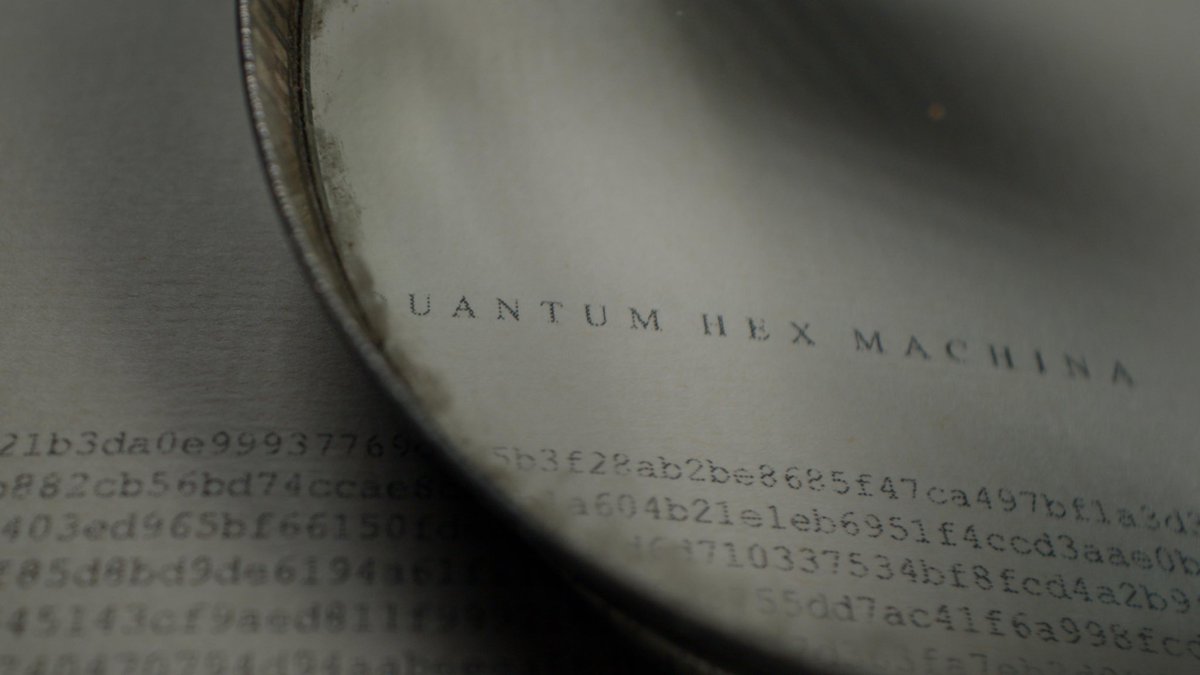
*SOLD for $50.0K / 28.248 ETH* QUANTUM HEX MACHINA joins a private collection. They’ve chosen to remain anonymous for now, but I can say with full confidence: this piece couldn’t have found a more thoughtful guardian. Here's why this is unlike anything I’ve done before👇
GIF
English
81
37
313
31.2K
Andrea Chiampo
Andrea Chiampo@Andrea_Chiampo·
3 HOURS LEFT ~ LAST CALL 🏴
English
1
1
15
507
Andrea Chiampo retweetledi
Merve
Merve@OmletteMerve·
GM 🤍 Less than 12 hrs to get a limited edition print from one and only legend Andrea Chiampo! Don’t miss it! Link below👇🏼
Merve tweet mediaMerve tweet media
English
24
8
70
1.4K
Andrea Chiampo retweetledi
RD
RD@RogerDickerman·
GENESIS | Andrea Chiampo
RD tweet media
Italiano
5
3
65
3.2K
Andrea Chiampo
Andrea Chiampo@Andrea_Chiampo·
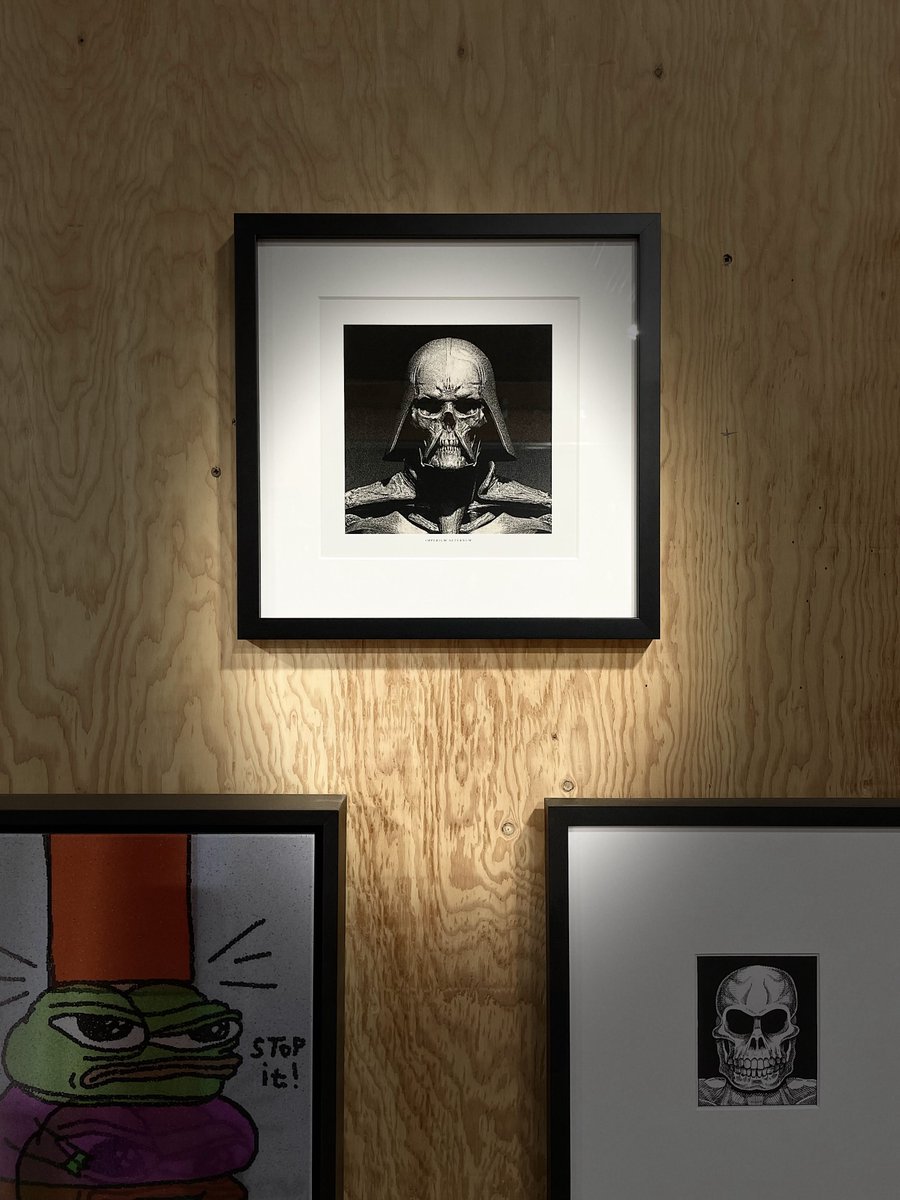
🏴 PRINT DROP - 48 hours LIMITED TIME *** For the past five years I’ve been deeply focused on fine art, creating unique pieces and very limited editions aimed at specific audience/collectors. Over time I realized that many of you here have been asking for something more accessible, a way to be part of the journey and own one of my works. With this print drop I’m opening that door. It’s my way of giving back to the community that has supported me all these years. This moment feels like the perfect opportunity to reward you, and I can’t wait for you to receive these stunning, top tier quality prints. Shop is now open. Go get yours. Thanks, A
Andrea Chiampo tweet mediaAndrea Chiampo tweet mediaAndrea Chiampo tweet media
English
4
6
49
4.5K
Andrea Chiampo retweetledi
Merve
Merve@OmletteMerve·
GM 🤍
Merve tweet media
47
12
134
1.9K
A. L. Crego
A. L. Crego@ALCrego_·
@Inspector_9 @Andrea_Chiampo Yee he rules! In my case is photo edition… and surprise! Is not black and white😂 It has even reds, but as I always say, here in X is IMPOSSIBLE to perceive art properly. Thanks mate!
A. L. Crego tweet media
English
1
0
1
80
A. L. Crego
A. L. Crego@ALCrego_·
Self control
A. L. Crego tweet media
English
3
25
190
3K
Andrea Chiampo retweetledi
vitalik.eth
vitalik.eth@VitalikButerin·
Now, the quantum resistance roadmap. Today, four things in Ethereum are quantum-vulnerable: * consensus-layer BLS signatures * data availability (KZG commitments+proofs) * EOA signatures (ECDSA) * Application-layer ZK proofs (KZG or groth16) We can tackle these step by step: ## Consensus-layer signatures Lean consensus includes fully replacing BLS signatures with hash-based signatures (some variant of Winternitz), and using STARKs to do aggregation. Before lean finality, we stand a good chance of getting the Lean available chain. This also involves hash-based signatures, but there are much fewer signatures (eg. 256-1024 per slot), so we do not need STARKs for aggregation. One important thing upstream of this is choosing the hash function. This may be "Ethereum's last hash function", so it's important to choose wisely. Conventional hashes are too slow, and the most aggressive forms of Poseidon have taken hits on their security analysis recently. Likely options are: * Poseidon2 plus extra rounds, potentially non-arithmetic layers (eg. Monolith) mixed in * Poseidon1 (the older version of Poseidon, not vulnerable to any of the recent attacks on Poseidon2, but 2x slower) * BLAKE3 or similar (take the most efficient conventional hash we know) ## Data availability Today, we rely pretty heavily on KZG for erasure coding. We could move to STARKs, but this has two problems: 1. If we want to do 2D DAS, then our current setup for this relies on the "linearity" property of KZG commitments; with STARKs we don't have that. However, our current thinking is that it should be sufficient given our scale targets to just max out 1D DAS (ie. PeerDAS). Ethereum is taking a more conservative posture, it's not trying to be a high-scale data layer for the world. 2. We need proofs that erasure coded blobs are correctly constructed. KZG does this "for free". STARKs can substitute, but a STARK is ... bigger than a blob. So you need recursive starks (though there's also alternative techniques, that have their own tradeoffs). This is okay, but the logistics of this get harder if you want to support distributed blob selection. Summary: it's manageable, but there's a lot of engineering work to do. ## EOA signatures Here, the answer is clear: we add native AA (see eips.ethereum.org/EIPS/eip-8141 ), so that we get first-class accounts that can use any signature algorithm. However, to make this work, we also need quantum-resistant signature algorithms to actually be viable. ECDSA signature verification costs 3000 gas. Quantum-resistant signatures are ... much much larger and heavier to verify. We know of quantum-resistant hash-based signatures that are in the ~200k gas range to verify. We also know of lattice-based quantum-resistant signatures. Today, these are extremely inefficient to verify. However, there is work on vectorized math precompiles, that let you perform operations (+, *, %, dot product, also NTT / butterfly permutations) that are at the core of lattice math, and also STARKs. This could greatly reduce the gas cost of lattice-based signatures to a similar range, and potentially go even lower. The long-term fix is protocol-layer recursive signature and proof aggregation, which could reduce these gas overheads to near-zero. ## Proofs Today, a ZK-SNARK costs ~300-500k gas. A quantum-resistant STARK is more like 10m gas. The latter is unacceptable for privacy protocols, L2s, and other users of proofs. The solution again is protocol-layer recursive signature and proof aggregation. So let's talk about what this is. In EIP-8141, transactions have the ability to include a "validation frame", during which signature verifications and similar operations are supposed to happen. Validation frames cannot access the outside world, they can only look at their calldata and return a value, and nothing else can look at their calldata. This is designed so that it's possible to replace any validation frame (and its calldata) with a STARK that verifies it (potentially a single STARK for all the validation frames in a block). This way, a block could "contain" a thousand validation frames, each of which contains either a 3 kB signature or even a 256 kB proof, but that 3-256 MB (and the computation needed to verify it) would never come onchain. Instead, it would all get replaced by a proof verifying that the computation is correct. Potentially, this proving does not even need to be done by the block builder. Instead, I envision that it happens at mempool layer: every 500ms, each node could pass along the new valid transactions that it has seen, along with a proof verifying that they are all valid (including having validation frames that match their stated effects). The overhead is static: only one proof per 500ms. Here's a post where I talk about this: ethresear.ch/t/recursive-st… firefly.social/post/farcaster…
English
803
1K
5.7K
899.1K