Sabitlenmiş Tweet
Andre Leu
6.2K posts
Andre Leu
@Andreleu1
Dr Andre Leu, Author of: Growing Life, The Myths of Safe Pesticides. He is the International Director of Regeneration International, musician and farmer
Daintree, Queesland, Australia Katılım Nisan 2011
684 Takip Edilen4.1K Takipçiler
Andre Leu retweetledi
Genetically Modified Microorganisms: What Are the Risks, and Who’s Watching?regenerationinternational.org/2026/03/16/gen…
English
There is no need to poison our food and environment with Glyphosate. Regenerative Organic gets higher yields without these toxins. regenerationinternational.org/2025/08/18/the…
English
Andre Leu retweetledi

Man, what a no brainer.
English
Andre Leu retweetledi
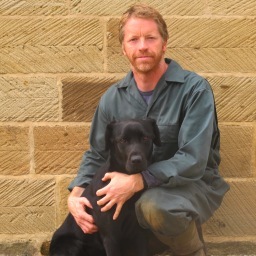
I don’t spray poison on my farm.
No:
- herbicides
- pesticides
- insecticides.
The animals receive no prophylactic medication.
The soil grows what it will; stewardship of the land and cattle together improves soil and maintains health.
Eat real red meat and animal fat; buy the best you can.
English
The Science shows Glyphosate must be banned regenerationinternational.org/2025/12/04/the…
English
Andre Leu retweetledi

No corporation writes a $7.5BILLION check unless the evidence is overwhelming. & Yet, Bayer still refuses to admit that Roundup causes cancer. Bayer’s own press release also makes clear they will continue pursuing state and federal legislation to shield themselves from liability.

English
Andre Leu retweetledi

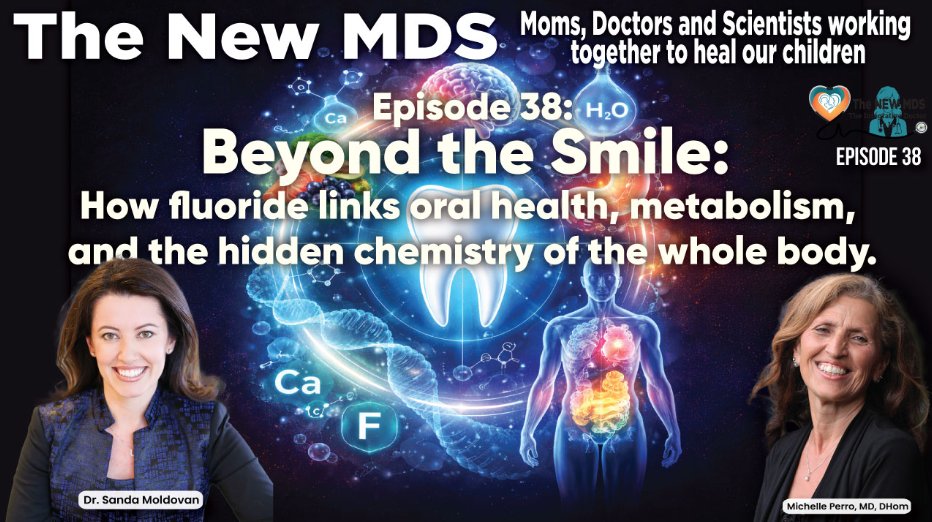
I hope you can join in tomorrow to our live joint podcast with the Holistic Dentist: periodontist, nutritionist, author, Dr. Sanda Moldovan and myself to discuss fluoride and the links to health, 12 Noon PST, Feb. 17th:
X - x.com/GMOScience
Facebook - facebook.com/NewMDS
YouTube - @thenewmds" target="_blank" rel="nofollow noopener">youtube.com/@thenewmds
Rumble - rumble.com/user/TheNewMDS
English
Andre Leu retweetledi
Excited to share our newly published paper: Genetically Modified Microorganisms: Risks and Regulatory Considerations for Human and Environmental Health (Microorganisms, 2026).
We examine how engineered microbes used in medicine, agriculture, and industry raise important biosafety, ecological, and regulatory questions that current frameworks do not address.
The paper highlights potential pathways of environmental spread, microbial gene transfer, and long-term public-health implications, while calling for oversight, monitoring, and precautionary risk assessment as synthetic biology accelerates.
@Andreleu1 @stephanieseneff @SecKennedy @DrMakaryFDA @GMOFreeUSA @GMWatch @GMOFreeEU @GMOFreeCanada @GMOFreeNigeria
Read here: mdpi.com/2076-2607/14/2…
English
Andre Leu retweetledi

The EPA has, for decades, failed to regulate pesticides - that is why there are lawsuits. They don't require long-term animal studies with blood analysis. They don't require analysis on the final formulation. And they allow MRL's that are garanteed to cause harm that will lead to lawsuits. American farmers are struggling because the prices they are being paid from foreign countries are too low- not because they don't have enough pesticides - they have over 1,100 agrochemcialss that make up tens of thousands of brands. @AlexandraDunn @Bayer4CropsIE
English
Andre Leu retweetledi

Andre Leu retweetledi

Smoke can clean the air better than some chemicals.
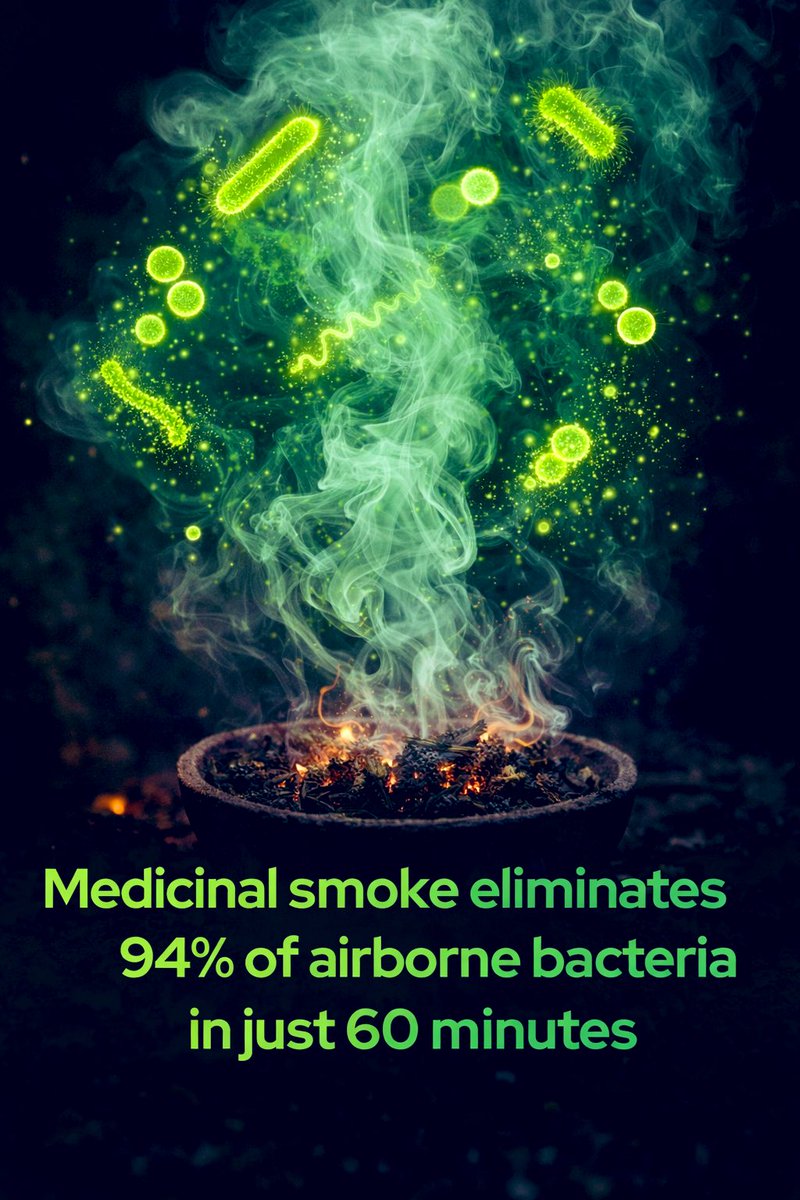
A study published in the Journal of Ethnopharmacology analyzed the effects of "medicinal smoke" - specifically the combustion of wood and a mixture of odoriferous and medicinal herbs - on airborne pathogens. The goal was to see if natural smoke could function as an atmospheric sterilizer.
The findings were significant.
The researchers treated a closed room with this medicinal smoke for one hour. They found that it didn't just mask odors; it decimated the bacteria. Within 60 minutes, there was a 94 percent reduction in bacterial counts.
Even more surprising was the longevity of the effect.
While chemical sprays often evaporate or dissipate quickly, the smoke treatment maintained a cleaner environment for 24 hours in a closed room. In an open room, specific pathogenic bacteria
- including Staphylococcus lentus and Enterobacter aerogenes were completely absent even 30 days after the initial treatment.
This indicates that the smoke possesses strong bactericidal properties, capable of eliminating diverse plant and human pathogens within a confined space. It challenges the modern assumption that air quality is only improved by filtration,
This modern data validates a practice that dates back thousands of years.
Indigenous cultures worldwide have long used smoke for purification. In India, the havan ritual involves burning specific herbs to purify the environment, while Aboriginal Australians have performed "smoking ceremonies" for roughly 60,000 years to ward off bad spirits and cleanse the land.
Read the study:
"Medicinal smoke reduces airborne bacteria." Journal of Ethnopharmacology, 2007
English
Andre Leu retweetledi
Andre Leu retweetledi

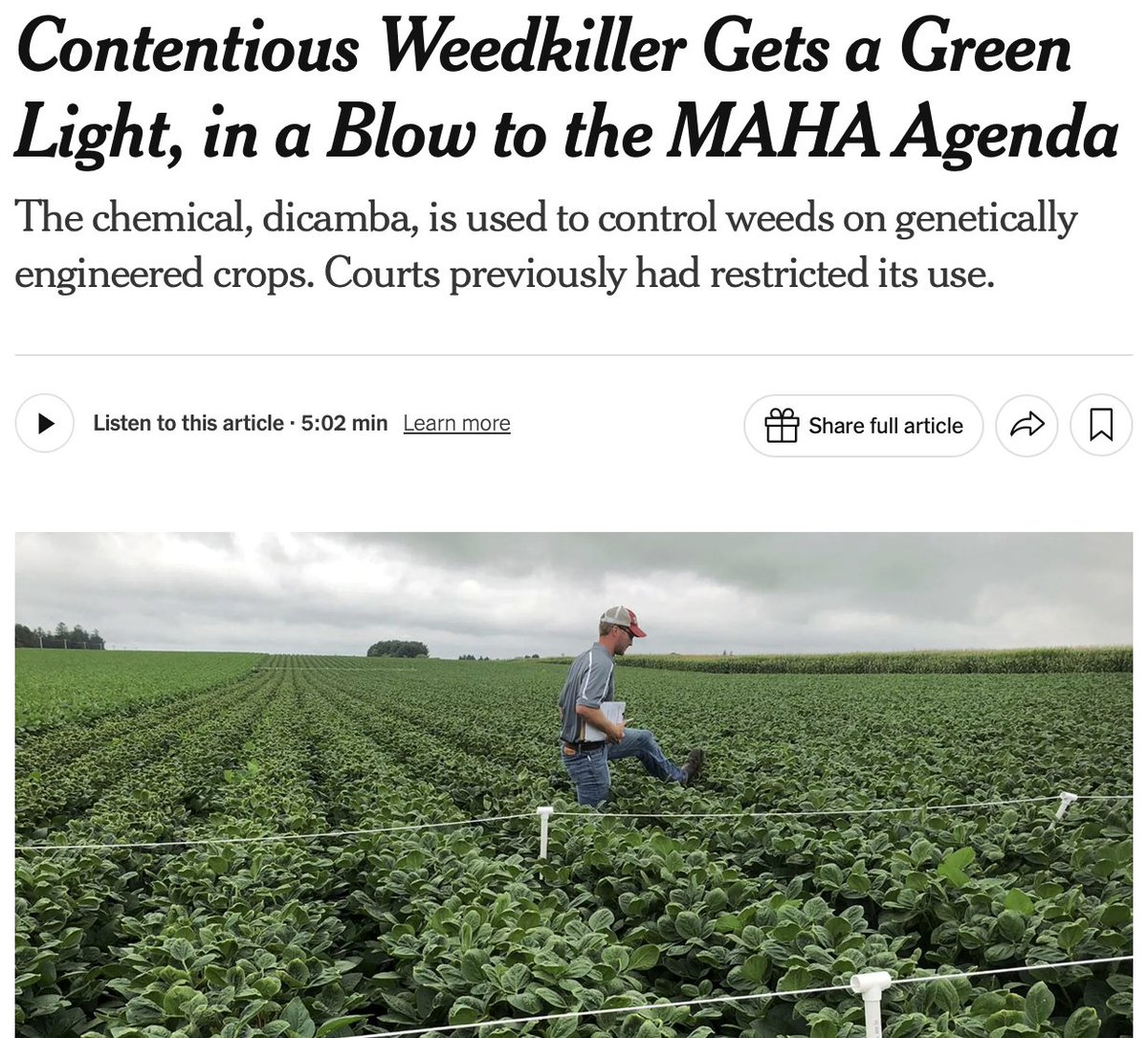
The EPA re-approved dicamba for use on genetically engineered soybeans and cotton, despite mounting evidence that this herbicide is undermining ecological, soil, and human health at landscape scale.
Dicamba is a synthetic auxin, meaning it mimics a plant's own growth hormones, triggering uncontrollable cell growth that kills sensitive broadleaf weeds.
The problem is that its effects don't stay where they're applied.
Dicamba vaporizes for up to 72 hours after application and drifts unpredictably for miles.
By 2017, 3.6 million acres of soybeans were damaged across 25 states from drift events.
Drift exposures reduce flowering in native plants, suppress pollinators, and shrink insect biomass which cascading through food webs that migratory birds in the depend on.
Proponents of dicamba claim it's a necessary tool due to its ability to eliminate "super weeds" that have developed resistance to glyphosate and other herbicides.
It turns out the same problem is repeating. Dicamba resistant waterhemp has already been confirmed in 4 states.
Weeds are evolving internal detoxification pathways broad enough to neutralize not just dicamba but also herbicides they've never even encountered.
Dicamba disrupts rhizosphere microbial communities and upregulates denitrification pathways, essentially draining plant-available nitrogen from the system while suppressing nitrogen fixation.
Dicamba increases antibiotic resistance genes in soil bacteria, linking its use to one of the major public health issues of our time.
And if that's not enough cause for concern, an NIH study linked the highest dicamba exposure to an 80% increased risk of liver and bile duct cancer, along with non-Hodgkin lymphoma, leukemia, and hypothyroidism.
Another biomonitoring study detected dicamba in every pregnant participant across three Midwestern states at four times the concentration measured a decade prior.
This is yet another example of the herbicide treadmill. Each chemical fix erodes the biological capital - soil microbiology, pollinators, native plant diversity and ultimately human health.
English
Andre Leu retweetledi

Bayer is a pharmaceutical company. Monsanto is a pesticide company. Bayer bought Monsanto.
Bayer makes drugs for non-Hodgkin's lymphoma. Monsanto makes a toxic herbicide called glyphosate that they spray on food.
Glyphosate... causes non-Hodgkin's lymphoma.
Now we've come full circle.
English
Andre Leu retweetledi
"Here's one to think about..."
"Instead of organic carrots having to be called organic carrots, maybe they could just be called carrots, and carrots grown with chemicals could be called chemical carrots?"
"And maybe those that grow with chemicals have to demonstrate and show the chemicals that were used in the production?"
"If that was on the supermarket packs, I wonder how our behaviour would change."
Credit: @greenearthorgan
English
Andre Leu retweetledi
Andre Leu retweetledi
Dicamba, a pesticide known to cause millions of dollars of crop damage, is up for reapproval
💬Sign our letter to the EPA which includes to NOT reapprove dicamba!
yesmaamusa.quorum.us/campaign/15299…

English
Andre Leu retweetledi