

Andrew Warner
2.2K posts
Andrew Warner
@AndrewDWarner
Consultant in the areas of business process management and business architecture with a penchant for scientific research.
Canberra, Australia Katılım Nisan 2009
591 Takip Edilen180 Takipçiler

Andrew Warner retweetledi

Alright, the Artemis II launch is less than a day away. So I want to address some recurring criticisms I've seen: it's too expensive, we need to solve problems down here, it's too dangerous, it does nothing for the greater good, we've already done it. Let's get into it.
NASA's annual budget is ~$25 billion, less than 0.5% of U.S. federal spending. The entire Artemis program has cost ~$93 billion over 13 years (per the NASA Inspector General). That sounds like a lot—without the right context. By comparison, the federal government spends roughly that amount in under a week. Redirecting NASA's budget would not address issues like housing or healthcare. It would simply be absorbed elsewhere, at the cost of science and technological advancement
And this investment produces real, tangible developments. NASA's Spinoff publication has documented over 2,000 technologies that have come from space exploration since 1976. Some examples:
• CMOS image sensors made at JPL that enable modern smartphone cameras
• Memory foam, originally engineered for crash protection
• Scratch-resistant lens coatings
• Advanced water purification systems derived from spacecraft recycling research
• Cochlear implant electronics improvements
• Lightweight wireless headsets
• LED lighting
• Firefighter protective gear
• Artificial limbs and advanced prosthetics
• Satellite-enabled weather forecasting
• Disaster response and environmental monitoring
These are just some technologies that came out of NASA research. The benefits extend into just about every part of life you can think of.
Now, safety. Human spaceflight is not risk-free. It is difficult and inherently dangerous. That's why missions are built diligently. Artemis I was a test flight that revealed problems NASA had to address. So NASA delayed Artemis II to address the anomalies, updated the mission profile, and added mitigations. That is what a real test program is supposed to do: identify problems before astronauts fly to make spaceflight as safe as possible.
As for it being an Apollo repeat: there's no doubt that Apollo was an incredible and historic achievement. It was also designed to be a bunch of short visits, with no plans for building infrastructure. That's because Apollo was about proving we could get there.
Artemis is designed differently. The objective is to establish a permanent, self-sustaining presence on the Moon. It includes using in-situ resources (producing water, oxygen, and propellant from lunar ice and regolith, giving us the ability to make return fuel there), nuclear surface power, autonomous robotic operations, private landers and rovers, and collaborations with JAXA, ESA, ASI, and CSA.
Artemis II itself will break records by sending astronauts farther from Earth than any human has ever gone, even the Apollo missions. The astronaut team includes the first woman, first Black person, and first Canadian astronaut to go on a lunar mission. To go beyond low Earth orbit, in fact. Artemis is absolutely not a repeat of Apollo. It'll go fast beyond and build the infrastructure needed for a sustained presence on the Moon.
Finally, space exploration has actually been one of the endeavors that have solved many of Earth's problems and bettered our everyday lives. The tech created to create spacecraft to work in the harsh conditions of space, and to help astronauts survive it, consistently improves life on Earth. Space tech becomes Earth tech. It's everywhere, in almost every facet of our lives, and most of us don't even know it. It's so integral to our everyday lives that we can't afford not to invest in space.
Now, LET'S GO ARTEMIS II 🚀👩🚀🌚
(Image credit: NASA/Bill Ingalls)

English
Andrew Warner retweetledi

JUST IN: Three thousand ships are anchored in and around the Strait of Hormuz. Twenty thousand seafarers are aboard them. Fresh food ran out two weeks ago. Perishables are rotting in refrigerated holds whose generators are burning through the last reserves of diesel. Water is rationed. Mental health is deteriorating. No mass evacuation plan exists. No humanitarian corridor has been negotiated. No international body has the authority or the means to move twenty thousand people off three thousand ships through a five-nautical-mile channel controlled by the IRGC.
These are the people who move the global economy. Every barrel of oil that reaches a refinery was carried by a seafarer. Every container of goods that stocks a shelf was loaded by one. Every tonne of fertiliser that feeds a field was shipped by one. The war has trapped the invisible workforce that makes globalisation function, and the world has not noticed because the world never notices seafarers until the shelves are empty.
The ships themselves are worth tens of billions. The cargo aboard them is worth more. Crude oil, liquefied natural gas, urea, ammonia, consumer electronics, automotive parts, and 200 cryogenic containers of helium that are boiling off at a rate that no engineer can reverse. The stranded fleet is a floating warehouse of every molecule the global economy needs, and the molecules are degrading while the crews ration drinking water. The cargo is valued higher than the people guarding it, and neither can move.
The IRGC’s Larak corridor clearance system does not only control entry. It controls exit. A vessel that wants to leave the anchorage zone must obtain the same clearance code, submit the same documentation, and receive the same pilot escort as a vessel seeking to transit. The customs border works in both directions. These crews are not stranded by geography alone. They are stranded by bureaucracy, the same bureaucracy Iran wrapped in the language of sovereign maritime governance when the parliamentary committee approved the Hormuz Management Plan. The toll booth charges for passage through. It also charges for passage out.
No centralised evacuation exists because evacuation at this scale would require IRGC approval, and requesting approval would legitimise the system the United States refuses to recognise. So the crews wait. The International Transport Workers Federation issues statements. P&I clubs cover individual medical evacuations by helicopter. Flag states, predominantly Panama, Liberia, and the Marshall Islands, register ships but do not operate navies. The system that made global shipping cheap by divorcing flag from nationality has left twenty thousand people without a government willing to retrieve them.
The seafarers are from the Philippines, India, Bangladesh, Myanmar, Indonesia. Countries whose workers crew the world’s merchant fleet because the monthly pay of $1,500 to $3,000 exceeds anything available at home. They signed contracts to deliver cargo across oceans. They did not sign contracts to become indefinite residents of a war zone, rationing water on a ship whose cargo of ammonia could feed a million people if it could reach a port that is 40 nautical miles and one IRGC clearance code away.
The helium boils off. The fertiliser waits. The crude oil sits. And the people who carry it all drink less water today than yesterday.
The supply chain has a human body at the very bottom of it. The body is thirsty.
open.substack.com/pub/shanakaans…

English
Andrew Warner retweetledi

1/
Big update in exercise science: ACSM has revised its resistance training Position Stand for the first time since 2009. That is a 17-year gap, and a lot has changed. 🧵pmc.ncbi.nlm.nih.gov/articles/PMC12…

English
Andrew Warner retweetledi

A woman was accused of 'cop-shopping' by police because she'd been to 2 different police stations to report her ex-husband for stalking and threatening her.
They told Kelly she needed to ‘cool off’ and to 'give him a break’.
He stabbed her and burned her to death just days later.
share.google/Iw2BLHMAeeLDOZ…
English
Andrew Warner retweetledi

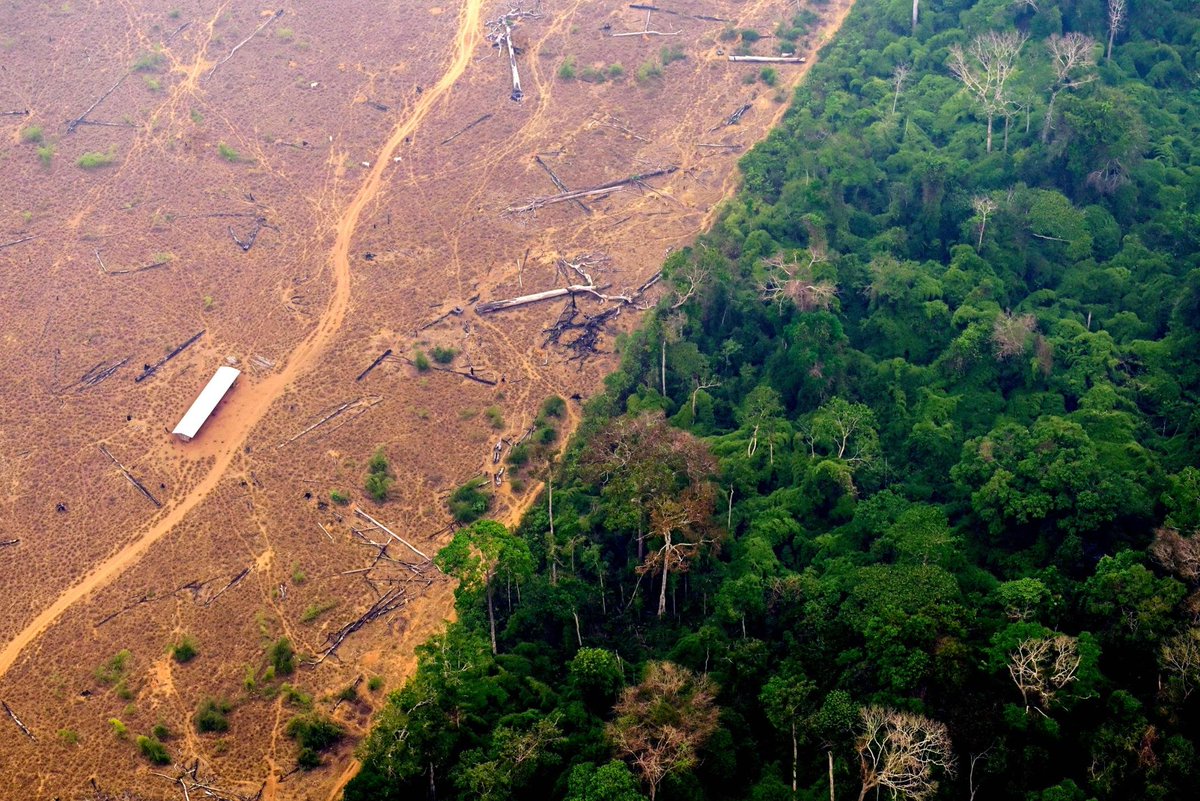
The Amazon and the Congo Basin are our planet's last great defense against climate collapse.
There is no "Planet B." There is no time to wait.
If you stand for climate action and against ecocide, let this moment count. Like, comment, and repost to spread the message. ✊🌿
English
Andrew Warner retweetledi
Growing pains – juggling complexity – Hoverstadt (2025) (for Notion Capital) buff.ly/c9EKSJh
English

Data centers could store information in glass for thousands of years
Microsoft researchers have developed a technology that writes data into glass with lasers, raising the prospect of robotic libraries full of glass tablets packed with data
newscientist.com/article/251607…
docs.google.com/document/d/1qQ…

English
@RelearningEcon @ProfSteveKeen @ElliotLip @LKrauss1 calls dimensional analysis one of three important features of the gestalt of physics in @TheOriginsPodc1 here
youtu.be/5Guq3SqcekI?si…

YouTube
English

@ElliotLip Dimensional analysis is not some trivial trick and it literally informs you that 1 km + 1 pound does not equal 2 dollars...😐
English

"Dimensional analysis" is interesting. Because it's more of a trick for debugging your analysis as you go, rather than a set of formal results, we don't really learn it systematically in any one class.
Are there other similarly useful "hidden curriculum" tricks for using math?
English
@nytimes Surely you can’t “repeal” scientific findings. Only disprove them.
English

Breaking News: The Trump administration repealed the bedrock scientific finding that greenhouse gases threaten human life and well being, meaning that the EPA can no longer regulate them. nyti.ms/404Lhbt
English
English

English

Shared with us from Sydney happening now. He had his hands up.
English
Andrew Warner retweetledi

Submissions to the parliamentary inquiry into the CSIRO have a consistent theme.
Funding of public science and medicine in Australia is too fragmented, short-term, and reactive. It ignores the fact that sovereign capacity for R&D is essential national infrastructure.

English
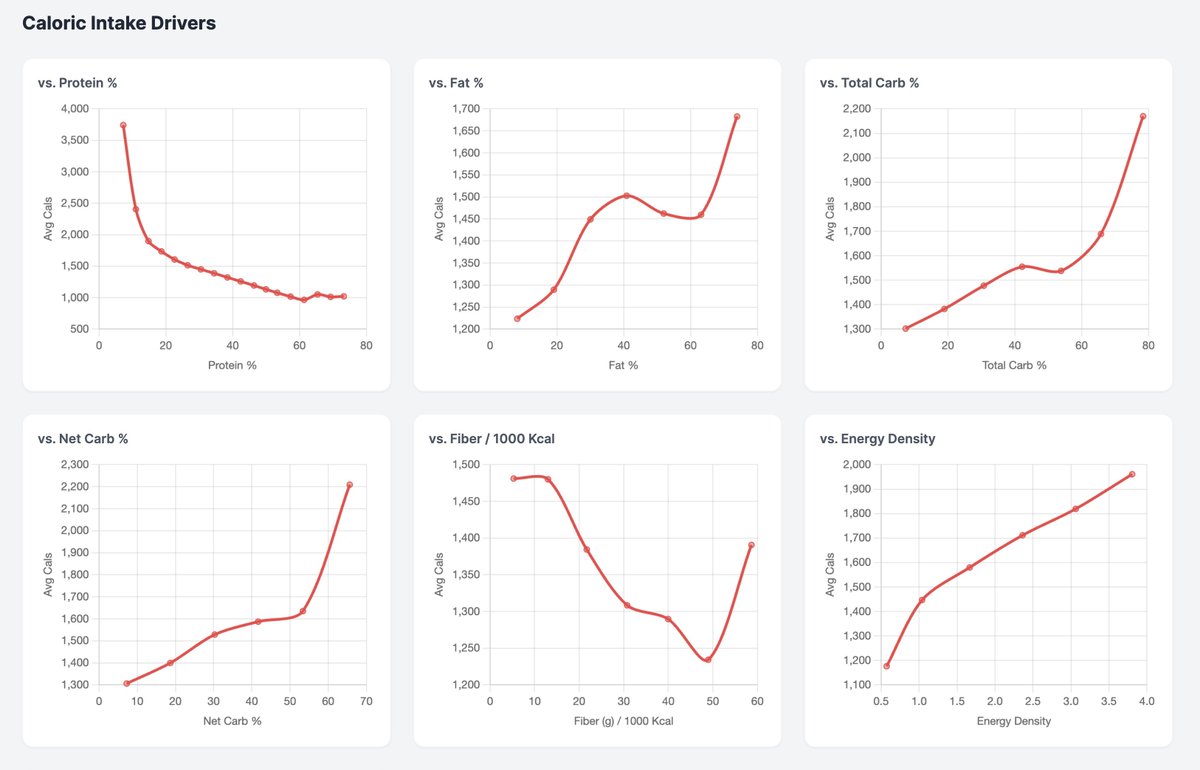
@tednaiman @eatlikeanimals It would be nice to see all the plots with the same calorie scale. It would highlight protein smashing them all. 👍
English
As predicted by Satiety Per Calorie (and the Hava algorithm itself), we can clearly see that:
1. Protein % of calories is CRITICAL.
≥ 20% seems like a good goal.
2. Fiber is good. ~30 grams per day prob a good target.
3. Lower is better for carbs, fats, and energy density.
English
🔥 MORE HAVA DATA 😁🙌🏼✨
Now over a quarter million person-days.
This graph says it all.
But even more interesting observations…

English

This is where we are headed. @radiokerry
David Ullrich@DavidUllrich202
Overshoot: Why It’s Already Too Late To Save Civilization I have bad news. Civilization is going to collapse! Not in 1000 years, not in 100 years, but within the lifetimes of most people alive today. It doesn’t necessarily mean humans will go extinct, but at the very least, billions of people are going to die from disease, violence, starvation, dehydration, natural disasters, and war. How do I know this? Because it has already begun. Our global industrial civilization has been headed for collapse for at least 50 years. That’s how long ago the human population went into overshoot, a concept that is crucial to understand if you’re going to make sense of the horrors that await us in the 21st century. docs.google.com/document/d/1fU…
English
Andrew Warner retweetledi

Andrew Warner retweetledi

If you haven’t seen this before, a warning, you might end up liking Bill Nye even more.
Via @CarsRuinedCity @BillNye
English
Andrew Warner retweetledi

ocean ramsey and her team’s encounter with this 20ft Great White Shark near Oahu, Hawaii. It's one of the largest ever recorded.
📹juansharks
English
Andrew Warner retweetledi

Doctors, nurses, and medics across Iran are being arrested by regime forces for treating protesters wounded by security shootings. Providing lifesaving care has been turned into a crime, with many facing fabricated charges, prison, and even execution.
All to silence witnesses to the regime’s brutality.
#IranMassacre


English
Andrew Warner retweetledi

1/12
Frame by frame breakdown of this MURDER shows ICE is lying!
-ICE had ALREADY disarmed the man before shooting.
-The man NEVER drew his gun.
At the 0:06 second mark we see the man’s hands on the ground covered in large gloves.
His hands are empty.

English
@mikenelson586 @angie_rasmussen I guess that’s the penguin they imposed tariffs on. Making amends I suppose.
English

"And I asked the Penguin, 'why are there only one set of footprints?'
And the Penguin told me, 'cause the person running this account is an idiot who tweets out messages that made no sense with AI slop graphics that are even worse '"
DOW Rapid Response@DOWResponse
Be a warrior, embrace the penguin.
English