Andrew Flatt

5.7K posts

Andrew Flatt

Andrew Flatt

@andrew_flatt

Professor and Researcher. Interested in the application of HRV in sport, exercise, and health.

Katılım Ekim 2012
489 Takip Edilen9K Takipçiler
Sabitlenmiş Tweet
Andrew Flatt
Andrew Flatt@andrew_flatt·
1. We tracked heart rate variability in college football players from day 1 of preseason training through to the national championship. Some key findings & thoughts discussed in the thread below. journals.humankinetics.com/view/journals/…
Andrew Flatt tweet media
English
20
71
385
0
Jim Galanes
Jim Galanes@JimGalanes·
@andrew_flatt What is AE? FYI i very often see an increase in the RMSSD the morning following a hard workout in those I coach.
English
2
0
1
181
Andrew Flatt
Andrew Flatt@andrew_flatt·
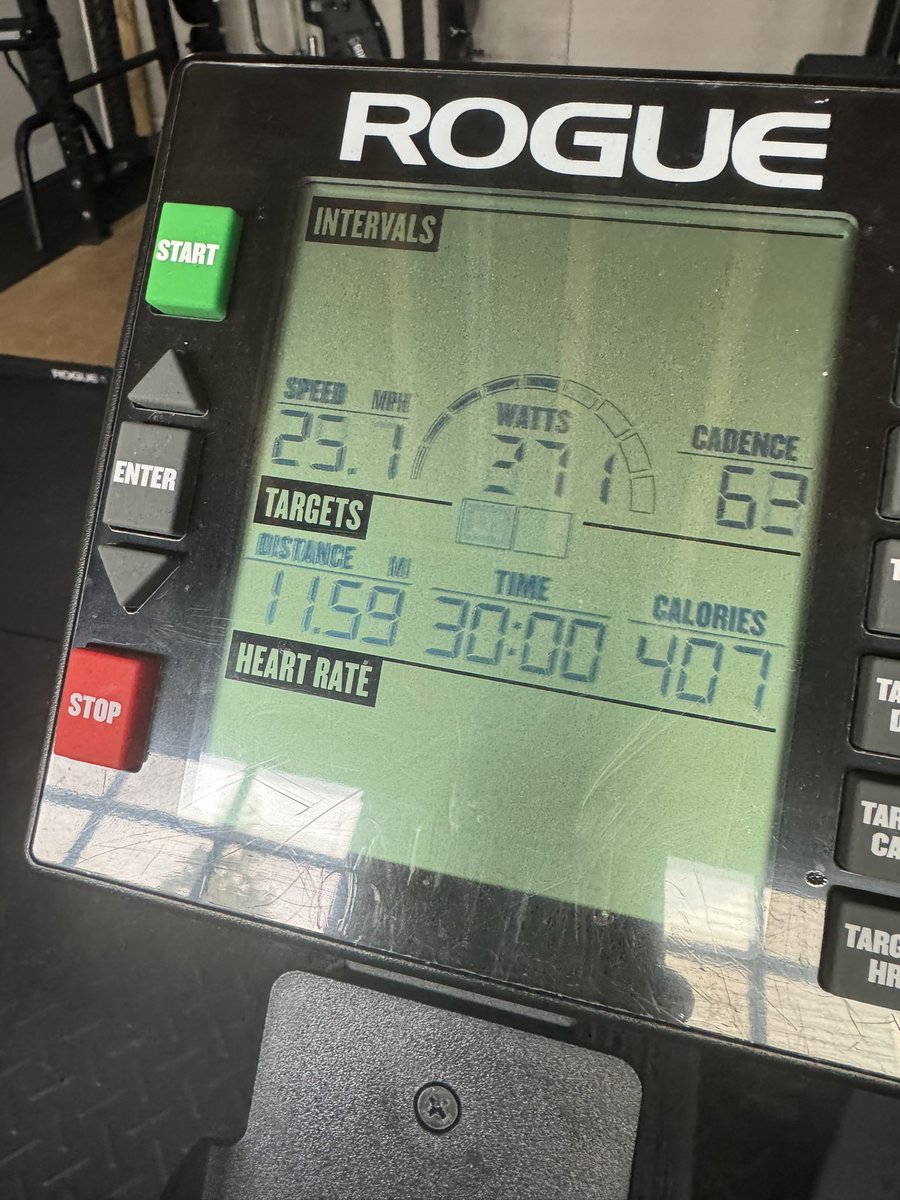
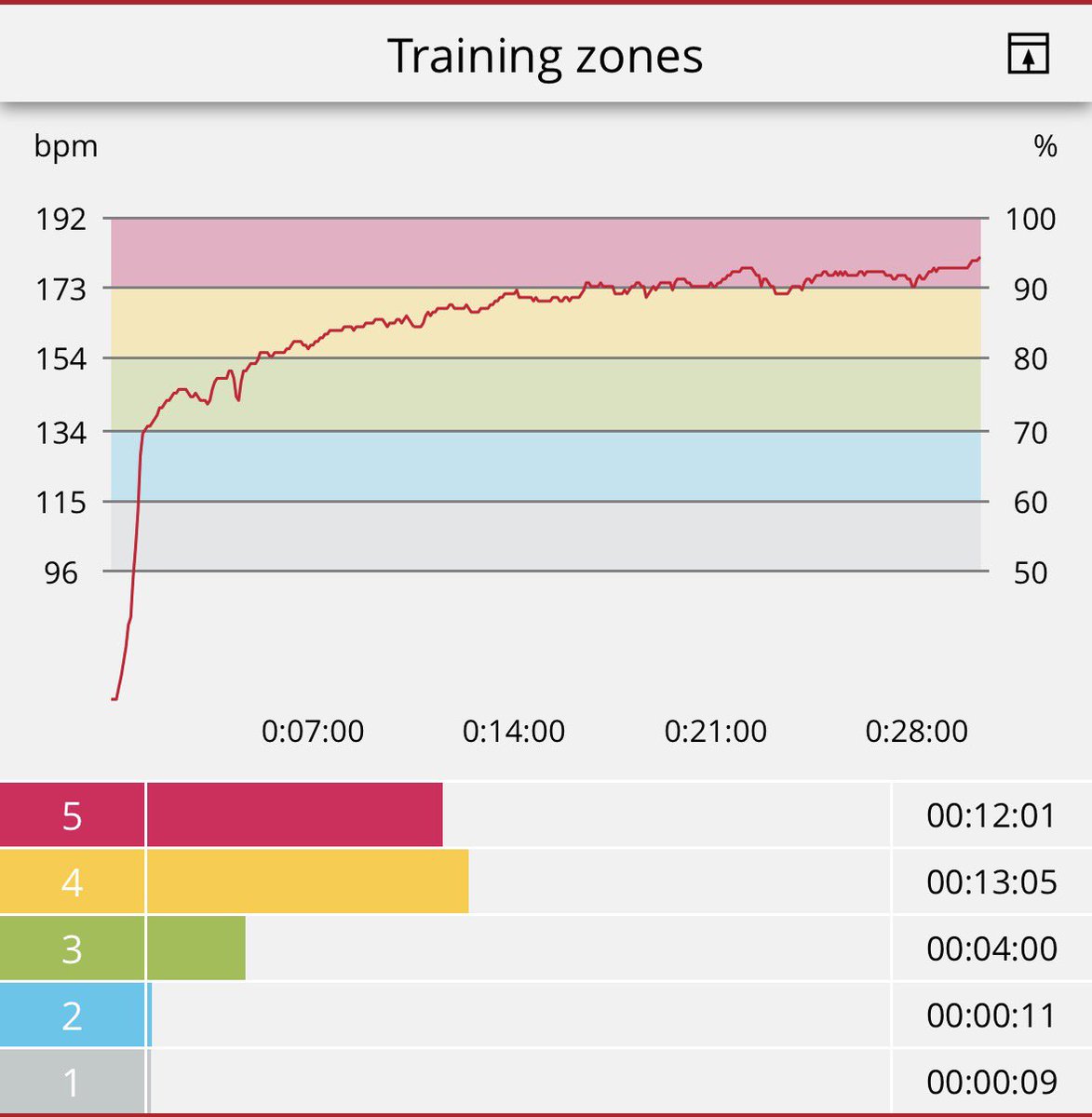
Experiencing cardiovascular benefits of AE ~20 h later. A 30 min PR yesterday and a bump in standing HRV today.
Andrew Flatt tweet mediaAndrew Flatt tweet mediaAndrew Flatt tweet media
English
3
0
19
2.6K
ACB
ACB@ACBPhysio·
@andrew_flatt Nice! And this is 10s all out vs. 50s rest for 30 mins?
English
1
0
1
191
Andrew Flatt
Andrew Flatt@andrew_flatt·
@LambdaStrength “The floor” seems a bit overstated. The single most important thing one can do to build/maintain aerobic fitness is resistance training?
English
2
0
1
121
Lambda Strength
Lambda Strength@LambdaStrength·
@andrew_flatt Aerobic fitness preservation tracks with muscle mass preservation. Lose 5 kg of muscle past 50 and VO2peak drops with it whether you ran the miles or not. Resistance training is the floor under the cardio number.
English
1
0
0
167
Andrew Flatt
Andrew Flatt@andrew_flatt·
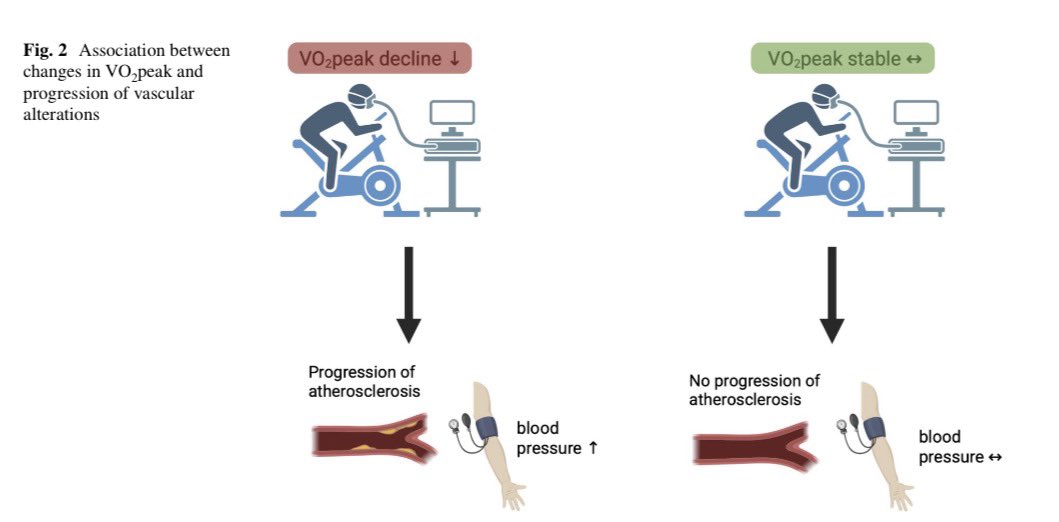
Build and maintain aerobic fitness. Older adults who preserved > 90% VO2peak over 3 years had much smaller increases in BP vs. those with greater fitness loss. Those with new plaques had the greatest reduction in VO2peak while those who remained plaque-free maintained fitness.
Andrew Flatt tweet media
English
3
3
37
3.1K
UKdeveloper
UKdeveloper@MarkEimas·
@andrew_flatt Genuine question. Do you measure the wrist and make sure that the watch is on the same hole of the strap for the entirety of the study? Is it always worn in the same way by participants? My mum for example wears an Apple Watch so loose that it locks.
English
2
0
0
131
Andrew Flatt
Andrew Flatt@andrew_flatt·
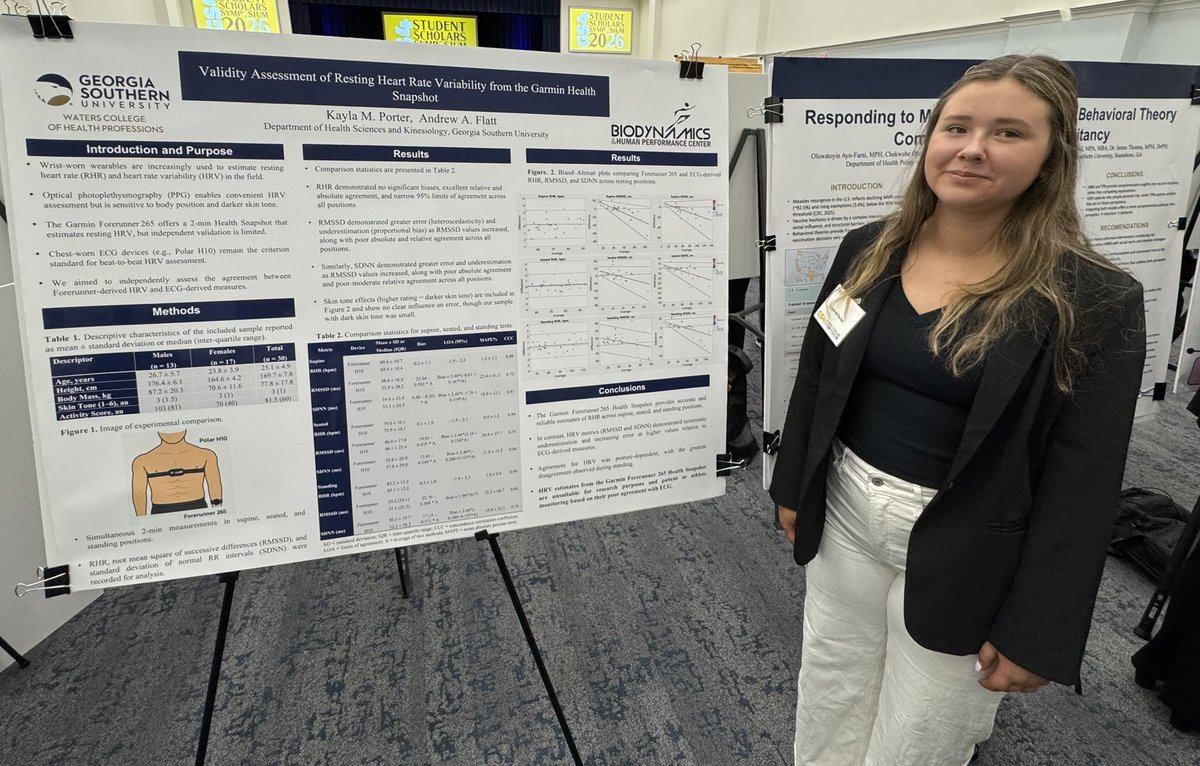
Early look at our ongoing comparison of Forerunner 265 vs H10 for HRV via Health Snapshot. Garmin overestimates lower HRV & increasingly underestimates higher HRV. Unsuitable for research, patient/athlete monitoring. Congrats to Kayla for completing her UG Honors project!
Andrew Flatt tweet media
English
11
5
125
13.4K
Andrew Flatt
Andrew Flatt@andrew_flatt·
@poetwithpace Every comparison study I’ve see using a Garmin watch shows the same issues for RMSSD, so there’s plenty of “proof”. If your true RMSSD is <40 ms or >60, it’s likely inaccurate in opposite directions. In general, less error between 40-60 ms.
English
0
0
1
27
Donato 🍕
Donato 🍕@poetwithpace·
@andrew_flatt Thank you for this Andrew. Would you believe I’m currently having this issue with Garmin and they want proof that their HRV data is wrong…
English
1
0
1
84
AJBB
AJBB@AJBB536·
@andrew_flatt I just read yours and Michael Esco’s 2014 publication “Ultra-short-term heart rate variability indexes at rest and post-exercise in athletes” and thought how elegant the study design was. Didn’t realize you’re active on Twitter! Haha. This is awesome. Big fan of your work.
English
1
0
1
94
James speed 🌲🌳
James speed 🌲🌳@SlowFastJames·
@andrew_flatt Nice one Kayla! Useful for a self assessment still rather than a comparison between people? I wonder how different Garmins vary too.
English
1
0
1
83
Andrew Flatt
Andrew Flatt@andrew_flatt·
@erroldnazareth Thanks, ErroI. I think we need to be cautious even with trends/directionality from these.
Andrew Flatt@andrew_flatt

“But wristbands can still be used to track HRV trends even if they aren’t 100% accurate”. This assumes that the error is fairly constant across the range of values (e.g. it consistently underestimates values by 10 ms whether RMSSD was 20 or 120 ms). If this were the case, then these could be used to track trends. Unfortunately, studies show that error is highly inconsistent across the range of RMSSD values. In some cases, error increases as RMSSD increases, with the error occurring in either direction. This means that the true RMSSD might be substantially higher OR lower than it appears on the app. You won’t know in which direction it is off. In other cases, there is overestimation at low values and massive underestimation at high values. This means your true low values will appear higher (e.g. 15 ms true value appears as 30 ms) and your true high values will appear lower (90 ms true value appears as 60 ms). This is unacceptable for tracking changes and quantifying daily variation (CV) with longitudinal monitoring, and for rank ordering individuals cross-sectionally (lowest to highest HRV). Note that many previous validation studies did not test for these types of bias (though it can be seen in figures), leading to overly optimistic conclusions about device accuracy. It’s concerning enough that people are using these recreationally and being misled. It’s much worse that these are increasingly being used for conducting research.

English
1
0
0
311
Errol Nazareth
Errol Nazareth@erroldnazareth·
@andrew_flatt Interesting. This is why it helps to treat tracker data as directional rather than absolute. Good to see more real-world validation like this.
English
1
0
0
291
Andrew Flatt
Andrew Flatt@andrew_flatt·
@Nick_Foreman_ Yes. Typical BA plots (as shown for RHR, left column) are inappropriate for RMSSD (middle) and SDNN (right) due to various assumptions being violated.
English
1
0
0
283
Nick Foreman
Nick Foreman@Nick_Foreman_·
@andrew_flatt Underestimating at high HRV makes sense but always good to have data confirming it too. In the panel of 3x3 figures, is the middle column also Bland-Altman plots? If so, that’s a lot of bias!
English
1
0
0
500
Andrew Flatt
Andrew Flatt@andrew_flatt·
AE should be prioritized over RE for reducing blood pressure. “Aerobic exercise consistently produces significant reductions in ambulatory (24-hour) BP, lowering systolic/diastolic BP by ~ 5/3 mmHg. In contrast, resistance training, whether dynamic or isometric, has not demonstrated significant hypotensive effects on ambulatory BP”
Andrew Flatt tweet mediaAndrew Flatt tweet media
English
6
10
40
5.1K
Andrew Flatt
Andrew Flatt@andrew_flatt·
@drjonathanchung The distinction is in 24 h BP profiles, which is more relevant than isolated office measurements. I don’t think many RT/handgrip studies assess ambulatory BP, and the few that did didn’t find much lowering.
English
1
0
0
107
Andrew Flatt
Andrew Flatt@andrew_flatt·
Higher cardiac vagal control (HRV) may buffer anxiety-related elevations in sympathetic activity. “The association between anxiety and MSNA became nonsignificant in individuals with a resting RMSSD exceeding ≈65 ms.” Note that AE improves HRV & reduces anxiety & SNS activity.
Andrew Flatt tweet media
English
4
11
35
2.7K