Nick Foreman

416 posts

Nick Foreman

Nick Foreman

@Nick_Foreman_

Exercise physiology PhD student with @GWpublichealth interested in metabolism and disease. He/him/his

Washington, DC Katılım Nisan 2020
343 Takip Edilen112 Takipçiler
Nick Foreman retweetledi
Dr. Catharine Young
Dr. Catharine Young@DrCatharineY·
We are now witnessing the dismantling of independent scientific oversight. The President has terminated, without reason, multiple members of the National Science Board, the independent body that guides NSF and advises Congress and the President on U.S. science policy.
Dr. Catharine Young tweet media
English
203
2.7K
4.4K
77K
Nick Foreman
Nick Foreman@Nick_Foreman_·
@andrew_flatt Ah ok, I see that now, thank you. Good on you all for accounting for that in the analyses! I don’t see many people that do
English
0
0
1
45
Andrew Flatt
Andrew Flatt@andrew_flatt·
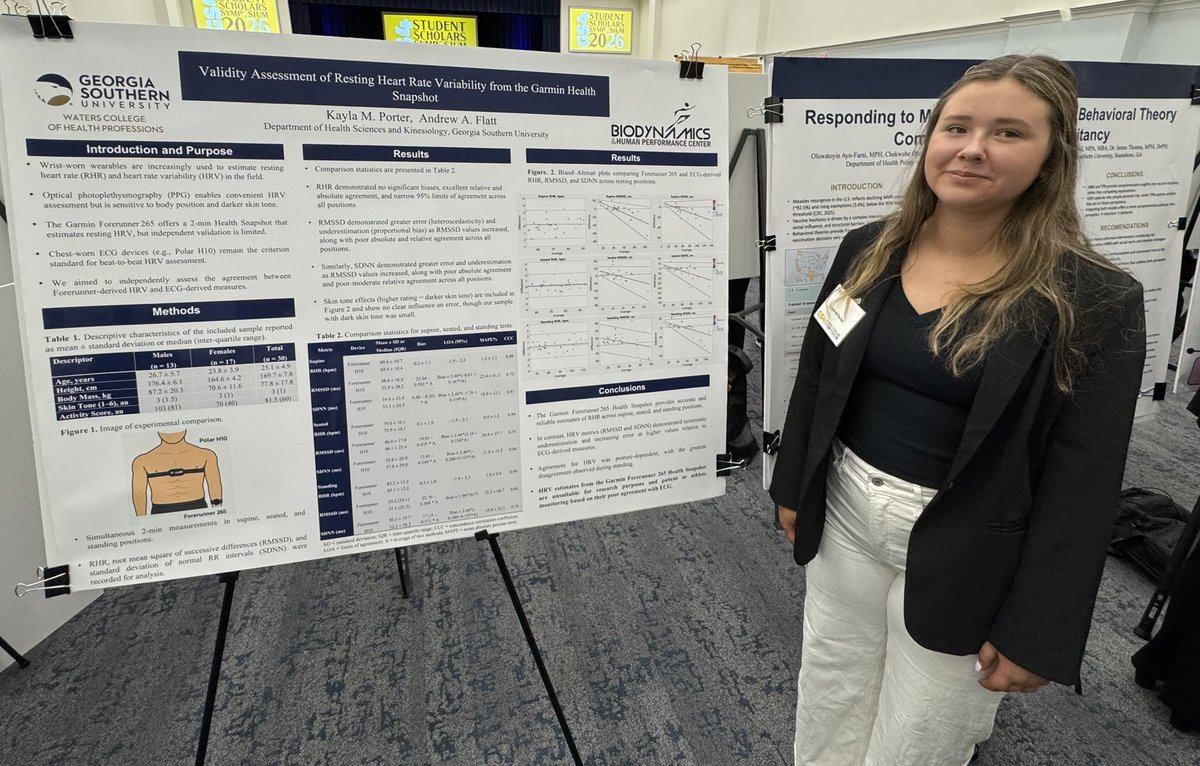
@Nick_Foreman_ Yes. Typical BA plots (as shown for RHR, left column) are inappropriate for RMSSD (middle) and SDNN (right) due to various assumptions being violated.
English
1
0
0
283
Andrew Flatt
Andrew Flatt@andrew_flatt·
Early look at our ongoing comparison of Forerunner 265 vs H10 for HRV via Health Snapshot. Garmin overestimates lower HRV & increasingly underestimates higher HRV. Unsuitable for research, patient/athlete monitoring. Congrats to Kayla for completing her UG Honors project!
Andrew Flatt tweet media
English
11
5
125
13.4K
Nick Foreman retweetledi
Misha Teplitskiy | Science of Science
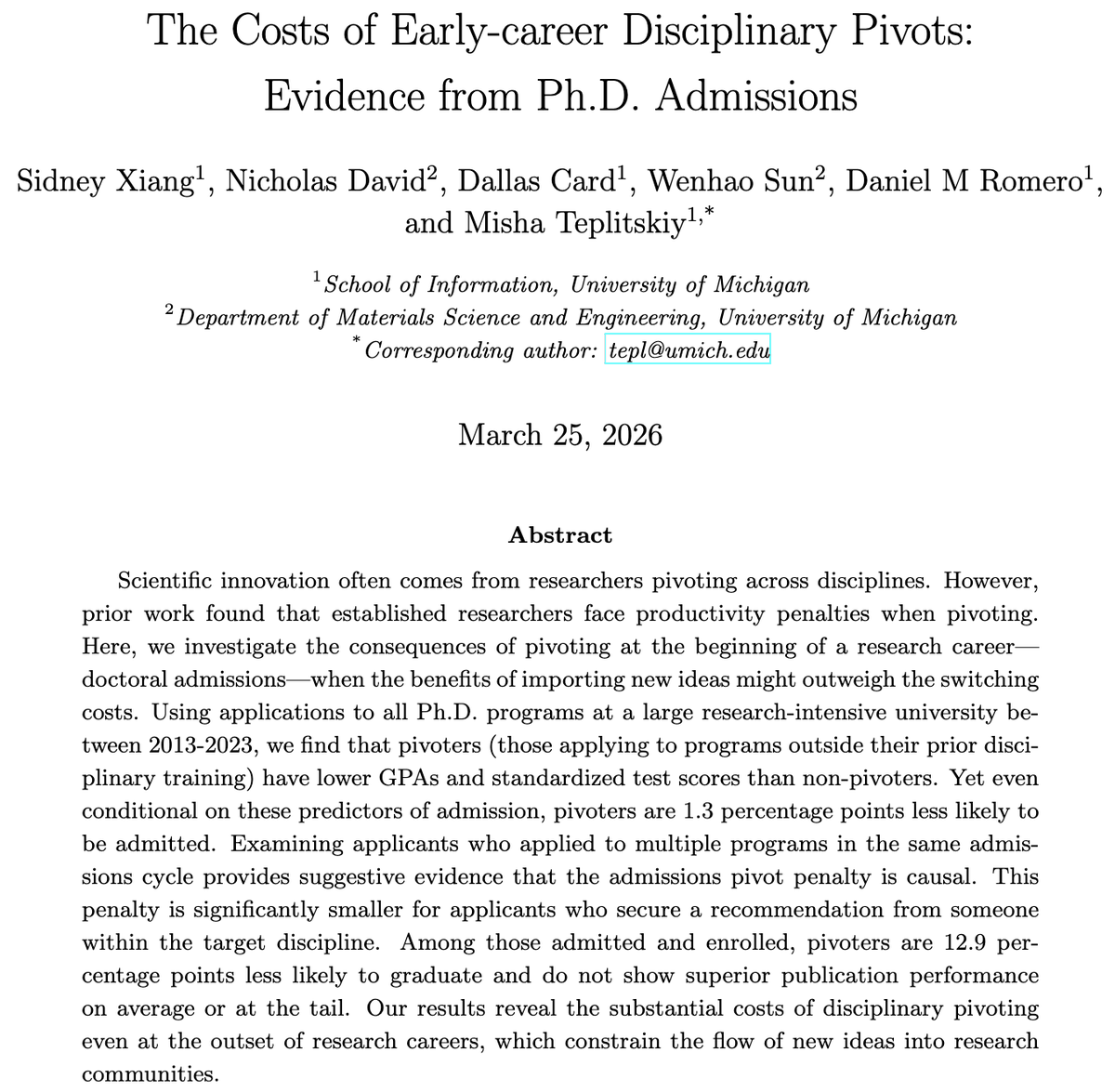
New paper on PhD admissions and pivots! Scientific communities need new ideas to stay productive and relevant. One source of new ideas is students who pivot from other fields. Do such pivots pay off for the student or the community? 🤔 1/3
Misha Teplitskiy | Science of Science tweet media
English
15
35
299
127.1K
Nick Foreman retweetledi
Dr. Catharine Young
Dr. Catharine Young@DrCatharineY·
This is not surprising: NIH cuts show women losing more funding than men - 57.9% vs 48.2%. And it gets worse: early-career scientists are being hit hardest, with women leading 60% of terminated grants among PhDs and assistant professor. So much hard work lost.
Dr. Catharine Young tweet media
English
11
123
278
20.3K
Nick Foreman
Nick Foreman@Nick_Foreman_·
@BrianSuttererMD Not my area of expertise per se but I believe most creatine intake comes from meat, not from supplements. I don’t disagree that this isn’t the strongest evidence in favor of creatine, but I don’t think exercise is a major confounder here
English
0
0
1
85
Brian Sutterer MD
Brian Sutterer MD@BrianSuttererMD·
I’m also going out on a limb to assume there’s a huge degree of confounding here as it’s been well established that exercise decreases cancer risk and most people taking creatine also exercise a lot
English
4
1
125
6.8K
Nick Foreman retweetledi
Steve Magness
Steve Magness@stevemagness·
What's the best exercise? Running, cycling, aerobic, weights, HIIT? The best exercise is the one that you can do consistently over the long haul. Whatever that is, start there. Don't get caught chasing optimum before you've ingrained it as a long term habit.
English
10
12
152
23.1K
Nick Foreman retweetledi
Eric Topol
Eric Topol@EricTopol·
To be clear, there are no data that provide a link between short-term use of Tylenol during pregnancy and autism. In fact, one of the best prospective studies w/ sibling controls, if anything, pointed to a protective effect for use less than 7 days acamh.onlinelibrary.wiley.com/doi/10.1002/jc…
Eric Topol tweet media
English
70
439
1.3K
136.9K
Nick Foreman
Nick Foreman@Nick_Foreman_·
@SteveAtkinsonV8 @AndrewHires @brady_h This study design is a really good setup to test these questions though. It’s a crossover study, so power is higher than an RCT. My gut says you’d need 40-50 people for an RCT vs. maybe 10-15 for a crossover. It’s also not feasible to blind fasting vs. 10g/kg CHO.
English
0
0
2
27
Steve Atkinson
Steve Atkinson@SteveAtkinsonV8·
@AndrewHires @brady_h Unfortunately, that’s not the case. The results suggest only that there might be an effect, but the study design is too limited to say an effect is clear. To say the latter, you’d need a prospective double blind RCT sufficiently powered to enable rigorous statistical analysis.
English
1
0
1
65
Brady Holmer
Brady Holmer@Brady_H·
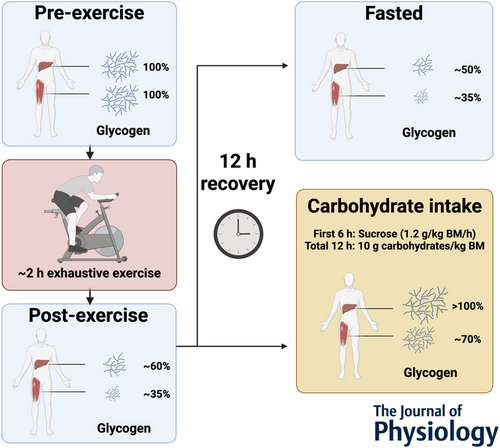
This is such a cool study and illustrates the complex nature and time course of post-exercise glycogen replenishment. Researchers had well-trained cyclists ride to glycogen depletion, then either fast for 12 hours or consume a massive 10 g/kg of carbs in the 12 hours post-exercise (1.2 g/kg/h of sucrose in the first 6 hours). - Without carbs: glycogen stayed low in both liver + muscle. - With carbs: liver glycogen was fully restored (and even supercompensated) within 6 hours (142% of pre-exercise levels). However, muscle glycogen lagged - even with huge carb intake, muscles only recovered to ~70% of baseline after 12 hours.
Brady Holmer tweet media
English
17
28
296
25.8K
Nick Foreman retweetledi
Dr. Glaucomflecken
Dr. Glaucomflecken@DGlaucomflecken·
Obviously I’m being a bit hyperbolic here, but shouldn’t research be done by people who literally cannot help themselves. They think in p-values. They have hypotheses pouring out of their massive brains. Just like a surgeon only wants to be in the OR doing surgery. Instead, we have an army of pre-meds, med students, and residents who feel an obligation to “do research” as a means to an end. Doesn’t make sense. What are we doing?
Dr. Glaucomflecken@DGlaucomflecken

Listen, we have way too many doctors trying to do research. Stop it. Go see some patients.

English
143
278
3.7K
328.3K
Nick Foreman retweetledi
Dr. Spencer Nadolsky
Dr. Spencer Nadolsky@DrNadolsky·
Changing Coke from high fructose corn syrup to cane sugar is just like rearranging the chairs on the titanic. Good work y’all 😂😂😂
English
140
129
1.6K
83.9K
Nick Foreman retweetledi
Drug Monkey
Drug Monkey@drugmonkeyblog·
The demonstrated power of the NIH system is that projects are funded because individual scientists decide to pursue them, but also because sometimes they respond to top-down Program priorities and sometimes they follow the priorities set by Congress, aka the vote of the ppls reps
Andrew D. Huberman, Ph.D.@hubermanlab

What are your thoughts?

English
2
4
32
6.2K
Nick Foreman retweetledi
Dr. Glaucomflecken
Dr. Glaucomflecken@DGlaucomflecken·
If you say a crazy thing, it’s on you to prove the crazy thing is true. It’s not my responsibility to prove your crazy thing is not true.
English
65
364
3.8K
135K
Nick Foreman retweetledi
Nick Tiller, Ph.D.
Nick Tiller, Ph.D.@NBTiller·
Why is a neuroscientist advising on dietary supplements? Because he sells them, endorses them, and is sponsored by them. 💰💰💰 Do you know who doesn't endorse supplements? Qualified nutritionists and dietitians—because most supplements don't work.
Nick Tiller, Ph.D. tweet media
Andrew D. Huberman, Ph.D.@hubermanlab

I get many questions about supplements. I have a ton (35 years) of experience with these: good, bad & all the in between. I would be happy to hold a spaces where I answer all questions. Please put the supplements you would like me to discuss below. I’ll post the recording.

English
17
32
227
22.9K
Nick Foreman
Nick Foreman@Nick_Foreman_·
@brady_h I don't doubt there's benefit to race pace training, but it's probably too small to detect in ~30 people. To me, that's reassuring, because there's lots of things we know work consistently in studies of this size and have bigger effects
English
0
0
2
21
Nick Foreman
Nick Foreman@Nick_Foreman_·
@brady_h The results are shown as if groups were different over time. This is the whole point of the initial ANOVA, which found no diff. between groups pre-post.
English
1
0
1
25
Brady Holmer
Brady Holmer@Brady_H·
Should you train based on your goal race pace, heart rate, or use HRV as a guide? A study with 28 recreational runners compared these methods over 6 weeks to see which drives performance. 🏃🏻 Each group trained differently: - HR used heart rate zones (e.g., 60-80% max HR) - Race pace used percentages of goal pace (e.g., 90-100% of 7k pace) - HRV adjusted HR zones daily based on recovery (via morning HRV readings—higher HRV signaled harder efforts). 🔬 Lab tests pre- and post-training measured VO2 max, ventilatory thresholds (VT1, VT2), running economy (O2 cost at submax), body composition, and a 7k time trial (TT) on a track or road. 🔑 Key findings: ✅ The race pace training was consistently “best”—all 28 runners improved their 7k TT, averaging a 3.8% faster time. They also boosted maximal aerobic speed (speed at VO2 max) by ~2-4% and reduced fat mass (skinfold or DEXA measures), with low variability in response. Why? Training at race-specific intensities mimics race demands, enhancing neuromuscular coordination and lactate clearance (evidenced by TT gains without threshold shifts). 🫀 HRV-guided training drove bigger physiological shifts: VO2 max rose ~5-8%, VT1 and VT2 (lactate turnpoints) increased ~3-5%, but TT gains were inconsistent—some runners hit PRs, others didn’t or gained fat mass (~0.5-1kg). Why the disconnect? HRV prioritized recovery (lower intensity on low-HRV days), potentially under-stressing speed adaptation. ❤️ HR training lifted VT1 and VT2 (~3-4%), but VO2 max and TT performance stayed flat—no clear edge over race pace. 📝The takeaway? Race pace is king for performance—reliable, practical, race-ready. I prescribe my speed work (e.g., 6x1k at 5k pace) this way; it’s simple and mirrors race day. HRV excels for physiological gains and recovery tweaks—pair it with race pace for elites or data nerds (like me). HR suits beginners or aerobic base-building but won’t sharpen speed alone. The study’s 6-week scope limits long-term insights—HRV might shine over months—but race pace’s consistency wins now. Blend them for the best results: race pace for key workouts, HRV to monitor fatigue, HR as a baseline. Study DOI: 10.1249/MSS.0000000000003671
Brady Holmer tweet media
English
52
22
307
76.5K