Angelic Philosopher

3.7K posts

Angelic Philosopher banner
Angelic Philosopher

Angelic Philosopher

@AngelicMindX

Catholic Philosopher 🇻🇦 | American 🇺🇸 | Check out my Highlights

United States Katılım Kasım 2023
47 Takip Edilen830 Takipçiler
Sabitlenmiş Tweet
Angelic Philosopher
Angelic Philosopher@AngelicMindX·
The Metaphysics of Creation, Evolution, Angels, Dinosaurs, and Giants 14 minute read. What if everything you’ve been taught about evolution is built on flawed assumptions? This post takes apart the modern view and shows a clearer, more coherent picture of creation through reason, faith, and history. If you don’t have time right now, bookmark this post and return later when you can read it in full. I welcome your critiques, questions, and challenges in the comments so we can refine and deepen this framework together. The account of evolution, as understood by the modern world, proposes that life began from the simplest matter and rose, step by step, to its present complexity through random processes, natural selection, and billions of years. This framework, however, does not rest securely on philosophy, theology, or even reason itself. A Catholic and metaphysical reading of reality points us toward a different view: one in which God directly creates essences, sustains accidents in variation, and orders all creation toward His ends. To understand this, we must not only reject the inadequacy of macroevolution but also appreciate the depth of metaphysical principles, the meaning of essence, the distinction between microevolution and macroevolution, and the problems even within so-called “theistic evolution.” With this groundwork, the mysteries of human origins, the Flood, the role of angels, and the presence of giants and dinosaurs in history take on a coherent place in the order of creation. 1. The First Principles of Metaphysics Every explanation of the world must be tested against the first principles of being, for without these principles, reasoning collapses into contradiction. The principle of act and potency tells us that nothing can bring itself into existence or actualize itself; a potency can only be made actual by something already in act. A seed cannot transform into a tree by itself, but only by the power of the sun, soil, and water acting upon it. This means that an ape, which lacks rationality, cannot give rise to man by its own internal potential, for rationality is absent from its nature. The principle of sufficient reason demands that for everything that exists, there must be a reason why it exists and why it is the way it is rather than otherwise. Evolutionary theory’s appeal to “chance” often sidesteps this principle, as though randomness could serve as a sufficient cause. The principle of proportionate causality requires that a cause contain at least in some way the perfections it imparts to its effect. A rock cannot produce life, nor can an irrational animal produce a rational soul. Just as one cannot draw water from an empty well, one cannot draw rationality from what lacks it entirely. Coupled with the principle of non-contradiction (something cannot both be and not be in the same respect), the principle of finality (every nature acts toward an end), and the principle of economy (God does not multiply miracles without necessity), these metaphysical rules show why macroevolutionary claims are impossible. Nature is not an aimless chaos but a hierarchy ordered by God. 2. The Nature of Essence At the heart of this question lies the concept of essence. Essence is what makes a thing to be what it is, the inner reality that defines its nature. A man is man not because of his height, skin tone, or culture, but because of his rational soul united to a body. These defining features are unchangeable, for essence fixes the boundaries of a being’s identity. Around this essence exist accidents—qualities like size, color, or hair type, which can change without altering the essence itself. Imagine a wax seal: the shape of the impression is the essence, while the color of the wax is the accident. Changing the wax from red to blue alters its appearance but not the identity of the seal. This distinction is critical, for only God can create an essence. Nature works only within the accidents of already existing essences. Evolutionary claims that one species can transform into another demand that accidents gradually build into a new essence, but that is as impossible as changing the color of a wax seal and expecting it to change its stamped design. The form—the essence—remains unaltered unless God directly acts. 3. Microevolution and Macroevolution When we examine nature, we indeed see variation. Dogs come in many breeds, colors, and sizes, yet all remain dogs. Human beings have countless traits shaped by genetics and environment, yet all remain fully human. This is microevolution, the variation of accidents within the boundaries of a fixed essence. Microevolution is observable, consistent with both reason and Catholic doctrine, and helps explain diversity within kinds. But macroevolution is another claim entirely. It asserts that new essences can emerge through accumulated accidental changes—that fish became reptiles, reptiles became mammals, and mammals became man. This leap violates metaphysical law: accidents cannot stack upon each other to create a new essence. A book may be translated into many languages, but at no point does it become a painting; its essence as a text remains. Similarly, however much variation occurs in a dog, it will never become a cat. Macroevolution is thus not simply improbable but impossible, because it demands a transformation of essence that nature cannot accomplish. 4. The Problem of Theistic Evolution Many Christians attempt a compromise: they argue that God created through evolution, guiding natural processes to bring forth life and man. This is called theistic evolution, and while it sounds pious, it does not solve the problem. First, it presumes macroevolution is possible, which it is not. Second, it imagines God intervening at crucial points, such as to infuse the rational soul into an evolved hominid. But this undermines the principle of economy: if God must constantly intervene to patch up a failing process, why not simply create essences directly? It also paints God as inefficient, using a process that cannot achieve its purpose without repeated interruptions. Worse still, it risks portraying God as deceptive, creating a process that appears random and purposeless when in fact He is intervening behind the scenes. Divine wisdom is better expressed in direct and ordered creation, where essences are given in their fullness from the beginning. Just as an architect does not let a pile of bricks randomly collapse until it resembles a cathedral, but designs and builds it according to plan, so too God creates essences directly, not through blind evolutionary groping. 5. Creation and Cosmology The creation account in Genesis describes God’s orderly act of bringing the cosmos into existence. Day 1 brings forth light, matter, and the angelic hosts, establishing the basic fabric of creation. Day 2 forms the firmament, separating waters and ordering the visible heavens. Day 3 produces dry land and vegetation, preparing the earth for life. Day 4 sets the sun, moon, and stars in their courses, marking times and seasons. Day 5 fills the seas and skies with fish and birds. Day 6 introduces land animals and culminates in the creation of man, made in the image and likeness of God. Day 7 sanctifies creation as God rests. This order is not arbitrary; it is a deliberate hierarchy in which each stage prepares for the next. Regarding the universe’s age, it is entirely possible that it is only about 10,000 years old, consistent with Scripture and a plain reading of chronology. Yet it is also possible that it is older. What is certain is that the idea of billions of years is not necessary, for those vast ages rest on assumptions built to support evolutionary theory. Like scaffolding built around a building that never exists, the concept of “deep time” stands propped up by false premises. Whether young or older, the universe need not be ancient in evolutionary terms, for its order flows not from time but from God’s creative act. 6. Radiometric Dating and Deep Time Radiometric dating is often presented as unquestionable proof of a universe billions of years old. But this method depends on several fragile assumptions. It presumes that decay rates have never changed, that the system has remained closed with no contamination, and that the initial conditions are knowable. Even if these assumptions held, the results are interpreted within the framework of deep time, which evolutionary theory requires. But adding time does not solve causality. Ten billion years cannot make a stone give birth to a flower. Just as no amount of waiting by a pile of lumber will turn it into a house without a builder, so too no duration of time transforms an essence into another. Geological formations, fossil layers, and sedimentary strata can be explained by catastrophism, particularly the great Flood, which with immense force could bury organisms rapidly, creating fossils and layers without vast ages. The idea of “deep time” is thus more a philosophical necessity for evolution than an empirical discovery. Time, like money, cannot buy what the account itself does not possess. 7. Cosmology and the Big Bang Modern cosmology’s Big Bang theory claims that the universe began from a self-originating singularity 13.8 billion years ago. But nothing cannot cause something. To attribute causal power to “nothing” is like crediting a blank page with writing a book. The principle of sufficient reason is violated, for an effect has no proportionate cause. Catholic thought instead insists that only God creates ex nihilo. Early cosmological theories by Catholic thinkers sought to affirm a beginning compatible with creation, but naturalism later stripped God away, leaving an incoherent mechanism. What we can affirm is that the universe had a beginning, but the billions of years and self-caused origins are not necessary. Scripture captures the truth more simply: “He spoke, and they were made; he commanded, and they were created” (Ps. 148:5, D-R). The beginning is real, but its explanation lies not in chance or self-generation but in the direct act of God. 8. Adam, Eve, and Human Origins Man’s creation was direct and immediate. Adam was formed from the dust of the ground, and God breathed into him the rational soul, a faculty no material process could produce. Eve was taken from Adam’s side, signifying complementarity and unity, and establishing the foundation of marriage and family. Humanity is not descended from apes or animals, for essences cannot evolve. Rationality cannot emerge from irrationality. The soul is not educed from matter but infused by God. Man is unique among creatures, bearing the image of God, capable of reason, and ordered to eternal life. To reduce man to a product of animal ancestry strips him of his dignity and erases the distinction Scripture and philosophy both affirm. As no sculptor chisels a statue by accident, so man was not carved by time and chance, but by the deliberate hand of God. 9. Human Longevity and Diversity Scripture records that early patriarchs lived for centuries. This longevity can be explained by humanity’s original perfection and providential design, where fewer genetic defects and environmental harmony allowed for longer lifespans. After the Flood, lifespans declined as corruption increased, showing the gradual loss of man’s original vigor. Human diversity also emerges after the Flood and Babel. All people descend from Adam and Noah, yet environmental adaptation, isolation, and genetic drift gave rise to differences in skin color, facial features, and physical traits. Darker skin protects against sunlight, while eyelid folds guard against dust and cold. These are not new essences but accidental variations. Cultural differences, too, flow largely from environment, education, and tradition. Just as water poured into different vessels takes on their shape without changing its essence, so human diversity is a matter of form, not nature. All humanity remains one family under God, equal in dignity, united in origin, and destined for unity in Christ. 10. Angels Angels are immaterial spirits created at the beginning. They are pure intelligences, not bound by matter, though capable of assuming bodies instrumentally. These assumed forms may eat, walk, or wrestle, but they are not organic; they cannot digest, reproduce, or generate offspring. For this reason, angels cannot father children with humans. The “sons of God” in Genesis 6 refer not to angels but to the descendants of Seth who intermarried with the daughters of men. The fall of the angels occurred shortly after creation, explaining why Satan was already present in Eden to tempt Eve. Angels thus remind us that creation is not limited to the visible world; a higher, invisible order of beings exists, acting in history under God’s providence. Like generals in an army, they do not form the rank and file of material creation, but command and influence, operating in ways unseen yet real. 11. Dinosaurs and the Flood Dinosaurs, like other land animals, were created on Day 6. They coexisted with man until their destruction in the Flood, when immense waters buried countless creatures and reshaped the earth. Fossils found in layered strata are evidence not of deep time but of rapid burial under catastrophic conditions. Some dinosaurs may have survived briefly after the Flood, giving rise to the many dragon legends across cultures. The Book of Job describes Behemoth and Leviathan (Job 40–41, D-R), great creatures that fit the description of massive reptiles. Rather than being relics of a distant evolutionary past, dinosaurs fit neatly into the biblical record, their extinction aligned with the cataclysmic judgment of the Flood. They are not alien to Scripture, but witnesses to it. 12. Giants in Human History Scripture speaks clearly of giants: the Nephilim before the Flood, the Anakim and Rephaim after it, and figures such as Goliath. Goliath’s height, nearly ten feet, is recorded as historical fact. Cultures across the world preserve legends of giants: the Norse Jotunn, the Greek Titans, the Irish Fomorians, and the Native American traditions of red-haired giants. In the 1800s, reports of giant skeletons surfaced, some with unusual features. Giants are not another species but extraordinary variations within human accidents, possible within the wide parameters of human essence. Just as some men today grow to extraordinary heights, so in ancient times, under different conditions, such cases may have been more common. The universality of these accounts strengthens their credibility, showing that humanity’s memory, across lands and ages, preserves truths that Scripture records with clarity. 13. Integrated Sacred Chronology A coherent timeline can be reconstructed from Scripture: Creation around 8000 B.C., Adam around 5500 B.C., Noah born around 3700 B.C., the Flood around 3300 B.C., the Tower of Babel and dispersion of peoples around 2500 B.C., Abraham around 2000 B.C., Isaac in 1900 B.C., Jacob in 1850 B.C., Israel entering Egypt around 1700 B.C., Moses and the Exodus around 1500 B.C., Joshua’s conquest around 1400 B.C., Saul around 1050 B.C., David around 1000 B.C., Solomon around 960 B.C., the Assyrian conquest in 722 B.C., the Babylonian exile in 586 B.C., the return under Cyrus in 538 B.C., the Maccabean revolt in 167 B.C., Roman occupation in 63 B.C., and the birth of Christ around 2–6 B.C., with His death and resurrection around 30–33 A.D. This chronology does not demand billions of years but shows a sacred order to history. Yet it also leaves open the possibility that the universe could be older than 10,000 years; what is certain is that evolutionary billions are not necessary. Time alone does not create; God alone does. 14. Principles Against Evolution The rejection of macroevolution stands on firm principles. Essences cannot evolve; only God creates essences. Accidents vary, but essence is fixed. Proportionate causality requires causes equal to their effects; irrational natures cannot yield rationality. The principle of sufficient reason demands that being cannot come from non-being. The principle of finality insists that agents act toward ends, contradicting the notion of randomness as a creative force. The principle of economy rejects the idea that God would rely on a wasteful, blind process when He could simply create directly. Flood geology offers an alternative to deep time, explaining fossils and strata without billions of years. Creation was not chaotic but ordered, immediate, and purposeful. Macroevolution is like imagining that by shuffling letters long enough, a Shakespearean play will emerge. Microevolution is real—accidents vary—but essences remain constant, and new natures are only created by God. The evolutionary story fails not simply as theology but as philosophy. It does not explain causality, proportion, or essence. Creation, however, upholds coherence: God brings essences into being, sustains accidents in variation, and orders creation toward its ends. The universe may be only 10,000 years old, or perhaps older, but in either case it does not require the billions of years evolution demands. History, from Adam to Christ, unfolds with order, not chaos. Man is made in God’s image, not descended from beasts. Angels act invisibly, dinosaurs and giants have their place in sacred history, and all creation points toward Christ. If creation is truly ordered, immediate, and purposeful rather than accidental and aimless, how should this transform the way we view not only the natural world but also our own calling within it?
Angelic Philosopher tweet media
English
4
0
5
7K
Angelic Philosopher
Angelic Philosopher@AngelicMindX·
@trad_west_ Is it considered a just war to forcibly install a new President into Venezuela, who is more friendly with the United States in trade, to prevent a majority of their oil being sent to China? And deceiving the public by saying it’s mostly about drug traffickers?
English
4
0
1
674
Trad West
Trad West@trad_west_·
Christianity is NOT a pacifist religion Christians are supposed to be pacifists? Just say you know nothing about Christianity. Modern culture wants you to believe that Christianity is a religion of passivity, that a "good Christian" stands by while evil triumphs. This is a lie. From the early Church Fathers to the great Doctors like St. Augustine and St. Thomas Aquinas, the Church has always taught that some wars are just, AND HOLY. War is an evil, but sometimes necessary to restore just peace and avoid greater evils. The Church does not glorify violence, but the Church does teach that peace is the fruit of justice, not cowardice - Is 32,17 If tyrants threaten the innocent and if evil crushes the weak, then Christian men may, and sometimes MUST, take up arms in defense of the good. St. Augustine (4th Century) taught that war is sometimes a tragic necessity. In City of God, he wrote: “It is the injustice of the opposing side that lays on the wise man the duty to wage wars.” He taught war can be an act of charity and justice. Just wars are those meant to punish injustices, when a people or city failed to return what was unjustly taken or neglected punishing evil. Sometimes, the only way to restore order is to fight. St. Thomas Aquinas codified the "Just War Theory," laying out the conditions (Legitimate authority; Just cause; Right intention - these must all be present, otherwise war becomes sinful) where taking up arms is not a sin, but a moral duty to protect the innocent. And then there is Holy War. St. Bernard of Clairvaux, preaching to the Knights Templar, wrote that when a Christian knight kills an evil-doer in defense of the Faith, "he is not a homicide, but a malicide (a killer of evil)." Christ Himself is not a pacifist. He drove out the money changers with a whip - Jn 2,15 He called His apostles to be fishers of men, but His Book of Revelation shows Him returning as a rider on a white horse, with a sword (Rev 19), waging war on evil. Francisco Suárez, a theologian, said: “War is not intrinsically evil, but can be honest and indispensable, when waged to restore justice and protect the innocent.” This is echoed in the Catechism of the Catholic Church (n. 2265–2266). Even the saints fought. St. Joan of Arc led armies to defend Christian France. St. Louis IX led Crusades to recover the Holy Land. St. Fernando III of Castile freed Spain from Islam by the sword, and was canonized. Holiness and heroism are not opposites. A Christian is not a pacifist, a true Christian is a peacemaker. And sometimes, the only way to make peace is to destroy the evil that threatens it. Make no peace with evil, destroy it. Tolerance of evil is not a Christian virtue.
Trad West tweet mediaTrad West tweet media
English
101
750
3.3K
289.3K
Angelic Philosopher
Angelic Philosopher@AngelicMindX·
@SamaHoole What about extremely high protein intake, like mentioned in your post about Lewis and Clark’s men on their expedition? It seems there could be an upper limit if taken to the absolute extreme:
Sama Hoole@SamaHoole

Lewis and Clark Expedition, 1805-1806. The journals are fascinating if you know what to look for. They're not dying from lack of food. They're eating 8-9 pounds of meat per man, per day. Eight. Pounds. Daily. And they're still losing weight, losing strength, and documenting "extreme hunger" despite eating until their stomachs are distended. What they're eating: Lean elk. Lean deer. Lean game that's been running through the mountains all summer with zero body fat. October 1805 entry: "We are consuming immense quantities of meat but the men remain weak and complain of hunger immediately after meals." They're experiencing rabbit starvation in real-time. Eating 4,000+ calories of lean protein daily and literally starving to death anyway. The biochemistry: Your liver can't process that much protein. Excess protein metabolism produces toxic ammonia faster than your body can clear it. You need fat to process protein. Without it, you're poisoning yourself. What saved them: They reached the Pacific coast. Found seals. Fat-rich marine mammals. Suddenly the journals change tone. Smaller portions. Full bellies. Strength returning. No more complaints of hunger. They went from 8 pounds of lean elk daily (still starving) to 2 pounds of fatty seal daily (thriving). The expedition nearly failed because they couldn't find fat. Your history teacher told you they were brave explorers. They were. But they also almost died because lean meat will kill you and they didn't know it yet. The Shoshone guides knew. They kept trying to trade them pemmican (50% fat). Lewis and Clark refused, thinking the lean elk was superior. Nearly cost them the entire expedition.

English
1
0
2
139
Sama Hoole
Sama Hoole@SamaHoole·
"High protein will destroy your kidneys!" This myth comes from studying people with existing kidney disease. When kidneys are failing, they struggle with protein waste. Then someone made a logic error: "If protein is bad for diseased kidneys, it must be bad for healthy kidneys." Like saying sunlight hurts when you're sunburned, therefore sunlight damages healthy skin. Decades of studies on healthy people eating high protein show no kidney damage. Athletes, bodybuilders, carnivores. No decline, no increased disease risk. The kidney disease association comes from diabetics eating protein with high blood sugar. High blood sugar damages kidneys. The protein gets blamed because it's measurable in the correlation. The mechanism of damage is glucose, not protein. The Inuit ate massive amounts of protein daily for generations. No kidney disease until Western carbs arrived. Your kidneys evolved to handle protein. That's their job. They're good at it when not overwhelmed by glucose damage. Carnivore removes the glucose. The kidneys work as designed.
English
12
39
224
5.5K
Angelic Philosopher
Angelic Philosopher@AngelicMindX·
@SamaHoole How do you spice up your food to get some variety in taste? Ground beef patties and steak are great and taste amazing, but after eating that exclusively for 3 months it can get tiring. It’s difficult to get past other food cravings even after 3 months.
English
1
0
0
109
Sama Hoole
Sama Hoole@SamaHoole·
Carnivore isn't a diet. It's a return to baseline. You don't "do carnivore" like you "do Whole30." You eat meat. Then you keep eating meat. Forever. Because it works. There's no end date. No "finishing" the program. No completion. This confuses people: "When do you reintroduce foods?" There's no need to. Why would I reintroduce the foods that made me sick? "Can you ever have carbs again?" I can. I choose not to. Because I like feeling good. "Isn't this unsustainable?" More sustainable than taking statins for life. More sustainable than managing diabetes. More sustainable than feeling like shit daily. The reframe: Standard diet approach: Temporary restriction to fix a problem, then return to "normal eating." Carnivore approach: This IS normal eating. Everything else is the deviation. You're not restricting. You're correcting. You're not eliminating food groups. You're eliminating non-food products. You're not on a diet. You're just eating. This is why carnivore "works" when other diets fail. There's no white-knuckle restriction. There's no suffering through meals you don't want. You're eating the most satisfying, nutrient-dense food on the planet. Why would you go back? Diets fail because they're temporary. Carnivore succeeds because it's permanent. Not because you force yourself. Because you want to. The diet you can maintain forever is the diet that wins. Carnivore is that diet for most people who actually try it properly. Not a 30-day challenge. Not a quick fix. Not a trend. A return to what humans are designed to eat. Try it for 90 days. Not 30. 90 minimum to get through adaptation. If you feel better, keep going. If you don't, stop. But give it a real chance. Long enough to get past withdrawal, past adaptation, past the initial adjustment. 90 days. Then decide. Most people who make it to day 90 never stop. Because by then, they understand: This isn't a diet. This is just eating. And feeling good while doing it. The long game wins. Play it.
English
9
30
244
3.9K
Angelic Philosopher
Angelic Philosopher@AngelicMindX·
@SamaHoole How would you explain Italians who eat lots of pasta/carbs and still look slim?
English
1
0
0
107
Sama Hoole
Sama Hoole@SamaHoole·
1958: British doctor Richard Mackarness publishes "Eat Fat and Grow Slim." The title alone was heretical. Everyone "knew" fat made you fat. Mackarness argued: "The fattening substance is carbohydrate. Animal fat doesn't make you fat." He cited thousands of his own patients who lost weight eating high-fat, low-carb diets. The book sold over a million copies. People tried it. It worked. For about 5 years, Mackarness was vindicated. His approach was mainstream in Britain. Then the American dietary guidelines came. The Seven Countries Study. The fat hypothesis. By the 1970s, "Eat Fat and Grow Slim" was considered dangerous pseudoscience. Mackarness was called a quack. His clinical results dismissed as anecdotal. He'd successfully treated thousands of obese patients. Documented their weight loss. Published the outcomes. None of it mattered. The narrative had shifted. Fat was now the enemy. Carbs were fine. Mackarness spent the rest of his career fighting the new orthodoxy. Lost that fight. He died in 1996. His book is out of print. His work forgotten. He was right in 1958. We're still pretending he wasn't.
Sama Hoole tweet media
English
72
832
2.6K
65.2K
Pope Respecter
Pope Respecter@poperespecter1·
@C_3C_3 Vatican's wall doesn't go all the way around and they have a completely open border with Italy that anyone can walk in without even a passport.
English
37
29
2.7K
25.6K
C3
C3@C_3C_3·
Pope Leo on how America is handling illegals… “You’re supposed to receive and welcome the foreigner.” This is the Wall around the Vatican and Pope Leo’s house. Not very welcoming.
C3 tweet mediaC3 tweet media
English
512
1.2K
5.3K
676.1K
Magnus Vigsø
Magnus Vigsø@MagnusVigso·
If we hit 30.000 on here before thee end of 2025 Im gonna do the biggest RAW Royal Jelly giveaway 🐝🍯🥂⚡️
English
4
1
33
2.7K
Rusty ⚡️: Solar Powered ☀️
Underrated life hack: Hangout with people who emit broadband full spectrum bio-photons because that’s the type of light they allow in their life NOBODY TALKS ABOUT THIS
English
15
21
196
9.7K
🌞HELIOS🌞
🌞HELIOS🌞@helios_brah·
If your "EMF harmonizer" does not have this scale It doesnt work.
🌞HELIOS🌞 tweet media
English
2
2
21
1.7K
Died Suddenly
Died Suddenly@DiedSuddenly_·
🚨 REVEALED: These ‘Covid Vaccines’ cause 146 Serious Brain, Spinal Cord, and Psychiatric Adverse Events. “Prion disease, encephalitis, brain abscesses, dementia, schizophrenia, suicidal and homicidal thoughts, stroke, psychosis, depression…”
English
50
450
1K
30.7K
Imran R Ally, MD
Imran R Ally, MD@ImranRAlly·
Burnout” isn’t a mystery Simply put your nervous system and brain found an inconvenient way to message the body because of neglect
English
1
0
1
117
Angelic Philosopher
Angelic Philosopher@AngelicMindX·
@NickJFuentes I think Trump is going to campaign for the removal of the 22nd Amendment after midterms and actually go for a 3rd term
English
0
0
1
2.7K
Nicholas J. Fuentes
Nicholas J. Fuentes@NickJFuentes·
This feels like Trump 2016 energy. Same hysterical and out-of-touch “basket of deplorables” condemnation from the Republican establishment. Same sense of unstoppable momentum and historical inevitability for the Groypers. We are going to win.
English
1.4K
3.6K
55.5K
1.5M
Angelic Philosopher
Angelic Philosopher@AngelicMindX·
@Yitzhak32941934 @MattWalshBlog @boztherapper Israel is not a nation state. It is a people. God’s chosen people. The Old Testament Jews are Catholics today because Jesus fulfilled the Jewish prophecy. Catholics are God’s chosen people. Catholics are Israel.
English
0
0
0
39
Yitz
Yitz@Yitzhak32941934·
@MattWalshBlog @boztherapper I voted for Trump over Israel. It's important. Those who bless Israel are blessed. Remember it.
English
19
0
12
2.7K
Angelic Philosopher
Angelic Philosopher@AngelicMindX·
@SecretFire79 We need @MartyTheElder writing more music for the Catholic Mass. His music style in Halo was already similar to Gregorian chant. Imagine having him compose new music that brings people to God.
English
0
0
1
548
☩ 𝕁𝕄𝕋 ☩
☩ 𝕁𝕄𝕋 ☩@SecretFire79·
Proof that your local diocesan parish doesn’t need to have terrible cringe “Table of Plenty” and Dan Schutte’s greatest hits as liturgical music in the program…
English
215
489
3.1K
101.8K
Lara Logan
Lara Logan@laralogan·
Who benefits most from separating the U.S. from it’a allies like Israel?
English
6.7K
814
5.7K
1.5M
Angelic Philosopher
Angelic Philosopher@AngelicMindX·
So it’s not a universal rule, but just one step towards a multi-layered problem. First fix their hormones. Then heal their gut with a healthy diet. Then heal any trauma in their brain. Then get them off of watching adult content. Lots of things can turn people gay, so fixing their testosterone may not be the only thing necessary before fixing the problem.
English
1
0
1
39
_aestheticprimal_
_aestheticprimal_@aestheticprimal·
Testosterone only worsens the problem further most likely. Ghey/Feminine males have a wrecked 5alpha-reductase to 5beta-reductase ratio Administering Testosterone would likely skyrocket Etiocholanolone without giving enough rise to Androsterone. (the ratio behind these two hormones is one of the strongest influences on sexual preference, with elevated Etiocholanolone being a HUGE indicator of homosexuality.) Then also take into account that Testosterone would give rise to Estrogen as well. (aromatization of Testosterone is the biggest source of Estrogen in the male body) DHTP or DHTE is the answer @5ARSociety
Lauren Chen@TheLaurenChen

Instead of cross-sex hormones, why don't we give trans people same-sex hormones? If a male "feels like a woman," why not give him testosterone, not estrogen? Genuine question. Making a man feel more like a man seems more logical than making him into an imitation of a woman.

English
17
18
461
53K
Angelic Philosopher
Angelic Philosopher@AngelicMindX·
Angelic Philosopher@AngelicMindX

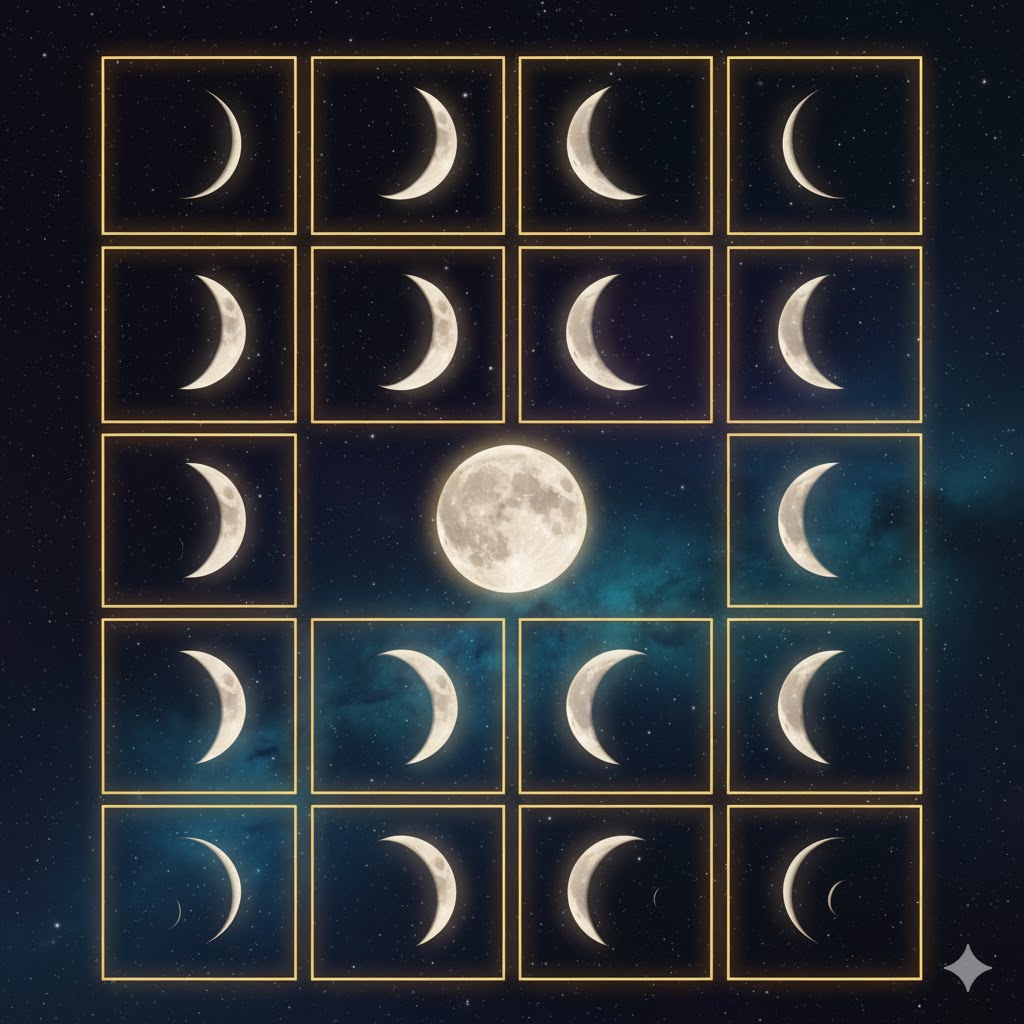
The 13-Month Calendar: Aligning with Nature and Tradition Throughout history, humanity has sought a calendar system that mirrors the harmony of the solar and lunar cycles while simplifying daily life. The 13-month calendar is an intriguing alternative to the irregular Gregorian system, offering a balance between nature, practicality, and tradition. This post explores the historical roots of the 13-month calendar, the meanings of existing month names, the potential benefits of its reinstatement, and a proposal for a new 13th month that fits seamlessly into this design. 1. The Historical Roots of the 13-Month Calendar The 13-month calendar is rooted in humanity’s earliest attempts to align timekeeping with the rhythms of nature. Ancient societies, such as the Maya and Celts, recognized the natural cycles of the moon and sun, often using calendars that attempted to harmonize both. The lunar year of 354 days posed a challenge: it fell short of the solar year’s 365 days. A 13-month system, with each month containing 28 days, offers a near-perfect alignment with the solar year (364 days), requiring only an additional “Year Day” to complete the cycle. Interestingly, the names of modern months in the Gregorian calendar point to an older structure that hints at a time when months better aligned with their numerical roots. September, October, November, and December retain Latin prefixes that reflect their original positions: • September (from septem, meaning “seven”) once marked the seventh month. • October (from octo, meaning “eight”) was the eighth month. • November (from novem, meaning “nine”) was the ninth month. • December (from decem, meaning “ten”) was the tenth month. This alignment existed in the Roman calendar, which originally started the year in March, making March the first month and February the last. The addition of January and February at the start of the year disrupted this system, shifting months out of sync with their names and numerical order. A 13-month calendar could restore some of this harmony. 2. The Original Meanings of the Months Each existing month in the Gregorian calendar carries a name reflecting its historical and mythological roots: • January: Named after Janus, the Roman god of doorways and transitions, representing beginnings and endings. • February: Derived from Februa, a Roman purification ritual, signifying cleansing and renewal. • March: Named for Mars, the Roman god of war, as it marked the traditional start of the military campaign season. • April: Likely from aperire, Latin for “to open,” symbolizing the blossoming of spring. • May: Named for Maia, a Roman goddess of fertility and growth. • June: Honoring Juno, the Roman queen of the gods and protector of marriage. • July: Originally Quintilis (fifth month), renamed for Julius Caesar after his reforms of the Roman calendar. • August: Originally Sextilis (sixth month), renamed for Emperor Augustus. • September: From septem, Latin for seven. • October: From octo, Latin for eight. • November: From novem, Latin for nine. • December: From decem, Latin for ten. Restoring the numerical harmony in these names would enhance the cultural and historical integrity of a calendar system. 3. A Proposal for the 13th Month In a 13-month calendar, the additional month could occupy a central position, symbolizing balance and unity in the year. Naming this month requires careful consideration to align with the existing calendar’s historical and cultural themes. Possible names include: • Solis (Latin for “sun”), emphasizing the solar cycle’s centrality. • Lumen (Latin for “light”), evoking themes of enlightenment and renewal. • Fides (Latin for “faith”), reflecting spiritual growth and trust in divine order. Positioned strategically, this month could serve as a bridge between spring and summer or another transitional period, maintaining the balance of seasons. 4. The Structure of the 13-Month Calendar Under the 13-month calendar, each month would contain exactly 28 days, totaling 364 days annually. To account for the solar year’s 365 days, “New Year’s Day” would serve as an unnumbered global holiday, placed at the start of the year. In leap years, an additional “Leap Year Day” would follow New Year’s Day. This design ensures that every month begins on a Monday, providing a consistent weekly cycle. April would now be the first month of the year. Aligning the calendar’s start with the Easter season enhances its spiritual significance. Easter, rooted in both solar and lunar cycles, celebrates Christ’s Resurrection and offers a profound symbol of renewal and hope. Starting the year with Easter anchors the calendar in a faith-centered worldview while reinforcing natural harmony. 5. Advantages of the 13-Month Calendar This system offers practical and philosophical benefits: • Simplicity: Each month has an equal length, and holidays have fixed positions, streamlining scheduling and planning. • Natural Alignment: Reflecting solar and lunar cycles honors the rhythms of creation. • Predictability: The unchanging weekly sequence aids global coordination in business, education, and governance. • Cultural Integrity: Restoring numerical harmony to months like September and October reconnects modern calendars with their historical roots. • Spiritual Resonance: Tying the calendar to Easter emphasizes renewal and divine order. 6. Challenges and Pathways to Adoption Transitioning to a 13-month calendar would require significant global cooperation. Governments, businesses, and religious organizations would need to adopt the system collectively. Gradual integration, such as dual-calendar systems, could ease the transition. Education campaigns highlighting the calendar’s advantages—practicality, harmony, and historical integrity—could foster acceptance. The 13-month calendar offers an elegant solution to the irregularities of the Gregorian system, combining practicality with a profound connection to natural cycles and spiritual truths. By restoring numerical harmony to month names, aligning timekeeping with creation, and tying the year to the Easter season, this model celebrates both tradition and renewal.

QME
0
0
1
13
Peter Cowan | Sunlight is Life
Peter Cowan | Sunlight is Life@living_energy·
Sometimes people need to learn things on their own. Finally got my older daughter on slightly better light habits. Today she comes to me: "Papa, have you heard of the thirteen-month moon calendar?" "Tell me more." "The Mayans and all the ancient civilizations lived by it, until that guy made us use the twelve-month calendar." "The Gregorian calendar, yes." "My cycle synced with the moon last month. I want to print out the moon calendar and align my cycle with it. We should start living by it." "I'm 100% in. Why do you think I quit my job and started my own business?" "I know. I hate going to school and being forced to learn what other people want you to learn. You should just learn what you want." "You know me, I dropped out of high school. It's not just the calendar, though. Before we had clocks, we lived by the light cycles. If you want to get serious about your cycle, you've gotta really lock in your..." "I know. My circadian rhythm." 🤯
Peter Cowan | Sunlight is Life tweet media
English
8
3
66
10.5K
Dissident West
Dissident West@dissidentwest·
So uhhh idk how to say this, but I still have no idea what the word groyper actually means or where the name originated from and at this point I'm too ashamed to ask.
English
34
3
339
11.2K