Sabitlenmiş Tweet

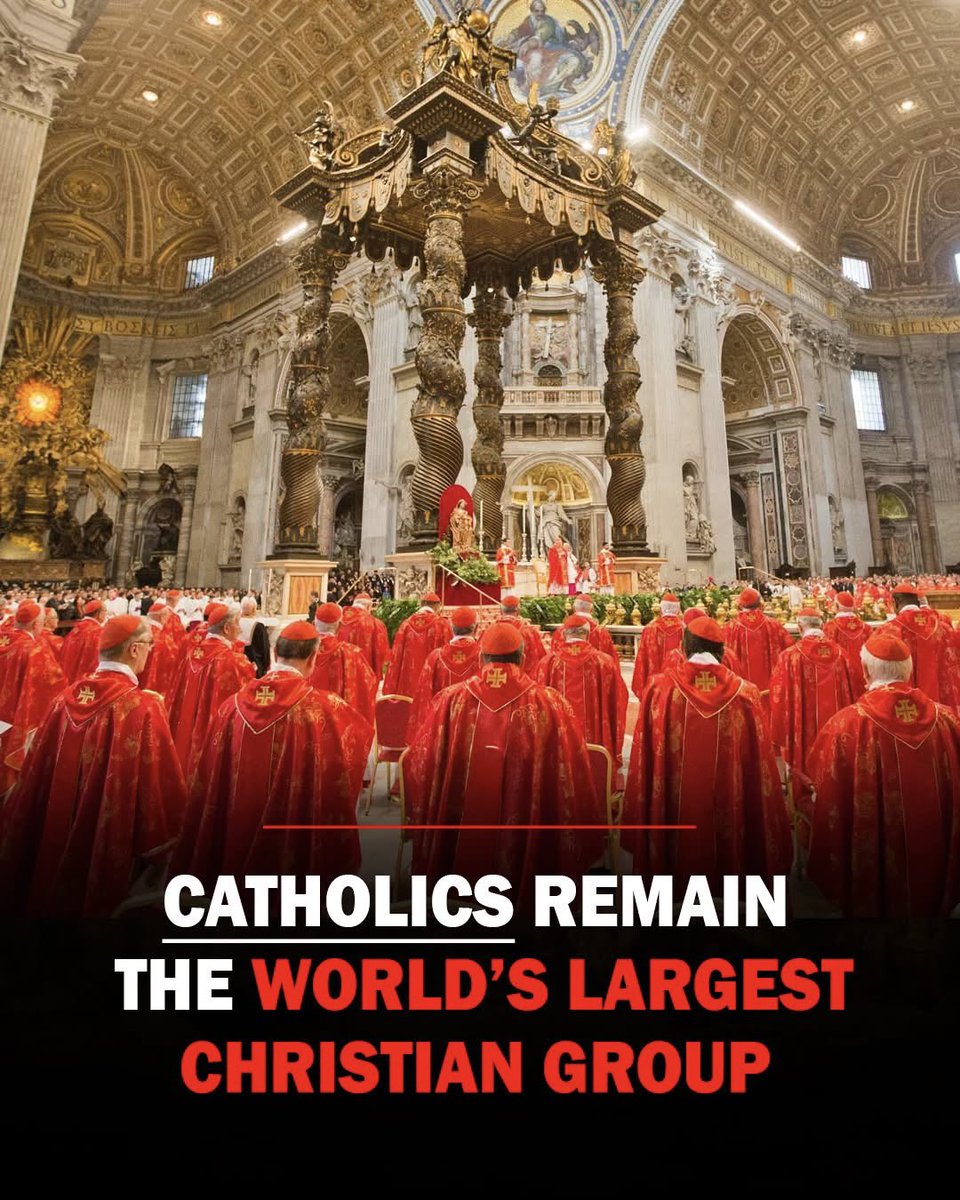
A BRIEF HISTORY OF THE CATHOLIC CHURCH🇻🇦🕊️ 🧵
c. 33: First Christian Pentecost; descent of the Holy Spirit upon the disciples; preaching of St. Peter in Jerusalem; conversion, baptism and aggregation of some 3,000 persons to the first Christian community.
St. Stephen, deacon, was stoned to death at Jerusalem; he is venerated as the first Christian martyr.
c. 34: St. Paul, formerly Saul the persecutor of Christians, was converted and baptized. After three years of solitude in the desert, he joined the college of the apostles; he made three major missionary journeys and became known as the Apostle to the Gentiles; he was imprisoned twice in Rome and was beheaded there between 64 and 67.
39: Cornelius (the Gentile) and his family were baptized by St. Peter; a significant event signaling the mission of the Church to all peoples.
42: Persecution of Christians in Palestine broke out during the rule of Herod Agrippa; St. James the Greater, the first apostle to die, was beheaded in 44; St. Peter was imprisoned for a short time; many Christians fled to Antioch, marking the beginning of the dispersion of Christians beyond the confines of Palestine. At Antioch, the followers of Christ were called Christians for the first time.
49: Christians at Rome, considered members of a Jewish sect, were adversely affected by a decree of Claudius which forbade Jewish worship there.
51: The Council of Jerusalem, in which all the apostles participated under the presidency of St. Peter, decreed that circumcision, dietary regulations, and various other prescriptions of Mosaic Law were not obligatory for Gentile converts to the Christian community. The crucial decree was issued in opposition to Judaizers who contended that observance of the Mosaic Law in its entirety was necessary for salvation.
64: Persecution broke out at Rome under Nero, the emperor said to have accused Christians of starting the fire which destroyed half of Rome.
64 or 67: Martyrdom of St. Peter at Rome during the Neronian persecution. He established his see and spent his last years there after preaching in and around Jerusalem, establishing a see at Antioch, and presiding at the Council of Jerusalem.
70: Destruction of Jerusalem by Titus.
88-97: Pontificate of St. Clement I, third successor of St. Peter as bishop of Rome, one of the Apostolic Fathers. The First Epistle of Clement to the Corinthians, with which he has been identified, was addressed by the Church of Rome to the Church at Corinth, the scene of irregularities and divisions in the Christian community.
95: Domitian persecuted Christians, principally at Rome.
c. 100: Death of St. John, apostle and evangelist, marking the end of the Age of the Apostles and the first generation of the Church.
By the end of the century, Antioch, Alexandria and Ephesus in the East and Rome in the West were established centers of Christian population and influence.
c. 107: St. Ignatius of Antioch was martyred at Rome. He was the first writer to use the expression, “the Catholic Church.”
112: Emperor Trajan, in a rescript to Pliny the Younger, governor of Bithynia, instructed him not to search out Christians but to punish them if they were publicly denounced and refused to do homage to the Roman gods. This rescript set a pattern for Roman magistrates in dealing with Christians.
117-38: Persecution under Hadrian. Many Acts of Martyrs date from this period.
c. 125: Spread of Gnosticism, a combination of elements of Platonic philosophy and Eastern mystery religions. Its adherents claimed that its secret-knowledge principle provided a deeper insight into Christian doctrine than divine revelation and faith. One gnostic thesis denied the divinity of Christ; others denied the reality of his humanity, calling it mere appearance (Docetism, Phantasiasm).

English