Sabitlenmiş Tweet

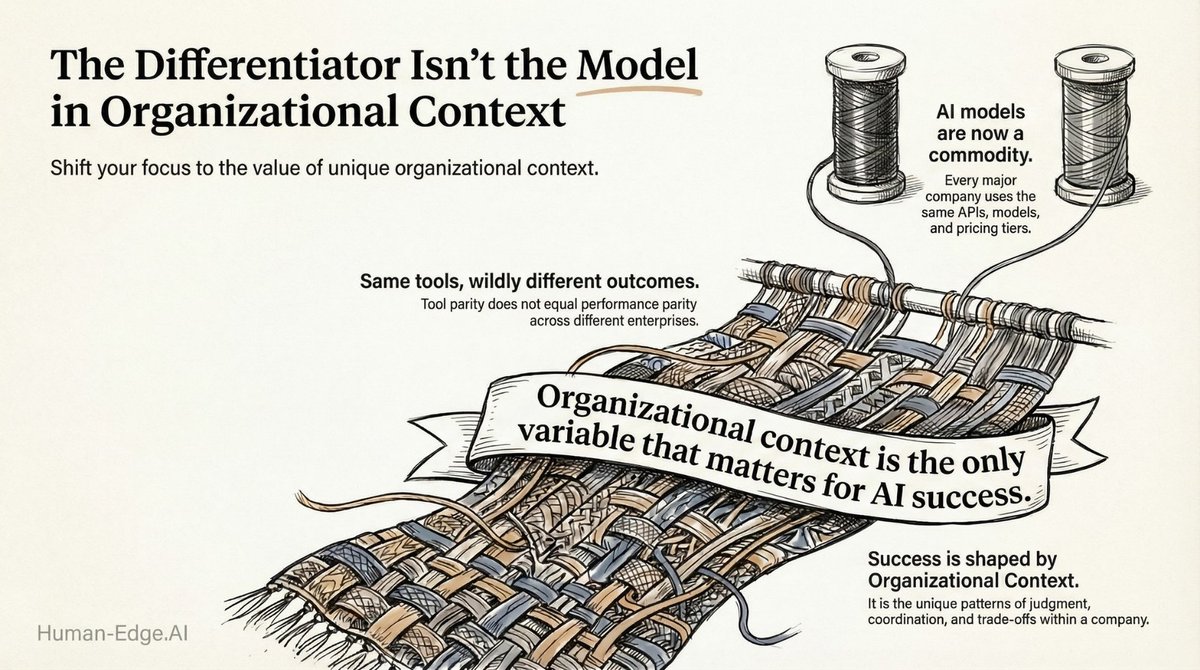
Two companies.
Same CRM.
Same sales stages.
Same forecasting cadence.
Compete for the same customers.
Look at their systems, and they're identical.
Look at how they actually work, and they're completely different.
English
Mohamed Anis
6.7K posts

@Anis_StepUpOne
Done-For-You Investor Outreach → Three Battle-Tested Playbooks → We Run The Process → You Build → Zero Distraction
Here's the case for why Claude Code + COBOL could unwind a century of @IBM dominance and why this time it's structural, not cyclical. IBM's moat was never technical. It was cognitive. 800 billion lines of COBOL sit in active production. $3 trillion in daily commerce flows through it. 95% of ATM transactions run on it. IBM didn't protect that kingdom with patents. It protected it with complexity, deliberately accumulated, institutionally embedded, humanly irreplaceable. The playbook worked for 65 years because COBOL expertise takes 20+ years to develop meaningfully. The average COBOL developer is now 55+. That's not a talent pool. That's a ticking liability. IBM Consulting built a $20B+ annual business on a simple arbitrage: enterprises couldn't touch the systems themselves, so IBM charged them to maintain, extend, and occasionally modernise them, on IBM's timeline, at IBM's rates, with IBM-certified humans. AI doesn't just speed that up. It eliminates the arbitrage entirely. When a model can read, reason about, and translate COBOL at a human-expert level, the knowledge scarcity that created IBM's pricing power disappears. Not gradually. Suddenly. What previously required 3-5 year multi-million-pound programmes could be compressed to months. What required IBMers with 20 years of mainframe scar tissue can now be scaffolded by a junior engineer with Claude Code and good judgment. Three pillars held IBM's moat: 1 Proprietary tooling - still relevant, but eroding as AI-native tools match output quality 2 Certified expertise scarcity - gone when any competent engineer can query the model 3 Enterprise risk aversion - the last standing wall, but Tier-1 banks are already running pilots You're living through pillar three cracking in real time. The real IBM risk isn't the Z17. It's the consulting P&L. The Z platform's 40% growth is real, and IBM Z17, supporting Java and modern workloads, is a smart hedge. But hardware is not where the margin lives. IBM Consulting is. And consulting revenue requires duration. long programmes, high headcount, multi-year contracts. When AI compresses a 5-year engagement into 8 months, IBM doesn't get 5 years' worth of fees on a smaller deal. It doesn't get the deal at all. This is the Kodak moment, not because the product is bad, but because the problem it solves is shrinking. Jasper, Gamma, Cursor - yes, they'll face the same gravity. But they were born in the AI era. IBM built its entire identity on a problem that required human scarcity to remain monetisable. The 13% drop isn't a panic. It's the market slowly understanding that IBM's core value proposition-"we are the only ones who can safely touch your most critical systems" just had its first genuinely credible challenger. That's not a dip. That's a re-rating of what IBM is worth in a world where the moat can be drained.

Here's the case for why Claude Code + COBOL could unwind a century of @IBM dominance and why this time it's structural, not cyclical. IBM's moat was never technical. It was cognitive. 800 billion lines of COBOL sit in active production. $3 trillion in daily commerce flows through it. 95% of ATM transactions run on it. IBM didn't protect that kingdom with patents. It protected it with complexity, deliberately accumulated, institutionally embedded, humanly irreplaceable. The playbook worked for 65 years because COBOL expertise takes 20+ years to develop meaningfully. The average COBOL developer is now 55+. That's not a talent pool. That's a ticking liability. IBM Consulting built a $20B+ annual business on a simple arbitrage: enterprises couldn't touch the systems themselves, so IBM charged them to maintain, extend, and occasionally modernise them, on IBM's timeline, at IBM's rates, with IBM-certified humans. AI doesn't just speed that up. It eliminates the arbitrage entirely. When a model can read, reason about, and translate COBOL at a human-expert level, the knowledge scarcity that created IBM's pricing power disappears. Not gradually. Suddenly. What previously required 3-5 year multi-million-pound programmes could be compressed to months. What required IBMers with 20 years of mainframe scar tissue can now be scaffolded by a junior engineer with Claude Code and good judgment. Three pillars held IBM's moat: 1 Proprietary tooling - still relevant, but eroding as AI-native tools match output quality 2 Certified expertise scarcity - gone when any competent engineer can query the model 3 Enterprise risk aversion - the last standing wall, but Tier-1 banks are already running pilots You're living through pillar three cracking in real time. The real IBM risk isn't the Z17. It's the consulting P&L. The Z platform's 40% growth is real, and IBM Z17, supporting Java and modern workloads, is a smart hedge. But hardware is not where the margin lives. IBM Consulting is. And consulting revenue requires duration. long programmes, high headcount, multi-year contracts. When AI compresses a 5-year engagement into 8 months, IBM doesn't get 5 years' worth of fees on a smaller deal. It doesn't get the deal at all. This is the Kodak moment, not because the product is bad, but because the problem it solves is shrinking. Jasper, Gamma, Cursor - yes, they'll face the same gravity. But they were born in the AI era. IBM built its entire identity on a problem that required human scarcity to remain monetisable. The 13% drop isn't a panic. It's the market slowly understanding that IBM's core value proposition-"we are the only ones who can safely touch your most critical systems" just had its first genuinely credible challenger. That's not a dip. That's a re-rating of what IBM is worth in a world where the moat can be drained.


Here's the case for why Claude Code + COBOL could unwind a century of @IBM dominance and why this time it's structural, not cyclical. IBM's moat was never technical. It was cognitive. 800 billion lines of COBOL sit in active production. $3 trillion in daily commerce flows through it. 95% of ATM transactions run on it. IBM didn't protect that kingdom with patents. It protected it with complexity, deliberately accumulated, institutionally embedded, humanly irreplaceable. The playbook worked for 65 years because COBOL expertise takes 20+ years to develop meaningfully. The average COBOL developer is now 55+. That's not a talent pool. That's a ticking liability. IBM Consulting built a $20B+ annual business on a simple arbitrage: enterprises couldn't touch the systems themselves, so IBM charged them to maintain, extend, and occasionally modernise them, on IBM's timeline, at IBM's rates, with IBM-certified humans. AI doesn't just speed that up. It eliminates the arbitrage entirely. When a model can read, reason about, and translate COBOL at a human-expert level, the knowledge scarcity that created IBM's pricing power disappears. Not gradually. Suddenly. What previously required 3-5 year multi-million-pound programmes could be compressed to months. What required IBMers with 20 years of mainframe scar tissue can now be scaffolded by a junior engineer with Claude Code and good judgment. Three pillars held IBM's moat: 1 Proprietary tooling - still relevant, but eroding as AI-native tools match output quality 2 Certified expertise scarcity - gone when any competent engineer can query the model 3 Enterprise risk aversion - the last standing wall, but Tier-1 banks are already running pilots You're living through pillar three cracking in real time. The real IBM risk isn't the Z17. It's the consulting P&L. The Z platform's 40% growth is real, and IBM Z17, supporting Java and modern workloads, is a smart hedge. But hardware is not where the margin lives. IBM Consulting is. And consulting revenue requires duration. long programmes, high headcount, multi-year contracts. When AI compresses a 5-year engagement into 8 months, IBM doesn't get 5 years' worth of fees on a smaller deal. It doesn't get the deal at all. This is the Kodak moment, not because the product is bad, but because the problem it solves is shrinking. Jasper, Gamma, Cursor - yes, they'll face the same gravity. But they were born in the AI era. IBM built its entire identity on a problem that required human scarcity to remain monetisable. The 13% drop isn't a panic. It's the market slowly understanding that IBM's core value proposition-"we are the only ones who can safely touch your most critical systems" just had its first genuinely credible challenger. That's not a dip. That's a re-rating of what IBM is worth in a world where the moat can be drained.


Here's the case for why Claude Code + COBOL could unwind a century of @IBM dominance and why this time it's structural, not cyclical. IBM's moat was never technical. It was cognitive. 800 billion lines of COBOL sit in active production. $3 trillion in daily commerce flows through it. 95% of ATM transactions run on it. IBM didn't protect that kingdom with patents. It protected it with complexity, deliberately accumulated, institutionally embedded, humanly irreplaceable. The playbook worked for 65 years because COBOL expertise takes 20+ years to develop meaningfully. The average COBOL developer is now 55+. That's not a talent pool. That's a ticking liability. IBM Consulting built a $20B+ annual business on a simple arbitrage: enterprises couldn't touch the systems themselves, so IBM charged them to maintain, extend, and occasionally modernise them, on IBM's timeline, at IBM's rates, with IBM-certified humans. AI doesn't just speed that up. It eliminates the arbitrage entirely. When a model can read, reason about, and translate COBOL at a human-expert level, the knowledge scarcity that created IBM's pricing power disappears. Not gradually. Suddenly. What previously required 3-5 year multi-million-pound programmes could be compressed to months. What required IBMers with 20 years of mainframe scar tissue can now be scaffolded by a junior engineer with Claude Code and good judgment. Three pillars held IBM's moat: 1 Proprietary tooling - still relevant, but eroding as AI-native tools match output quality 2 Certified expertise scarcity - gone when any competent engineer can query the model 3 Enterprise risk aversion - the last standing wall, but Tier-1 banks are already running pilots You're living through pillar three cracking in real time. The real IBM risk isn't the Z17. It's the consulting P&L. The Z platform's 40% growth is real, and IBM Z17, supporting Java and modern workloads, is a smart hedge. But hardware is not where the margin lives. IBM Consulting is. And consulting revenue requires duration. long programmes, high headcount, multi-year contracts. When AI compresses a 5-year engagement into 8 months, IBM doesn't get 5 years' worth of fees on a smaller deal. It doesn't get the deal at all. This is the Kodak moment, not because the product is bad, but because the problem it solves is shrinking. Jasper, Gamma, Cursor - yes, they'll face the same gravity. But they were born in the AI era. IBM built its entire identity on a problem that required human scarcity to remain monetisable. The 13% drop isn't a panic. It's the market slowly understanding that IBM's core value proposition-"we are the only ones who can safely touch your most critical systems" just had its first genuinely credible challenger. That's not a dip. That's a re-rating of what IBM is worth in a world where the moat can be drained.


Here's the case for why Claude Code + COBOL could unwind a century of @IBM dominance and why this time it's structural, not cyclical. IBM's moat was never technical. It was cognitive. 800 billion lines of COBOL sit in active production. $3 trillion in daily commerce flows through it. 95% of ATM transactions run on it. IBM didn't protect that kingdom with patents. It protected it with complexity, deliberately accumulated, institutionally embedded, humanly irreplaceable. The playbook worked for 65 years because COBOL expertise takes 20+ years to develop meaningfully. The average COBOL developer is now 55+. That's not a talent pool. That's a ticking liability. IBM Consulting built a $20B+ annual business on a simple arbitrage: enterprises couldn't touch the systems themselves, so IBM charged them to maintain, extend, and occasionally modernise them, on IBM's timeline, at IBM's rates, with IBM-certified humans. AI doesn't just speed that up. It eliminates the arbitrage entirely. When a model can read, reason about, and translate COBOL at a human-expert level, the knowledge scarcity that created IBM's pricing power disappears. Not gradually. Suddenly. What previously required 3-5 year multi-million-pound programmes could be compressed to months. What required IBMers with 20 years of mainframe scar tissue can now be scaffolded by a junior engineer with Claude Code and good judgment. Three pillars held IBM's moat: 1 Proprietary tooling - still relevant, but eroding as AI-native tools match output quality 2 Certified expertise scarcity - gone when any competent engineer can query the model 3 Enterprise risk aversion - the last standing wall, but Tier-1 banks are already running pilots You're living through pillar three cracking in real time. The real IBM risk isn't the Z17. It's the consulting P&L. The Z platform's 40% growth is real, and IBM Z17, supporting Java and modern workloads, is a smart hedge. But hardware is not where the margin lives. IBM Consulting is. And consulting revenue requires duration. long programmes, high headcount, multi-year contracts. When AI compresses a 5-year engagement into 8 months, IBM doesn't get 5 years' worth of fees on a smaller deal. It doesn't get the deal at all. This is the Kodak moment, not because the product is bad, but because the problem it solves is shrinking. Jasper, Gamma, Cursor - yes, they'll face the same gravity. But they were born in the AI era. IBM built its entire identity on a problem that required human scarcity to remain monetisable. The 13% drop isn't a panic. It's the market slowly understanding that IBM's core value proposition-"we are the only ones who can safely touch your most critical systems" just had its first genuinely credible challenger. That's not a dip. That's a re-rating of what IBM is worth in a world where the moat can be drained.

Here's the case for why Claude Code + COBOL could unwind a century of @IBM dominance and why this time it's structural, not cyclical. IBM's moat was never technical. It was cognitive. 800 billion lines of COBOL sit in active production. $3 trillion in daily commerce flows through it. 95% of ATM transactions run on it. IBM didn't protect that kingdom with patents. It protected it with complexity, deliberately accumulated, institutionally embedded, humanly irreplaceable. The playbook worked for 65 years because COBOL expertise takes 20+ years to develop meaningfully. The average COBOL developer is now 55+. That's not a talent pool. That's a ticking liability. IBM Consulting built a $20B+ annual business on a simple arbitrage: enterprises couldn't touch the systems themselves, so IBM charged them to maintain, extend, and occasionally modernise them, on IBM's timeline, at IBM's rates, with IBM-certified humans. AI doesn't just speed that up. It eliminates the arbitrage entirely. When a model can read, reason about, and translate COBOL at a human-expert level, the knowledge scarcity that created IBM's pricing power disappears. Not gradually. Suddenly. What previously required 3-5 year multi-million-pound programmes could be compressed to months. What required IBMers with 20 years of mainframe scar tissue can now be scaffolded by a junior engineer with Claude Code and good judgment. Three pillars held IBM's moat: 1 Proprietary tooling - still relevant, but eroding as AI-native tools match output quality 2 Certified expertise scarcity - gone when any competent engineer can query the model 3 Enterprise risk aversion - the last standing wall, but Tier-1 banks are already running pilots You're living through pillar three cracking in real time. The real IBM risk isn't the Z17. It's the consulting P&L. The Z platform's 40% growth is real, and IBM Z17, supporting Java and modern workloads, is a smart hedge. But hardware is not where the margin lives. IBM Consulting is. And consulting revenue requires duration. long programmes, high headcount, multi-year contracts. When AI compresses a 5-year engagement into 8 months, IBM doesn't get 5 years' worth of fees on a smaller deal. It doesn't get the deal at all. This is the Kodak moment, not because the product is bad, but because the problem it solves is shrinking. Jasper, Gamma, Cursor - yes, they'll face the same gravity. But they were born in the AI era. IBM built its entire identity on a problem that required human scarcity to remain monetisable. The 13% drop isn't a panic. It's the market slowly understanding that IBM's core value proposition-"we are the only ones who can safely touch your most critical systems" just had its first genuinely credible challenger. That's not a dip. That's a re-rating of what IBM is worth in a world where the moat can be drained.

Here's the case for why Claude Code + COBOL could unwind a century of @IBM dominance and why this time it's structural, not cyclical. IBM's moat was never technical. It was cognitive. 800 billion lines of COBOL sit in active production. $3 trillion in daily commerce flows through it. 95% of ATM transactions run on it. IBM didn't protect that kingdom with patents. It protected it with complexity, deliberately accumulated, institutionally embedded, humanly irreplaceable. The playbook worked for 65 years because COBOL expertise takes 20+ years to develop meaningfully. The average COBOL developer is now 55+. That's not a talent pool. That's a ticking liability. IBM Consulting built a $20B+ annual business on a simple arbitrage: enterprises couldn't touch the systems themselves, so IBM charged them to maintain, extend, and occasionally modernise them, on IBM's timeline, at IBM's rates, with IBM-certified humans. AI doesn't just speed that up. It eliminates the arbitrage entirely. When a model can read, reason about, and translate COBOL at a human-expert level, the knowledge scarcity that created IBM's pricing power disappears. Not gradually. Suddenly. What previously required 3-5 year multi-million-pound programmes could be compressed to months. What required IBMers with 20 years of mainframe scar tissue can now be scaffolded by a junior engineer with Claude Code and good judgment. Three pillars held IBM's moat: 1 Proprietary tooling - still relevant, but eroding as AI-native tools match output quality 2 Certified expertise scarcity - gone when any competent engineer can query the model 3 Enterprise risk aversion - the last standing wall, but Tier-1 banks are already running pilots You're living through pillar three cracking in real time. The real IBM risk isn't the Z17. It's the consulting P&L. The Z platform's 40% growth is real, and IBM Z17, supporting Java and modern workloads, is a smart hedge. But hardware is not where the margin lives. IBM Consulting is. And consulting revenue requires duration. long programmes, high headcount, multi-year contracts. When AI compresses a 5-year engagement into 8 months, IBM doesn't get 5 years' worth of fees on a smaller deal. It doesn't get the deal at all. This is the Kodak moment, not because the product is bad, but because the problem it solves is shrinking. Jasper, Gamma, Cursor - yes, they'll face the same gravity. But they were born in the AI era. IBM built its entire identity on a problem that required human scarcity to remain monetisable. The 13% drop isn't a panic. It's the market slowly understanding that IBM's core value proposition-"we are the only ones who can safely touch your most critical systems" just had its first genuinely credible challenger. That's not a dip. That's a re-rating of what IBM is worth in a world where the moat can be drained.


Here's the case for why Claude Code + COBOL could unwind a century of @IBM dominance and why this time it's structural, not cyclical. IBM's moat was never technical. It was cognitive. 800 billion lines of COBOL sit in active production. $3 trillion in daily commerce flows through it. 95% of ATM transactions run on it. IBM didn't protect that kingdom with patents. It protected it with complexity, deliberately accumulated, institutionally embedded, humanly irreplaceable. The playbook worked for 65 years because COBOL expertise takes 20+ years to develop meaningfully. The average COBOL developer is now 55+. That's not a talent pool. That's a ticking liability. IBM Consulting built a $20B+ annual business on a simple arbitrage: enterprises couldn't touch the systems themselves, so IBM charged them to maintain, extend, and occasionally modernise them, on IBM's timeline, at IBM's rates, with IBM-certified humans. AI doesn't just speed that up. It eliminates the arbitrage entirely. When a model can read, reason about, and translate COBOL at a human-expert level, the knowledge scarcity that created IBM's pricing power disappears. Not gradually. Suddenly. What previously required 3-5 year multi-million-pound programmes could be compressed to months. What required IBMers with 20 years of mainframe scar tissue can now be scaffolded by a junior engineer with Claude Code and good judgment. Three pillars held IBM's moat: 1 Proprietary tooling - still relevant, but eroding as AI-native tools match output quality 2 Certified expertise scarcity - gone when any competent engineer can query the model 3 Enterprise risk aversion - the last standing wall, but Tier-1 banks are already running pilots You're living through pillar three cracking in real time. The real IBM risk isn't the Z17. It's the consulting P&L. The Z platform's 40% growth is real, and IBM Z17, supporting Java and modern workloads, is a smart hedge. But hardware is not where the margin lives. IBM Consulting is. And consulting revenue requires duration. long programmes, high headcount, multi-year contracts. When AI compresses a 5-year engagement into 8 months, IBM doesn't get 5 years' worth of fees on a smaller deal. It doesn't get the deal at all. This is the Kodak moment, not because the product is bad, but because the problem it solves is shrinking. Jasper, Gamma, Cursor - yes, they'll face the same gravity. But they were born in the AI era. IBM built its entire identity on a problem that required human scarcity to remain monetisable. The 13% drop isn't a panic. It's the market slowly understanding that IBM's core value proposition-"we are the only ones who can safely touch your most critical systems" just had its first genuinely credible challenger. That's not a dip. That's a re-rating of what IBM is worth in a world where the moat can be drained.


Here's the case for why Claude Code + COBOL could unwind a century of @IBM dominance and why this time it's structural, not cyclical. IBM's moat was never technical. It was cognitive. 800 billion lines of COBOL sit in active production. $3 trillion in daily commerce flows through it. 95% of ATM transactions run on it. IBM didn't protect that kingdom with patents. It protected it with complexity, deliberately accumulated, institutionally embedded, humanly irreplaceable. The playbook worked for 65 years because COBOL expertise takes 20+ years to develop meaningfully. The average COBOL developer is now 55+. That's not a talent pool. That's a ticking liability. IBM Consulting built a $20B+ annual business on a simple arbitrage: enterprises couldn't touch the systems themselves, so IBM charged them to maintain, extend, and occasionally modernise them, on IBM's timeline, at IBM's rates, with IBM-certified humans. AI doesn't just speed that up. It eliminates the arbitrage entirely. When a model can read, reason about, and translate COBOL at a human-expert level, the knowledge scarcity that created IBM's pricing power disappears. Not gradually. Suddenly. What previously required 3-5 year multi-million-pound programmes could be compressed to months. What required IBMers with 20 years of mainframe scar tissue can now be scaffolded by a junior engineer with Claude Code and good judgment. Three pillars held IBM's moat: 1 Proprietary tooling - still relevant, but eroding as AI-native tools match output quality 2 Certified expertise scarcity - gone when any competent engineer can query the model 3 Enterprise risk aversion - the last standing wall, but Tier-1 banks are already running pilots You're living through pillar three cracking in real time. The real IBM risk isn't the Z17. It's the consulting P&L. The Z platform's 40% growth is real, and IBM Z17, supporting Java and modern workloads, is a smart hedge. But hardware is not where the margin lives. IBM Consulting is. And consulting revenue requires duration. long programmes, high headcount, multi-year contracts. When AI compresses a 5-year engagement into 8 months, IBM doesn't get 5 years' worth of fees on a smaller deal. It doesn't get the deal at all. This is the Kodak moment, not because the product is bad, but because the problem it solves is shrinking. Jasper, Gamma, Cursor - yes, they'll face the same gravity. But they were born in the AI era. IBM built its entire identity on a problem that required human scarcity to remain monetisable. The 13% drop isn't a panic. It's the market slowly understanding that IBM's core value proposition-"we are the only ones who can safely touch your most critical systems" just had its first genuinely credible challenger. That's not a dip. That's a re-rating of what IBM is worth in a world where the moat can be drained.


Here's the case for why Claude Code + COBOL could unwind a century of @IBM dominance and why this time it's structural, not cyclical. IBM's moat was never technical. It was cognitive. 800 billion lines of COBOL sit in active production. $3 trillion in daily commerce flows through it. 95% of ATM transactions run on it. IBM didn't protect that kingdom with patents. It protected it with complexity, deliberately accumulated, institutionally embedded, humanly irreplaceable. The playbook worked for 65 years because COBOL expertise takes 20+ years to develop meaningfully. The average COBOL developer is now 55+. That's not a talent pool. That's a ticking liability. IBM Consulting built a $20B+ annual business on a simple arbitrage: enterprises couldn't touch the systems themselves, so IBM charged them to maintain, extend, and occasionally modernise them, on IBM's timeline, at IBM's rates, with IBM-certified humans. AI doesn't just speed that up. It eliminates the arbitrage entirely. When a model can read, reason about, and translate COBOL at a human-expert level, the knowledge scarcity that created IBM's pricing power disappears. Not gradually. Suddenly. What previously required 3-5 year multi-million-pound programmes could be compressed to months. What required IBMers with 20 years of mainframe scar tissue can now be scaffolded by a junior engineer with Claude Code and good judgment. Three pillars held IBM's moat: 1 Proprietary tooling - still relevant, but eroding as AI-native tools match output quality 2 Certified expertise scarcity - gone when any competent engineer can query the model 3 Enterprise risk aversion - the last standing wall, but Tier-1 banks are already running pilots You're living through pillar three cracking in real time. The real IBM risk isn't the Z17. It's the consulting P&L. The Z platform's 40% growth is real, and IBM Z17, supporting Java and modern workloads, is a smart hedge. But hardware is not where the margin lives. IBM Consulting is. And consulting revenue requires duration. long programmes, high headcount, multi-year contracts. When AI compresses a 5-year engagement into 8 months, IBM doesn't get 5 years' worth of fees on a smaller deal. It doesn't get the deal at all. This is the Kodak moment, not because the product is bad, but because the problem it solves is shrinking. Jasper, Gamma, Cursor - yes, they'll face the same gravity. But they were born in the AI era. IBM built its entire identity on a problem that required human scarcity to remain monetisable. The 13% drop isn't a panic. It's the market slowly understanding that IBM's core value proposition-"we are the only ones who can safely touch your most critical systems" just had its first genuinely credible challenger. That's not a dip. That's a re-rating of what IBM is worth in a world where the moat can be drained.

Here's the case for why Claude Code + COBOL could unwind a century of @IBM dominance and why this time it's structural, not cyclical. IBM's moat was never technical. It was cognitive. 800 billion lines of COBOL sit in active production. $3 trillion in daily commerce flows through it. 95% of ATM transactions run on it. IBM didn't protect that kingdom with patents. It protected it with complexity, deliberately accumulated, institutionally embedded, humanly irreplaceable. The playbook worked for 65 years because COBOL expertise takes 20+ years to develop meaningfully. The average COBOL developer is now 55+. That's not a talent pool. That's a ticking liability. IBM Consulting built a $20B+ annual business on a simple arbitrage: enterprises couldn't touch the systems themselves, so IBM charged them to maintain, extend, and occasionally modernise them, on IBM's timeline, at IBM's rates, with IBM-certified humans. AI doesn't just speed that up. It eliminates the arbitrage entirely. When a model can read, reason about, and translate COBOL at a human-expert level, the knowledge scarcity that created IBM's pricing power disappears. Not gradually. Suddenly. What previously required 3-5 year multi-million-pound programmes could be compressed to months. What required IBMers with 20 years of mainframe scar tissue can now be scaffolded by a junior engineer with Claude Code and good judgment. Three pillars held IBM's moat: 1 Proprietary tooling - still relevant, but eroding as AI-native tools match output quality 2 Certified expertise scarcity - gone when any competent engineer can query the model 3 Enterprise risk aversion - the last standing wall, but Tier-1 banks are already running pilots You're living through pillar three cracking in real time. The real IBM risk isn't the Z17. It's the consulting P&L. The Z platform's 40% growth is real, and IBM Z17, supporting Java and modern workloads, is a smart hedge. But hardware is not where the margin lives. IBM Consulting is. And consulting revenue requires duration. long programmes, high headcount, multi-year contracts. When AI compresses a 5-year engagement into 8 months, IBM doesn't get 5 years' worth of fees on a smaller deal. It doesn't get the deal at all. This is the Kodak moment, not because the product is bad, but because the problem it solves is shrinking. Jasper, Gamma, Cursor - yes, they'll face the same gravity. But they were born in the AI era. IBM built its entire identity on a problem that required human scarcity to remain monetisable. The 13% drop isn't a panic. It's the market slowly understanding that IBM's core value proposition-"we are the only ones who can safely touch your most critical systems" just had its first genuinely credible challenger. That's not a dip. That's a re-rating of what IBM is worth in a world where the moat can be drained.

Here's the case for why Claude Code + COBOL could unwind a century of @IBM dominance and why this time it's structural, not cyclical. IBM's moat was never technical. It was cognitive. 800 billion lines of COBOL sit in active production. $3 trillion in daily commerce flows through it. 95% of ATM transactions run on it. IBM didn't protect that kingdom with patents. It protected it with complexity, deliberately accumulated, institutionally embedded, humanly irreplaceable. The playbook worked for 65 years because COBOL expertise takes 20+ years to develop meaningfully. The average COBOL developer is now 55+. That's not a talent pool. That's a ticking liability. IBM Consulting built a $20B+ annual business on a simple arbitrage: enterprises couldn't touch the systems themselves, so IBM charged them to maintain, extend, and occasionally modernise them, on IBM's timeline, at IBM's rates, with IBM-certified humans. AI doesn't just speed that up. It eliminates the arbitrage entirely. When a model can read, reason about, and translate COBOL at a human-expert level, the knowledge scarcity that created IBM's pricing power disappears. Not gradually. Suddenly. What previously required 3-5 year multi-million-pound programmes could be compressed to months. What required IBMers with 20 years of mainframe scar tissue can now be scaffolded by a junior engineer with Claude Code and good judgment. Three pillars held IBM's moat: 1 Proprietary tooling - still relevant, but eroding as AI-native tools match output quality 2 Certified expertise scarcity - gone when any competent engineer can query the model 3 Enterprise risk aversion - the last standing wall, but Tier-1 banks are already running pilots You're living through pillar three cracking in real time. The real IBM risk isn't the Z17. It's the consulting P&L. The Z platform's 40% growth is real, and IBM Z17, supporting Java and modern workloads, is a smart hedge. But hardware is not where the margin lives. IBM Consulting is. And consulting revenue requires duration. long programmes, high headcount, multi-year contracts. When AI compresses a 5-year engagement into 8 months, IBM doesn't get 5 years' worth of fees on a smaller deal. It doesn't get the deal at all. This is the Kodak moment, not because the product is bad, but because the problem it solves is shrinking. Jasper, Gamma, Cursor - yes, they'll face the same gravity. But they were born in the AI era. IBM built its entire identity on a problem that required human scarcity to remain monetisable. The 13% drop isn't a panic. It's the market slowly understanding that IBM's core value proposition-"we are the only ones who can safely touch your most critical systems" just had its first genuinely credible challenger. That's not a dip. That's a re-rating of what IBM is worth in a world where the moat can be drained.

Yann LeCun just raised $1.03B for AMI LABS. His thesis: LLMs learn from language, not reality. That's a fundamental limitation. To get real intelligence, you need world models - AI that understands how the physical world works. He's right. But there's a second limitation: nobody is funding it. LLMs don't just fail to understand the world. They fail to understand you. Your context. Your job. The domain you're operating in. The unwritten rules. The relationships. The trade-offs. Yann LeCun is building models that understand the world. We're building infrastructure that understands the human. $1B just went to world models. ~$0 has gone to context infrastructure. Both are correct that the model alone is not enough. Both are building layers that sit around the model, not a better model. The complete stack needs both. But right now, one side of the equation is funded. The other isn't.

Yann LeCun just raised $1.03B for AMI LABS. His thesis: LLMs learn from language, not reality. That's a fundamental limitation. To get real intelligence, you need world models - AI that understands how the physical world works. He's right. But there's a second limitation: nobody is funding it. LLMs don't just fail to understand the world. They fail to understand you. Your context. Your job. The domain you're operating in. The unwritten rules. The relationships. The trade-offs. Yann LeCun is building models that understand the world. We're building infrastructure that understands the human. $1B just went to world models. ~$0 has gone to context infrastructure. Both are correct that the model alone is not enough. Both are building layers that sit around the model, not a better model. The complete stack needs both. But right now, one side of the equation is funded. The other isn't.

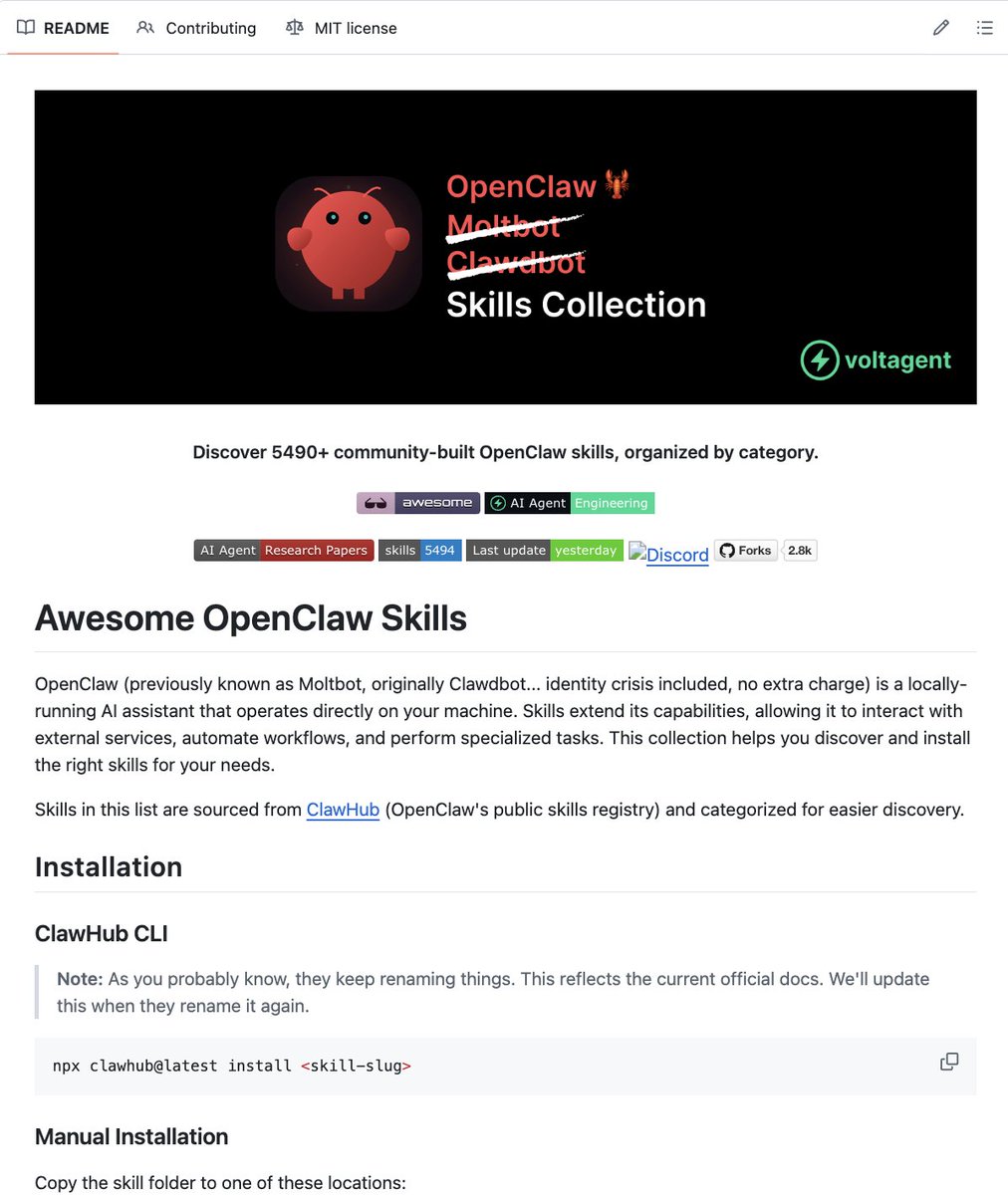
Peter Steinberger is joining OpenAI to drive the next generation of personal agents. He is a genius with a lot of amazing ideas about the future of very smart agents interacting with each other to do very useful things for people. We expect this will quickly become core to our product offerings. OpenClaw will live in a foundation as an open source project that OpenAI will continue to support. The future is going to be extremely multi-agent and it's important to us to support open source as part of that.
Yann LeCun just raised $1.03B for AMI LABS. His thesis: LLMs learn from language, not reality. That's a fundamental limitation. To get real intelligence, you need world models - AI that understands how the physical world works. He's right. But there's a second limitation: nobody is funding it. LLMs don't just fail to understand the world. They fail to understand you. Your context. Your job. The domain you're operating in. The unwritten rules. The relationships. The trade-offs. Yann LeCun is building models that understand the world. We're building infrastructure that understands the human. $1B just went to world models. ~$0 has gone to context infrastructure. Both are correct that the model alone is not enough. Both are building layers that sit around the model, not a better model. The complete stack needs both. But right now, one side of the equation is funded. The other isn't.
Cursor charges $200/month for Claude Code. It costs them up to $5,000 in computing to deliver it. Read that again. For every $1 you pay, someone is burning $25 behind the scenes. Last year it was $2,000. This year $5,000. The cost is going UP, not down. Where's the difference coming from? Venture capital. VCs are subsidising your AI productivity right now. Every smart autocomplete. Every code generation. Every agent that writes your tests. Someone is writing a cheque so you can have it for cheap. We've seen this movie before. Uber did it with rides. WeWork did it with desks. DoorDash did it with deliveries. Subsidise like crazy. Capture the market. Then reprice. But here's what's different this time. Cursor doesn't control the models. They're reselling Anthropic and OpenAI's compute at a loss. They can't subsidise their own users the way Anthropic can subsidise Claude Code directly. That's a brutal position to be in. Your entire margin depends on someone else's pricing decision. The platform eventually competes with you. Or reprices you out. So what should builders do right now? Use everything. Build fast. This window of subsidised AI is real and it won't last. But don't confuse subsidised pricing with sustainable economics. The companies that win long term will be the ones who turn this cheap compute into durable client relationships and measurable outcomes before the subsidy disappears. Cheap AI is temporary. The outcomes you build with it don't have to be. hashtag#AI hashtag#Startups hashtag#Founders hashtag#VentureCapital hashtag#AIStrategy hashtag#ClaudeCode
Cursor charges $200/month for Claude Code. It costs them up to $5,000 in computing to deliver it. Read that again. For every $1 you pay, someone is burning $25 behind the scenes. Last year it was $2,000. This year $5,000. The cost is going UP, not down. Where's the difference coming from? Venture capital. VCs are subsidising your AI productivity right now. Every smart autocomplete. Every code generation. Every agent that writes your tests. Someone is writing a cheque so you can have it for cheap. We've seen this movie before. Uber did it with rides. WeWork did it with desks. DoorDash did it with deliveries. Subsidise like crazy. Capture the market. Then reprice. But here's what's different this time. Cursor doesn't control the models. They're reselling Anthropic and OpenAI's compute at a loss. They can't subsidise their own users the way Anthropic can subsidise Claude Code directly. That's a brutal position to be in. Your entire margin depends on someone else's pricing decision. The platform eventually competes with you. Or reprices you out. So what should builders do right now? Use everything. Build fast. This window of subsidised AI is real and it won't last. But don't confuse subsidised pricing with sustainable economics. The companies that win long term will be the ones who turn this cheap compute into durable client relationships and measurable outcomes before the subsidy disappears. Cheap AI is temporary. The outcomes you build with it don't have to be. hashtag#AI hashtag#Startups hashtag#Founders hashtag#VentureCapital hashtag#AIStrategy hashtag#ClaudeCode


Cursor charges $200/month for Claude Code. It costs them up to $5,000 in computing to deliver it. Read that again. For every $1 you pay, someone is burning $25 behind the scenes. Last year it was $2,000. This year $5,000. The cost is going UP, not down. Where's the difference coming from? Venture capital. VCs are subsidising your AI productivity right now. Every smart autocomplete. Every code generation. Every agent that writes your tests. Someone is writing a cheque so you can have it for cheap. We've seen this movie before. Uber did it with rides. WeWork did it with desks. DoorDash did it with deliveries. Subsidise like crazy. Capture the market. Then reprice. But here's what's different this time. Cursor doesn't control the models. They're reselling Anthropic and OpenAI's compute at a loss. They can't subsidise their own users the way Anthropic can subsidise Claude Code directly. That's a brutal position to be in. Your entire margin depends on someone else's pricing decision. The platform eventually competes with you. Or reprices you out. So what should builders do right now? Use everything. Build fast. This window of subsidised AI is real and it won't last. But don't confuse subsidised pricing with sustainable economics. The companies that win long term will be the ones who turn this cheap compute into durable client relationships and measurable outcomes before the subsidy disappears. Cheap AI is temporary. The outcomes you build with it don't have to be. hashtag#AI hashtag#Startups hashtag#Founders hashtag#VentureCapital hashtag#AIStrategy hashtag#ClaudeCode

Cursor charges $200/month for Claude Code. It costs them up to $5,000 in computing to deliver it. Read that again. For every $1 you pay, someone is burning $25 behind the scenes. Last year it was $2,000. This year $5,000. The cost is going UP, not down. Where's the difference coming from? Venture capital. VCs are subsidising your AI productivity right now. Every smart autocomplete. Every code generation. Every agent that writes your tests. Someone is writing a cheque so you can have it for cheap. We've seen this movie before. Uber did it with rides. WeWork did it with desks. DoorDash did it with deliveries. Subsidise like crazy. Capture the market. Then reprice. But here's what's different this time. Cursor doesn't control the models. They're reselling Anthropic and OpenAI's compute at a loss. They can't subsidise their own users the way Anthropic can subsidise Claude Code directly. That's a brutal position to be in. Your entire margin depends on someone else's pricing decision. The platform eventually competes with you. Or reprices you out. So what should builders do right now? Use everything. Build fast. This window of subsidised AI is real and it won't last. But don't confuse subsidised pricing with sustainable economics. The companies that win long term will be the ones who turn this cheap compute into durable client relationships and measurable outcomes before the subsidy disappears. Cheap AI is temporary. The outcomes you build with it don't have to be. hashtag#AI hashtag#Startups hashtag#Founders hashtag#VentureCapital hashtag#AIStrategy hashtag#ClaudeCode