BlessedAnomaly

11.9K posts

BlessedAnomaly banner
BlessedAnomaly

BlessedAnomaly

@AnomalyBlessed

Beware: snarky! ***Enter my DMs: blocked!*** I study the Word. A hermetic grouch. see View More below for block rules.

San Tan Valley, AZ Katılım Nisan 2023
690 Takip Edilen650 Takipçiler
Sabitlenmiş Tweet
BlessedAnomaly
BlessedAnomaly@AnomalyBlessed·
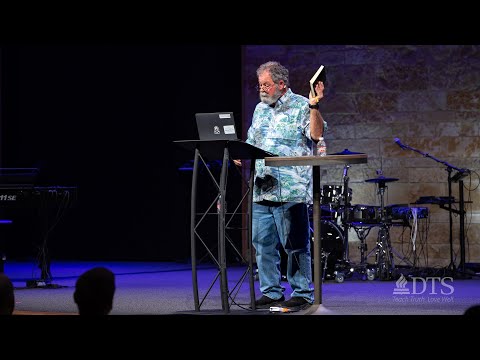
What is the bible. How did we get it? How did it get interpreted, and what goes into making the different translations. And how do we know which translations are most trusted? Enjoy. youtube.com/watch?v=n5AKPi…… Dr. Wallace is a New Testament and Greek scholar from Dallas Theological Seminary. He is one of the scholars that has a hand in the New Testament translation of the NET bible.
YouTube video
YouTube
English
11
2
150
13.2K
BlessedAnomaly
BlessedAnomaly@AnomalyBlessed·
God's Law is far more encompassing than the Mosaic Law. Do you know how you can know? Romans 2:14 For whenever the Gentiles, who do not have the law,.... Gentiles were NEVER under the Mosaic Law. Paul teaches the Gentile to NOT get under the Mosaic Law in at least five distinct passages, across three different letters — Galatians, Romans, and Colossians. And these are not vague hints; they are direct statements telling Gentile believers not to submit to the Law, telling Jewish converts not to return to it, and not to treat it as covenant authority. The Mosaic Law is part of the Old Covenant. You know, the one that Paul teaches will be made obsolete once Israel is saved. Hebrews 8:13 When he speaks of a new covenant, he makes the first obsolete. Now what is growing obsolete and aging is about to disappear. Oops. Mosaic Law will disappear.
English
0
0
0
6
TChapman500
TChapman500@TChapman500·
If you teach that there's a difference between God's law and the "Mosaic law", then you are a heretic. The "law of Moses" and the "law of God" are the same law.
English
4
1
12
173
BlessedAnomaly
BlessedAnomaly@AnomalyBlessed·
Added clarity for that: Romans 5:13 teaches that sin existed before the Law, but it wasn’t legally imputed as covenant transgression until the Law was given — which is why Paul says death spread because of sin. But Adam’s guilt was not imputed to everyone. People are guilty of their own sin when they sin. And verses like Ecc 7:29 says that "man was created upright," (there goes total depravity!) "but man will chase after sin." It is in our makeup to desire what is pleasurable, and that includes what is sinful.
English
0
0
0
1
BlessedAnomaly
BlessedAnomaly@AnomalyBlessed·
No. Adam and Eve sinned. The rest of humanity didn’t personally sin in Adam — we inherit the consequences of their sin, not the guilt of their act. Romans 5 says death spread because all sinned, not that all sinned in Adam. There’s a difference between being affected by Adam and participating in Adam.
English
1
0
0
3
Toneskee ☀️
Toneskee ☀️@Toneskeee·
Did all mankind fall in Adam's first transgression?
English
88
2
55
2.8K
BlessedAnomaly
BlessedAnomaly@AnomalyBlessed·
It's one thing to have a different view and understanding of the bible than other people. But this post makes a mockery of the bible (no mater which side you believe). And I don't think that God will be pleased when judgment occurs. Mocking the Word is not to be taken lightly.
David@David_wthebeard

Nowhere to be found, I guess.

English
0
0
0
12
BlessedAnomaly
BlessedAnomaly@AnomalyBlessed·
Then your eyes are purposefully closed. This is what's called bringing presuppositions to the text. Romans 9:32 Because they did not pursue it by faith, but as if it were by works. Pursue? That's free will. Paul says nothing about predestination. Nothing about God-decreed unbelief. No. They freely pursued the wrong thing. They did not pursue faith. They chose works. They stumbled in their free will. v 31 - Israel pushed a law of righteousness and did not attain it. That's free will. It is effort, intention, volition. v 18 "He hardens whom he wills." Calvinists love this verse. But they ignore Paul's own commentary on the situation: Rom 10:21 All day long I have held out my hands to a disobedient and obstinate people. I thought God was ordaining their walk? No. They walk in free will. God's hardening is judicial (judgment for wrong free actions); responsive (to bad actions); based on persistent refusal (free will sin). Romans 9:22 "vessels of wrath prepared themselves for destruction." Yes. κατηρτισμένα is middle/passive and perfect tense — strongly indicates self‑preparedness, not divine predestination. Romans 9:11 - "not by works" This assumes works are possible. It shows that free will is in place. If it wasn't, "works" would be meaningless. Paul's point is that: -- humans can act; -- humans can choose; -- humans can do works; -- humans can respond freely. Romans 9:30 - Gentiles "attained" righteousness by faith. This is human response. Paul doesn't say God irresistibly regenerated them. Paul doesn't say God caused their faith. It says: they believed; It says: Israel did not. That's free will. Romans 9 flows into Romans 10 where free will is clearly taught: Romans 10:13 Everyone who calls on the name of the Lord will be saved. Romans 10:16 They did not all obey the gospel. Romans 10:21 All day long I stretched out my hands… If you would open your eyes and put down your presuppositions, you will see free will in action all over Romans.
English
0
0
0
2
David
David@David_wthebeard·
Nowhere to be found, I guess.
David tweet media
English
30
6
60
2.5K
BlessedAnomaly
BlessedAnomaly@AnomalyBlessed·
I didn't know they could take such clear video in the 4th century. But yes, each generation men like Jack Van Impe (he was the one in my younger, early saved days) who had a penchant for setting, not so much dates, but time frames. In the '80's it was always "before the year 2000." But none of these make scripture any less true that the Rapture will come. The Church will rise and meet Jesus in the clouds. At the Second Coming, Jesus will set his foot on the Mount. Two events. Not the same.
English
0
0
0
170
Josh Barzon
Josh Barzon@JoshuaBarzon·
My stomach hurts from laughing so hard 🤣
English
96
145
703
75.1K
BlessedAnomaly
BlessedAnomaly@AnomalyBlessed·
Tit 3:5 He saved us, not because of works done by us in righteousness, but according to his own mercy, by the washing of regeneration and renewal of the Holy Spirit, Tit 3:6  whom he poured out on us richly through Jesus Christ our Savior, Tit 3:7  so that being justified by his grace we might become heirs according to the hope of eternal life. So Titus says God saves us. It's not your works. And he saved us so we can be heirs in eternal life. But you go on and on and on...repeating over and over....kind of like what Jesus told us not to do in prayer, you do in nonsense explanation. Matthew 6:7 ... use not vain repetitions, as the heathen do: for they think that they shall be heard for their much speaking.
English
0
0
0
11
ByFaithAL0NE
ByFaithAL0NE@ByGraceAL0NE·
I dont see anything wrong with what Jon has said here. It clearly describes the regeneration of the Holy Spirit as the causality of belief. If you follow his logic he begins by describing them (his audience) and himself before regeneration as: “we ourselves were once foolish, disobedient, led astray, slaves to various passions and pleasures, passing our days in malice and envy, hated by others and hating one another.” Titus 3:3 Then he goes on to describe what happened to them and himself also as: “Tit 3:5 He saved us, not because of works done by us in righteousness, but according to his own mercy, by the washing of regeneration and renewal of the Holy Spirit, Tit 3:6  whom he poured out on us richly through Jesus Christ our Savior, Tit 3:7  so that being justified by his grace we might become heirs according to the hope of eternal life. Clearly here it talks about Gods work in them; (saving, washing, regeneration, renewal, pouring of the Spirit). These are all God’s actions upon them. Then he describes why: Tit 3:7  so that being justified by His grace we might become heirs according to the hope of eternal life. He then exhorts them that “those who have come to believe in God be careful to devote themselves to good works.” Tied together, his logic is very easy to follow in that those who believed did so as a result of the grace and mercy of God through the washing and regeneration of the Holy Spirit so that they would become heirs of the Kingdom.
English
4
0
0
131
Nate
Nate@1984_nate·
Biblical illiteracy is off the charts with Calvinists.
Nate tweet media
English
14
3
41
1.3K
BlessedAnomaly
BlessedAnomaly@AnomalyBlessed·
Moses’ shining face, the pillar of fire, and the burning bush — none of those examples actually answer the question. They don’t establish cycles of light, nor do they show that God’s created light in Genesis 1 functioned like a natural, half‑day/half‑night solar rhythm. So: -- Did Israel track a time cycle from Moses’ shekinah glow? -- Did the pillar of fire shine only 12 hours a day? -- Did the burning bush flicker on a day/night schedule? Obviously not. Those manifestations were not cyclical light sources. So the real question is: Does the created light of Gen 1 behave like a natural luminary, or is it simply God establishing the rhythm of time before the sun exists? Which leads to the next point: -- If Christ is the light of the New Jerusalem, does his illumination operate on a 12‑hour on/off cycle? Revelation says the opposite — “there shall be no night there.” So Christ’s light is continuous, not cyclicl. Now, regarding Colossians 1:16: -- “Firstborn of all creation” is a relational, preeminence term, but it also affirms that the Son is the one through whom all things came to be. -- If the Son is "one who comes forth from the Father" and is the agent of creation, then identifying the Genesis 1:3 light with the Son’s appearing is not some wild leap — it’s a coherent reading within the biblical pattern of God’s self‑manifestation. BTW, what do you mean by "one who comes forth from the Father"? Jesus is not created. He is God. Or are you saying the Father sent the Son? So the question remains: If the light of Genesis 1:3 is purely a created, impersonal illumination, why does it behave like no other created light source in Scripture? And conversely: If the Son is the one who "comes forth from God" and is the light of the world and the light of the New Jerusalem, why is it unreasonable to see his appearing as the first light God calls forth? That’s the actual exegetical issue I’m raising — not whether photons stick to Moses’ face.
English
0
0
0
6
Jeff
Jeff@WithinAllOfUs·
“Moses came down from Sinai and his face glowed. Was that the sun? Was that God sticking to his face?” Did the Israelites track a time period from Moses’ shekinah? Does God’s created light in Genesis shine only half the time to establish a cycle? Is Christ’s light in the New Jerusalem shown as only shining half the time, 12 hours on/off? By the way, Col 1:16 shows the Son as the firstborn over all creation, so the grammar here reflects that the Son came forth from God, which I believe was the light of Genesis 1:3. So in that same regard, does the light of Christ cycle?
English
1
0
0
36
🔥Potluck Lauren🔥
🔥Potluck Lauren🔥@PotluckLauren·
While I appreciate the attempts to find common ground with the old earthers out there, the Bible says it was evening and morning for each day to show us that this is a 24 hour period. Not figurative, but literal. Genesis is a historical narrative. It’s important that as Christians we choose to believe God’s word.
English
167
15
299
15.1K
BlessedAnomaly
BlessedAnomaly@AnomalyBlessed·
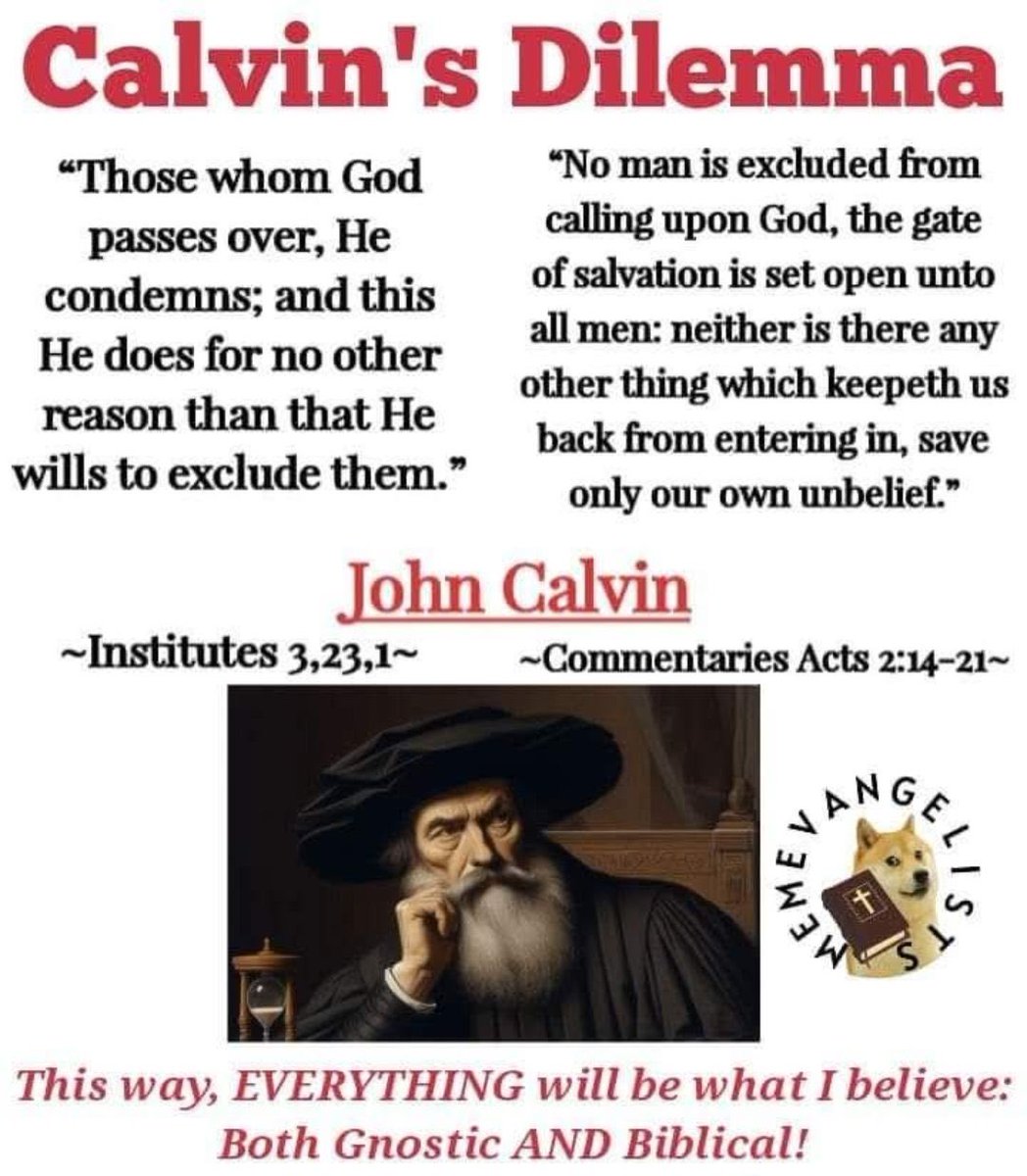
It does if you're not enamored with Calvin. In short, the only way Calvinism makes sense is when each small part can be explained with a veil covering any other part. We have to "change the rules" and use our secret decoder ring to know when all means all and when to add the word 'elect' into the sentence, bc God forgets to.
English
0
0
0
6
Jon Bowlin
Jon Bowlin@_jonbowlin·
There is no dilemma. Calvin on the left is referring to God’s decree while on the right, he is referring to the prescriptive will of God which calls and invites all men to repent and believe. Both things that Calvin says here are true.
Jon Bowlin tweet media
English
8
0
11
717
BlessedAnomaly
BlessedAnomaly@AnomalyBlessed·
Why do you limit God? John 1:5 -- God is light. * purity * truth * revelation * moral perfection * life Why must you make this a radiant light we can read a book under? You're limited mind makes this into photons?? "God is light, and in Him is no darkness at all" - John 1:5 So there is someplace within God where the absence of a photon-type of light can't be? What absurdity. God is not the light of Genesis 1. He would have said that it was him, as he does in Revelation for the New Jerusalem. He doesn't say this. The text says that God created light: "Let there be light." So if this light is God, did he call himself into existence?? Did he create himself at that moment?? I think not. So taking your concordance and finding all instances of "light" in the Word, well this is not how we learn what God is telling us. The burning bush. Was the burn God? Was the light the sun? The text says the bush burned without being consumed. God created a pillar of fire for the Hebrews to follow out of Egypt. Was the light the sun? Was it God himself? Moses came down from Sinai and his face glowed. Was that the sun? Was that God sticking to his face? Separate "created" from being. In the New Jerusalem there is not need for the sun or moon. The Lamb is the lamp. Jesus is the light that illuminates all things. The text says this to be true. It doesn't say or indicate it was created. So no, (to be clear: here's your answer!!!): the light in Gen 1:3 was called into existence. It was created. It is not God himself.
English
1
0
0
16
Jeff
Jeff@WithinAllOfUs·
You are snarky, but my question was valid. In you view, you said that a light/dark cycle was 24 hours, though not based on solar energy, then the only light available in the first three time periods of Genesis is the same light of John 1:5. So I’m asking, is the light/dark of, “God is light, and in Him is no darkness” the same light in this verse, as there no ‘dark’ in God. And if not, how do you make the distinction of the light of Genesis 1:3 vs the light of John 1:5?
English
1
0
1
52
BlessedAnomaly
BlessedAnomaly@AnomalyBlessed·
@_jonbowlin "Passes over." DIdn't God pass over the Hebrew homes that had blood on the door posts?? Calvinism is so mixed up and confused.
English
0
0
0
28
BlessedAnomaly
BlessedAnomaly@AnomalyBlessed·
Because Good didn't ask anyone to freely choose anything to do with salvation here, did he? Deuteronomy 30:19 Today I invoke heaven and earth as witnesses against you that I have set life and death, blessing and curse, before you. Therefore choose life so that you and your descendants may live! Maybe Tod can just take a Sharpie marker and strike this one out -- along with the myriad number of verses that also speak of choice. Romans 10:10 For with the heart one believes and thus has righteousness and with the mouth one confesses and thus has salvation. You belive... You confess.... THEN you will be saved. Not the other way around. Joshua 24:15 If you have no desire to worship the LORD, then choose today whom you will worship, .... But I and my family will worship the LORD. Based upon your desire.... Do you CHOOSE a false God or the Lord?.... As for me: I CHOOSE. I mean a perfect time for Joshua to say: "God chose me as elect before creation." BUT NO!!! He's not talking about being preordained....he makes a CHOICE!
English
1
0
0
36
Tod Ashby
Tod Ashby@TodAshby·
Libertarian Free Will survives only if you ignore Scripture’s actual anthropology. The Bible does not describe man as a morally neutral chooser with contrary power suspended above his nature. It describes man as blind, hostile, enslaved, unable, and needing a new heart. When God saves, He does not merely provide opportunity. He gives life, grants faith, and brings about obedience, and works in the willing itself. That is not LFW. That is the will acting according to nature under God’s sovereign power.
English
19
4
53
1.2K
Jeff
Jeff@WithinAllOfUs·
I notice you didn’t answer the question. You believe that a Hebrew word that has multiple meanings to be your single opinion, which isn’t based in the usage, and then when asked about wording that you chose, that you can’t defend, you turn to name calling. That’s a good spirit there…
English
1
0
0
29
GodlyAction
GodlyAction@GodlyAction·
Baptism is not required for salvation.
English
816
36
949
163.3K
BlessedAnomaly
BlessedAnomaly@AnomalyBlessed·
The deal here is that-- if Tom is is right as he tries to throw shade at Timothy's belief, God desires none to perish (2 Peter 3:9), but free will allows some to perish. Human fault, not God's. If Timothy is right as he tries to throw shade at Tom's belief, God desires some to burn in hell. And he succeeds. Making it fully God's desire and fault. Humans are puppets, God is evil. So biblically, it looks like the Calvinists are very bad at understanding scripture. And also, someone ought to tell Tom that NOT all non-Calvinists are Arminian. Not by a long shot. Overall Protestant Breakdown (U.S.) • Calvinist: ~12% • Arminian: ~25% • Other non‑Calvinist: ~63% @TomHicks2LCF @MrTimothyRenfro
BlessedAnomaly tweet media
English
0
0
7
113
BlessedAnomaly
BlessedAnomaly@AnomalyBlessed·
Do you know.... Before the Immaculate Conception was defined in 1854, two views of Mary’s sinlessness were orthodox. * Mary was sinless -- Supported by medieval theologians. * Mary was not sinless -- Held by Bernard, Aquinas, Bonaventure. Both were accepted by Rome as orthodox.
English
0
0
0
41
BlessedAnomaly
BlessedAnomaly@AnomalyBlessed·
Let me move this up here in support of your post. It's too important a topic. --------- There are about 4–5 key texts that in English seem to say baptism is important in salvation, but in context and the original language, clearly do not. Acts 2:38 — Grammar and context must be taken into account. Peter says: “Repent and be baptized… for the forgiveness of sins.” • The Greek construction ties forgiveness to repentance, not baptism. • The same author (Luke) repeatedly shows people receiving salvation before baptism (Acts 10:43–48). • Peter himself says forgiveness comes through faith (Acts 10:43). Mark 16:16 — The second half is the key; he writes, “Whoever believes and is baptized will be saved, but whoever does not believe will be condemned.” Notice: • Condemnation is tied only to unbelief, not lack of baptism. • If baptism were required, the second clause would say “whoever does not believe and is not baptized will be condemned.” Acts 22:16 — Hebrew idiom and participles are important. It states: “Be baptized and wash away your sins, calling on His name.” The actual saving action is the participle: • “calling on His name” = the NT formula for salvation (Romans 10:13). 1 Peter 3:21 — here Peter explicitly denies baptismal regeneration. He says: “Baptism… now saves you, not the removal of dirt from the body, but an appeal to God for a good conscience.” He clarifies: • It’s not the water. • It’s the appeal (faith-response) that saves. • Baptism is the [public] symbol, not the saving mechanism. John 3:5 — “Water and Spirit” is not baptism. • Jesus rebukes Nicodemus for not knowing this from the Old Testament, not Christian baptism (which didn’t exist yet). • Ezekiel 36:25–27 uses “water and Spirit” to describe spiritual cleansing and renewal, not baptism. • Jesus later says the new birth comes by believing (John 3:16). Across the entire New Testament salvation is always conditioned on: • Faith • Repentance • Calling on the Lord • Believing the gospel • Receiving Christ Never once is baptism listed as a condition in: • John’s Gospel (written to produce faith) • Romans (the doctrinal book on salvation) • Galatians (the book defending justification by faith) • Ephesians (salvation by grace through faith) • Acts’ summary statements of salvation The conclusion “baptism saves” is wrong bc it: 1. Contradicts the overwhelming NT pattern -- Salvation is by grace thru faith, not works (Eph 2:8–9). 2. Confuses the sign with the reality -- Baptism is the public identification with Christ, not the mechanism of regeneration. 3. Misreads narrative passages as doctrinal formulas --Acts describes what happened, not always what is required. 4. Ignores explicit statements that salvation precedes baptism -- Cornelius receives the Spirit before baptism (Acts 10:44–48). 5. Makes salvation dependent on a human ritual -- Which contradicts the entire logic of grace.
English
0
0
0
85
BlessedAnomaly
BlessedAnomaly@AnomalyBlessed·
If you believed every verse without properly understanding langusge, you'd be quite messed up. But then perhaps you are. There are about 4–5 key texts that in English seem to say that, but in context and the original language, clearly do not. Acts 2:38 — Grammar and context must be taken into account. Peter says: “Repent and be baptized… for the forgiveness of sins.” • The Greek construction ties forgiveness to repentance, not baptism. • The same author (Luke) repeatedly shows people receiving salvation before baptism (Acts 10:43–48). • Peter himself says forgiveness comes through faith (Acts 10:43). Mark 16:16 — The second half is the key; he writes, “Whoever believes and is baptized will be saved, but whoever does not believe will be condemned.” Notice: • Condemnation is tied only to unbelief, not lack of baptism. • If baptism were required, the second clause would say “whoever does not believe and is not baptized will be condemned.” Acts 22:16 — Hebrew idiom and participles are important. It states: “Be baptized and wash away your sins, calling on His name.” The actual saving action is the participle: • “calling on His name” = the NT formula for salvation (Romans 10:13). 1 Peter 3:21 — here Peter explicitly denies baptismal regeneration. He says: “Baptism… now saves you, not the removal of dirt from the body, but an appeal to God for a good conscience.” He clarifies: • It’s not the water. • It’s the appeal (faith-response) that saves. • Baptism is the [public] symbol, not the saving mechanism. John 3:5 — “Water and Spirit” is not baptism. • Jesus rebukes Nicodemus for not knowing this from the Old Testament, not Christian baptism (which didn’t exist yet). • Ezekiel 36:25–27 uses “water and Spirit” to describe spiritual cleansing and renewal, not baptism. • Jesus later says the new birth comes by believing (John 3:16). Across the entire New Testament salvation is always conditioned on: • Faith • Repentance • Calling on the Lord • Believing the gospel • Receiving Christ Never once is baptism listed as a condition in: • John’s Gospel (written to produce faith) • Romans (the doctrinal book on salvation) • Galatians (the book defending justification by faith) • Ephesians (salvation by grace through faith) • Acts’ summary statements of salvation The conclusion “baptism saves” is wrong bc it: 1. Contradicts the overwhelming NT pattern -- Salvation is by grace thru faith, not works (Eph 2:8–9). 2. Confuses the sign with the reality -- Baptism is the public identification with Christ, not the mechanism of regeneration. 3. Misreads narrative passages as doctrinal formulas --Acts describes what happened, not always what is required. 4. Ignores explicit statements that salvation precedes baptism -- Cornelius receives the Spirit before baptism (Acts 10:44–48). 5. Makes salvation dependent on a human ritual -- Which contradicts the entire logic of grace.
English
1
0
0
35
Jeff
Jeff@WithinAllOfUs·
@AnomalyBlessed @PotluckLauren So when scripture teaches that “God is light“ that means that God is made of photonic energy, and He’s around half the time? And John 1:5, “And the Light shines in the darkness, and the darkness has not overcome it” is also speaking of photonic energy?
English
1
0
1
27