Anthony

1.5K posts

Anthony banner
Anthony

Anthony

@Anthony03301061

Now or never

Mesa, AZ Katılım Nisan 2022
235 Takip Edilen97 Takipçiler
Anthony retweetledi
Anish Moonka
Anish Moonka@anishmoonka·
Winston Churchill fought his depression with bricks. He'd lay them for hours at his country home in Kent. He joined the bricklayers' union. And in 1921 he wrote about why it worked. It took psychology another 75 years to catch up. He called his depression the "Black Dog." It followed him for decades. His method for fighting it back was as basic as it sounds: laying brick after brick, hour after hour. Churchill spelled out his theory in a long essay for The Strand Magazine. People who think for a living, he wrote, can't fix a tired brain just by resting it. They have to use a different part of themselves. The part that moves the eyes and the hands. Woodworking, chemistry, bookbinding, bricklaying, painting. Anything that drags the body into a problem the mind can't solve by itself. Modern psychology now calls this behavioral activation. It's one of the most-studied depression treatments out there. Depression sets a behavior trap. You feel bad, so you stop doing things, and doing less means less to feel good about. Feeling worse makes you do even less. The loop tightens until you can't breathe inside it. Behavioral activation breaks the loop from the action side. You schedule the activity first, even when every part of you doesn't want to. Doing it produces small rewards: a wall gets straighter, a painting fills in, a messy room gets clean. Those small rewards slowly rewire the brain. Action comes first, and the feeling follows. Researchers at the University of Washington put this to the test in 2006. They studied 241 adults with major depression and compared three treatments: behavioral activation, regular talk therapy, and antidepressants. For the people who were most severely depressed, behavioral activation matched the drugs. It beat the talk therapy. A 2014 review of more than 1,500 patients across 26 trials backed up the result. Physical work like bricklaying does something extra on top of this. It crowds out rumination, the looping bad thoughts that grind people down during the worst stretches of depression. Bricklaying needs both hands and gives feedback brick by brick: each one is straight or crooked. After an hour you can see exactly how much wall you built. No room left for the mental chewing. The line George Mack used in his post, "depression hates a moving target," is good poetry. The science behind it is sharper. Depression hates a brain that has somewhere else to be.
George Mack@george__mack

Winston Churchill used to lay 200 bricks per day to keep his mind busy when feeling down. Depression hates a moving target.

English
655
8.8K
42.8K
4.5M
Anthony retweetledi
Jaina
Jaina@Jainadave_·
BEING HEALTHY IS NOT EXPENSIVE Walking is FREE Getting sunlight is FREE Avoiding junk food is FREE Skipping alcohol is FREE Sleeping early is FREE Lifting your body weight is FREE Skipping sugar is FREE Laughing often is FREE Not smoking is FREE Not making excuses is FREE
English
43
745
6.1K
76.6K
Anthony retweetledi
✞ Richard ✞
✞ Richard ✞@Richard_gh1·
Matthew 28:20
✞ Richard ✞ tweet media
English
18
340
5.7K
35.6K
Anthony retweetledi
Rumi
Rumi@rumilyrics·
Still more people to meet. Still more people to love.
English
44
203
1.4K
23.2K
Anthony retweetledi
Samrah
Samrah@_Chemist1·
people who are really at peace are skilled at war.
English
109
465
2.5K
39.4K
Anthony retweetledi
S.clips
S.clips@whitesocksclips·
Nick mentions that a video reminded him how quickly life passes and we’ll be deаd before we know it. "I'm going to be 30, and then I'm going to be 50, and then I'm going to be dеаd. So I'm like, I better just get after it."
English
19
130
2.5K
85.8K
Anthony retweetledi
R.F. Kenmore
R.F. Kenmore@rfkenmore·
Eyes forward
R.F. Kenmore tweet mediaR.F. Kenmore tweet media
English
2
13
372
30K
Anthony retweetledi
Deep Psychology
Deep Psychology@DeepPsycho_HQ·
The Japanese Samurai had a rule: never make a decision before you can answer this one question. In feudal Japan, elite samurai were trained never to act until they could honestly answer one question their masters repeated for decades: "If I die tomorrow, does this choice still matter?" It wasn't philosophy. It was a mental filter designed to cut through fear, ego, and short-term emotion in seconds. Most modern decisions are made under invisible pressure: deadlines, social approval, FOMO. The result is a life built on reactions instead of clarity. When you start applying the samurai question daily, something shifts. Small irritations lose power. Big risks become obvious. You stop chasing things that won't matter next year. The samurai understood that true strength isn't speed. It's the ability to see clearly when everyone else is rushing.
Deep Psychology tweet media
English
52
851
3.9K
195.8K
Anthony retweetledi
DAN KOE
DAN KOE@thedankoe·
You aren't going to get lucky repeating the same day. You need to go on more side quests. Weekly. Daily if you can. Even one tiny new decision can substantially increase your chances at luck.
English
442
862
8.8K
233.8K
Anthony retweetledi
deep value insights
deep value insights@NoelWieder·
I've always liked the story of Charlie Munger. At 31, he was basically at rock bottom. He was freshly divorced, had lost the house, and his son died of leukemia. Munger paid for every treatment out of pocket and was left with almost nothing. Yet he kept going. Instead of drowning in bitterness, he worked, he read, and he kept his head down. With a new marriage and some stability, he began investing his lawyer's salary into stocks and real estate. Then in 1959 he met Buffett. Inspired by someone who was already running his own partnership, Munger founded Wheeler, Munger & Company in 1962. The wealth started to accumulate. Through real estate projects and his growing investment partnership, Munger became a millionaire around age 43. Many successful investments followed, many alongside Buffett, and the relationship grew close enough that working together was the only thing that made sense. Munger wound down his partnership in 1975. Over 13 years, he had compounded at 19.8% annually, against 5% for the Dow. In 1978, he became Vice Chairman of Berkshire Hathaway and helped build the empire it was set to become. Somewhere along the way he lost an eye to a failed surgery, but that didn't bother him much. He still had one left. Plenty enough to read annual reports. When most people think of Munger, they just see a rich old wise man who almost stood in Buffett's shadow. But the truth is that Munger's wisdom didn't come from nowhere. He worked himself up from rock bottom, a place where many others would have stayed down, to become one of the most respected investors in history. And a billionaire on top of that. He never let it go to his head. He lived in the same house in Pasadena for decades. The place didn't even have AC. He cooled it with ice and fans. Hard to find a better role model than that.
English
39
263
1.9K
102.9K
Anthony retweetledi
Wholesome Side of 𝕏
Wholesome Side of 𝕏@itsme_urstruly·
A psychologist explained: "Travel breaks the illusion that your current life is the only one possible."
English
68
2.3K
14K
242.4K
Anthony retweetledi
Pascal
Pascal@KnowsPascal·
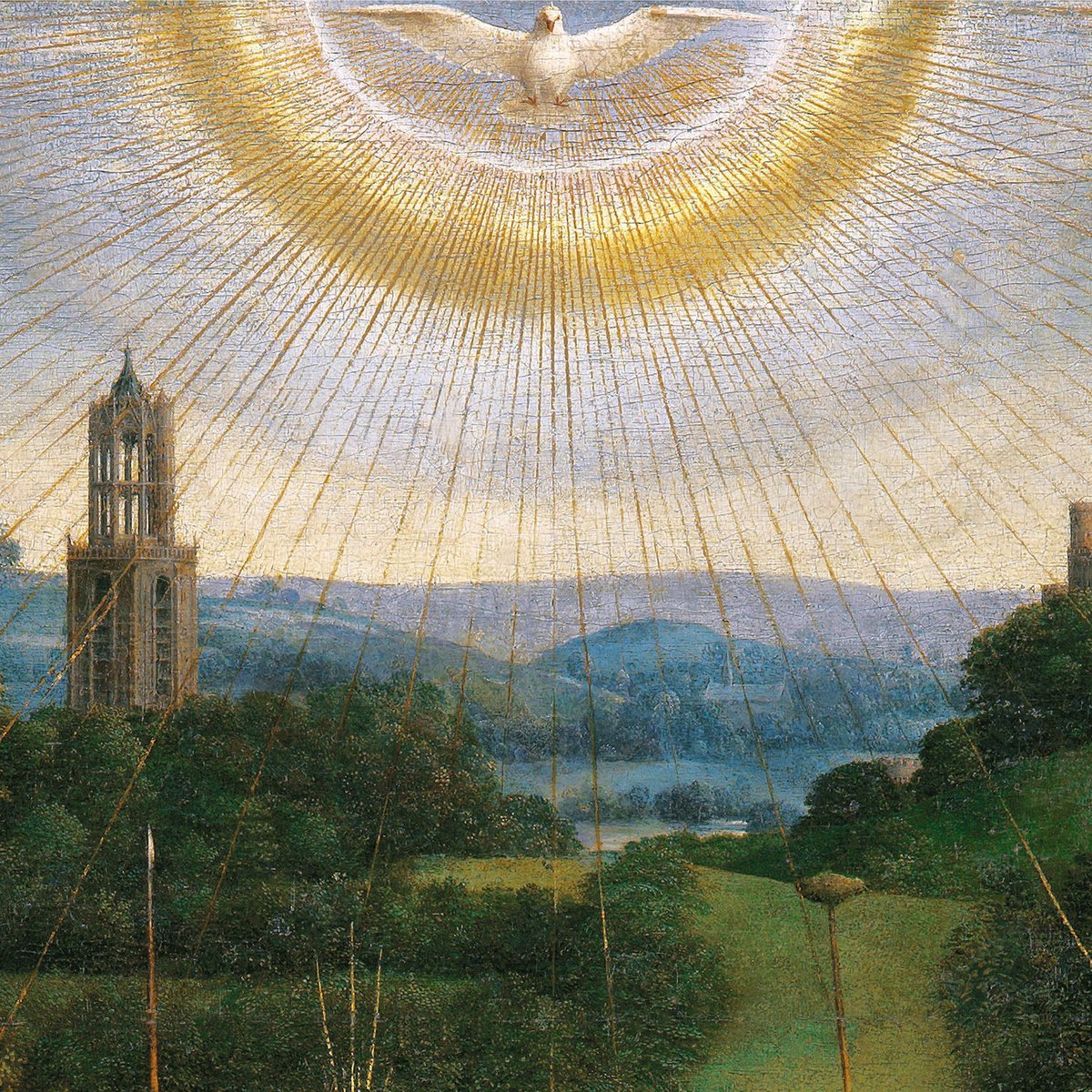
Come, Holy Spirit, send forth the heavenly radiance of your light.
Pascal tweet media
English
14
317
2.6K
21.6K
Anthony retweetledi
alexei
alexei@alexeixbt·
a man who waits for the perfect shot will die with a full mag
English
112
5.5K
39.5K
802.2K
Anthony retweetledi
Stone & Sinew
Stone & Sinew@stonesinew7·
Stone & Sinew tweet media
ZXX
0
25
244
2.3K
Anthony retweetledi
Ariel Helwani
Ariel Helwani@arielhelwani·
Arman Tsarukyan opens up about his perspective on money and lessons learned from his father: "My father told me maybe 10 years ago, when I asked him, ‘Why do you buy us nice cars but not for yourself?’ He said, ‘When I wanted nice cars, I didn’t have the money. Now I don’t want those cars anymore—you just enjoy them instead of me.’ So I feel the same. When I was 18-20, I wanted different things. Now I’m almost 30, and I already want different things. By the time I’m 40 or 50, I won’t need these cars anymore. If you have money, enjoy it."
English
8
30
829
172.5K
Anthony retweetledi
Ankor Inclán
Ankor Inclán@ankorinclan·
Dijo una vez Gerard Butler: “Pude ser un abogado mediocre en algún pueblo de Escocia… y estuve a punto. Traje, corbata y una infelicidad que no sabía explicar. Me despidieron, y lo sentí como una humillación. Pero también fue mi salvación. Caminé por el festival de Edimburgo y vi a un actor en escena. Sentí un fuego que nunca me dio el derecho. Ahí supe: esto era lo mío. A veces, perderlo todo es lo único que te deja encontrar tu verdad.”
Ankor Inclán tweet media
Español
43
629
5.9K
472.7K
Anthony retweetledi
blue
blue@bluewmist·
Education is SOOOOO IMPORTANT. Degrees, licenses, certs. Training classes. Late nights and early morning studying. Weekend and night school. Community college, don’t matter what it takes. JUST DO IT.
English
46
1.1K
6.1K
78.6K
Anthony retweetledi
The Bull Moose Project
The Bull Moose Project@BullMooseProj·
Don't let them sell your birthright. Defend your land, protect your people, serve your country.
The Bull Moose Project tweet mediaThe Bull Moose Project tweet media
English
6
78
635
6.3K