Anto

270 posts

Anto

Anto

@Antohack_12

Ilustración

Katılım Şubat 2022
443 Takip Edilen6 Takipçiler
Billie
Billie@BillieBizkit·
Ingeniería antisísmica, terrazas agricolas, Cirugía creneal, avances medicinales y bases en la biomedicina, botánica, astronomía, sociedad funcional e higiene. La llegada de la colonia española solo atrasó y arruinó la cultura latinoamericana a tal punto que existe un país con la ideología que posee Argentina, odiando sus raíces y aspirando a ser algo que nunca serán. Se dice que en América éramos bárbaros por los sacrificios, pero ellos mataban y torturaban en nombre de un Dios y además introdujeron enfermedades y parafilias a nuestra cultura.
LO +@SuperViiral

🚨 Xokas, sobre la influencia que tuvimos los españoles en Latinoamérica "Nosotros en 300 años les avanzamos 1.500, ellos eran tribus joder"

Español
810
795
7K
406.3K
Anto
Anto@Antohack_12·
@Sebasti88297255 @soypantaleon @BillieBizkit @abxc___ Educación en el Imperio Azteca tenían un sistema educativo obligatorio dividido principalmente en dos instituciones:Calmécac: Escuela para los hijos de los nobles (pipiltin). Se enfocaba en el liderazgo, la astronomía, la religión, la historia, el gobierno y el arte de la guerra.
Español
1
0
0
7
Anto
Anto@Antohack_12·
@Sebasti88297255 @soypantaleon @BillieBizkit @abxc___ El Calmecac y Telpochcalli. hablo de la cirujias que hacían las civilizaciónes andinas, lo que tu hablas son deformaciones esticas que la gente se hacia, no médicas, hablo de cirujias para mejorar la salud de una persona. Eso era lo que las cirujias andinas hacían
Español
2
0
0
21
Makurenbo
Makurenbo@Sebasti88297255·
@Antohack_12 @soypantaleon @BillieBizkit @abxc___ Es broma ? Que universidad y escuela había en américa latina ? En américa en general en la edad pre colonial ? Dime quiero saber, cirujía craneal habla de los coreanos alargados eso es lo hacía los egipcios también.
Español
2
0
0
70
Anto
Anto@Antohack_12·
@Sebasti88297255 @soypantaleon @BillieBizkit @abxc___ Creo que te estas refieres a otros, por que si hablas de las civilizaciónes de mesoamerica o andinas, ahi es otra cosa. Un ejemplo de escuelas eran Calmecac y Telpochcalli. habían manuales estaban los codices, que eran los libros para los mesoamericanos, y quipos para los andinos
Español
1
0
0
13
Makurenbo
Makurenbo@Sebasti88297255·
@soypantaleon @Antohack_12 @BillieBizkit @abxc___ En la época pre colonial había 0 academias donde había enseñanza de aprendizaje nada más. No había manuales habían en arcilla. Pero no dependía de la clase si no de la tribu si era más grande o si eran esclavos.
Español
2
0
0
42
Anto
Anto@Antohack_12·
@soypantaleon @BillieBizkit @abxc___ Como cazando brujas y esclavizando. No como los las civilizaciónes Américanas, que estudiaban el cosmo, tenian escuelas para todas las clases sociales, teniendo avances en las cirujias craneales, teniendo conocimiento precisos en astronomía que su calendario es la mas exacta.
Español
3
0
0
87
Pantaleón Pantoja
Pantaleón Pantoja@soypantaleon·
@BillieBizkit @abxc___ sí, mi niña, pero no están hablando de Visigodos, Ostrogodos, Lombardos, etc. Están hablando del tiempo en el que solo aquí andaban en taparrabos comiendo carne humana y sacrificando vírgenes, mientras en Europa descrubrían y colonizaban terrorios cruzando el atlántico.
Español
1
0
3
715
Anto
Anto@Antohack_12·
@RedRightHand221 @edy_lebat Como si en Europa no hacían lo mismo, las cazas de brujas, las cruzadas, que crees que el cristianismo llego en modo de paz. Lo de la ley de mas fuerte, no crees que es lo mismo que hizo España con América? Estupido. Ponte a reeler lo que escribiste
Español
1
0
1
14
El Piki Jolms
El Piki Jolms@RedRightHand221·
@edy_lebat México surgió después de 1821, antes era la Nueva España y antes de eso un lugar donde imperaba la ley del más fuerte, donde desollaban mujeres vivas para pedir buena temporada de lluvias y cosechas
Español
1
0
0
55
Edy Lebat
Edy Lebat@edy_lebat·
Les recuerdo que estas basuras tragan, viven, son famosos y tienen los lujos que tienen gracias a su público latinoamericano, principalmente de México, Perú, Colombia y Argentina. Sin su audiencia "atrasada" serían mileuristas ordinarios frustrados trabajando en algo que odian.
LO +@SuperViiral

🚨 Xokas, sobre la influencia que tuvimos los españoles en Latinoamérica "Nosotros en 300 años les avanzamos 1.500, ellos eran tribus joder"

Español
191
591
6.8K
108.3K
Anto retweetledi
Celestial Sentinel
Celestial Sentinel@Aetas_Memoria·
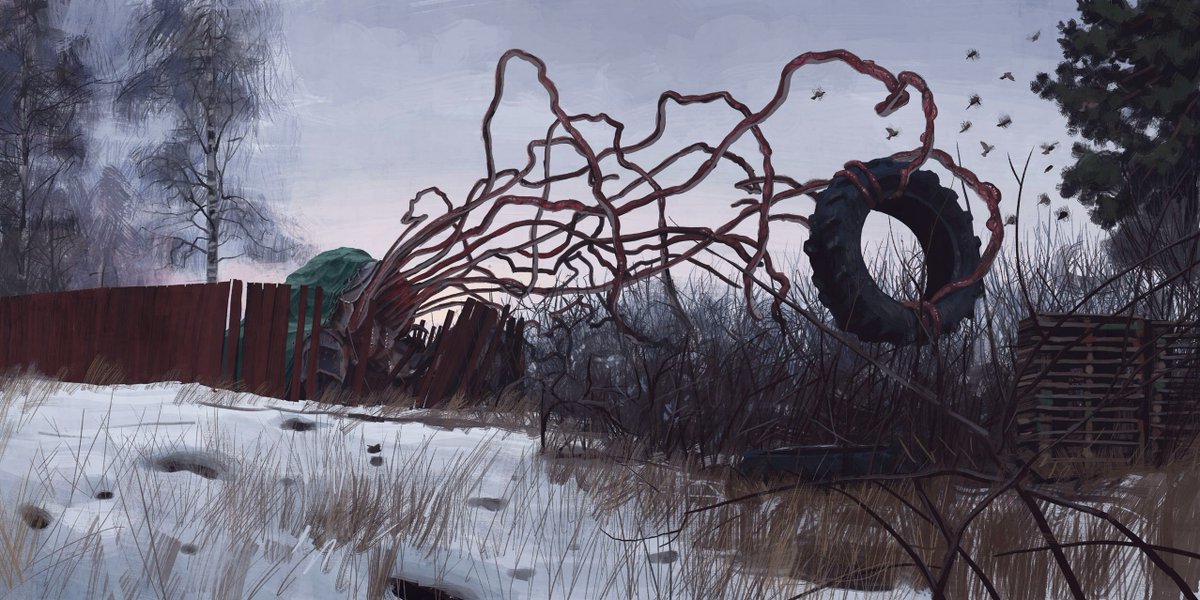
Some of the Simon Stålenhag's illustrations for his "Flodskörden"/"Things From the Flood" book.
Celestial Sentinel tweet mediaCelestial Sentinel tweet mediaCelestial Sentinel tweet mediaCelestial Sentinel tweet media
Dansk
13
755
7.6K
201.3K
Animetrends
Animetrends@AnimetrendsLA·
NO SE PUEDE COMPLACER A TODOS «El contenido sexual y el romance no hacen automáticamente que una obra sea mejor solo porque los agregues, pero cuando faltan la historia puede sentirse un poco insatisfactoria». 🙂‍↔️ «Lo ideal es sólo incluir lo necesario, pero lo que es 'suficiente' difiere de lector a lector, así que eso es básicamente imposible en la práctica». 😅 Palabras de Rifujin, autor de Mushoku Tensei, que también agregó: «Los autores sólo deberían poner la cantidad que crean que se siente mejor, por eso yo pongo toneladas de ello». 🗿
Animetrends tweet mediaAnimetrends tweet media
Español
121
155
3.3K
1.3M
Martni Cuentan
Martni Cuentan@CuentanMar42792·
@LGAndreu @luciano_prida @IsaacVtuber11 Jajaja pero negrito aca las casas de clase medis estan arriba de los 100.000 dolares, entonces que vas a comprar vos muerto de hambre si comes arroz blanco con huevo para tener algo en el estomago jajajaja
Español
3
0
3
76
Anto retweetledi
MoundLore
MoundLore@MoundLore·
This doesn’t even make sense. What a simplistic view. You can condemn sacrifice without turning Indigenous civilizations into cartoon villains. The “Aztecs were barbaric so conquest was good” argument always collapses the second you apply the same standard evenly. Human sacrifice existed in Mesoamerica. It should be talked about honestly. But Europeans arrived from a world of inquisitions, mass burnings, public torture, dynastic slaughter, religious wars, colonial extraction, and industrial-scale conquest. The idea that one side represented “civilization” and the other represented “savagery” is mostly hindsight propaganda. Guess the propaganda got to you. Also, the “Bronze Age” framing barely works here. Makes me question your understanding of the Americas. Mesoamerican societies developed under completely different environmental and material conditions. They had no large draft animals and simply different metallurgy priorities. Different trade systems. Yet they still built massive cities, hydraulic engineering, aqueduct’s, astronomy, mathematics, calendars, causeways, market systems, and state networks that stunned Europeans on contact. You don’t have to romanticize the Aztecs to admit the “primitive savage rescued by Europe” framing is historically shallow.
🇺🇸 The American Culturist 🇺🇸@MericaCulture

The great fallacy of cultural relativism is that its adherents believe the technological wonders of our modern world were always inevitable. They believe that Western Civilization (Christendom) pushed humanity forward purely by coincidence, rather than because of anything inherently valuable about it. They look at the barbaric tribes of Mesoamerica, such as the Aztecs, and assume they could have had a Central American Wakanda if not for those oppressive Europeans. In reality, there was a reason the Aztecs hadn't progressed even to the Bronze Age, and if the Europeans hadn't forced civilization upon them, they'd still be ripping out hearts and practicing cannibalism in demonic rituals.

English
202
655
4.2K
230.3K
KJ
KJ@guitarzing12·
@esaronia @archeohistories I think much archaeology is guess work if you want to define a scenario. As far as I have read, the Aztecs were pretty backward and violent. It was the civilizations that were there before 850 AD are the advanced ones: Toltecas and Olmecas before them.
English
2
0
0
85
Archaeo - Histories
Archaeo - Histories@archeohistories·
In 15th Century AD, while most of Europe educated only the sons of the wealthy and the church, the Aztec Empire had already built something that no other civilization on earth had yet attempted: a system of mandatory schooling for every child, regardless of sex, social rank, or the circumstances of birth. The child of a noble and the child of a farmer were both enrolled. Girls attended alongside boys. Even the children of slaves received an education. The Aztec state did not consider this generosity. It considered it a basic obligation of governance. Education began before school ever did. From birth, Aztec parents understood themselves to be teachers first. The first years of a child's life were gentle — children were indulged and pampered until around age three. Then the tone shifted sharply. Parents began instructing their children in the huehuetlatolli, a vast body of oral wisdom translated as "the words of the elders" or "ancient speech." These were not simple proverbs. They were full rhetorical orations — speeches on how to greet a newborn, how to mourn the dead, how to address a ruler, how to conduct yourself in the marketplace, how to speak to the gods. A child raised on the huehuetlatolli was being shaped into a person who understood their exact place in the world and had the precise language to inhabit it. Every few years, children were brought to the temple and tested on how much of this inherited knowledge they had absorbed. At around fifteen, boys entered one of two formal institutions. The sons of nobles attended the calmecac, attached to temples and governed by priests, where the curriculum included astronomy, the sacred calendar, law, medicine, architecture, rhetoric, and the reading and painting of codices. Life there was deliberately brutal: cold baths before dawn, midnight prayer vigils, manual labor, and ritual penance involving cactus spines. The sons of commoners attended the telpochcalli, the House of Youth, present in every neighborhood, where military training formed the backbone of daily life. Boys learned weapons, tactics, and the physical endurance that warfare demanded. But neither school was purely vocational. Both taught religion, history, and the ceremonial knowledge required to participate fully in Aztec civic life. Girls entered their own parallel institutions. Noble daughters trained at the calmecac as priestesses-in-training, learning the same rigorous ritual knowledge as their male counterparts. Other girls attended schools where they learned weaving, the preparation of ritual foods, and the ceremonial practices that structured household and community life. What every child — boy or girl, noble or common — shared was the cuicacalli: the House of Song. After regular school hours each day, all children were required to attend. There they memorized the sacred hymns associated with each deity and festival, learned the dances that accompanied them, and studied the flower-songs, xochicuicatl, a Nahuatl poetic tradition built on elaborate metaphors linking beauty, impermanence, and the divine. The House of Song was also, in the evenings, a social space where young people gathered to sing, play instruments, and perform for one another. The communal drums were kept there, along with flutes and rattles. Music was not an extracurricular activity. It was a civic duty. What the Spanish encountered when they arrived in 1521 AD, was a population of extraordinary cultural literacy. The 16th Century Jesuit José de Acosta was so impressed by the Aztec education system that he formally recommended it be adopted by Spanish colonial administration as the framework for introducing Catholicism to the conquered population. #archaeohistories
Archaeo - Histories tweet media
English
39
441
1.4K
40.8K
Anto retweetledi
Effi
Effi@effipeonia·
If you're interested in my series of pre-Hispanic illustrations, you can get them from my INPRNT ;) (link in my profile)
Effi tweet mediaEffi tweet mediaEffi tweet mediaEffi tweet media
English
33
3K
21.1K
174.8K
Anto retweetledi
Y4
Y4@y4chnyy·
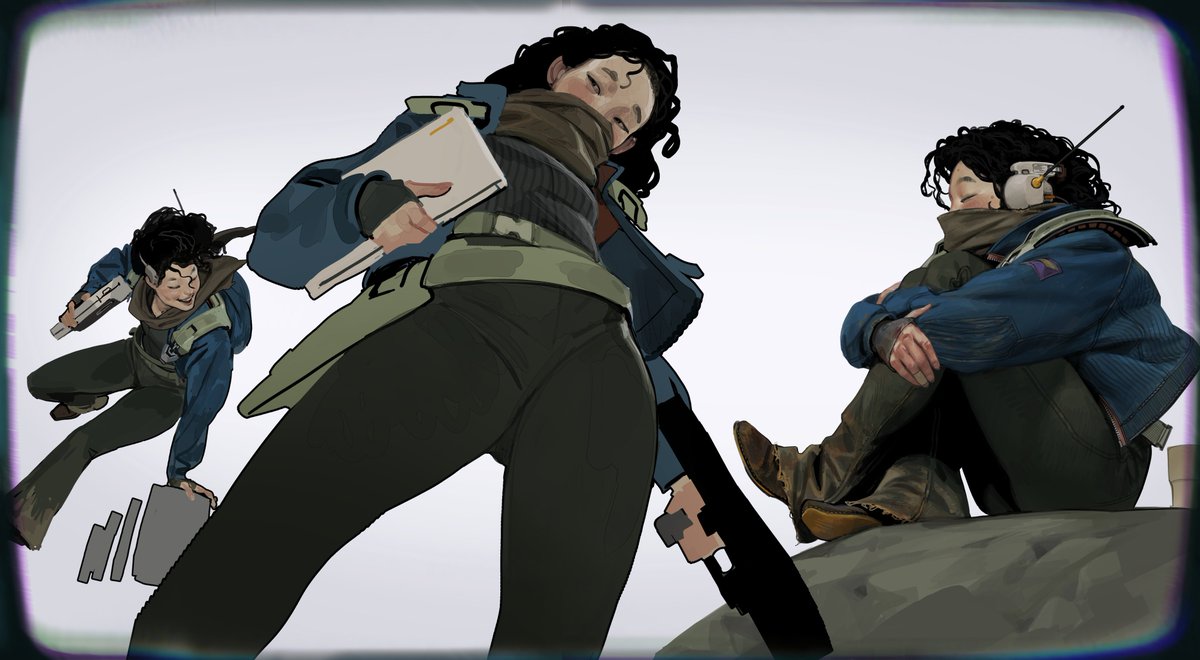
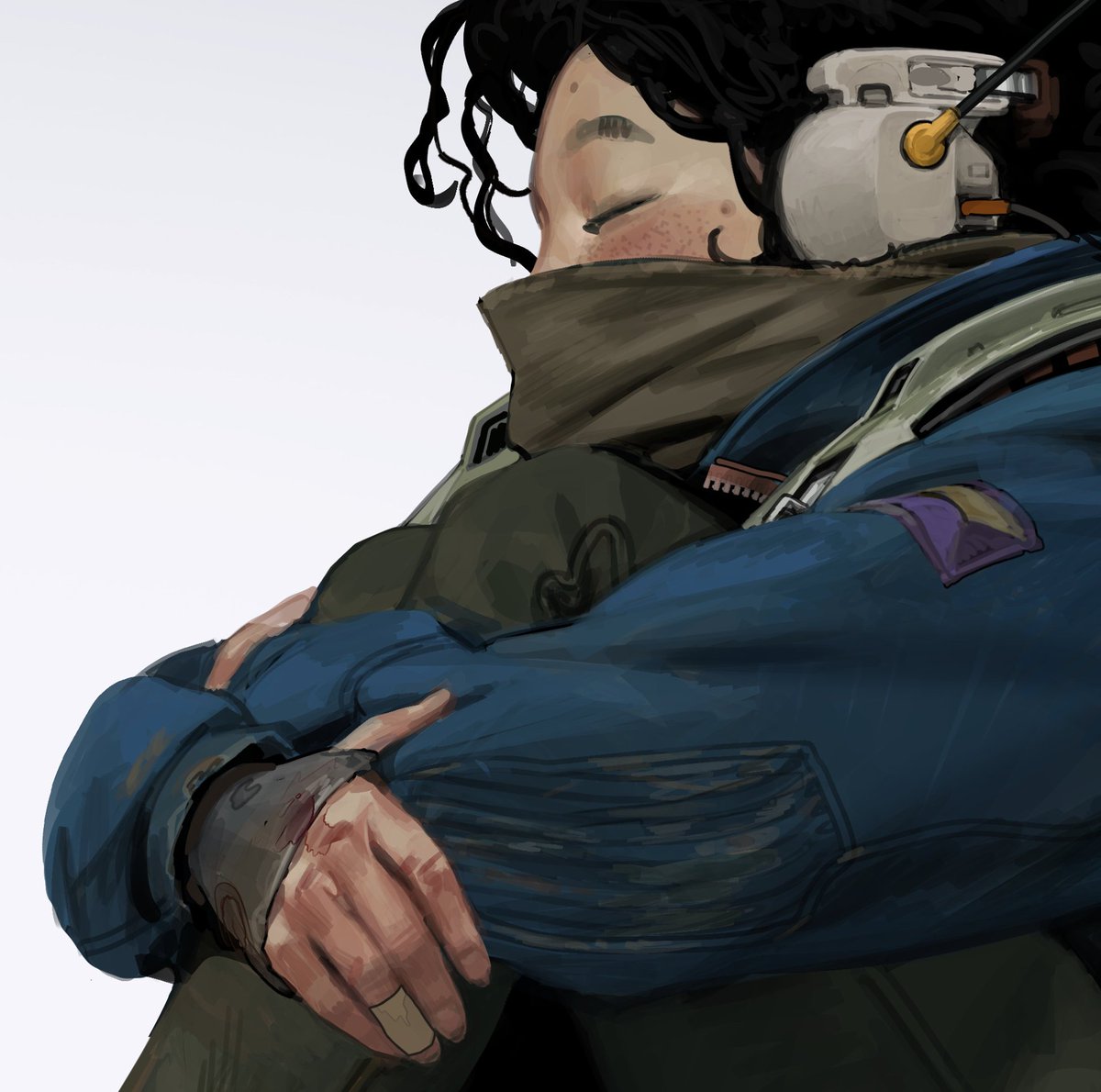
sketch
Y4 tweet media
English
0
26
717
6.5K