anton (🪙,🕸)@AntonCoinweb
Quick introduction to Multi Asset Order Types on Pact Swap:
One of the biggest problems in cross chain trading today is liquidity fragmentation. Liquidity is split across chains, pairs, and venues, which makes pricing worse and capital usage inefficient.
Pact Swap solves this with Multi Asset Order Types.
Instead of liquidity being tied to a single pair or a single chain, a single order can be reused across multiple assets and trading paths. This allows the same liquidity to serve many different swaps without needing to be duplicated.
In practice, this means a liquidity provider does not need to post separate liquidity for LTC to ETH, LTC to BTC, LTC to USDT, and so on. One order can dynamically settle against whichever asset the liquidity provider wants, as long as the conditions of the order are met.
This dramatically reduces liquidity fragmentation and improves pricing across the entire system.
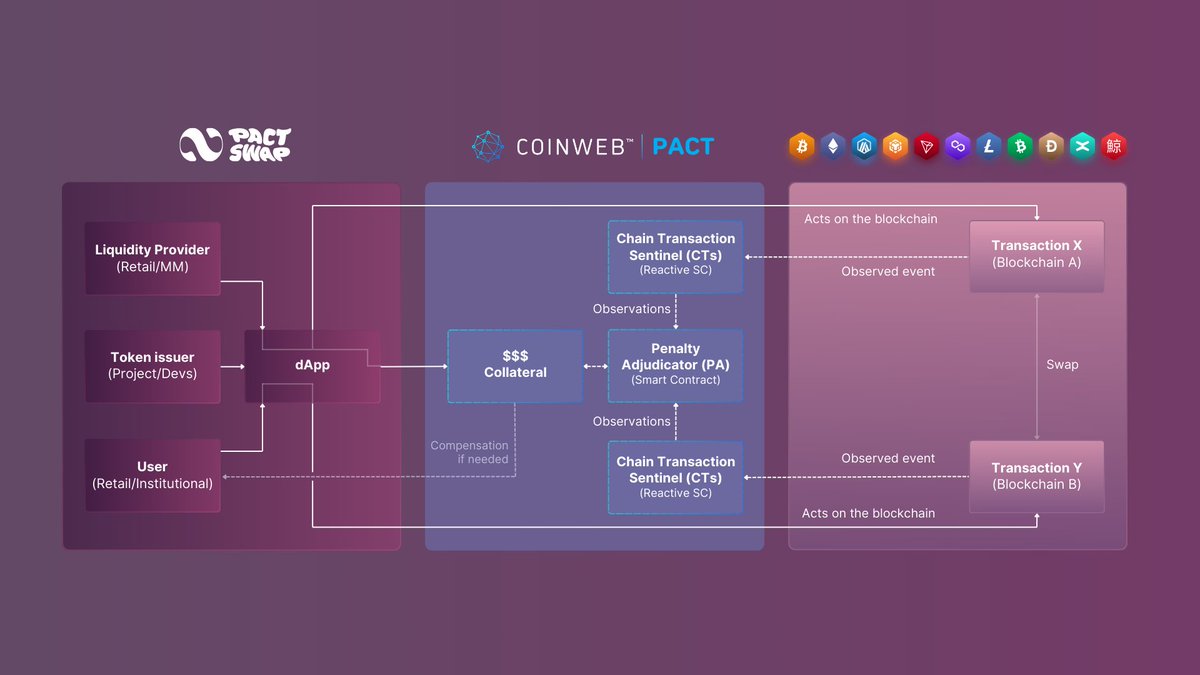
Multi Asset Order Types work because Pact Swap is not an AMM and does not rely on pools. Trades are settled autonomously, and each settlement is enforced by collateral posted by the liquidity provider for that specific trade.
The liquidity provider commits to an outcome.
Reactive Smart Contracts observe what happens on each underlying chain.
If the trade settles correctly, the collateral is released back. If it does not, the collateral is reassigned to incentivise another LP and if no one settles, it gets entitled to the user.
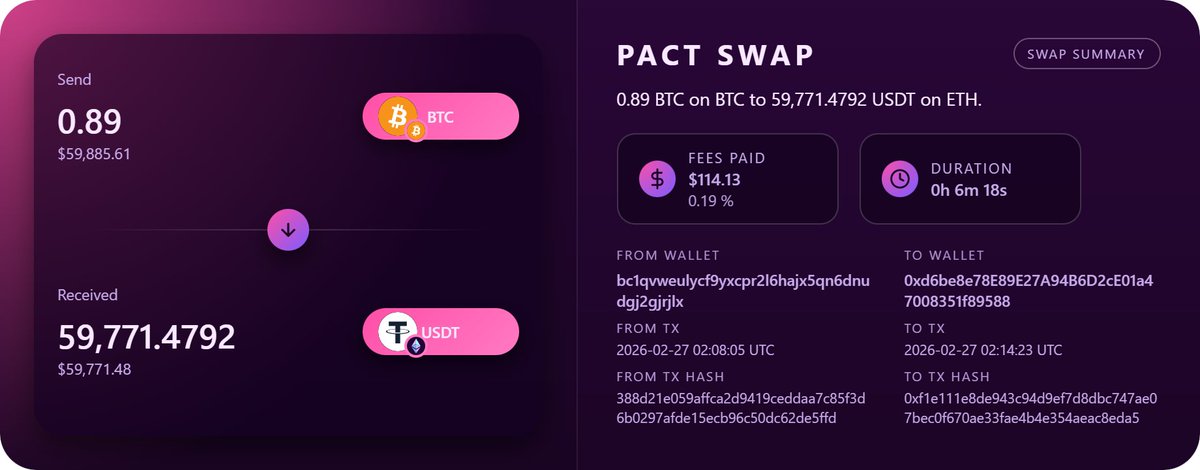
Because collateral is posted per trade and not permanently locked, the same capital can be reused many times across different assets and chains. This is one of the key reasons Pact Swap can offer such low fees without sacrificing security.
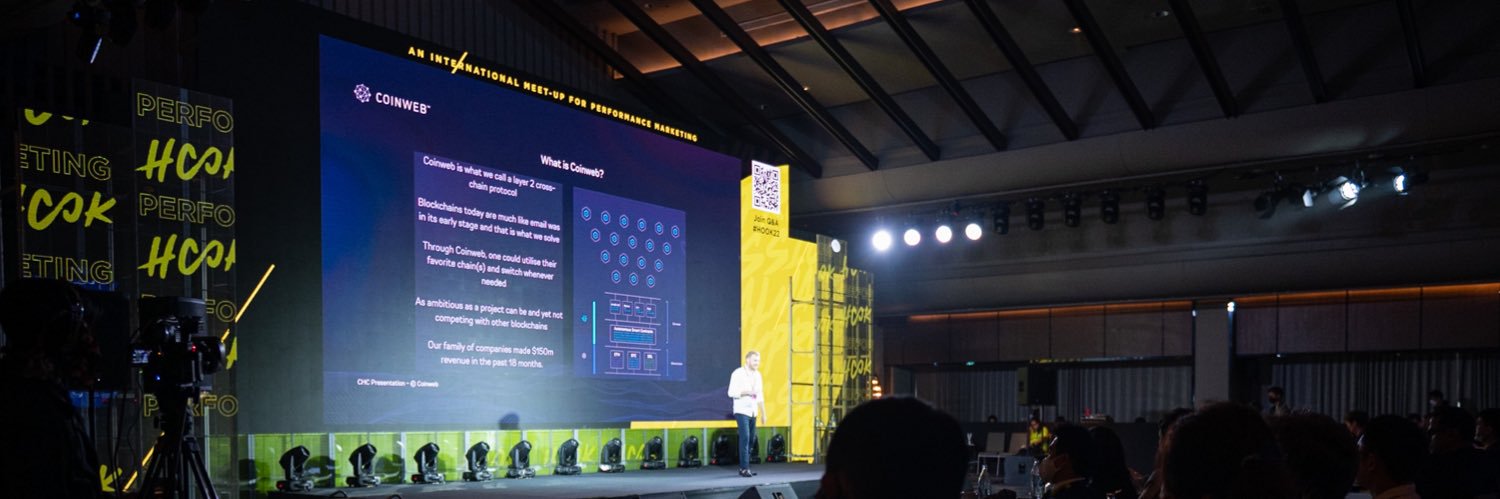
Multi Asset Order Types are only possible because the protocol is built on @CoinwebOfficial.
Coinweb turns independent blockchains into a single coherent compute environment. This allows Pact Swap to observe, reason about, and react to events across all connected chains deterministically, without relying on external coordination or compatibility between chains.
This is also why Multi Asset Order Types are fundamentally different from atomic swaps. Atomic swaps require strict compatibility and direct coordination between users. Pact Swap does not. Orders are enforced by code, not by user interaction or timing assumptions.
The result is a system where liquidity becomes more flexible, more efficient, and more scalable as more assets and chains are added.
This is the same composability that made Uniswap so powerful, but applied across chains and across assets instead of being confined to a single ecosystem.
Multi Asset Order Types are not a minor feature.
They are a core reason Pact Swap will be able to scale liquidity better than any other cross-chain DEX out there.
$BTC $ETH $BNB $LTC