Sabitlenmiş Tweet
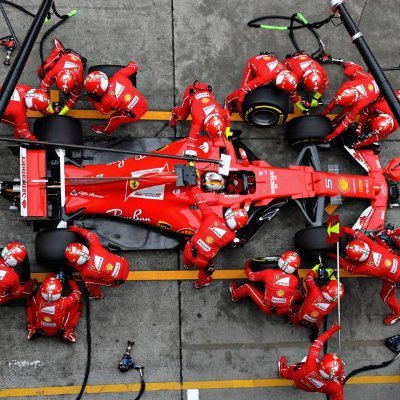
Remote work is here to stay.
Zuckerberg on last night’s $FB call:
“50% employees to be remote in next 5 to 10 years. Not to save costs but to attract broader pool of talent”
English
Ardavan Homayounfar
17.2K posts

@ArdavanH
“Everything around you that you call life was made up by people that were no smarter than you.” — Steve Jobs

$AMZN Best part of the Bezos interview. Its a must watch


On this day in 2004: Google went public at a valuation of $23 billion. Today, the company is worth $2 trillion.


Unite the country, close the wealth gap & teach financial literacy by getting every child in the game at birth w a 401k like acct seeded in the S&P 500 - 3.7 M new investors per yr who benefit from the upside of capitalism. 🇺🇸🇺🇸 @MilkenInstitute @johnhopebryant @stevenmnuchin1

In this year's @PermanentEquity Annual Letter I wrote about the market for smaller companies, the struggle of operations, and the unexpected difficulties of firm-building: permanentequity.com/content/2023-a… TL;DR: It's hard. We're bullish. The letter got long, so if you're only interested in that portion, here it is reproduced in its entirety. Hope it's helpful. ---- What We Invest In and Why Ten years ago I’d pretty much invest in anything I thought was highly profitable. I had relatively little money, not a ton of experience, and what felt like a lot of time, which led me to evaluate opportunities across the spectrum. I did some real estate investing, created a few startups, invested in early-stage companies, and of course bought small businesses. While there were some mistakes, each category of investment was quite profitable. Ultimately, I liked buying small companies more than anything else and thought we had the best shot at being world class at it, hence the singular focus. Within the SMB acquisition space, my original criteria was all based on price. I knew I was inexperienced and didn’t have a refined palate. Cheapness felt solid. But even that gets squishy in the details. Early investments taught me a lot about working capital changes, cyclicality, pricing power, reinvestment needs, and taxes. A four-times multiple on a mediocre business can sure feel expensive once you close and realize what you really bought. We continue to believe the market for smaller companies (the lower-middle market) is significant and inefficient, and will largely remain so due to enduring structural frictions. To define the playing field, the lower-middle market is typically classified as companies with annual revenues of $5M to $100M, with approximately 350,000 U.S. companies qualifying. This compares to about 25,000 companies with revenues between $100M to $500M called the middle market and the few thousand companies with revenues above $500M that make up the upper-middle market . To put it plainly, smaller companies operate differently than bigger companies, come with different challenges, and require different levels and forms of risk mitigation. There are few people who have the necessary skills to parse these complicated situations, mostly because the only way to acquire the skills is to do it and pay the tuition of struggle. Grand ambitions of the inexperienced die on the altar of day-to-day operating brutality. Doubling market share and bolting on your five competitors sounds great in theory until your warehouse manager steals in order to support a hidden addiction, the government informs you that you’re under investigation, or a whole division gets poached by a competitor. Those who buy successfully once or twice almost always lack the ability to firm-build or maintain focus. In my experience, having done it personally and watched many attempt it, it’s difficult to successfully buy and operate one company. It’s much harder to buy three or four more, which forces the creation of new roles, new systems, and an exponential growth in complexity while causing a system-wide dip in profitability as you plough profits into infrastructure. It’s then another order of magnitude harder to build and fund a repeatable system that scales to 10-plus companies. And if you happen to run the gauntlet and build a successful firm in this segment of the market, fee incentives virtually guarantee you’ll leave it for the greener pastures of bigger deals. These dynamics lead those who can successfully find, negotiate, diligence, document, and operate at scale to investment opportunities with a clear line of sight to 20%-plus cash yields annually by maintaining the status quo, with good probabilities of growing to 30%-plus by being helpful and improving business hygiene. As cash flows grow and the businesses are professionalized, equity value should compound, adding significant upside from the cash yields. There just aren’t many markets in the world with that type of earning potential, no matter the risk and difficulty required. As we’ve looked at 15,000-plus opportunities and invested in 15 organizations, we’ve honed our buy-box to companies with a track record of generating meaningful distributable free cash flow with high relative margins, fast relative cash conversion cycles, minimal required maintenance CapEx, and something misunderstood about the situation or organization. Our favorite situations are ones where our value proposition (no debt, long time horizon, high care) gives us an advantage in negotiating the price, terms, and structure of a deal relative to other buyers. We look for businesses where there are clear opportunities for us to assist in areas where we can be helpful, such as hiring, marketing, technology, capital allocation, and working capital management. Despite new competitors entering the space, regulatory and bureaucratic headwinds at the federal level and in most states, and an uncertain economic and political environment, we find ourselves better positioned than ever to continue to serve our market and build Permanent Equity. Being long term smooths out the short-term variance. Not relying on debt makes us interest-rate independent. And, ultimately, a focus on meaningful relationships is the only truly enduring competitive advantage.






New survey: 80% of tech companies are willing to hire someone without a college degree for any role. a.team/mission/2022-t… This is a sea-change with 3 major downstream effects: