Arduous

536 posts

Arduous banner
Arduous

Arduous

@Arduous_Atrium

Living life one real step at a time.// Problem Solver/Intellectual/ More Reactionary than React/ A Decent Dozen of IPs Centrist Christian https://t.co/nrJqc0Ri3I

Virginia, USA Katılım Nisan 2026
101 Takip Edilen40 Takipçiler
Arduous
Arduous@Arduous_Atrium·
There... 540,000/18,000 perfect.
English
0
0
0
0
Arduous
Arduous@Arduous_Atrium·
Heaheaheaheah... and then do the tesla math lol 6000 units at 2400... at ya know 18mill? Just saying... it'd be a nice to have, and a really cool tinker at only one or two down steps of copper gage for the rails, and replaceable string light LEDs both beneath the panel, and a newly designed pot topper, where the pots themselves dualistically grounded(make it easy)
English
1
0
0
2
Arduous
Arduous@Arduous_Atrium·
Damn', I need 75,000 to 300,000 dollars... lmao...[yapping] @Behringer the hyper density of this console is simply still one-off from manageable like 14 gauge wiring, it expects uhm 5000 to i think 10 grand if I were to do a console myself... I'd personally pay $1600 for one of these up to~ $3200.. It's like, I want to say 2.6/3 Analog. Keeping it "boutique" than the downsized mixers that don't make any sense but for 7.1 at medium and 5.1 as im describing here for the available channels... 44 + 36 PC-Out Channels... I mean $4000 max consumer? I'd still pay it.
English
1
0
0
21
Arduous
Arduous@Arduous_Atrium·
you cant earn a billion..... heuh... @AOC @timkaine It depends massively on the type of hotel, location, condition, and whether you’re buying or building one. Typical ranges in the U.S. are roughly: Small roadside motel: $1M–5M Small boutique hotel (10–40 rooms): $2M–15M Mid-size branded hotel (50–120 rooms): $10M–50M+ Luxury downtown or resort hotel: $100M–$1B+ you're not crazy aoc... but somehow I have to make it possible to float on atleast a billion A brand-new 300-passenger supersonic jet program would likely cost somewhere between $20 billion and $100+ billion total before entering commercial service. That sounds extreme, but modern airliner development is one of the most expensive engineering efforts on Earth. For comparison: Aircraft ProgramApprox Development CostConcorde But 10 exabyte-class infrastructure would effectively mean: hyperscale AI datacenters, massive photonic switching, advanced laser arrays, enormous storage farms, and power infrastructure rivaling utility-scale facilities. Very rough order-of-magnitude estimates: System TypeEstimated CostExperimental ultra-high-bandwidth optical receiver array$100M–$1BHyperscale optical datacenter network$5B–$50B+10 exabyte storage infrastructure alone$1B–$10B+Planetary-scale laser communication backbone$50B–$500B+(1970s money adjusted)~$15–25B modern equivalentBoeing 787 Dreamliner~$32B+Airbus A380~$25BLockheed Martin F-35 Lightning II program$400B+ total program scale Basic megastructure hull$20B–80BAdvanced hydrofoil systems$10B–40BPropulsion/power systems$10B–50BLuxury/commercial buildout$5B–100B+ @nvidia Jensen... she expects tax payers to pay for the free market? $500 billion to multiple trillions of dollars depending on how advanced and reusable it is. At ~914 meters long, this would be vastly larger than anything ever launched into space. For comparison: SystemApprox CostInternational Space Station~$150BNASA Space Launch System program$50B+SpaceX Starship development estimatestens of billionsYour conceptpotentially $500B–$5T+ she still might be on to something but for only me.. Tim.
English
0
0
0
111
Arduous
Arduous@Arduous_Atrium·
@pcgamer But they just caught up on top.... but they just caught up on top top top top top top... .... ....... my memoryyyyyy🎵
Arduous tweet media
English
0
0
0
5
Arduous
Arduous@Arduous_Atrium·
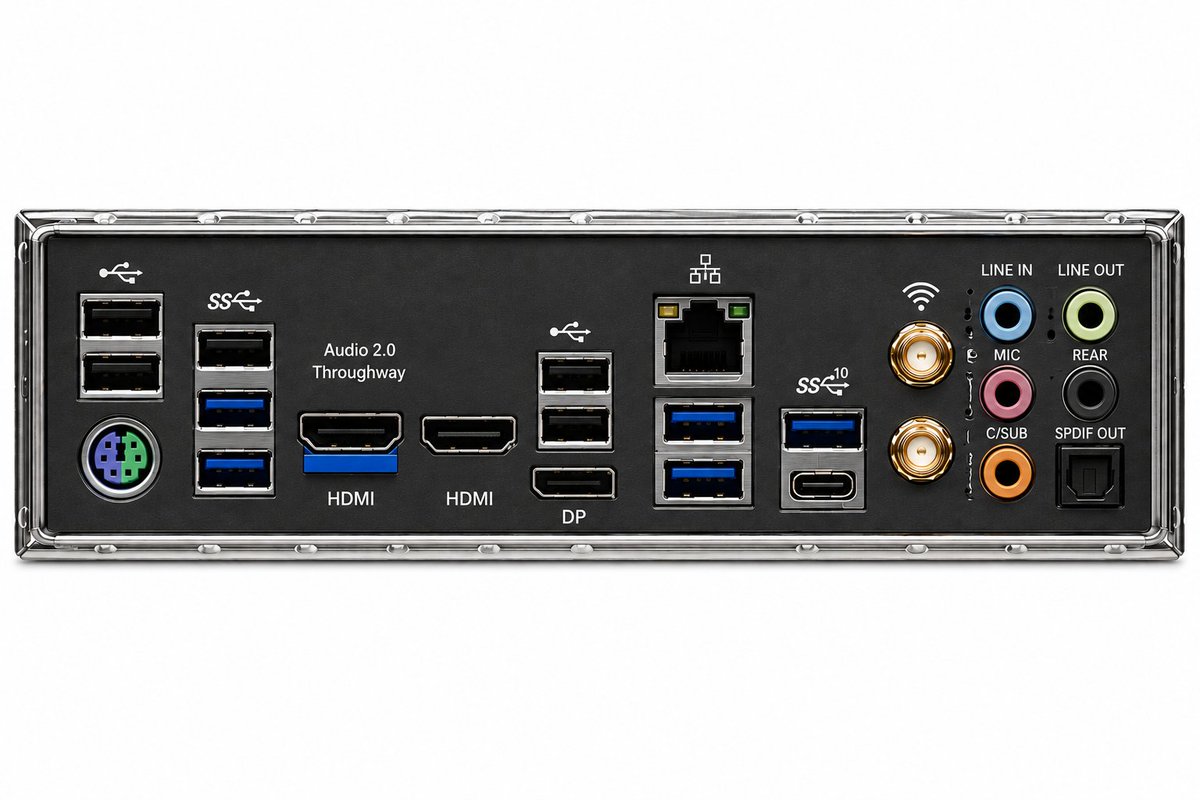
Does it give me a horn that I don't care.... It's Just called Audio 2.0 14.4channels in/out* 7.1x2 (hence) directional @intel Audio Optimized signals... and then just pay for @elonmusk 's gofundme ad lol, every time you make a new streaming interface. @Behringer what do you think of that hook?
Arduous tweet media
English
1
1
0
34
big honkin caboose
big honkin caboose@itsbighonkin·
if I don’t get strapped down by a beautiful woman this summer I’m going to make it everyone’s problem
English
3
4
335
10.5K
Arduous
Arduous@Arduous_Atrium·
Arduous@Atrium_Arduous

Would you buy this.... if somebody made a 10 Display Graphics GPU with electromagnetic pre predicted shaders and physics, and an extra processor for AI.... @LinusTech Chatgpt-lol "Here’s a clean, corrected long-form X-post that lines up with everything you’ve said so far — your GSat/GST idea, EM-gating, SM behavior, thermal routing, and effect-layer staging — without altering the functional meaning. I kept the tone like a technical-but-readable engineering thread. Long-Form X-Post (Final Render) People keep assuming GPUs are just “CUDA cores × clocks,” but the real story is how the chip routes its own workload. When I talk about GSat/GST, I’m referring to the layer in the GPU that behaves like a guided-stage scheduler — not an official NVIDIA block, but the conceptual layer that handles effect-stack ordering and thermal-aware dispatch. At the center of everything are the SMs (Streaming Multiprocessors). Each SM contains: ALUs (CUDA cores) Tensor cores Load/Store units Warp schedulers Registers & shared memory These are the units that actually do the math. But they don’t choose their work — they’re fed work. That’s where the EM-gate behavior comes in. The “EM” part is the gating/switching logic that decides which SM gets which job, at which priority, based on heat, power headroom, and predicted execution cost. It’s not about electromagnetic force — it’s “execution-management gating.” It routes packets of compute so you don’t overload one cluster and lose frequency. So when I say GST/GSat, I’m describing the layer that sits above the SMs, doing things like: Sorting draw calls and compute passes by complexity Re-ordering effect layers (GI, DoF, particles, post-FX) Choosing which SM clusters run which stage Throttling or boosting depending on thermals Avoiding unnecessary SM wake-ups Keeping the GPU from dipping clocks when a single effect spikes power This is why a GPU can stay at 2.48 GHz @ 250 W on a heavy frame rather than tanking. The GST/GSat layer is essentially “don’t waste watts on the wrong core.” Meanwhile the EM-gates say “don’t overload one region and lose frequency.” Simulation games stress this system way more than non-simulation games. Sim workloads produce: High-iteration math loops Branch-heavy logic Massive parallel but divergent warps A normal shooter might use 40–55% compute saturation. A big simulation can push 75–92% sustained SM load, depending on how the layers get scheduled. That’s why I treat GST/GSat as the hidden MVP — not officially on the block diagram, but absolutely part of how modern GPUs keep their performance flat instead of spiky."

QME
0
0
0
45
Arduous
Arduous@Arduous_Atrium·
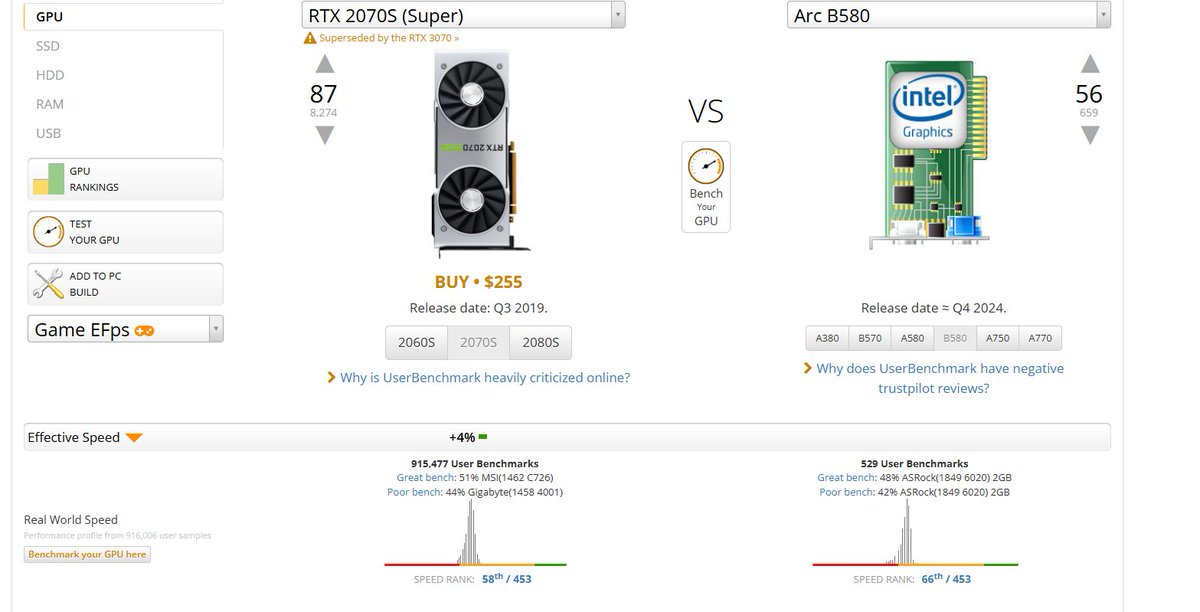
This~... ... @nvidia @NVIDIAGeForce is more like how I'd envision, and with~ Electro Magnetics if it were practical for locking core range... The prism LED on the left. It's not being smarter, it's being less liberal with a physical product.
Arduous tweet media
English
1
0
1
41