Eesti
Ari CryptoGold ¦ zer0
4.2K posts

@AriCryptoGold
MockJUP ¦ zer0boi JUP Catdet PPP



73k before 78k



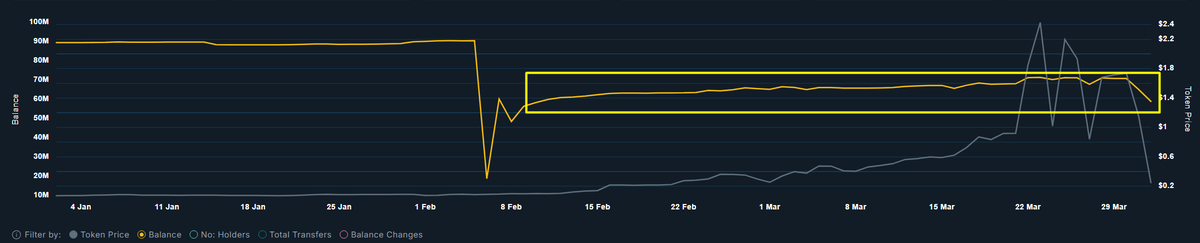
A lot of people here don't realise that before $Jup was launched, there was a test token called $Mockjup launched for the @JupiterExchange team and @weremeow. For a long time there has been a group of diamond handed Zer0 bros holding from launch down to 75k. With this holder base now accumulating the lows and a lot of the Jupiter team still on board. I'm going to call it here the $Mockjup / $Jup pair will go to zer0. A great flippening is brewing and its between Jupiter and the community built to mock it.

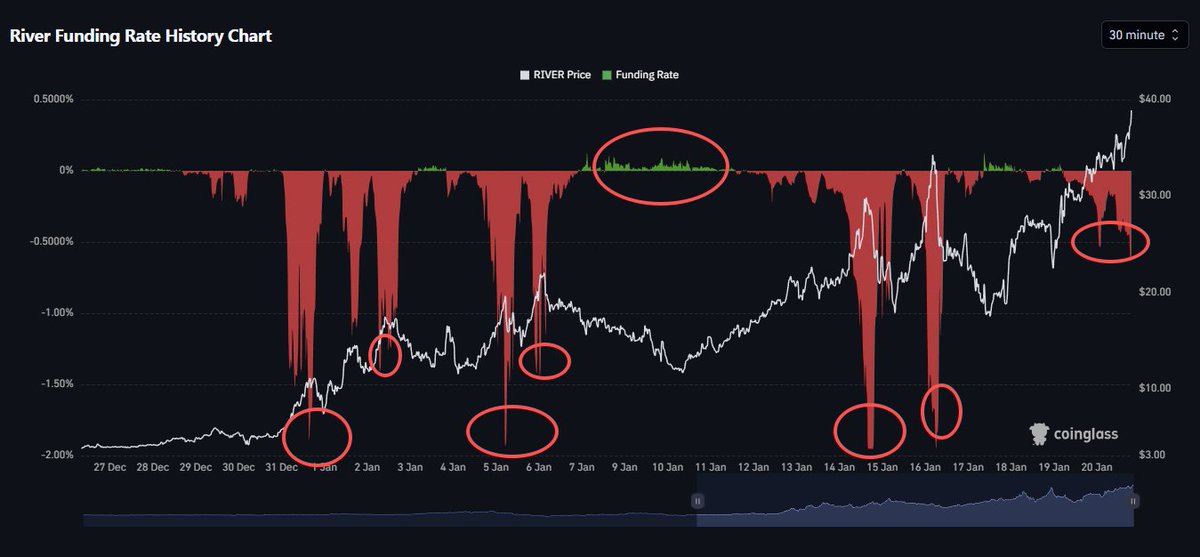




$SIREN $PIPPIN | Insider Supply Control Case Study & Price Manipulation Breakdown $SIREN and $PIPPIN are textbook cases of insiders controlling supply. Multiple wallets accumulate early when price is cheap, and over time reach a level where they can control a large portion of circulating supply, sometimes 70–80% on-chain. This doesn’t even include potential holdings on CEXs that aren’t visible. Once supply is concentrated like this, price is no longer purely market-driven, it becomes something that can be shaped. How to accumulate (Price Up Phase) When supply is controlled, the real circulating float becomes very thin. At this point, even small buy pressure can push demand up disproportionately, leading to strong price expansion. Many bots and momentum flows amplify this effect, making the move look organic. Backtesting $SIREN, we previously detected clear coordinated accumulation: The first cluster accumulated around 157M tokens near $0.03, and the second added another ~50M around $0.0506. Combined, these wallets control over 207M $SIREN, roughly 28.4% of the circulating supply. Importantly, these wallets have remained inactive since accumulating, showing no signs of distribution. Both phases happened at major dips and were followed by strong recoveries. Notably, these wallets have remained inactive since, with no signs of distribution. Opportunity: If you detect this structure early, you can position before hype. “Hype” here can be tracked via market cap expansion, rising OI, funding extremes, and social sentiment. Each case differs, but the edge comes from entering before these signals peak. How to distribute (Price Crash Phase) Many assume insiders dump spot at the top, but in most cases, on-chain wallets remain inactive even during crashes. So are they taking losses? No. Distribution is executed more subtly through derivatives. Spot liquidity is often too thin to exit large positions without collapsing price. So instead, insiders open large short positions at the top, then let price crash and take profit from derivatives. Backtesting $SIREN confirms this: - At the peak, OI spiked to ~$126M - Funding turned negative, indicating aggressive short positioning - Price dropped sharply afterward Meanwhile: - No significant CEX inflows - Accumulation wallets remained holding > Profit was taken via derivatives, not spot selling Opportunity: If you’ve tracked the token from accumulation, a sudden spike should shift focus to derivatives. Watch for OI expansion and funding flips. You may catch the short alongside insiders, but this phase is fast and often plays out in a single sharp move. Also note: profits from derivatives are usually smaller than unrealized spot gains, due to liquidity constraints. That’s why price is pumped first before being monetized. Conclusion $SIREN, $PIPPIN and similar cases show a repeatable pattern: accumulate early, control supply, push price up on thin float, then distribute via derivatives. As long as supply remains concentrated, this cycle can repeat multiple times. Tokens like $PIPPIN, $JELLYJELLY, $BEAT have shown that price can pump again and crash again, as long as control remains.