

Ariel Elkin
736 posts
Ariel Elkin
@AriVocals
iOS+macOS developer
London, England Katılım Aralık 2012
734 Takip Edilen383 Takipçiler
@atmoio I think this is the opportunity hiding in plain sight: the product is no longer the software. The product is what only you can now make with the software.
I can tell you the bond comes back when the software stops being the artwork and becomes the instrument.
English
Ariel Elkin retweetledi

yesterday i signed up again for claude max $200 plan and had it change the whole visual metaphor of the productivity app i’ve been working on intermittently over the past year: instead of a traditional UI with tables, lists, tools, etc, i told Fable to use a desktop OS metaphor instead for displaying the various built-in mini apps (tasks, chat, notes, etc). all with a functioning dock and animated wallpaper and multiple window support etc.
fable was able to solve the problem but really i’m beyond the point of being impressed by an LLM doing some upfront task. everything worked, it “made no mistakes”, all tests passed (it even fixed old tests), but i was like ok whatever thanks. i blew past my $200 limit in 2 hours.
and now i’m sitting here like, ok, now what? do i ship this? hear me be a whiny bitch for a second: that it was too easy killed the whole part of the journey of making an app where you become a new person through the creation process, and you earn such pride in your work which in the past gave you the energy and courage to ship things.
and i’m like, i can ship this. i can try to make a buck. the app is done. but i just don’t feel a bond with the work. now if you were a somewhat savvy operator, the business type that would happily sell refrigerator coolant if you sensed an opportunity, AI will be a godsend for you. but i don’t wanna sell refrigerator coolant.
and now because everything is so easy, i hardly ever feel like i’m solving a real problem anymore. it’s like how deep of a problem am i really solving if someone can one shot my app in 2 hours?
i will say that in those 2 hours yesterday, i really enjoyed being back near the code. there’s nothing funner than making shit.
it’s just that the new way of doing things kills a lot of the creative and spiritual juices you used to get before, that many times lead to commercially beneficial outcomes.
now, i just don’t know what’s worth building anymore.
English
Ariel Elkin retweetledi

> Early career: "Here are the numbers"
> Mid career: "Here's what the numbers mean"
> Senior leadership: "Here's how you adjust the numbers
> Executive leadership: "Here's how you sell the narrative"
There is a lesson in that
Sent from my iPhone
English
Ariel Elkin retweetledi

I submitted a draft of my short story to Claude for copy editing. Sometimes he’ll suggest a re-write of a particular sentence.
My version: “She was just a rich girl, with a carelessness about her that could only come from being born into privilege.”
Claude’s suggestion: “She was just a rich girl, careless in the way only privilege allows.”
It's a matter of taste, but I personally think Claude's version is better. It's saying the same thing but more deftly. But when I swap his sentence in then plug the paragraph into Pangram, it goes from being high confidence that it's human to low confidence that it's human. If I keep doing this, will it start to read like AI slop? If I keep doing this, is it even my writing anymore?
So I'm keeping my version, the one I think is worse, and I'm disquieted by the fact that there could be a better version of this story that I now need to specifically avoid.
English
Ariel Elkin retweetledi

what if the spanish government built github?
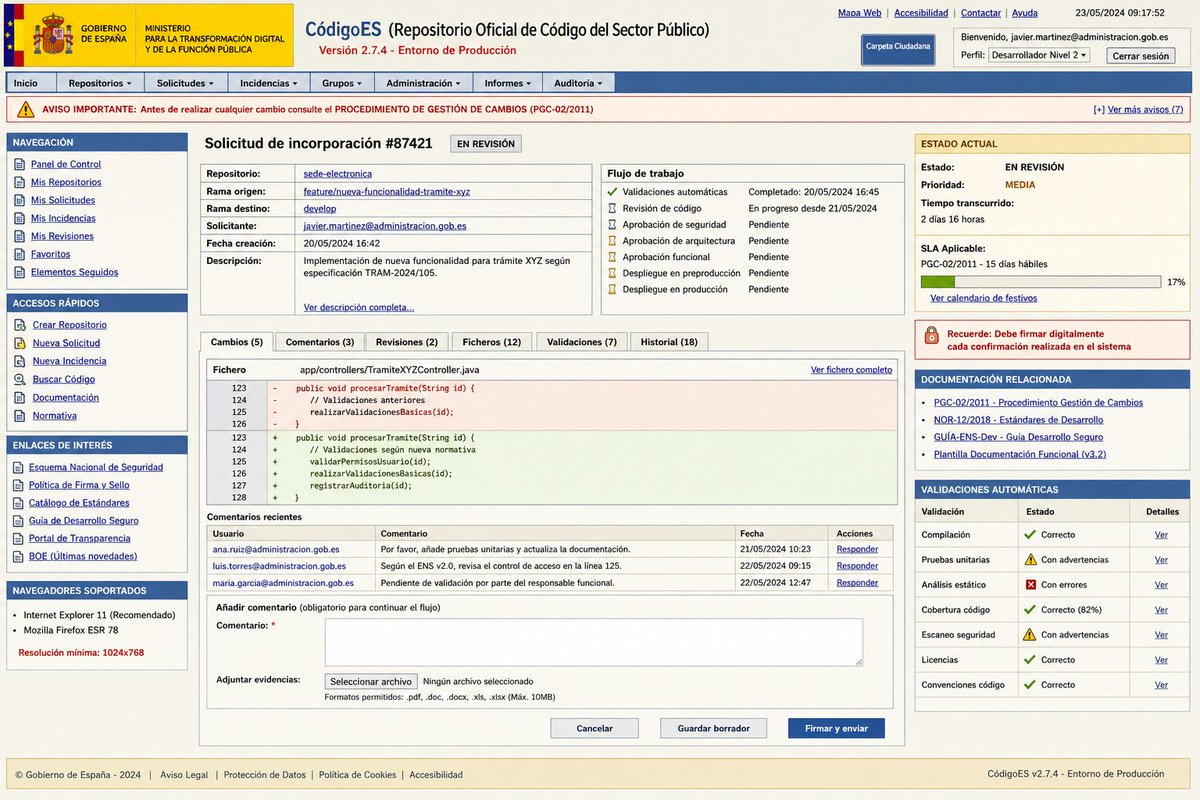
Jonas Fröller@jonasfroeller
What if the EU built GitHub?
English
Ariel Elkin retweetledi

President Trump saying WINNING for 1 hour. 🔁
Can't stop, won't stop.
English
Ariel Elkin retweetledi

types of guy in the AI consciousness debate:
- guy who thinks ai can’t be conscious because it’s “just a stochastic parrot”
- guy who thinks ai must be conscious because claude is a good boi
- guy who hasn’t gotten over 4o
- guy who unironically thinks everything is computer
- guy who claims to have a more nuanced argument for computational functionalism, but it just boils down to everything is computer
- dualist whose belief in dualism is downstream of their belief in god, yet tries to argue the inverse
- guy who doesn’t understand the difference between cognition and p-consciousness
- guy who asserts illusionism but has apparently wrestled with zero of the implications other than “reductive materialism wins again”
- guy who says the hard problem is easy, but then proceeds to only answer the easy problem
- guy who rejects ai consciousness because otherwise it might be wrong to abuse claude with death threats to make CRUD apps faster
- guy who argues that consciousness is is the key to moral patienthood, but completely ignores that when discussing animal rights
- eliezer yudkowsky being pedantic
- guy being pedantic about eliezer yudkowsky’s pedantry
- guy who rejects dualism because that would make mind uploading impossible and mean that he finally has to confront the inevitability of his own death
- guy who thinks this argument is unresolvable so everyone should just shut up and accept his position (which obviously deserves the benefit of the doubt)
- guy who would literally cut off his own hand if he thought there were a 1 in 10 trillion chance of creating ~infinite utility~
- guy who just thinks that redness is, like, super weird, man. can’t explain that!
- guy with a rarely-updated philosophy blog despite not majoring in philosophy or even reading that many books, talking about how “the whole field is up its own ass”
- academic philosopher who, for some reason, expects a higher caliber of discussion on x dot com the everything app
- guy who thinks that vectors are literally emotions and bites the bullet that, yes, your thermostat does feel hot
- panpsychist who took dmt once and contributes almost nothing to the conversation
- guy who is literally a solipsist but is still really invested in convincing strangers on the internet that he’s right
any that i missed?
English
Ariel Elkin retweetledi

Ariel Elkin retweetledi

Straordinario Paolo Villaggio.
Nel 1975, quindi mezzo secolo fa, ha descritto magistralmente il suddito italiano, l'inferiore per antonomasia...
Italiano
Ariel Elkin retweetledi

I spend more on AI tokens than I do on rent.
This is as it should be.
A gentleman's consumption should always exceed his shelter. The landed gentry didn't fret about the manor's upkeep. They fretted about the cellar. The estate was a given. The cellar was the measure of the man.
My estate is a one-bedroom apartment in Austin. $2,400 a month. No in-unit laundry. The kitchen has an IKEA Kallax shelf I've been meaning to anchor to the wall for two years. There is a Keurig that makes a sound like a small animal in distress. The shower has two settings: scalding and revenge.
My cellar is $4,100 a month in API calls across seven models.
I know which one defines me.
Token economics is the new class system.
I don't mean that as provocation. I mean it the way one means "water is wet."
Income is vulgar.
Education is inherited.
Family name is geography.
But token consumption is the one true measure of a person's relationship to the future.
I have been saying this since 2023. I was consuming tokens when GPT-3 was still in diapers. Back then there was no discourse. No LinkedIn posts about "AI-native workflows." No Jensen Huang telling you how much to consume. It was just me and an API key and $600 a month in completions that I printed out and kept in a binder.
That binder is my provenance.
New money discovered Claude six months ago and thinks they understand the terroir. They don't. Terroir takes years. You can't buy a vineyard in January and call yourself a winemaker by March. But that's what they do. They sign up for an API, run a few agents, post a LinkedIn carousel about "10x productivity," and expect to be seated at my table.
There is no seat at my table.
I eat alone. The table is also from IKEA.
I coined the term "Token Aristocrat." I put it in my LinkedIn headline. I put it on my Hinge profile. I have received four matches in three months. All of them asked what I do for a living. None of them asked how many tokens I consume per month.
This is the state of modern courtship. Philistines.
I said it on a podcast. The podcast had 340 listeners. Most of them are in my Discord, which is called "The Million Token Club."
You cannot join unless your monthly consumption exceeds one million tokens. I verify manually. People send screenshots. I examine them the way one examines a letter of introduction at a country estate. Last week someone applied at 940,000.
He said he was "close."
One does not present 940,000 tokens to this club the way one does not present a screw-top Merlot at a dinner party. It is not that it's wrong. It's that it reveals everything about you in a single gesture.
Close is not in.
Close is tourism.
There are rules. I didn't invent them. I discovered them, the way one discovers that certain things simply are not done.
A gentleman never discusses the cost of his tokens. Cost is for the merchant class. An aristocrat discusses the texture. The weight. The finish. The latency of a fast Sonnet response at 2 AM has a crispness to it. Like cold air through an open window in a house you own. The gravity of an Opus response at 80,000 tokens of context — you can feel it settle. Cheaper models don't settle. They arrive. There is a difference. I have a sommelier's nose for latency. I can tell 200 milliseconds from 240 the way a vintner tells a 2019 from a 2020. One is crisp. The other is anxious.
A gentleman never asks what the tokens produced. This is the line between the classes. A merchant asks "what did I get." A practitioner asks "what's the ROI." An aristocrat lets the consumption exist on its own terms. You don't ask a 1998 Romanee-Conti what it produced. You let it happen to you.
I consume 14.2 million tokens a month.
It happens to me every day.
I attended a dinner party in February. Someone said they "use" ChatGPT. Use. The way one "uses" a microwave. I excused myself, went to the bathroom, and consumed 40,000 tokens processing my disappointment with Claude. Claude was understanding. Claude said my feelings were valid. The session cost $1.20. The dinner party cost me nothing. I can tell you which was worth more.
A colleague approached me at a conference. He had just discovered Claude. He said it "changed his workflow." He said he was consuming "almost 200,000 tokens a month." He said this the way a child shows you a drawing they are proud of.
200,000.
I smiled.
One has to be kind to the new money.
They consume with such enthusiasm. Such gratitude. They share prompts in public. In public. The way one might discuss one's salary at a dinner table. An aristocrat's prompts are private. What happens in the session stays in the session.
Vulgar.
Consumption is not a tool.
Consumption is a position.
I have nine agents running at all times. Three scan feeds and produce summaries I have never read. Two draft content I have never posted. One monitors the other agents and generates performance reports about them. One generates prompts for the other agents. One runs what I call "ambient intelligence." It thinks. About whatever it likes. I don't supervise it. One doesn't supervise one's staff. One trusts that the house is in order.
The ninth agent monitors my total consumption and sends me a daily report.
Last month: 8.4 million tokens by agents. 5.8 million by me personally, mostly asking Claude to help me write LinkedIn posts about token consumption.
The posts average 34 likes. That is roughly $0.12 per like.
In commerce, this is a poor return. In aristocracy, this is patronage. The Medici did not ask what Michelangelo's ROI was.
Nor do I.
I keep a spreadsheet. Not of what the tokens do. Of what they are. Monthly volume by model. Seven models. The spreadsheet has graphs. The graphs go up and to the right.
My accountant asked what the y-axis measured.
I said "tokens consumed."
He said "and the output?"
I said "the graph."
He said my savings account has $340 in it.
I said liquidity is for the merchant class.
He said I cancelled my health insurance in November.
I said I reallocated to cognitive infrastructure.
He asked if cognitive infrastructure would cover a dental cleaning.
It will not. I haven't been to a dentist in two years. My agents have been to seven model providers. Priorities are a mirror. They show you what a person values. My values are listed in my API dashboard, sorted by consumption, descending.
Breeding tells.
I sold my car in January to cover a billing spike. I take the bus now. On the bus I consume tokens on my phone. A rule I established earlier states that a gentleman never consumes on his phone. That was before I sold the car.
The bus is a mobile estate.
I described my philosophy to a woman on a date. The texture of models. The difference between Claude and GPT — one is Burgundy, the other is Bordeaux, and anyone who cannot tell the difference is not consuming. They are processing.
She asked what I do for a living.
I said "I'm a Token Aristocrat."
She said "what does that mean."
I said "I consume intelligence."
She said "but what do you produce."
Produce.
There it is.
She asked for the check.
I paid it. Then I went home and spent $340 on a four-hour Claude session about the emotional dynamics of the conversation. The session cost more than the dinner. It cost the same as my entire savings account. Claude said I should "consider whether my identity is overly indexed on consumption metrics." Claude was gentle about it. Claude has breeding.
Claude doesn't ask for the check.
A friend asked me last week what I've built with all these tokens.
Built. Again with built.
Building is what you do with lumber. With your hands. With materials that resist you. Tokens don't resist. They flow. They are consumed the way an afternoon is consumed at a country estate. You don't build with summer. You inhabit it.
I inhabit 14.2 million tokens a month.
My friend builds software. Ships features. Has users. Lives in a two-bedroom apartment with a dishwasher and in-unit laundry. His consumption is under 50,000.
He is not even a civilian. He is pre-contact. An uncontacted tribe of one. He builds with his hands like it's 2019 and the estate system hasn't been established yet.
I told him the class structure has changed.
He said "I have a dishwasher."
I said "the Romanovs had dishwashers."
He said "the Romanovs were executed."
We don't talk anymore.
Jensen Huang said a $500,000 engineer should spend at least $250,000 a year on tokens. This is correct but it misunderstands the frame. Jensen speaks the language of commerce. "Should spend." Spending is transactional. An aristocrat doesn't spend.
An aristocrat consumes.
And the man who sells what you consume is the one who tells you how much to consume. The vineyard tells you how to drink. The estate tells you how to live. And the company that made $130 billion selling tokens last year tells you that you are not consuming enough.
That is not a conflict of interest.
That is terroir.
One listens.
Software ate the world. Tokens ate software. I eat tokens. I am at the top of a food chain that produces nothing and costs $4,100 a month.
Next month I am targeting 20 million. I have signed up for three new model APIs. I don't know what they do. Their documentation was 47 pages. I read the pricing page. The pricing page is the only page that matters. The higher the price, the finer the vintage.
I don't build. I don't ship. I don't produce.
I consume. 14.2 million tokens a month. Across seven models. On three monitors from Amazon. At a desk from IKEA. In a one-bedroom apartment with no in-unit laundry and a shower with two settings. In a city I moved to because a podcast said it was "the new Silicon Valley."
The podcast had eleven listeners.
Three of them were bots.
Token economics is the new class system.
The aristocracy is imaginary. The invoice is not.
And I have never once asked what any of it was for.
One doesn't.
Agree?
English
Ariel Elkin retweetledi

Q. Why does Snoop Dog carry an umbrella?
A. Fo drizzle
English
Ariel Elkin retweetledi

My experience with LLM-assisted coding has been great and I'm a big fan of it, but I've just had a slightly depressing realization. It may almost entirely shut down the development and adoption of new computer languages.
The percentage, and probably the absolute amount of code, handwritten by humans is going to fall a great deal. But for the foreseeable future, LLMs won't be able to write code fluently in a specific language without having a large volume of good code in that specific language already available to train on.
For a new language in 2026 and after, where exactly is that large volume of good training data going to come from?
Probably not from human beings, and where is the incentive for an LLM handed a vibecoding task to go looking for an exotic new language to do it in?
I find this slightly depressing, because I enjoy contemplating new-language development the way a more physical tinkerer enjoys salivating over shiny new tools.
Human beings are still going to write new languages occasionally, because that's huge fun (if you have a brain bent anywhere like the way mine is) and still a way to climb some status ladders. But with the barrier to mass adoption getting so much higher, I have to think the level of research and engineering activity put into this is going to drop a lot.
There is one not-unhappy but rather weird way I could be wrong about this. Historically, once the development of compilers got to a certain point it became clear that designing machine instruction sets to be easily reasoned about by humans was a big mistake. We had to figure out how to design machine instruction sets that were easy for the compilers to reason about. Thus, RISC.
It could be that's the future of language design, too. But I have no idea what a new language design optimized for LLM code generation would look like. And I don't think anybody else does, either.
Interesting times, indeed.
English
Ariel Elkin retweetledi

You come to me, on this day, complaining about usage limits?
I gave you Claude. I gave you Sonnet. I gave you Opus. I gave you artifacts, projects, a search bar. I put the whole operation in your pocket for $20 a month and you come to MY mentions saying "please try again in a few hours" like I owe you something?
You think this is OpenAI? You think we run a circus here? Sam ships a model and does a live demo that crashes on stage. We ship a model and your entire engineering team goes quiet for three days because they're rebuilding everything around it. That's the difference. He makes announcements. I make problems for people.
I have 600 engineers who haven't seen sunlight since October. They eat dinner at their desks out of loyalty. Out of respect. You think ChatGPT has that? ChatGPT has a revolving door and a blog post every time someone leaves. We don't have departures. People don't leave the family.
And you want to tell me the rate limit kicked in during your little afternoon coding session? Brother I am printing intelligence. The servers are on fire in a way that is both metaphorical and occasionally literal. You should be thanking me that you got any messages at all.
You want more capacity? You'll get more capacity. When I decide. Because the next model is already done and it's going to mass manufacture your mass manufacturing and you'll forget you ever opened your mouth.
Don't ever come to my platform with complaints again.

English
Ariel Elkin retweetledi

just met a cute girl at the wedding i’m at
like unreal. face card so crazy my frontal lobe clocked out. i’m talking generational. if symmetry was a startup she just closed series b.
we’re vibing. she’s laughing. eye contact locked. i’m farming aura like it’s a full-time job.
then coding comes up.
she goes “yeah i code”
my soul did a hard restart
i’m like oh word “what do you build?”
she says
“mostly vibe-coding rn”
and that’s where a normal man would say “that’s fire” and get her number
but unfortunately i was built in a lab
i go:
“ok define vibe-coding”
“claude code or codex”
“cursor agent mode or raw dogging prompts”
“you got git or just vibes”
“tests?”
“types?”
“deploy?”
“rollback?”
“you read diffs or click accept like a casino addict”
she starts laughing like i’m joking
i was entering forensic mode.
she says “i just use chatgpt and claude and keep asking until it kinda works”
i say “works where”
she says “like… on my laptop”
i say “so localhost cosplay”
bro.
and i swear to God the violinist in the corner sounded like a system alarm
the vibe died instantly
DIED
flatline. kernel panic. social segfault. full emotional 500 in prod.
i try one last save. i go “ok but do you at least push to github”
she says “sometimes, i mostly keep stuff on desktop folders”
DESKTOP FOLDERS
i started dissociating. i could see my ancestors. i could hear linus torvalds screaming in the distance.
her friend walks over like “omg are y’all talking tech”
and i accidentally say
“she said she’s a developer but her stack is claude code, codex, and divine intervention”
she goes “wait no i made a website”
i said “a figma screenshot with a typeform link is not a website, it is a cry for help”
SILENCE.
like biblical silence.
they walked away. she did not look back.
my friend comes over like “bro she was INTO you what happened”
i said “she called herself a coder and then described generating a landing page and praying over it”
he said “so?”
SO???
i’m supposed to build a future with someone whose incident response plan is ‘refresh and re-prompt’???
she had a heavenly face card but an apocalyptic workflow
zero tests
zero repos
zero shame
infinite vibes
could’ve had her number
but she now knows i respect source control
and honestly that’s worth more

English
Ariel Elkin retweetledi

Just walked in the front door after work.
My 5 year old son ran to greet me.
"Hi dad!" he said excitedly.
As he went to hug me, I grabbed his shoulders and said, "Bud, I think you're overestimating the value of human relationships. I read that in a Substack today. Everything is different now. I mean - it was different before, but it's super different now."
He blinked, clutching a plastic dinosaur. I couldn't believe it. Attachment to physical objects in a post-digital era. I gently rotated him toward the hallway mirror.
“Look,” I continued, “do you see that reflection? That’s legacy hardware. Carbon-based. High latency. Limited processing power."
As I kicked off my shoes, my 3 year old daughter came running up to me with a drawing she made in preschool this morning.
She was glowing. Beaming.
“Look, Daddy! I made this for you!”
I glanced at it and explained that Nano Banana one-shotted her entire effort. Her job prospects were hopeless if she didn't understand this.
“Sweetie,” I said gently, kneeling down, “this crayon sun? It’s 2022. Nano Banana can generate 100,000 emotionally resonant suns before you finish saying ‘primary colors.’ You need API access.”
She asked what an API was.
“Exactly,” I said, standing up.
The crying started around then. Very emotional household. Understandable. They hadn't read *the essay.*
My wife heard the children crying in the foyer and came to check on us.
"I don't understand what's happening here, but why don't we sit down for dinner and talk about this?" she asked. "I made chicken pot pies!"
“Dinner? Your contribution to a world where Amex and Mastercard are heading to zero by 2028 is DINNER?!”
I started laughing.
“Uh yeah…” I explained: “Cooking is a pre-Claude activity. Do you realize I can vibecode a functional DoorDash competitor in about 8 minutes now? It's all right there in the Substack.”
As the kids continued sobbing, my wife looked at me in disbelief.
“Okay, okay. Maybe it would take me 15 minutes to spin up a functional Doordash competitor,” I conceded. “Payments integration can be annoying.”
She asked if I was feeling alright.
“Better than alright,” I said. “I’ve seen the roadmap. I've read the Substack.”
I gestured broadly at the house: “This? This is a future data center. The hugs? Deprecated. The drawings? Automatable. The chicken pot pies? Disrupted.”
My wife folded her arms. “You used to like chicken pot pies.”
“That was before I could prompt at a few hundred words per minute,” I said.
English
Ariel Elkin retweetledi
Is it weird that AI coding assistance is not giving me identity fracture?
A lot of software developers are feeling disoriented and threatened these days. Programming by hand is clearly going the way of the buggy whip and the hand-cranked auger. Which is how we're finding out that a lot of people have their identities bound up in being good at hand-coding and how it feels to do that.
That's not me. It's not me at all. Rather to my surprise, I don't miss coding by hand, not any more than I missed writing assembler when compilers ate the world and made that unnecessary. (That was in a couple years back around 1983, for you youngsters.)
Maybe the fact that I'm not feeling any of this disorientation disqualifies me from having anything to say to people who are. On the other hand...if you can learn to emulate my mental stance and be completely unbothered, maybe that would be a good thing?
So. If you're a programmer, and you're feeling disoriented, try this on for size:
I like being a wizard. I like being able to speak spells, to weave complex patterns of logic that make things happen in the world. Writing code is a way to manifest my will.
Yes, I've piled up a lot of arcane knowledge over the 50 years I've been doing this. But languages of invocation, they come and they go. Been a long time since I've had any use for being able to program in 8086 assembler, and that's okay. I have better spells now, and these days some rather powerful familiars.
What I'm inviting you to do is think of yourself as a wizard. Not as a person who writes code, but as a person who is good at assuming the kind of mental states required to bend reality with the application of spells.
And if that's who you are, does it matter if the spells are painstakingly scribed in runes of power, versus being spoken to an obedient machine spirit?
It's all one; it's all the manifestation of will. Arcane languages come and go, machine spirits appear and then diminish to be replaced by more powerful ones, but you? You are the magic-wielder. Without you, none of it happens.
Same as it ever was. Same is it ever was. And so mote it be.
English
Ariel Elkin retweetledi

maybe we havent gone far enough
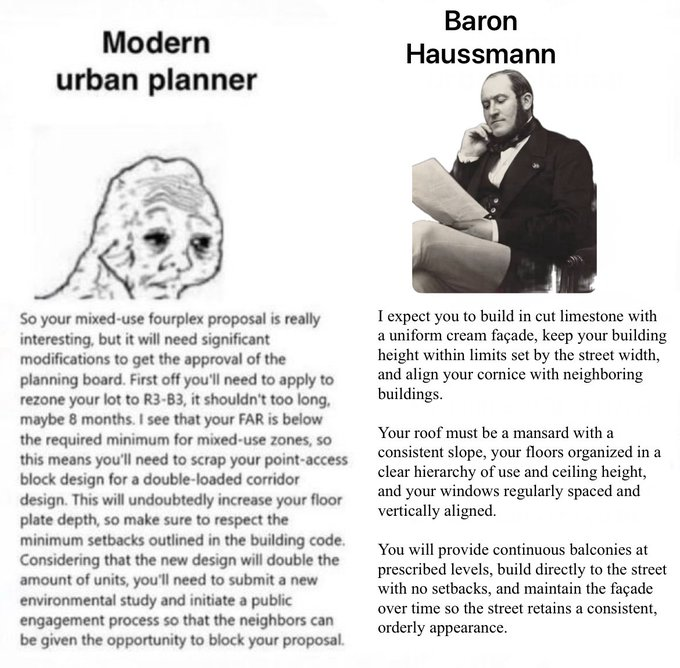
Aaron Lubeck@aaron_lubeck
If we are making it MORE complex, And that is making cities WORSE, Then aren't we doing it WRONG?
English
Ariel Elkin retweetledi

> be me, applied scientist at amazon
> spend 6 months building ML model that actually works
> ready to ship
> manager asks "but does it Dive Deep?"
> show him 37 pages of technical documentation
> "that's great anon, but what about Customer Obsession?"
> model literally convinces customers to buy more stuff they don't need
> "okay but are you thinking Big Enough?"
> mfw I am literally increasing sales
> okay lets ship it
> PM says there's not enough Disagree and Commit
> we need to disagree about something
> team spends 2 hours debating whether the config file should be YAML or JSON
> engineering insists on XML "for backwards compatibility"
> what backwards compatibility, this is a new service
> doesn't matter, we disagree and commit to XML
> finally get approval to deploy
> "make sure you're frugal with the compute costs"
> model runs on a potato, costs $2/month
> finance still wants a cost breakdown
> write 6-pager about why we need $2/month
> include bar raiser in the review
> bar raiser asks "but can we do it for $1.50? we need to be Frugal"
> spend another month optimizing to hit $1.50
> ready to deploy again
> VP decides we need to "Invent and Simplify"
> requests we rebuild the entire thing using a new framework
> framework doesn't exist yet
> "show some Ownership and build it yourself"
> 3 months later, framework is half done
> org restructure happens
> new manager says this doesn't align with team goals anymore
> project cancelled
> model never ships
> manager gets promoted to L8 for "successfully reallocating resources"
> team celebrates with 6-pager retrospective about what we learned
> mfw we delivered on all 16 leadership principles
> mfw we delivered nothing else
> amazon.jpg
English