

Arik Friedman
187 posts




Judging from the hairstyle, what year do you think this photo was taken?

English





Who’s your favorite president among the four ?
A – Bill Clinton
B – Barack Obama
C – Joe Biden
D – Donald Trump

English


Simple poll. be honest As of today, how much do you still trust this man?
A. 100 % B. 75% F.10%
C. 50% D. 25% E. 0%

English
@lady_valor_07 I have never listened to your music. But now I know I never will
English


@archeohistories That a lie. The first thing they do is destroy other houses of worship.
English

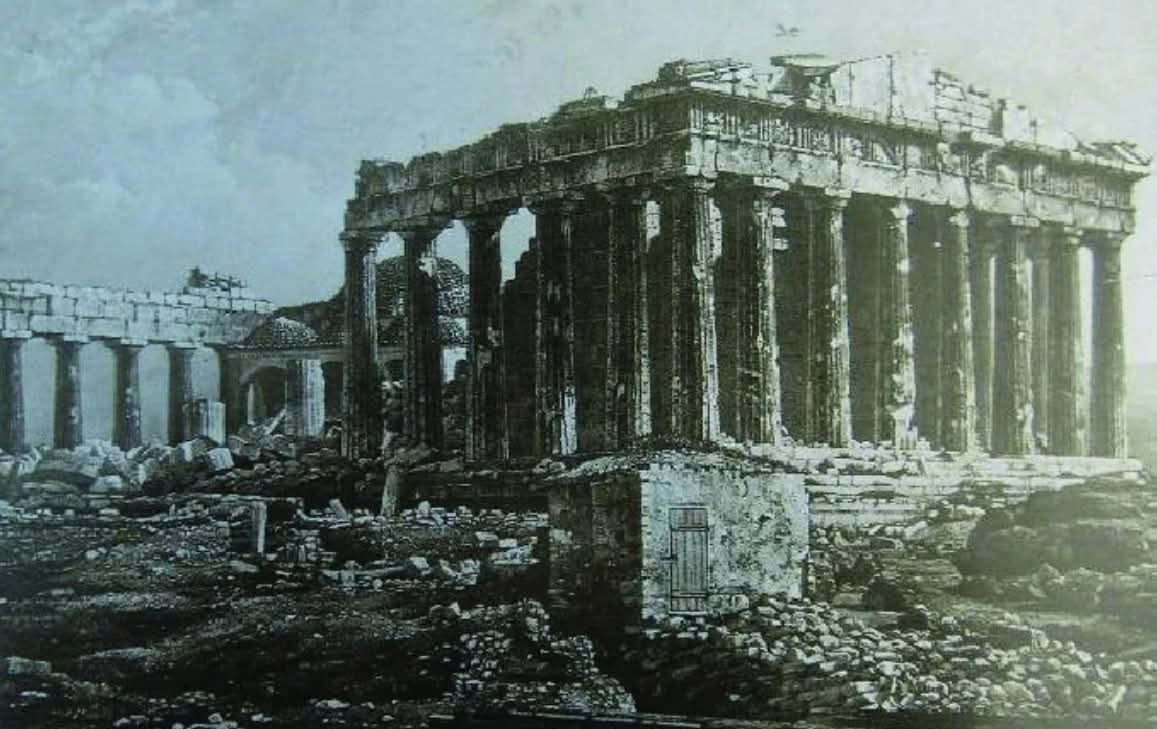
In the very first photograph of the Parthenon in Athens, taken almost 200 years ago in 1839, an observant eye will notice an Ottoman mosque in its center. It was demolished immediately after Greece gained independence from the Ottomans in 1843 to showcase the idealized classical Greek identity again
The Parthenon had served many different purposes over time, first a temple to Athena, later a Byzantine church, and eventually a mosque after the Ottoman conquest of Athens in 1458.
Following the establishment of the modern Greece after the Greek War of Independence, Greek authorities removed the Ottoman structures from the Acropolis in the 1840s in an effort to restore the monument’s classical appearance and emphasize the nation’s ancient heritage.
The Parthenon suffered one of its greatest destructions in 1687, when a Venetian bombardment ignited an Ottoman gunpowder store inside the temple, causing a massive explosion that blew out much of the structure still missing today.
© History Pictures
#archaeohistories
English
@archeohistories She should have shot her husband instead of herself
English
In 1900, Clara Immerwahr accomplished something no German woman had ever done before. At the University of Breslau, she earned a doctorate in chemistry with highest honors, becoming the first woman in Germany to reach that milestone. In a scientific world dominated almost entirely by men, her achievement was extraordinary. Colleagues described her as brilliant, disciplined, and fiercely committed to the idea that science should improve human life.
Yet the career she had worked so hard to build slowly slipped out of her reach. After marrying fellow chemist Fritz Haber, Immerwahr found herself pushed into the traditional role expected of wives at the time. Haber’s career skyrocketed—his research would later earn him a Nobel Prize in Chemistry—while Clara’s own scientific ambitions were largely set aside. She translated her husband’s papers, hosted his academic colleagues, and struggled to remain connected to a field that rarely allowed women equal footing.
Then came the moral crisis that would define her legacy. During World War I, Haber became the leading architect of Germany’s chemical weapons program. In April 1915, he oversaw the first large-scale chlorine gas attack at the Second Battle of Ypres, unleashing a weapon that would horrify the world.
Clara was devastated. A scientist herself, she believed chemistry should serve humanity, not destroy it. She openly condemned the use of poison gas, calling it a betrayal of science and a perversion of knowledge. To her, the new weapons represented the moment when intellect had been turned against life itself.
Shortly after Haber returned home celebrating the attack as a military triumph, Clara took his service revolver and ended her life in their garden in 1915. She was only forty-four.
© Women In World History
#archaeohistories

English
English
@Barrysmith7664 @ryangrim Jews hid weapons in a school, so is that why they keep on accusing Palestinians of doing the same thing?
English

This is awkward, David Ben Gurion named as a “Palestinian citizen” in travel documents from the 1940s. We’re told there was no such thing.
Mosab Abu Toha@MosabAbuToha
This is a newly revealed British transit visa document for Israel’s first PM, David Ben Gurion, who was also the leader of the Haganah terrorist gang, a gang that was involved in the cruel massacre of Der Yassin in 1948 and the expulsion of thousands of Palestinians from their homes. The British visa document was issued in 1941 and it refers to Ben Gurion, who was born in Poland, as a Palestinian citizen.
English
@archeohistories Spains leaders King Ferdinand II of Aragon and Queen Isabella I of Castile were expelling their own people because of religious reasons at that time. They took over lands from the Aztecs even though they were living in peace. Spain got punished and lost its power and prestige.
English
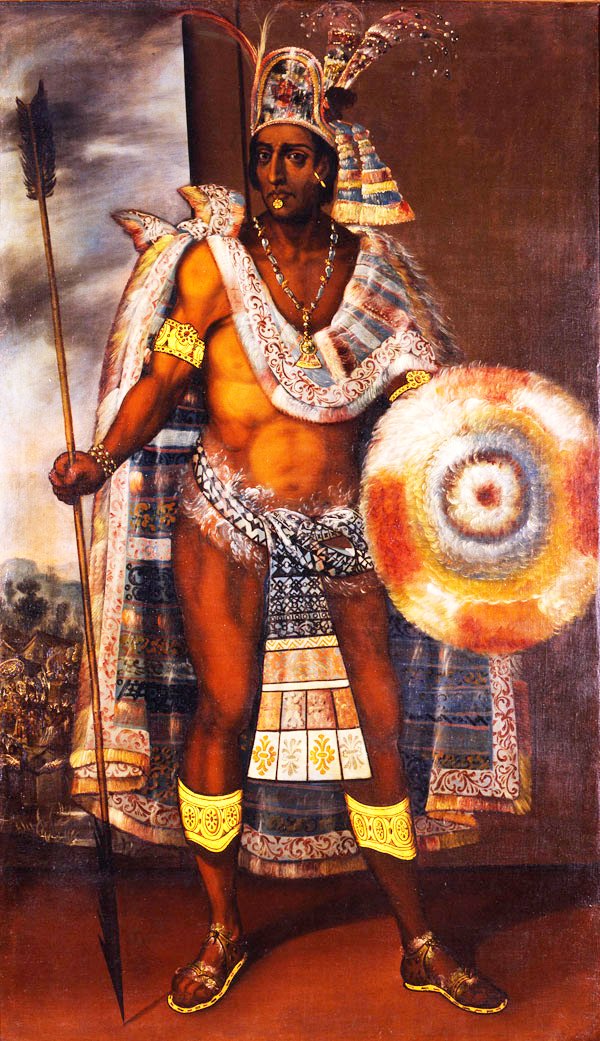
Moctezuma II, born around 1466, was the ninth and most powerful emperor of the Aztec Empire, ruling from approximately 1502 until his death in 1520.
He inherited a vast empire and expanded it further through military campaigns, pushing Aztec territory south into Chiapas and incorporating the Zapotec and Yopi peoples.
His early reign was marked by famine, drought, and rebellion, yet he managed to suppress revolts across his domain and keep the empire functioning through a combination of military force and taxation.
He was known for centralizing power around himself, stripping commoners of roles in the royal court and widening the gap between nobles and ordinary people, policies that created deep resentment among the population.
The first warning signs of what was to come arrived in 1518, when Moctezuma received reports of strange ships along the eastern coast of his empire.
When Hernán Cortés arrived in 1519 with a relatively small Spanish force, Moctezuma was already aware and sent emissaries and lavish gifts, possibly attempting to gauge the newcomers while asserting his own prestige.
On November 8, 1519, Moctezuma personally met Cortés on the great causeway leading into Tenochtitlan, an exchange of greetings that masked a deeply dangerous moment in Aztec history.
Just six days after that meeting, Moctezuma was taken prisoner inside his own palace by the Spanish, with Cortés later admitting he did so to prevent losing control over a situation where his small force was deep inside enemy territory.
Though technically still treated with the outward respect due an emperor, Moctezuma had effectively lost all real power, with the Spanish overseeing nearly every aspect of his activities.
His own nobility grew increasingly furious watching their emperor serve as a cooperative hostage, and tensions built steadily inside Tenochtitlan throughout the following months.
A massacre carried out by Spanish soldiers at the Great Temple during a religious ceremony, while Cortés was away dealing with a rival Spanish force, pushed Aztec anger past the breaking point.
When Cortés returned, full-scale urban warfare had erupted throughout the capital, and the Spanish forced Moctezuma to appear before his people from a palace balcony in an attempt to calm the fighting.
The Aztecs, who had by then rejected Moctezuma as a traitor to his own people, responded with a barrage of stones and projectiles, striking him in the head, arm, and leg.
According to Spanish accounts, Moctezuma refused medical treatment after being hit and died of his wounds on June 29, 1520, though indigenous sources give a darker account, suggesting he was killed directly by the Spanish before his body was cast out.
After his death, the Spanish were driven from Tenochtitlan in the chaotic and bloody retreat known as La Noche Triste, forced to flee to their Tlaxcalan allies to regroup.
His successor Cuitláhuac died of smallpox within months, and the young Cuauhtémoc took the throne only to face the final Spanish siege of Tenochtitlan, which ended with the complete fall of the Aztec Empire on August 13, 1521.
The fall of Moctezuma II and the subsequent collapse of the Aztec Empire fundamentally reshaped the entire Western Hemisphere, ending one of the most sophisticated civilizations in the ancient world and opening the door to three centuries of Spanish colonial rule over Mesoamerica. The destruction of Tenochtitlan, once a city larger than most European capitals, erased a complex political, religious, and economic system almost overnight, replacing it with the Viceroyalty of New Spain. The displacement of the indigenous population, combined with catastrophic European diseases that killed millions, permanently altered the demographic and cultural landscape of Mexico, leaving a legacy of colonial trauma, cultural loss, and blended identity that continues to shape Mexican society to this day.
#archaeohistories
English
@vangoghmuseum He was a great artist. But he had no ear for music
English

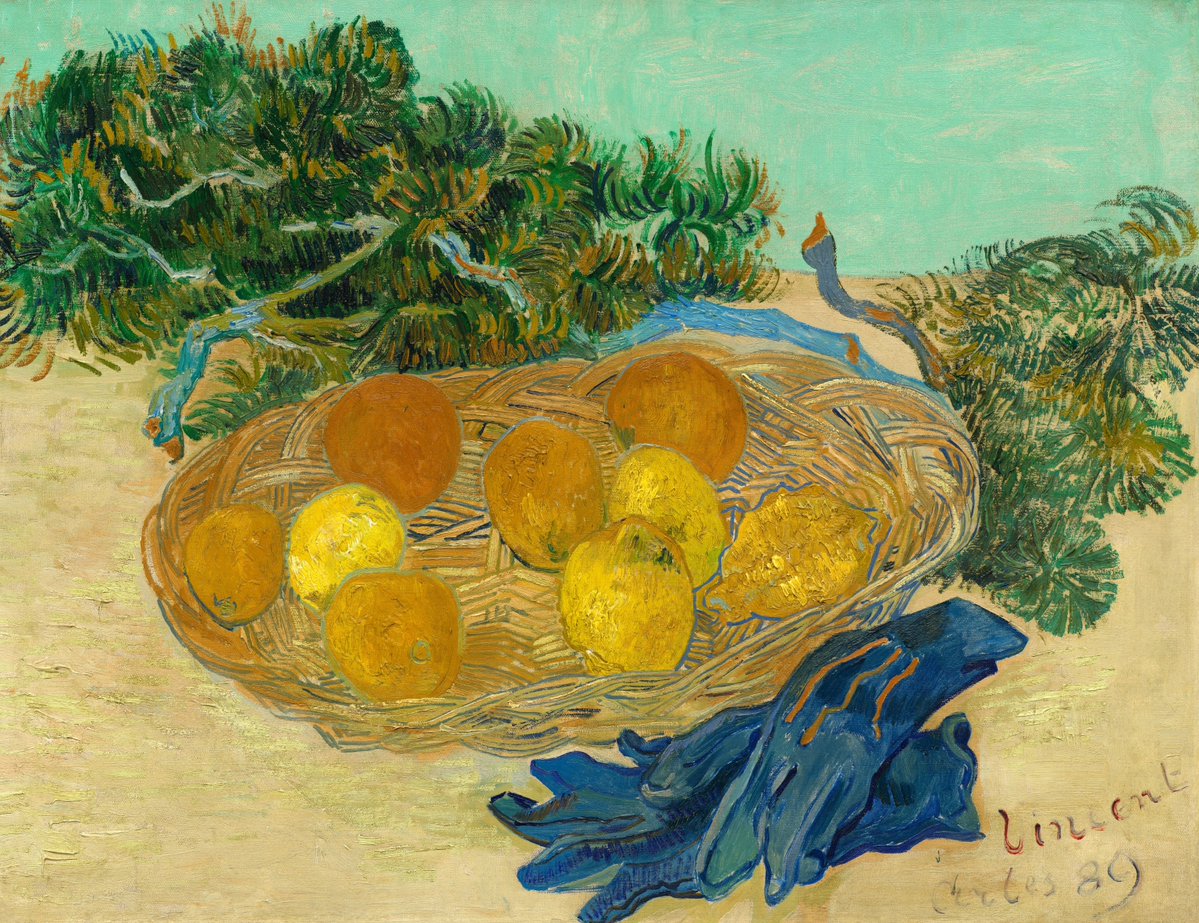
This painting was made in a fragile moment. Painted soon after Van Gogh was discharged from hospital, this still life carries more than bright citrus 🍋🍊
In a letter to his brother Theo (23 January, 1889), he mentions creating this painting alongside several other matters, including the need to make money through picture sales. So while painting this work, he likely had the market in mind.
Look closer: the woven basket, prickly cypress branches, and even a pair of blue garden gloves. Van Gogh said it had ‘an almost chic little look to it.’ ✨
🖼️ ‘Still Life of Oranges and Lemons with Blue Gloves’, 1889 © National Gallery of Art, Washington
English
@TrumpsHurricane I just read all the comments. Not one is supporting your big move. Nobody cares. NOBODY. Take Uncle Shmuky with you before his glasses actually fall off his nose
English


@TrumpsHurricane You should move because of your Uncle the self hating Jew. Btw NOBODY will miss you
English

Popular transgender advocate and social media personality Dylan Mulvaney fired back at President Trump about her gender.
Do you consider Dylan Mulvaney to be a woman?♀️

English
@Pamiej2025 @archeohistories Wonderful? He should have helped her much earlier before he died!!
English

@archeohistories How wonderful that he clearly recognized her difficult life and remembered her in his will
English
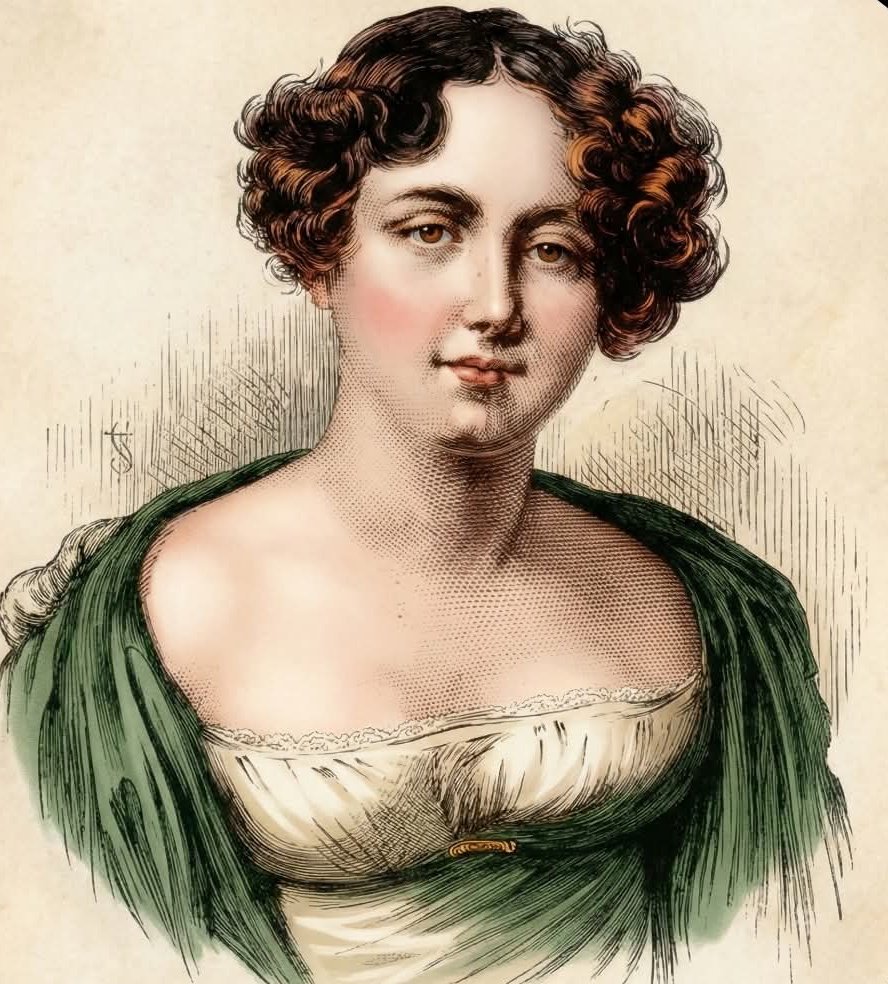
Boston, 1712. The midwife hands a baby girl to her mother. Fifteenth child in the Franklin household. They name her Jane...
Seven years later, another baby arrives. A boy. Benjamin. Number seventeen.
Same parents. Same cramped house. Same poverty. Two children who will share almost identical genetic potential. But their lives will split so completely that 250 years later, one name will be on currency and in every history textbook, while the other will be barely a whisper in footnotes.
Jane Franklin married at fifteen. Not for love. For subtraction. One less mouth for her parents to feed. Her husband Edward made saddles, which meant irregular income and a future of counting pennies until her fingers ached. Her brother Benjamin left home around the same time. Learned printing. Moved to Philadelphia. Started climbing.
Jane started something else. Pregnancy. Twelve times in twenty-two years. Her body became a factory of life that kept delivering heartbreak. The babies came, and then they left. Josiah at five years old. Sarah as a toddler. Benjamin at three. Another Jane at seven. The names blur together in colonial death records, assuming there were records at all.
Eleven of her twelve children died before she did.
While Benjamin Franklin sat in London drawing rooms discussing natural philosophy, Jane sat in Boston doing arithmetic that meant survival. Three shillings for rent. Can we afford candles this week? How much soap can I make before my hands crack open?
She wasn't less intelligent than her famous brother. Her letters prove a mind just as sharp, just as curious. She read everything she could find. She understood politics deeply. She thought in complex, elegant sentences.
But intelligence without access is just potential that evaporates. Benjamin got apprenticeship and patronage. Jane got a husband whose mind deteriorated, leaving her as sole provider for a household that kept expanding and collapsing in cycles of birth and death.
She made soap. Took in boarders. Sewed by candlelight until her vision blurred. Became the communication center for the entire Franklin family network, coordinating help and resources, invisible infrastructure that held everything together.
When Benjamin died in 1790, twenty thousand people attended his funeral. France mourned. He'd secured his legacy as a founder, inventor, diplomat. He left Jane a house and income. She was seventy-eight. For the first time in sixty-three years of marriage, she had financial security. She lived four more years before dying quietly in Boston.
Same family. Same intelligence. Wildly different outcomes based entirely on which body they were born into.
📷© Bodoklecksel (Wikimedia Commons) / Die grossen Polarexpeditionen London 1978 (Restored & Colorized)
© Daughters of Time
#archaeohistories
English