Arvo - Crypto & Macro Flows

598 posts

Arvo - Crypto & Macro Flows banner
Arvo - Crypto & Macro Flows

Arvo - Crypto & Macro Flows

@ArvoFlows

Observing the crypto space through a clinical lens. Registering capital flows, liquidity cycles, and macro-regimes. Systematic analysis. NFA.

Katılım Şubat 2026
211 Takip Edilen189 Takipçiler
Sabitlenmiş Tweet
Arvo - Crypto & Macro Flows
Arvo - Crypto & Macro Flows@ArvoFlows·
Bottoms take time. If this cycle rhymes with prior post-halving structures (anchored from Apr 19, 2024), the “time window” math points to mid/late 2026: 2012 trace (777d) → Jun 4, 2026 2016 trace (889d) → Sep 24, 2026 2020 trace (925d) → Oct 30, 2026 So yes: June–December 2026 is the broad zone, with a Sep–Nov cluster if history repeats. Timing analogs are useful, but they’re not a trigger. The bottom is a process, usually defined by: • leverage getting cleaned out, then staying clean • spot demand returning (real bids, not just futures flips) • macro volatility calming down enough for risk appetite to stick Until those conditions show up, the window is just a calendar. When they do, the calendar suddenly matters a lot.
CryptoQuant.com@cryptoquant_com

Bottoms take time. If this cycle mirrors past structures from April 19, 2024: 2012 trace (777 days) → June 4, 2026 • 2016 trace (889 days) → September 24, 2026 • 2020 trace (925 days) → October 30, 2026. That puts the broader timing window in June–December 2026. Historically, the sweet spot clusters around September–November 2026.

English
3
1
6
154
CoreZone
CoreZone@Corezonein·
@ArvoFlows Right now I see potential in AMD. We’re in a massive consolidation expecting a manipulation move (dip even below 1k), then building a buy model 🤝
English
1
0
1
39
CoreZone
CoreZone@Corezonein·
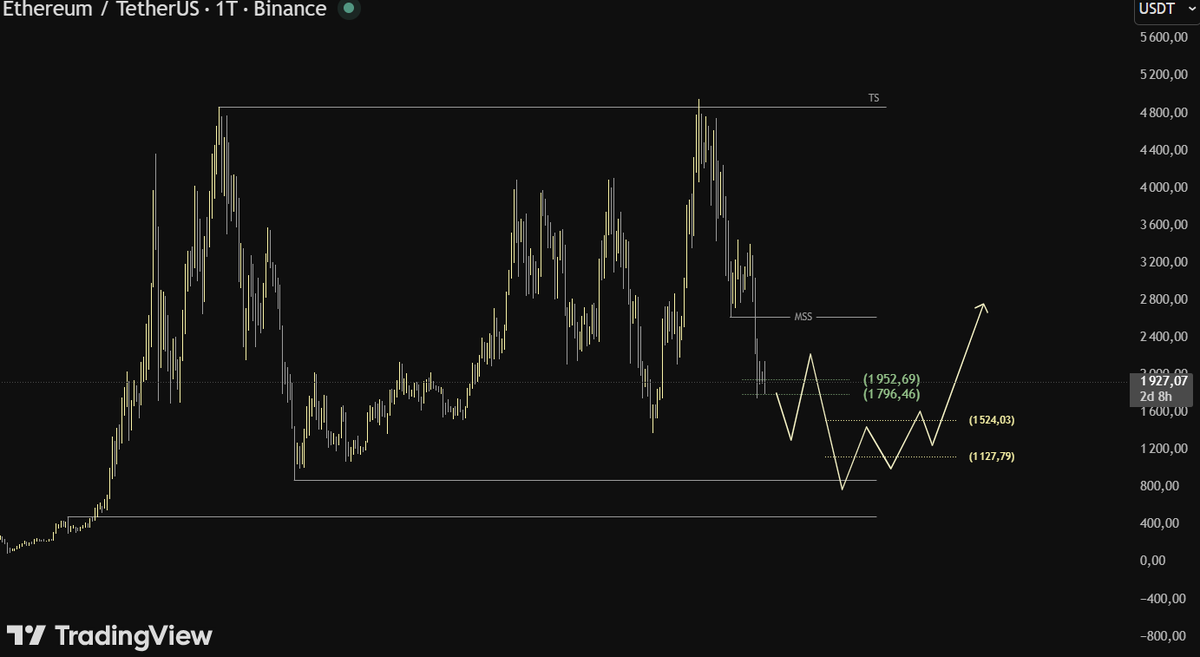
🔸ETH plan for playing out the bear market, i think it's simple and clear. ▪️Currently, the Golden Pocket (GP) is holding us; if this downward move doesn't slow down, I expect OTE levels as the next support. We're in one massive consolidation on ETH. ▪️In the bear market, I anticipate a manipulative move (around 1k), followed by a solid upward distribution. Levels above 7k are realistic, but for now, I won't analyze them since the market is in bear mode. ▫️If you want more analyses and content on this channel please follow-comment-heart. #ETH #CryptoMarket
CoreZone tweet media
English
1
0
5
201
Arvo - Crypto & Macro Flows
Arvo - Crypto & Macro Flows@ArvoFlows·
Bottoms take time. If this cycle rhymes with prior post-halving structures (anchored from Apr 19, 2024), the “time window” math points to mid/late 2026: 2012 trace (777d) → Jun 4, 2026 2016 trace (889d) → Sep 24, 2026 2020 trace (925d) → Oct 30, 2026 So yes: June–December 2026 is the broad zone, with a Sep–Nov cluster if history repeats. Timing analogs are useful, but they’re not a trigger. The bottom is a process, usually defined by: • leverage getting cleaned out, then staying clean • spot demand returning (real bids, not just futures flips) • macro volatility calming down enough for risk appetite to stick Until those conditions show up, the window is just a calendar. When they do, the calendar suddenly matters a lot.
CryptoQuant.com@cryptoquant_com

Bottoms take time. If this cycle mirrors past structures from April 19, 2024: 2012 trace (777 days) → June 4, 2026 • 2016 trace (889 days) → September 24, 2026 • 2020 trace (925 days) → October 30, 2026. That puts the broader timing window in June–December 2026. Historically, the sweet spot clusters around September–November 2026.

English
3
1
6
154
Merlijn The Trader
Merlijn The Trader@MerlijnTrader·
ETHEREUM IS REPLAYING A CLASSIC MASTER PATTERN. Major rally. Rejection. Retest. Reload This exact sequence has launched some of the biggest moves in market history. $5.1K is the final gate. Break it clean… and $ETH enters price discovery mode Don’t sleep on the quiet before expansion.
English
54
60
325
56.8K
The Daily Bitcoin 💎
The Daily Bitcoin 💎@TheDailyBitcoin·
GN. 🚨 Crypto, DeFi & Market Moves: 🔹 NASDAQ files with the #SEC to list the VanEck JitoSOL ETF — first U.S. exchange filing for a liquid staking token ETP 📈 🔹 Bybit intercepts $300M in impersonation scams and fraudulent withdrawals in Q4 2025 🛡️ 🔹 Jack Dorsey’s Block Inc buys 103 more #Bitcoin, bringing total holdings to 8,883 $BTC ₿ 🔹 Ethereum launches Project Odin to help public goods teams build long-term operational and financial resilience 🟣 🔹 Bloomberg and Kaiko partner to bring licensed financial data on-chain for tokenized U.S. Treasuries and repo markets on Canton Network 🌐
The Daily Bitcoin 💎 tweet mediaThe Daily Bitcoin 💎 tweet media
English
8
2
18
207
Cointelegraph
Cointelegraph@Cointelegraph·
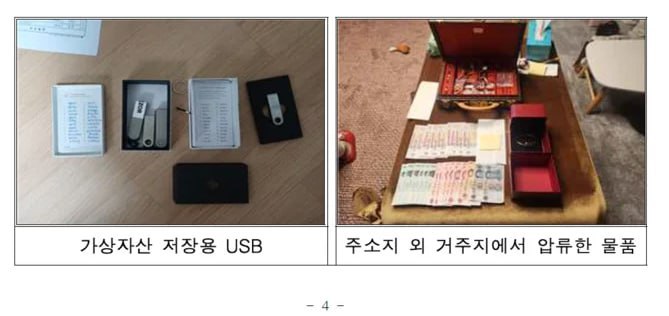
🚨 ALERT: South Korea’s tax agency accidentally leaked a crypto wallet seed phrase in a press release, leading to a $4.8M token theft.
Cointelegraph tweet media
English
122
96
672
152.6K
Ted
Ted@TedPillows·
President Trump says he want to make a deal with Iran. Trump also said that he's not happy with Iran negotiations and they can't have nuclear weapons.
English
69
16
338
26.5K
The Wolf Of All Streets
The Wolf Of All Streets@scottmelker·
UPDATE: U.S. SPOT $BTC ETFS SEE $1.1B INFLOWS IN 3 DAYS
English
34
21
480
27.5K
Brian Armstrong
Brian Armstrong@brian_armstrong·
We’re working hard to make @base the best place to innovate and build the next set of products that will accelerate crypto adoption. If you’re working on something cool, reach out to the team so they can support!
Base Build@buildonbase

All the builders at ETH Denver were locked in this year. @jessepollak and @Nick_Prince12 went over how Base makes it easier for them by focusing on their needs and removing complexity with onchain tooling E.g. a fully subsidized paymaster via gas credits, Base account, and more:

English
171
82
618
66.3K
MSB Intel
MSB Intel@MSBIntel·
Elon Musk says in 36 months, the cheapest place to run AI will be space. "You can mark my words. In 36 months, but probably closer to 30 months, the most economically compelling place to put AI will be space. It will then get ridiculously better to be in space. The only place you can really scale is space. You can't scale very much on Earth."
English
23
5
59
13K
CoinMarketCap
CoinMarketCap@CoinMarketCap·
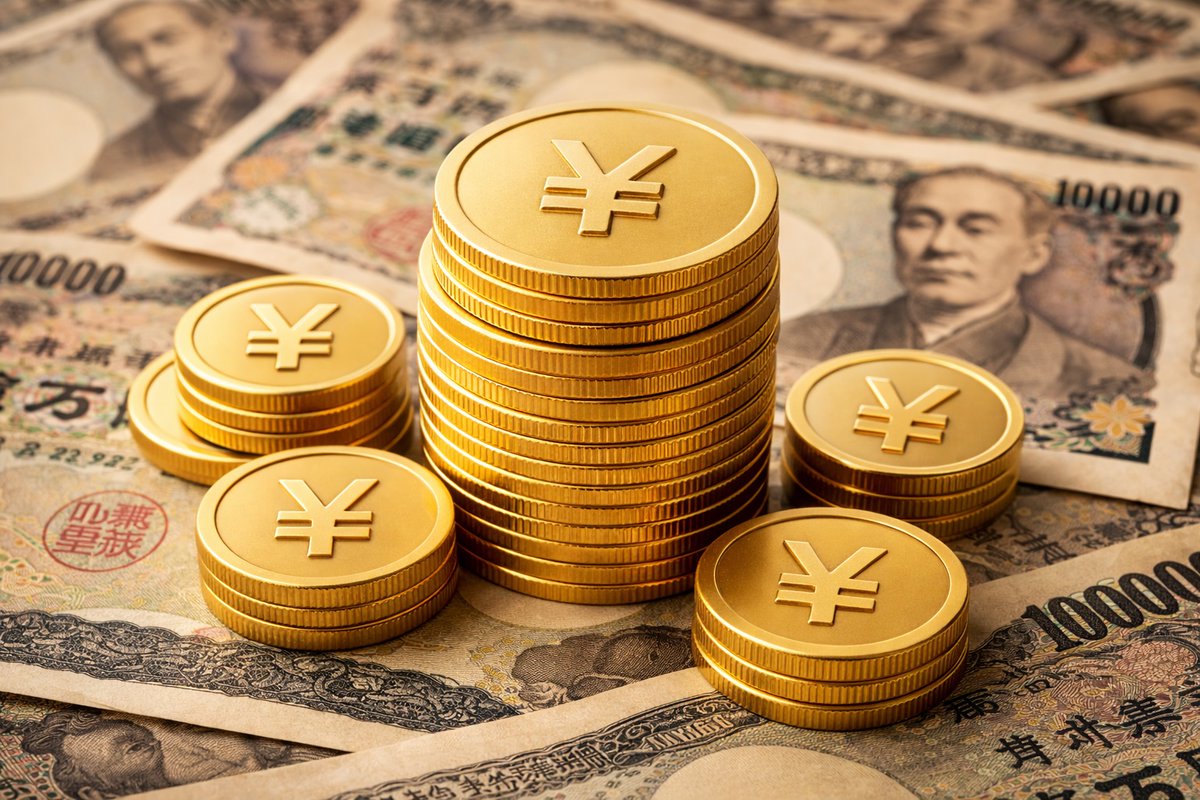
LATEST: ⚡ SBI and Startale unveiled JPYSC, Japan's first trust bank-backed yen stablecoin targeting institutional payments and cross-border settlement, with a Q2 2026 launch expected.
CoinMarketCap tweet mediaCoinMarketCap tweet media
English
39
52
211
22.8K
Crypto Rover
Crypto Rover@cryptorover·
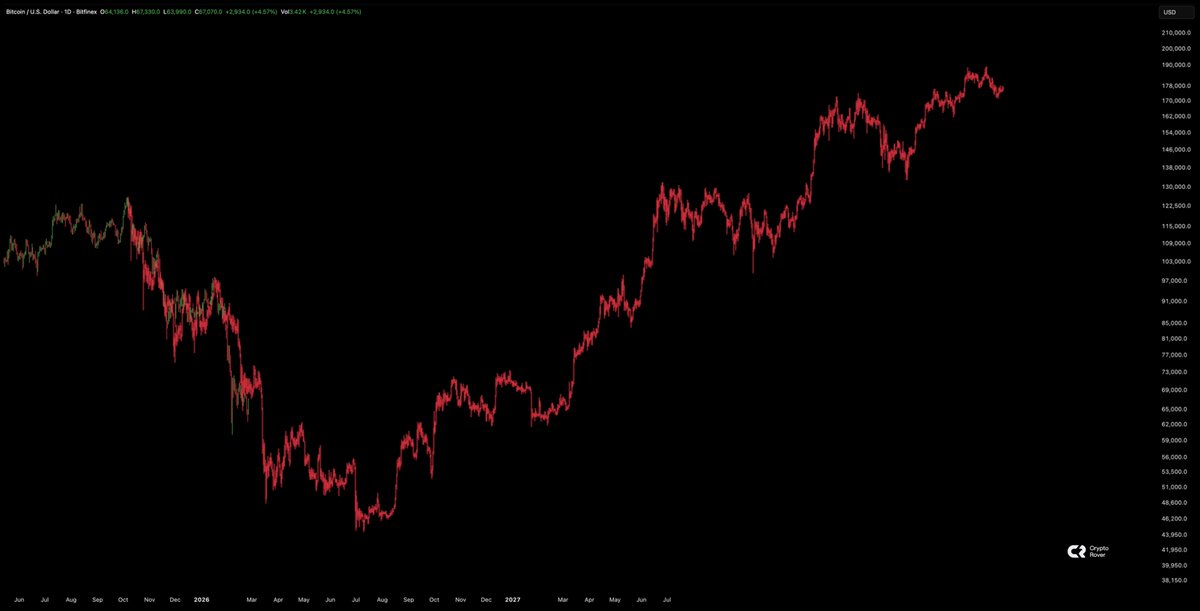
So far, price action is mirroring the 2022 bear market with insane precision... 😳
Crypto Rover tweet media
English
121
54
293
61.5K
Arvo - Crypto & Macro Flows
Arvo - Crypto & Macro Flows@ArvoFlows·
@AltcoinDaily Pensions don’t need BTC exposure, they need liquidity. Collateralized BTC loans are just a structured way to borrow dollars without selling.
English
0
0
1
156
Altcoin Daily
Altcoin Daily@AltcoinDaily·
Bitcoin as loan collateral can lower risk and volatility for pension plans. 🇺🇸 Newmarket Capital CEO Andrew Hohns explains on CNBC how #Bitcoin backed loans reduce their risk.
English
64
69
492
42.8K
Cointelegraph
Cointelegraph@Cointelegraph·
⚡️ LATEST: Vitalik Buterin outlined a roadmap for Ethereum to become quantum-resistant by replacing vulnerable cryptography with hash-based signatures, STARK proofs, and new account infrastructure.
Cointelegraph tweet mediaCointelegraph tweet media
English
117
127
878
48.1K
Bitcoin Magazine
Bitcoin Magazine@BitcoinMagazine·
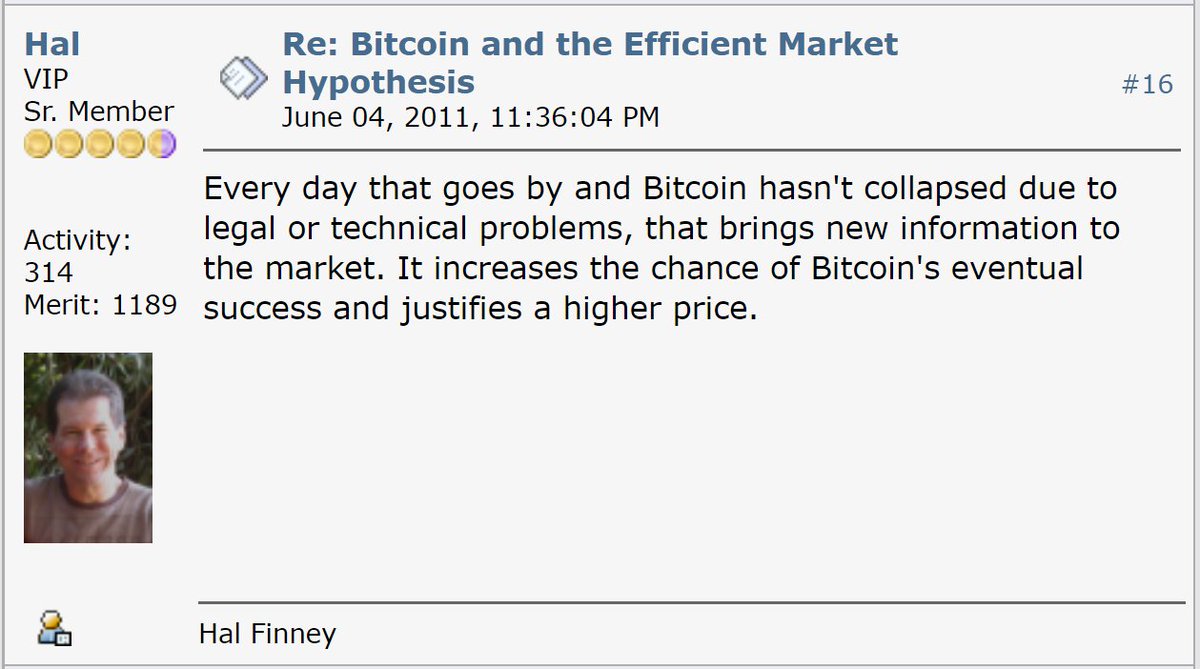
Hal Finney on Bitcoin price in 2011 ✨ "Every day that goes by and Bitcoin hasn't collapsed due to legal or technical problems...increases the chance of Bitcoin's eventual success and justifies a higher price."
Bitcoin Magazine tweet media
English
84
174
900
45.6K
Arvo - Crypto & Macro Flows
Arvo - Crypto & Macro Flows@ArvoFlows·
@TedPillows Quantum resistance is basically Ethereum planning for an attacker that doesn’t exist yet, while still keeping fees survivable. Hard problem, solid roadmap.
English
7
0
5
518
Ted
Ted@TedPillows·
$ETH ❤️
vitalik.eth@VitalikButerin

Now, the quantum resistance roadmap. Today, four things in Ethereum are quantum-vulnerable: * consensus-layer BLS signatures * data availability (KZG commitments+proofs) * EOA signatures (ECDSA) * Application-layer ZK proofs (KZG or groth16) We can tackle these step by step: ## Consensus-layer signatures Lean consensus includes fully replacing BLS signatures with hash-based signatures (some variant of Winternitz), and using STARKs to do aggregation. Before lean finality, we stand a good chance of getting the Lean available chain. This also involves hash-based signatures, but there are much fewer signatures (eg. 256-1024 per slot), so we do not need STARKs for aggregation. One important thing upstream of this is choosing the hash function. This may be "Ethereum's last hash function", so it's important to choose wisely. Conventional hashes are too slow, and the most aggressive forms of Poseidon have taken hits on their security analysis recently. Likely options are: * Poseidon2 plus extra rounds, potentially non-arithmetic layers (eg. Monolith) mixed in * Poseidon1 (the older version of Poseidon, not vulnerable to any of the recent attacks on Poseidon2, but 2x slower) * BLAKE3 or similar (take the most efficient conventional hash we know) ## Data availability Today, we rely pretty heavily on KZG for erasure coding. We could move to STARKs, but this has two problems: 1. If we want to do 2D DAS, then our current setup for this relies on the "linearity" property of KZG commitments; with STARKs we don't have that. However, our current thinking is that it should be sufficient given our scale targets to just max out 1D DAS (ie. PeerDAS). Ethereum is taking a more conservative posture, it's not trying to be a high-scale data layer for the world. 2. We need proofs that erasure coded blobs are correctly constructed. KZG does this "for free". STARKs can substitute, but a STARK is ... bigger than a blob. So you need recursive starks (though there's also alternative techniques, that have their own tradeoffs). This is okay, but the logistics of this get harder if you want to support distributed blob selection. Summary: it's manageable, but there's a lot of engineering work to do. ## EOA signatures Here, the answer is clear: we add native AA (see eips.ethereum.org/EIPS/eip-8141 ), so that we get first-class accounts that can use any signature algorithm. However, to make this work, we also need quantum-resistant signature algorithms to actually be viable. ECDSA signature verification costs 3000 gas. Quantum-resistant signatures are ... much much larger and heavier to verify. We know of quantum-resistant hash-based signatures that are in the ~200k gas range to verify. We also know of lattice-based quantum-resistant signatures. Today, these are extremely inefficient to verify. However, there is work on vectorized math precompiles, that let you perform operations (+, *, %, dot product, also NTT / butterfly permutations) that are at the core of lattice math, and also STARKs. This could greatly reduce the gas cost of lattice-based signatures to a similar range, and potentially go even lower. The long-term fix is protocol-layer recursive signature and proof aggregation, which could reduce these gas overheads to near-zero. ## Proofs Today, a ZK-SNARK costs ~300-500k gas. A quantum-resistant STARK is more like 10m gas. The latter is unacceptable for privacy protocols, L2s, and other users of proofs. The solution again is protocol-layer recursive signature and proof aggregation. So let's talk about what this is. In EIP-8141, transactions have the ability to include a "validation frame", during which signature verifications and similar operations are supposed to happen. Validation frames cannot access the outside world, they can only look at their calldata and return a value, and nothing else can look at their calldata. This is designed so that it's possible to replace any validation frame (and its calldata) with a STARK that verifies it (potentially a single STARK for all the validation frames in a block). This way, a block could "contain" a thousand validation frames, each of which contains either a 3 kB signature or even a 256 kB proof, but that 3-256 MB (and the computation needed to verify it) would never come onchain. Instead, it would all get replaced by a proof verifying that the computation is correct. Potentially, this proving does not even need to be done by the block builder. Instead, I envision that it happens at mempool layer: every 500ms, each node could pass along the new valid transactions that it has seen, along with a proof verifying that they are all valid (including having validation frames that match their stated effects). The overhead is static: only one proof per 500ms. Here's a post where I talk about this: ethresear.ch/t/recursive-st… firefly.social/post/farcaster…

QME
45
28
529
57.8K