Ash Maiz

109 posts

Ash Maiz banner
Ash Maiz

Ash Maiz

@AshMaiz

Now a Christian, I am a former orthodox Jew, who discovered the Christianity is the truth, and I seek to demonstrate that

Katılım Kasım 2025
26 Takip Edilen3.2K Takipçiler
Ash Maiz
Ash Maiz@AshMaiz·
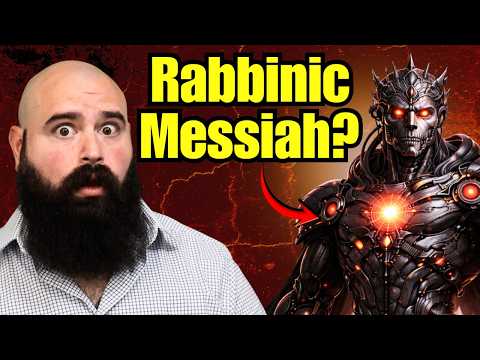
Today is the last day of Passover outside of Israel. And thousands and thousands of Jewish people in chabad some other Jewish movements, will be celebrating what is known as Seudat Mashiach, Or the meal of the Messiah. or messianic meal. I would like to remind all my fellow Jews that you started this holiday with the breaking of the middle of three breads (unleavened) rather than the customary two, breaking the middle one, wrapping it in cloth and resurrecting it at the end of your meal around the time of the cup of Elijah the prophet, In memory of the Passover Lamb. Those first days celebrating and remembering the Exodus, mystically participating as it were in The Exodus from Egypt, were done with symbolism related to the crucifixion and Resurrection of Jesus, and now many of you are celebrating another symbolic Feast celebrating the final coming of the Messiah. Time to wake up.
English
2
3
17
479
Ash Maiz
Ash Maiz@AshMaiz·
@Trent_Horn You were one of the first voices, and the only Catholic on the list, who first convinced me to read the gospels. My baptism (along with my wife and children) will be this Saturday. Unlikely though I'm sure it would be. You are most certainly invited. God bless you and your family.
English
4
2
17
518
Ash Maiz
Ash Maiz@AshMaiz·
Take a look at these awesome products I just launched, with more to come. shop.ashmaiz.com
English
2
0
2
326
Ash Maiz
Ash Maiz@AshMaiz·
You have but little love if you are not zealous for the salvation of all souls. You have but poor love if you are not eager to inspire other apostles with your craziness. - St. Josemaria Escriva
English
0
1
19
434
Ash Maiz
Ash Maiz@AshMaiz·
@LilaGraceRose you will turn Jews away from Christ and away from his church if you lie to them. You release a video titled "how I converted from ORTHODOX Judaism to Christianity" however the man you interviewed in said video is about as Jewish as I am a duck billed platypus. You should at the very least change the title of the video as not to deceive people because once again, Orthodox Jews (who I assume you really do want to bring to Christ) will smell the deception a mile away, it will harden their hearts and you will turn them away from the church. It's okay to make mistakes. Fix this one please before you damage the efforts of people who actually do come from ORTHODOX Judaism, and actually are effective in bringing Jews to Christ.
Ash Maiz tweet media
English
4
2
40
756
Ash Maiz
Ash Maiz@AshMaiz·
If you support war with Iran for political or strategic reasons, fine. Make the case. I may very well agree. But if you think Donald Trump and Benjamin Netanyahu are divinely ordained to trigger the end times, you shouldn’t be pastoring a church, teaching as a Rabbi or running a government program. You should be checking yourself into a mental hospital.
English
3
1
34
668
Ash Maiz
Ash Maiz@AshMaiz·
Has anyone else noticed that since the Epstein files have come out, a lot of social media companies have removed the gallows and guillotine related gifs? Odd...🤣
English
0
3
12
428
Ash Maiz retweetledi
Scriptorium Press
Scriptorium Press@ScriptoriumP·
Do the Church's hymns honour the Virgin Mary and the saints excessively? An excellent presentation by @barrelagedfaith!
English
1
3
28
2.6K
Ash Maiz retweetledi
Pretty White for a Melkite
Pretty White for a Melkite@PWFAM1724·
Fr. Flavian Kafouri (1802 AD – 1886 AD), Chouerite. Youssef Al-Kafouri was born in the Mar Yohanna neighborhood at the beginning of the year 1802 during the lifetime of his paternal uncle, Father Markos, who was the first of the Kafouri family to enter the monastery. He was raised properly by his parents, Mansour and Katora. Since his childhood, he had a melodious, sweet voice, so he learned church hymns and Greek tunes at the hands of the monks. At that time, his soul longed to embrace the holy calling, and when the General Superior and the monks knew his desire, they welcomed him after he was 18. On August 25, 1820, he put on the monastic habit in the Monastery of Saint John, and was called by the name of Markos (like his Uncle). He began to study and gain knowledge from the virtuous monks who competed to teach him, especially when they saw him diligent and eager, characterized by gentleness and humility, especially because of the softness of his voice. He was very inclined towards church music, liturgical melodies and the rhythms arranged in Greek music, so he mastered this art until he became a skilled teacher, and throughout his life he taught it to the young monks. After completing the novitiate, he took vows on April 23, 1822 and was called by the name Flavian. He remained persevering in studying, reading, theology and other sciences. On April 23, 1824, he went by order of the General Superior to Zahle, where he was ordained a Deacon by its bishop, His Eminence Bishop Ignatius Ajouri. On December 26, 1826, he was ordained a priest by His Eminence Patriarch Ignatius (V) Qattan. After his ordination, he was sent to Beirut to take over its episcopal school. He performed this function for a full year, during which he was considered by all the people of Beirut. In 1827, His Beatitude appointed him as a patriarchal vicar over the aforementioned diocese, which was still a widow of its bishop, Bishop Athanasius Dahan. The intention was to include him in the episcopate, but when he learned of this intention, he apologized to him and drew his attention to Father Yacoub Al-Riyashi. Thus, after a while, His Beatitude summoned the aforementioned Father Yacoub Al-Riyashi and appointed him a bishop over the Beirut diocese in 1828. Flavian remained in Beirut, and he gained the trust of the community as a whole, and he was loved by all the people. Until the year 1835, when the monks met in the Monastery of the Painter, and they chose Father Flavian for the general presidency of the monks. Since the fathers of the council were aware of this, he was well-known for his disposition and his disdain for positions. They sought help from the aforementioned bishop, who ruled that he should accept the position because God was calling him to it. At first, he pretended to accept and went secretly from Beirut to the Monastery of Saint Simon the Stylite instead of going to the Monastery of Saint John the Painter. Finally, when he saw that the monks were determined to elect him, he accepted the position. This was his first presidency, which was on October 12, 1835. When he took over the reins of presidency, he began first by reforming the monastic system, not allowing anyone to have the slightest shortcoming in keeping the law, whether great or small, until he astonished everyone with his firm measures combined with gentleness and strictness together. In the meantime, the community in Egypt requested from His Beatitude Patriarch Maximus (III) Mazloum, in a petition signed by the Head of the Egyptian nation. In the translator’s request, he was to be their bishop and their election was signed by consensus. The blessed one held a council in Ain Traz and informed the bishops about this matter and decided that the election was illegal because it was without his knowledge, and the Egyptian country was directly subject to him. After communicating with the bishops, the council decided to ordain him as a bishop. He would be a patriarchal deputy and remain under the presidency of the blessed one. On December 6, 1835, Flavian arrived in Ain Traz and His Beatitude the Patriarch informed him of the Synod’s decision to ordain him as a bishop and patriarchal vicar over Egypt. He apologized to the blessed one and the council, but the Patriarch replied that it was not possible except to satisfy the Egyptian people by ordaining him as their bishop because they were officially requesting him. He promised the blessed one and the council to ordain for them his relative, Father Youssef, who was then in Egypt and was called Basil, and he promised them to convince them. And so he sent letters to the Egyptian people and the Head of the community convincing them of the above that this was the will of God and the will of the Patriarch and that everything he ordained for them they had fulfilled with all precision. In the year 1838, the general presidency was renewed, and he remained until March 31, 1842, when the general council was held. He then resigned from all duties, but he only agreed to continue teaching the monks the church hymns and Greek music. In the year 1845, he was elected first administrator, and remained its teacher as he was. In the year 1848, he went to seek the blessing of visiting the Holy Land and witnessed the Jerusalem Council held under the presidency of Patriarch Maximus Mazloum. After the end of the council, he returned to Beirut. He was aware of the monasticism’s hardship and financial difficulties. He intended to travel to America to collect the necessary donations for the reforms he wanted to introduce into the monastic order for its literary and moral success, and especially to establish a high school for the monastic order so that its sons could graduate with the sciences necessary for the politics and education of the people. He obtained permission from His Beatitude and the legal superiors. He traveled to America on September 8, 1849. He was the first Eastern Catholic priest to enter the United States, and he remained there for only two years. He was accompanied by his interpreter, Nassif Shadoudi, and he had some success. On his return from America, he went to Rome. He was honored to meet His Holiness Pope Pius IX, who blessed him and bestowed upon him, his family, and his monastic order the apostolic blessing. He visited the shrines of Saints Peter and Paul and the rest of the official sites in the papal court, and he was held in very high esteem by the Vatican authorities. When he arrived at the port of Alexandria in Egypt, he visited his relative Bishop Basilios AKafouri, and his friends. When he arrived in Lebanon in 1851, he found that the Patriarch wanted to ordain him as a bishop of the Baalbek diocese, so he apologized to him and went to the Monastery of Al-Sabbagh. Then he began building the southern portico, which remained for a while called the new portico (the portico of the general superior). In the projects and constructions he carried out in the monastery, after he finished building the aforementioned portico in the Monastery of Mar Youhanna al-Sabbagh, he began building the western portico adjacent to the Church of the Monastery of Mar Antonios al-Qarqafi, and repaired the properties of the monasteries that were in dire need of repair, and bought one hundred acres of vineyards from the lands of Jdita and the lands of Ain al-Asal. He allocated the northern portico of the Monastery of Mar Youhanna to teach beginners. He continued to work until the year 1859 on November 8, when the General Assembly met and elected a general superior. When he came to the city of Zahle, he began building an annex to the monastery church on the western side, and repaired the mill that was named the office in Zahle. He added a stone to it until it became three stones. Then after that, he began building the western portico in the Monastery of Mar Elias al-Tawq after it burned down in the year sixty (1860) of the Druze, the year of the movement that occurred between the Christians and the Druze. Then he built the Church of the Prophet Elias in Al-Khanshara and the Church of Our Lady in the neighborhood, and built the neighborhood of Shubra in Egypt. He bought an olive grove and an oil press in Kafrshaya for the position of General Presidency. He continued for a period of time, the General Presidency being renewed for him. And his determination to work was renewed until the year 1868, when he insisted on the fathers of the General Assembly to leave him for a period so that he could rest from the fatigue of his efforts, so they elected Father Demetrius Al-Jamed as General President, and they hoped that he would remain the first manager and assistant to the General President. (In truth, this esteemed father, Father Demetrius Al-Jamed, had paternal zeal with Flavianus and Economos (Bursar) Youssef Kafouri as well for the good of the monastic order, and he remained with them all the days of his life, preserving true Christian friendship and agreeing on the good of the monastic order morally and materially.) In the year 1871, the General Assembly met in early September, and the votes of the fathers of the Assembly agreed to elect Flavian without accepting any excuse for him. He returned to his work, diligence and vigilance for the good of the monastic order until the year 1880, when he and the fathers of the monastic order decided to build a special school for the monastic order after he had been interested in building it for a long time. He had previously decided after his return from America, and he built the new southern portico, and allocated the northern portico in the same monastery of Mar Youhanna to teach the monks who are qualified to receive higher education. They were previously sent to the Ain Traz school because it was designated for the education of the clergy and all the clergy of the sect, and it did not meet the goal. Then he began building the aforementioned school. When the building was completed, the student monks were transferred to it, and it has remained as it was until now. This is what we were able to know of his projects, works and effects that he made in the monastic order, summarizing what remains. In the year 1864, when the Yellow Fever spread in most parts of Egypt, Syria, Beirut and the Levant, except for Mount Lebanon and other high places. The elderly families of Egypt, Beirut and the Levant fled to the regions of Lebanon to escape the epidemic. A large section of the elite of the community went to the areas of Kenchara, especially because its water is sweet and its springs are clear, and its climate refreshes the heart, as it is surrounded by beautiful types of pine trees, and it is unanimously agreed that its climate heals the sick, and it is near the Monastery of Mar Yohanna. He would send to each family what they needed, and he assigned one of the monks and the guard to watch over everything each family needed. Every so often, he would visit them with all kinds of sweets and the famous cakes made by the nuns, which he would send like a fatherly blessing. At the end of the mentioned summer, when he knew that the epidemic had gone away and most of them were ready to return to their homes, he made them a sumptuous feast in which those fatherly feelings were evident from that noble person. He arranged for them a quantity of sheep to be slaughtered and prepared in the Ain Al-Qalaa park under the famous oak trees. Which existed at that time before the foundation of the monastery and that very beautiful and spacious park. Then he said to them: My children, it is necessary that you take the freedom to go for a walk with each other, and I will go to the monastery and take my freedom with my brothers. At the end of the feast, those people gathered and talked among themselves. The senior among them said that the general president has overwhelmed us with his favors and has won our hearts with his love and the love of the Hannawi Order, whose favors we cannot forget. He began to collect a considerable amount of Alms, which they presented to him and asked him to accept it in order to build a church in Kenchara, because there was only a small church there, which was the old church of Saint Anthony and the church of Saint George. However, they disagreed about the name of the church. Then one of them, named Elias El-Nahhas, stood up and said, I hope that the name of the church will be after the Prophet Elias, and here I am offering twenty pounds in addition to the subscription as assistance, so everyone agreed to this proposal. A delegation of those present went to Flavian and asked him to accept their offering as assistance in building the church. They said that this was not all they wanted to offer, and they apologized to him for this small offering. In fact, such procedures and actions made the people and the monks more obedient to him than they had been during his presidency and throughout his life. Even after the Egyptians left, he became aware that they loved soft Lebanese cheese and fine bulgur (for making kibbeh). So after their arrival, he sent them a quantity of fine cheese and Zahlawi bulgur, known for its quality. As for them, they sent him the monastery’s provisions of rice, a quantity of felt and raw materials, a bale of leather for the monks’ clothing, and a considerable amount of dirhams (currency) to help the monastery. Among his love for his monks and the monastic order in general, the monks unanimously elect him as the general superior and he took over the reins of the monastic order for a long period of years. It was his habit after the bedtime bell rang to inspect the monks’ cells himself. One night, he happened to pass by the door of one of the cells and saw tobacco smoke coming out of the keyhole in the door’s lock. He knocked gently on the door and said, “Through the prayers of our holy fathers, Lord Jesus Christ, have mercy on us", as is the custom, and he left without entering the cell. That monk corrected his behavior without any confrontation. As for his modesty, public manners, patience, endurance, and steadfastness in striving to work for the good of the monastic order and its moral and material success, he was a very vigilant watcher to preserve the manners and monastic perfection that he was his image. He had the habit of never showing his teeth. And when he was forced to smile, he would put his hand over his mouth, and when he ate, no one could tell whether he was moving his mouth or not. Despite his manners, he did not disdain to perform the lowest monastic duties and lowly services. The tone of his voice had a sweet ring to the ears, especially during the times of church celebrations that he represented, arranged, and taught to the monks. When he chanted, you would see angels fluttering above his head and reverence filling the hearts of those present as if there were birds on their heads. They were all staring at his movement coupled with the wonderful order. Among his most special students who took from him some of these beautiful qualities were the late Father George Issa, the famous one who had a hand in establishing the Patriarchal School and was the first to establish it, and Economos Youssef Kafouri and Bishop Agapius Maalouf. These three were among his most special students. Finally, he remained persistent in working in the monastic vineyard and the general presidency was renewed for him until the year 1883, when the general council met. He was exhausted by fatigue and old age and was no longer able to carry out the burdensome duties of the office he had served for nearly half a century. He officially asked the fathers of the council to direct their election to someone else, and with his advice they elected Fr Suleiman al-Shami as General President, Father Youssef Kfoury as first and second administrator, and Agapius Maalouf who later became Bishop of Baalbek. Flavian gave away everything he owned, even his priestly vestments, which he distributed to the monk priests, leaving only a simple habit for himself. He stripped his heart of all worldly debris. To the point that at the end of his life he needed the price of an ounce of milk, which he did not have with him. Thus he spent his righteous life in the service of the Lord, persevering in prayers and meditations until the time of his departure approached. He summoned the monks whom he had raised in the monastery. He asked for their forgiveness, saying to them: Forgive me, my children, and pardon me for my mistakes that I committed against you, and the doubtful example that I set before you. After receiving the divine mysteries, he began to kiss the Holy Cross and asked the Lord Jesus for help in enduring the pains as he himself had endured them for the love of our salvation. He was chanting psalms, spiritual hymns and hymns. While the monks were praying to the Virgin Mary and supplicating, that pure soul flew to the green gardens to receive the crown prepared for her by God Almighty. When the news of his death became known, large crowds from all relatives and neighboring villages flocked to the aforementioned monastery, who were deeply grieved for the loss of that earthly angel and heavenly man. After they held a great mourning for him, attended by the elite of the people, both laymen and clerics, Protosynchelos (Vicar General) Clement Farah delivered a powerful eulogy. He was buried in the tomb designated for famous monastics, in which Patriarch Maximus (II) Hakim, the youth Abdullah Zakher are buried, himself being the third. May his memory be eternal, worthy of blessing and everlasting memory. He died in Deir al-Sabbagh (Monastery of John the Baptist) in the year 1886, on November 30, at the age of 84.
Pretty White for a Melkite tweet media
English
0
3
9
877
Ash Maiz retweetledi
Pretty White for a Melkite
Pretty White for a Melkite@PWFAM1724·
I will start a small series of biographies of Melkites who died in the odor of sanctity: may they be canonized soon! Fr Nicolas Al-Sayegh 1692 - 1756 AD (Chouerite) Nehme Allah Al-Sayegh was born in Aleppo in 1692 to good parents, who raised him on piety and faith. He was bright-minded and intelligent. When they sent him to one of the schools to learn, he showed sharpness of mind & quick wit. After he had acquired the basics of Arabic, his father taught him his trade: goldsmithing. Although he excelled in it, his mind and heart were not satisfied with the pleasures of this world, and was drawn to the lives of religious people & ascetics. He spent his free time visiting churches, praying, visiting pious people, and speaking with priests. Because of his strong inclination towards linguistic and religious sciences, he desired to master them, so he studied morphology, grammar, & rhetoric with Sheikh Suleiman bin Khalid bin Abdul Qadir Al-Hanafi Al-Halabi, known as Al-Nahwi, the great scholar. He studied logic, philosophy and theology with one of the most distinguished Greek Catholic priests, Fr Michael Al-Baja’ Al-Halabi, who obtained a certificate of excellence from Rome. After returning to his homeland, he was promoted to the rank of “Economos” (Diocesan Bursar). He also studied under the secretary of Patriarch Stephan Al-Duwaihi: Father Boutros Al-Tulawi Al-Maronite. The Patriarch sent him to continue studies at the Maronite School in Aleppo, He studied Italian and Latin there. Because of his skill and great status, he was given the nickname – Star of the East. He also studied under Germanos Farhat, the famous Maronite bishop. Fr. Louis Cheikho S.J. who translated these two scholars, said: “They were like two stars in the sky of the Catholic Church, and even like two brothers in its service.” 1716, Nicola, intending to become a monk, left his hometown and headed to Lebanon, where he visited monasteries. When he arrived at the Monastery of Mar Youhanna al-Sabbagh, and met its monks - many were from Aleppo, who realized that he possessed high qualities, they welcomed him, so he decided to become a monk there. His arrival there was on Saturday after Ascension Thursday in May 1716. A few days later, he entered the Noviciate. In 1719, he was promoted to the rank of priesthood by Selseftros Al-Dahan, Bishop of Beirut. Afterward, he began to move from one village to another advising and preaching, bringing a significant number of people to Catholicism, and he helped to send priests in the towns and villages surrounding Shweir. In 1727, he was elected head of the Chouerite order, and was continuously re-elected until the end of his life. His death was at the Monastery of the Archangel Michael in Zouk on December 17, 1756. Before his death, he asked the monks who had gathered for a general assembly to relieve him of his tenure, but they refused. FrLouis Cheikho said: “When he saw that they did not listen to his pleas, he said to them: If you do not excuse me, God Himself will excuse me. He said that as if the matter had been revealed to him by God. “The next day, the day he attended the recitation of the office and offered the divine sacrifice. After giving thanks, he went up to his room in perfect health, called the senior monks, and gave them his last instructions, as if he were bidding them a final farewell. While he was talking to them, his body felt weak, followed by a severe fever. He received the Holy Mysteries with all piety and reverence, and was anointed with the last anointing by the hand of Mr. Athanasius Dahan, Metropolitan of Beirut. Meanwhile, the monks had gathered at his bedside, and the dying man bid them farewell, urging them to persevere in their calling and to maintain the high duties of their monastic life. He blessed them, then took the Holy Cross in his hand, kissed it, and pressed it to his chest, and gave up his spirit with all simplicity.”
Pretty White for a Melkite tweet media
English
3
8
32
2.5K
Ash Maiz retweetledi
Pretty White for a Melkite
Pretty White for a Melkite@PWFAM1724·
Archimandrite Theophan Akke (Choerite): Amin Akke was born in Damascus in 1878. There, he and his ten brothers and two sisters were raised by virtuous parents in the Bab Musalla neighborhood. At the age of six, he entered the Cathedral School in Damascus, whose head at that time was His Eminence Bishop Nicholas, the judge of the Metropolitanate of Hauran. It was not long before signs of intelligence and cleverness appeared in him, coupled with a good heart, a sound mind, and a balanced conduct. His teachers began to see good in him and dream of a bright future for him. After His Eminence the Bishop consulted his student and his family, he sent him to the School of Saint Anne in Jerusalem. He studied there for four years, during which he was a good example for his peers and a living example of a keen mind and diligence. However, he was not in good health to help him complete his studies, so he was forced, reluctantly, to leave the seminary and return to his homeland for health reasons. However, he remained committed to his priestly calling. His health improved after a little rest, so he headed to the Monastery of Saint John the Baptist in Choueir, knocking on its door to join the Monastic Order, whose general superior at that time was the famous Economos Youssef Kfoury. Amin put on the novitiate’s robe on the first of May 1895 and was called Theophan. After spending two years of novitiate in the monastery, he accepted, with great comfort, to take the monastic vows on the sixth of August 1896. After completing all his studies, he was appointed a teacher in the same monastery’s school for four years, during which he was an example of a good educator and a caring father. In recognition of his talents, intelligence, and zeal for the interests of the monastic order, he was then appointed director of the Oriental College in Zahle, whose head at that time was Father Boulos Kfoury. He was ordained Deacon on December 21, 1903 by Bishop Meletius Fakak, Metropolitan of Beirut, in the Cathedral of St Elias, then a priest on August 29, 1904 by Agapius Maalouf, Metropolitan of Baalbek, in the Monastery of Saint Elias El-Tawq in Zahle, in the presence of a large crowd of notables, government employees, and school students, given the love and respect that the new priest had in people’s hearts. Not long after his ordination as a priest, Bishop Flavianus Kfoury, Metropolitan of Homs, Hama, and Yabroud requested him. He was appointed director of the Episcopal School in Yabroud. During the six years he lived there, he was distinguished by his eloquence and skill in managing and promoting the students, his diligence in educating them, and his vigilance over their upbringing and success. Many young men grew up under his care, and they still maintain loyalty and gratitude to him. The Jesuit fathers praised him many times for his glorious works, expressing their great satisfaction with his ability and vast experience in managing the school, and his ardent apostolic zeal for religion and country. Moreover, all the people of Yabroud did not cease to praise him and flatter him in their praise, as they saw in him a faithful shepherd and a loving father, compassionate towards their spiritual and temporal well-being, sacrificing his most precious possessions for their comfort and progress, not hindered by any obstacle, and his determination not weakening no matter what difficulties he encountered, and no problems or obstacles prevented him from achieving his goal. Perhaps the clearest evidence of his chivalry and zeal is his support for the people of Yabroud in hanging a large bell on the dome of the church to call the faithful to prayer, despite the opposition and severe resistance shown by some of the fanatical Muslims of that region, until he was able to do so with the help of the French consul. After six years of hard work, diligence and exhausting work, always crowned with success, he returned to Zahle in response to the request of its bishop, Cyril Moghabghab, who later became patriarch. He entrusted him with the management of the diocese’s schools in Zahle and the Bekaa, and appointed him general episcopal vicar. He remained head of the schools and general vicar for about seventeen years, during which he enjoyed the love and appreciation of his bishop, as he was his right hand man due to his knowledge, sound mind, literary acumen and wise management in solving important problems. He was also respected and loved by the generous people of Zahle. On the first day of January 1914, his bishop promoted him to the rank of Archimandrite. During the First World War in 1917, during the days of the Ottomans, Fr. Theophan stood before the murderer Jamal Pasha and removed the accusation directed at him by some informers, the grudge-bearers who were against him for his faith, and against His Eminence Bishop Kyrollos Moghabghab at that time, because they were opponents of the Masonic Lodge. Local Masons sent to Jamal Pasha several complaints against the bishop and his deputy, inventing lies which would trap the bishop and his deputy by saying, for example: “His Excellency the bishop has secretly agreed with the French state against the Ottoman state, as he corresponds with it and informs it of every movement made by the Ottomans in our country, through his agent, Theophan, and that these letters are sent to France via the town of Jounieh.” They fabricated a letter in the name of Bishop Maghbgab and stamped it with his forged signature, attaching to it another statement in their name saying: “We are sending to your Excellency the letter submitted to the French state, and this is only to prove to your Excellency the truth of our words. And we obtained it in a strange way, as it fell from the pocket of the bishop’s agent while he was boarding the train heading to Beirut, without him noticing that it had fallen.” When Jamal Pasha received the letter and read its contents, he immediately sent a telegram summoning Bishop Mughbghab and his agent to confront him in his customary office in the town of Aley. The next morning, while His Eminence the Bishop was returning from the temple, the postman was standing at the door of the bishopric, waiting for him. As soon as the man saw him, he rushed to greet him, gave him the telegram, kissed his hand, and left. His Eminence took it calmly and entered his room, As soon as he opened it and read its words, his face became gloomy, and his nerves were disturbed. He had no choice but to summon his deputy and inform him of what was in the ill-fated telegram. The deputy was surprised at this request, especially the harsh tone in which it was worded, as they both knew that whoever Jamal Pasha summoned to his courtroom would inevitably end up being hanged. The deputy said, after realizing that he had no way to get out of this critical predicament: “Let us trust in God and the Virgin Mary, for they are our best helpers. Let us go. If we are to live, we will return safely. Otherwise, let God’s will be done…” And each of them began to prepare for that journey with determination and composure. They arrived at Jdita at around 8:30 in the morning, which was the time for the train to Beirut. They boarded it, and the deputy instructed the driver of the carriage that took them to return to Zahle. On the way, the deputy addressed his bishop, saying: “I see that it is our duty to visit Kazim Bey Al-Hamdani before confronting Jamal Pasha, so that he may inform us of the matter for which we were requested.” Kazim Bey was an Ottoman commander in the Turkish army, Jamal Pasha's personal aide, and a close friend of His Eminence the Metropolitan and his deputy, the Archimandrite. The train entered Aley station at about ten o’clock in the morning, and stopped there. The bishop and the archimandrite got off, rented a carriage, and instructed Al-Hawzi to head to the house of the Supreme Commander, Kazim Bey. When they arrived at the house, the deputy knocked on the door, and one of the servants opened it. His Eminence the Bishop entered and appeared before Jamal Pasha. He was sitting on a high platform with a long table in front of him, turning over a number of papers in his hands. Sitting beside him were a number of judges and clerks, and a number of soldiers and guards, who surrounded the hall on four sides, standing like standing idols. His Eminence the Bishop stood in the middle of the hall with all dignity and respect, and Jamal Pasha, the military governor, began to interrogate him about his position towards the Turkish state and his betrayal of it, and about his friendship with France. He answered him, truthfully, that he had no relationship with France or any other state. Then he began to flatter the Turkish state, expressing his pure love for it. After some back and forth, Jamal the Butcher said: “I have a letter of treason from you and signed by you… against our sublime state… and that you deny it to us and praise us to our face. You are undoubtedly a cunning deceiver... Come closer, then, and sign this paper.” His Excellency stepped forward and signed it in front of the audience with all boldness and firmness. The paper was white, with nothing blackened on it... Then the soldiers took him to another room, and the doorman called in his familiar voice: “Let the bishop’s agent enter.” The deputy entered and stood in the middle of the court, between the soldiers and guards, silent, while the court began to talk and consult among themselves in Turkish. After a while, Jamal Pasha asked him what he knew about his bishop’s betrayal of the Turkish state and about the letters sent to France against the Ottoman state with his knowledge and under his supervision…? Before waiting for the deputy’s statement, he began to hurl insults, obscene humiliations, and barbaric descriptions at him and the bishop, which disgust the senses and repel morals and values. However, these did not diminish the deputy’s resolve, and prompted him to declare calmly: “Allow me, Your Excellency, to say a word, even if it is short, and God is witness to what I say, that His Excellency the bishop is innocent of these charges. He has never betrayed and will never betray the sublime Turkish state. Rather, he is a close friend of this great state. Everything that the informers have conveyed to you about him is nothing but a lie and a contradiction to reality, as the informers are liars, cowards and malicious people.” Jamal Pasha brought his gavel down on the table, followed by a terrible silence. Signs of anger were evident on his face and in the tone of his voice when he said: “Don’t you know, Khoury, that we have in our possession a letter from your bishop, signed by him, that reveals the enormity of your betrayal of us and of our great country, and shows your excessive inclination towards France! Not just one letter, but several letters that clearly prove this heinous crime of yours!” Then he added: “Come closer to this platform and look with your own eyes at your bishop’s signature.” (Jamal Pasha had placed the letter sent to him in front of him next to the paper signed by the bishop, and only the signatures were visible, and he had covered the rest with a large notebook.) The deputy walked confidently towards the large table, and looked at the two signatures. As soon as he looked at them carefully, he placed his finger on the correct signature, saying: “This is the signature of His Eminence the Bishop, but the second is completely forged…” Then the Pasha lifted the notebook under which he had hidden the two papers. How great was the Pasha’s astonishment when he saw that the signature to which the deputy had pointed was the one the bishop had signed a short while ago on the blank paper… and not that one…! Immediately, signs of relief appeared on Jamal Pasha's face, as the accusation seemed to him to be baseless, and the truth was clear. He understood that everything the informers had brought him was nothing but slander, and that what he had sensed in the representative's personality of sincere boldness, courage, and precision in distinguishing between the two signatures so quickly, clearly proved the truth of their words and their good intentions. So he admitted having all this evidence in his possession, that the accusation against them had been lifted, and declared their innocence before those present. They left the hall with their heads held high after thanking him for his justice and fairness, and after asking him for the continuity of his rule and a long life... as they had never dreamed of their safe return. Jamal Pasha went out with them to send them off. Thus, the two clerics escaped death. After three days, the bishop and his deputy left Beirut for Zahle, to perform their rites the next day for the feast of Our Lady of Deliverance, the patron saint of the cathedral. On the morning His Eminence the Bishop celebrated a Hierarchical Liturgy and gave a speech about this feast. In it, he mentioned his trip to Aley with his deputy, and his meeting with Jamal Pasha, addressing harsh words to the sons of the Masonic heresy, who secretly plotted against him. In the end, he urged the people to adhere to the true religion and draw closer to God by praying to their mother, the Theotokos, the patron saint of Zahle and Lebanon. When the world war ended in 1918 and peace prevailed among the countries, Bishop Mughbghab wanted to reward his deputy for all the services he had provided throughout the war and before it. During the occupation of Syria and Lebanon, he requested from the French state the Medal of Valor with the rank of “Hero” and presented it to him in appreciation of his virtue, recognition of his kindness, and reward for his works and righteousness. He then doubled his zeal, loyalty, and integrity in his work, which led the people to deepen their love and loyalty to him. When Moghabghab was elected Patriarch on December 8, 1925, the people expected Fr. Theophan to be installed in his place on the throne of the Zahle diocese, but this was not to be. Thus, he gained the sympathy and respect of all sects alike, including the Islamic ones, because they saw in him the ideal man of piety, lack of religious fanaticism, and love of cooperation between the people of the two religions. They trusted him and resorted to him to consult him in solving their problems and complex matters; he would solve them and guide them to what was good and beneficial, and his soul was in humility and balance, so that they said about him: “This is the true man of God, the insightful priest, and the devoted and zealous father.” They loved him dearly and preserved for him an embodied gratitude. Whenever he passed by their shops, you would see them standing in reverence for him and greeting him, until this feeling often extended to the hearts of their children when they rushed to kiss his pure hand and seek blessings from it if they saw him passing by on the road. Fr. Theophan was busy with his work with energy and determination throughout the period he spent in Damascus, his hometown, not knowing the taste of rest, exhausting his nerves, sacrificing his happiness for the sake of the common good and in fulfillment of the holy mission for which he was called and to which he was dedicated. His news spread and his fame became widespread among the people of the pen, so crowds of writers and important figures from the government and civil sectors flocked to visit him, appreciating his unique talents and high knowledge, and praising, in particular, that heart that combined generous love with silent ambition in many of his works and achievements. His bishop loved him with great love and embraced him with his affection, and he appreciated in him that mighty ambition and noble soul coupled with majesty in personality, goodness of heart and tenderness of feeling. Work was his determination, as if he realized that it was time for that soul to settle down to tranquility and rest in austerity and prayer, only within the spacious courtyard of the monastery. He decided to resign from service and turn the page of his book on a new life, with which he wanted to end his last days far from the burdens of people and the world… In late 1947, His Eminence wrote a letter of resignation and sent it to his Superior General, Archimandrite Augustine Farah, asking him to accept his resignation and relieve him of all his duties, wishing to live with his fellow monks in the Monastery of Saint Anthony al-Qarqafa near Kafarshima, seeking isolation and rest there after the days had worn him down. Fr. Augustine refused his request, claiming that he was still full of determination, energetic, and in good health that would enable him to serve the people. However, after much insistence and in view of the great love of the people of the monastery for him, he agreed to exempt him from all service and position, leaving him free to manage his livelihood. The great father left Zahle, after bidding farewell to his friends and acquaintances, with tears in his eyes, leaving in every heart a spark of love, and in every soul a whiff of holiness. As soon as the monastery took him in, he began to serve his elderly monk brothers with great joy and delight. He spent his day among them, entertaining them with the sweetest and most beautiful conversations, telling them happy stories and funny jokes that cheered the heart and warmed the mind… From time to time, he would visit Zahle to check on its people, inquire about his relatives, and long to see his youthful friends. He often spent the summer in Chtaura with his nephew, Dimitri Bandak, the pharmacy owner there. There, he would strive to serve the people of the villages of Jdita and Chtaura, despite his old age, holding masses and religious celebrations for them in the most perfect manner and with all energy, and his soul was above material things, whatever they were, as he would pay it to the church agent, saying: “Keep it in the church fund as a help from me to beautify it and improve its furniture.” He remained in this state for about four years, moving between the Monastery of Saint Anthony, Zahle, and Chtaura, until he was suddenly struck by a health problem. On Thursday, July 5, 1951, he set out from the Monastery of Saint Anthony of Qarqafah, heading towards Beirut and from there to Zahle. He was accompanied by Father Youssef Qasouf, one of his friends and companions until his old age, and the servant of the parish of the Prophet Elias in the Muallaqa of Zahle. They arrived at Burj Square in Beirut at around ten in the morning. At this time, the square was empty of Zahle cars, so he sat on a chair in front of the garage and began wiping the sweat dripping from his forehead with his handkerchief. The weather was hot and the sun was blazing and its heat was intense, becoming very strong and influential. He became very thirsty and wanted to quench his thirst while the iced lemonade seller was nearby. He pointed to him with two glasses and asked Father Qasouf: Would he like one? He apologized gratefully. Then he took the first glass and sipped it, then the second, because of the thirst that had afflicted him. Only a few minutes later, one of Zahle’s cars arrived, so they got in it and it drove off with God’s blessings. However, as soon as the drink settled in his stomach, he felt a sharp pain in his gut, in a way he had never felt before. His face became flushed, his nerves tensed, and a cold sweat covered his body. I wonder what happened to him? Should he pretend to be silent? Or should he inform his companion about his condition? No. Let him bear the pain and be patient with his suffering so as not to disturb those with him, especially since they were close to reaching Zahle. But Father Youssef finally realized this was serious, so they immediately summoned the doctor Nadra Zalaket, who was one of his brother's wife's relatives. He gave him some painkillers and the necessary treatments, but they did not help. He tossed and turned on his bed throughout day and night, while his family gathered around his bed, comforting him and relieving him until dawn. His luck this morning was not any better than before. His condition continued to go from bad to worse. In this situation, Father Qasouf had no choice but to inform the head of the Eastern Basilian College, Father Ayoub Falouh (47), of the illness that had befallen their brother. He came immediately, accompanied by the head of the Monastery of the Prophet Elias al-Tawq, in their capacity as members of the Choueiry Order. When they saw him in this condition, they summoned the doctors: Najib Farah, Joseph Issa Obeid, and Najib al-Ghussein. They examined him and suggested a specific medicine. It was brought immediately, and his nephew, Dimitri, helped him take it. Around noon, his condition improved a little. He opened his eyes and turned his face to the right and left. He saw around him his sister’s children and his brother’s children, who had come from Damascus, all in a state of gloom and depression. In a low, faltering voice, he addressed them, saying: “Isn’t it better for me to enter the hospital to relieve you of your suffering and fatigue?” Dimitri, who was closest to his bed, replied: “No, uncle, we are not suffering or tired, especially since your health has improved and you have recovered. Your presence among us is a blessing and a grace for us and our children. Our service to you, no matter how old you are, is a sincere expression of our pure love for you and an acknowledgment of the kindness you have showered on us since our early childhood until this day, as you were both a caring father and a compassionate uncle. We are yours as long as you live, loyal servants and obedient sons... and all the work we do for you, which you think is great, is only a drop in the ocean of your past services and your efforts on us... When he heard these sincere words, full of feeling and tenderness, his eyes filled with tears. So his nephew wiped it for him, and everyone had tearful eyes, a broken heart, and a cry to God, pleading for mercy and compassion... He asked those present to sit him down on the bed for a while, and they did so, and supported his arms on the couches. Then he began to talk to them calmly, asking each of them about his condition and the health of his family, as if he was not suffering from any illness. While he was doing this, Father Youssef Qasouf and Father Ibrahim Haddad, the Pastor of the Saint George Parish in Al-Muallaqa, arrived. He also began to speak to them with words full of tenderness and sweetness. In his eyes was a glimmer of hope that would sometimes darken and sometimes shine… and in his chest was a flutter of hope that would subside and then return to harbor the signs of life. Question marks appeared on the foreheads of the family, some optimistic and some pessimistic… and minds wandered between the tides of hope and the ebbs of despair… and chests fluctuated between holding back breathing and sending out sighs. No sooner had it passed six o'clock in the afternoon of that day (Friday) than Fr Theophan’s face became gloomy and his complexion changed. The two fathers realized how dangerous the patient's condition had become, so they hastened to give him the sacrament of the Holy Anointing of the Sick. He responded to them with full attention and awareness, until they finished this last prayer, then left the room for the outer hall, where the family and relatives were wailing and crying... Only his nephew, Antoine Bandak, remained by the dying man's side, helping him to turn in bed from one side to the other. Sometimes he would wipe the sweat from his forehead and sometimes he would pour a little water into his mouth to cool his feverish stomach. The patient kept repeating in a broken voice: “O Lord… O Lord… do not abandon us… May your name… O Lord… be blessed…” He often repeated this phrase in his last hour. However, when death and life stood struggling beside his bed, he wanted to raise his right hand but could not, so his nephew helped him to raise it, and he saw him make the sign of the cross, saying: “Have mercy on me, O God…” Immediately, Antoine left the room, summoning the priests. They entered, followed by some of the family members, wiping their tears. They all gathered around his bed. It was nearly nine o’clock at night. He looked at them and said, while the virtuous fathers recited the Creed and some prayers: “May the Lord… be with you… and may He… be… faithful… Pray… for… me.” He said this, and closed his eyes quietly, no longer able to speak. And only seconds later, he opened his mouth and blew three breaths, with which his pure soul departed towards its Creator.
Pretty White for a Melkite tweet media
English
1
3
14
1.4K
Ash Maiz retweetledi
Pretty White for a Melkite
Pretty White for a Melkite@PWFAM1724·
Fr. George Issa (Chouerite, 1827 - 1875) Elias bin Ibrahim bin Elias Issa Al-Skaf, born in Al-Muallaqa - (Zahle, Lebanon) in 1827. He entered the Novitiate on November 2, 1845, and was given the name George. He made his Solemn vows on July 6, 1947. He was ordained a Deacon on January 7, 1857, by Bishop Agapius Al-Riashi, Metropolitan of Beirut, in the Cathedral Church of the Prophet Elias, and a priest on March 30, 1858, by the aforementioned bishop, then a priest on October 14, 1859, by the same Bishop. He was famous for his knowledge and piety, and appointed as a judge for Christians during the time of Prince Bashir al-Ahmad al-Lami’i around the year 1859. He carried out his mission until the new Mutasarrifate was formed, and the Qaimat al-Maqam was abolished on November 17, 1860. He traveled to Europe, with the permission of his superiors, on June 18, 1860. He arrived in Paris, and from there he traveled to Ireland, where he spent some years collecting charity. Then he returned to Beirut on September 31, 1865, and began building the Patriarchal School, according to the desire of Patriarch Gregorius Youssef. He supervised its construction and furnishing. It was not until 1866 that its doors were opened to students. He was its first president, and he set its laws, and established a Eucharistic Confraternity for students. In appreciation of his efforts and national service, the Patriarch rewarded him by granting him the rank of Archimandrite on February 1, 1866. The Ottoman Empire, through its minister Rashid Pasha, the former governor of Syria, also granted him the fifth Majidi Medal. However, after a few years, and due to the fatigue he suffered, he returned to the Monastery of St. John the Baptist, where he devoted himself to teaching monks and performing spiritual exercises in the villages, especially during the days of Lent. In 1870, Bishop Agapius Riachy called him and appointed him his general agent in Beirut. He assumed his duties on February 15, and began to renovate the schools, took over teaching, and devoted himself to preaching and guidance. He founded the first Confraternity of the Virgin Mary (the original text is vague, so I have used the term Confraternity) for both men and women, on August 15, 1870. The bishop confirmed it on March 25, 1871. Thus, he spent his life struggling and zealously until he became famous in the city of Beirut and elsewhere. He was very pious and an example of purity. As for his last pastoral work, he remained in Beirut when the yellow fever epidemic spread, and most of its residents and clergy fled. He used to go around the city carrying medicines and food to distribute to the poor and the afflicted, along with Pastoral visits, alleviating their pain with spiritual consolations and helping them to die a good death. He used to take care of preparing and transporting the dead, and when there was no one to bury them, he himself would carry them on his shoulder and bury them in their final resting place, a matter that astonished even non-Christians. He remained like this for months until, after visiting one of the injured, he felt that his death was approaching. It is narrated that on his way he passed by a Muslim carpenter who ordered him a coffin, claiming that it belonged to one of the patients, saying to him: The patient is exactly like me in terms of measurements, and as soon as he arrived at the episcopal residence, his illness worsened, and he passed away on the evening of Saturday, August 8, 1875. The servant went to the carpenter next to the episcopal residence and ordered him a coffin. He said to him: It is ready, so where is the priest to take it? He said to him: He has died. He was amazed and continued to tell that to many people. He was famous for his devotion to the Theotokos, an eloquent preacher, love of the poor and the sick, and zealous for spiritual service. He left money to the monastic order and the poor. He acquired a library of over two hundred volumes. He was a brilliant jurist, fluent in Arabic, knowledgeable in English and French, and a great poet. He was afflicted with smallpox, and there were scars on his face from it. He was praised by great poets such as Salim Bey Takla and Sheikh Khalil Al-Yaziji. His praise was included in a poem entitled: “The National Cry”, which said: Isn’t George Issa a pious priest who traveled Europe to collect a dinar? The Patriarchate is the House of Knowledge, which he built in the port of Beirut, famous for its monuments. He established fraternities that became famous as the committee of righteousness in which the keys were obtained. He contacted the scholar Sheikh Nassif Al-Yaziji who taught him Arabic grammar and mastered it, then Sharif jurisprudence with the scholar Sheikh Youssef Al-Assir, and became well-versed in it. He also was inclined towards composing poetry. At the moment, he either has no Cause for Canonization or it is in its infancy, but the Chouerite order maintains he died in the scent of holiness. Fr. George, pray for us!
Pretty White for a Melkite tweet media
English
0
6
24
1.9K