

@HummaSaif Bibi PTI didnt supported him elections get your gets right before posting shit
English
Ashiq Maan
1.1K posts
@AshiqMaan
Compliance & ISO Systems | Integrated Management Systems Architect | EMS360 | PSX Investor

𝗥𝗲𝗮𝗹𝗶𝘁𝘆 𝗼𝗳 𝗭𝗲𝗿𝗼 𝗖𝗼𝘂𝗽𝗼𝗻 𝗕𝗼𝗻𝗱 Zero Coupon Bond issuance is being portrayed as if the government is taking Rs80 billion today and creating a massive burden of Rs512 billion after 15 years. In reality, the situation is much simpler and quite different from how it is being portrayed. It can be understood through an everyday example. Suppose a business owner knows that over the next 15 years he will gradually need a large amount of money - say around Rs500 billion. One option is to go to the market every year and borrow Rs30–35 billion annually. But in that case, he would have to repeatedly return to the market every year, take fresh loans, pay interest every year, and also face the risk of rising interest rates. If rates go up, borrowing next year would become even more expensive. In other words, there would be fresh borrowing and fresh uncertainty every year. Now imagine that today he gets the opportunity to raise the entire amount he may need over the next 15 years at today’s value. In that case, he may raise around Rs80 billion today and commit to repaying an agreed amount - for example Rs500 billion - after 15 years. The key point is that during those 15 years he does not have to make annual interest payments, nor does he need to return to the market every year for new borrowing. It also reduces the risk of fluctuating interest rates. In simple terms, it works like this: a smaller amount is taken today, no yearly payments are made in between, and the full amount is repaid at the end. This is not “financial magic” or an “explosion of debt.” It is a standard financial principle known as the “time value of money,” on which debt markets around the world operate. Countries such as the United States, United Kingdom, Japan and Russia have issued such instruments directly, while several emerging economies including Mexico, Brazil and Argentina have also used zero-coupon or deep-discount structures in sovereign debt management and restructuring exercises. In Pakistan, zero-coupon bonds make up only around 5% of total government debt. They are issued for specific target market where these bonds are usually bought by insurance companies and pension funds because they have long-term future payment obligations. They invest money today in order to receive a larger amount in the future. For governments, such bonds provide the flexibility to plan long-term projects more smoothly and use the funds for development work, infrastructure and investments without the pressure of annual repayments. Therefore, simply saying that “Rs80 billion is being taken and Rs512 billion will be repaid” does not present the full picture. Financial instruments cannot be understood through headline numbers alone. They must be viewed in the context of time, interest rates, inflation, cash flows and overall market conditions. Economic decisions should certainly be questioned and debated, but with complete facts and proper understanding so that the public gets an accurate picture rather than unnecessary fear or misleading impressions. #DebtManagement #EconomicLiteracy #PublicFinance #FinancialEducation #MacroEconomics #DebtStrategy @Financegovpk

رات آٹھ بجے بازار مارکیٹ بند۔۔۔ ایک بہت ہی اچھا اور مثبت قدم۔ وفاقی و صوبائی حکومتوں کو اس پالیسی کو مستقل کرنا چاہیے۔


میں نے اسلامی تعلیمات کے مطابق جمز میں مردوں اور عورتوں کے متعلق الگ الگ اوقات کار مختص کرنے کی بات کی جس پر مجھے نہ میرا مزاق اُڑانے والوں سے کوئی فرق پڑتا ہے نہ لعن طعن کرنے والوں کی فکر ہے۔ پاکستان میں اسلامی معاشرہ کا قیام ہم سب کی ذمہ داری ہے اور یہی ہمارا آئین بھی کہتا ہے۔
وزیراعظم @CMShehbaz کی توجہ کے لیے: اسلام آباد کے جمز میں مرد و خواتین کی مشترکہ ایکسرسائز سے اخلاقی و معاشرتی مسائل جنم لے رہے ہیں۔ متعلقہ حکام فوری طور پر خواتین اور مردوں کے لیے علیحدہ اوقات مقرر کریں اور اس پر سختی سے عمل کروائیں۔ @dcislamabad


🚨 REAL ESTATE CRASH 🚨 Dubai 🇦🇪 real estate was down 40% recently. Now, China’s 🇨🇳 real estate market has just crashed to a 20-year low, losing a quarter of its value. SOMETHING REALLY BAD IS HAPPENING IN SO CALLED SAFE ASSET! NEXT IN LINE - 🇵🇰 PAKISTAN ?


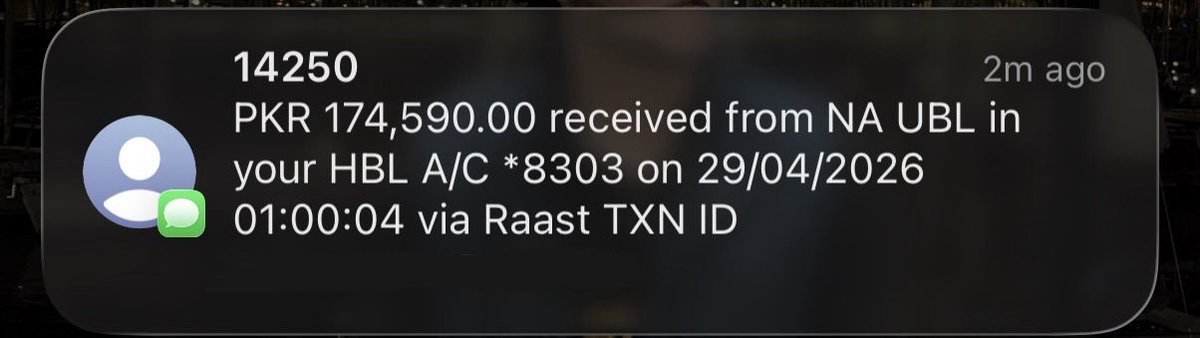
Everyone starts trend for screenshot of dividends so why we left behind ? #UBL—-dividend for year ended’25—-#dividends offer buffer zone in uncertainty providing liquidity so you can enjoy chunk of your investment separately #KSE100 🏦 🇵🇰

Nope, It's advised to marry young women so you can enjoy life. What do you want men to be? monks?
پاکستان دوست و همسایه خوب ماست اما واسطه مناسبی جهت مذاکرات نیست و اعتبار لازم را برای واسطهگری ندارد. آنها همیشه مصلحت ترامپ را در نظر میگیرند و برخلاف میل آمریکاییها حرفی نمیزنند بطور مثال حاضر نیستند به دنیا بگویند که آمریکا ابتدا پیشنهاد پاکستان را پذیرفت اما بعد زیر حرفش زد. نمیگویند که آمریکاییها در موضوع لبنان یا اموال بلوکهشده تعهداتی داشتند اما به آن عمل نکردند. میانجی باید بیطرف باشد نه اینکه همیشه به یک سمت غش کند.
Let’s understand why Iran’s FM is undertaking visits to Islamabad, Moscow, and Muscat. Pakistan is a lead mediator, Russia is a main Iranian ally, and Oman hosted the previous round of talks. What I understand is that there appears to be some framework being developed on two key issues: the nuclear program and the Strait of Hormuz. On the nuclear issue, Russia has previously expressed its desire to take over the 60% enriched uranium. So, the Iranian FM’s visit is not a coincidence. Also, Iran needs guarantees, and Putin can chip in with that by talking to Trump. The Oman visit is not necessarily meant for exploring Muscat as a venue for the next round, but to potentially discuss the way forward over the Strait of Hormuz. Iran and Oman may jointly exercise control and collect tolls. Hence, as I stated in the morning, amid most people predicting a doomsday scenario, “discreet diplomacy” was taking shape. And the visit of the Iranian FM is the outcome of those behind-the-scenes maneuvers.
