Askesis

487 posts

Askesis banner
Askesis

Askesis

@Askesis_Support

Orthodox apparel for the modern desert. Forged in discipline.

Katılım Mayıs 2026
39 Takip Edilen17 Takipçiler
Sabitlenmiş Tweet
Askesis
Askesis@Askesis_Support·
ASKESIS was never meant to be just a shirts. It’s about Orthodox counterculture: building ways of living, creating, raising families, making art and resisting the spiritual disintegration of modern culture. If we refuse to build culture, modern culture will form us.
English
4
0
2
104
Cynic in the Desert
Cynic in the Desert@desertcynic·
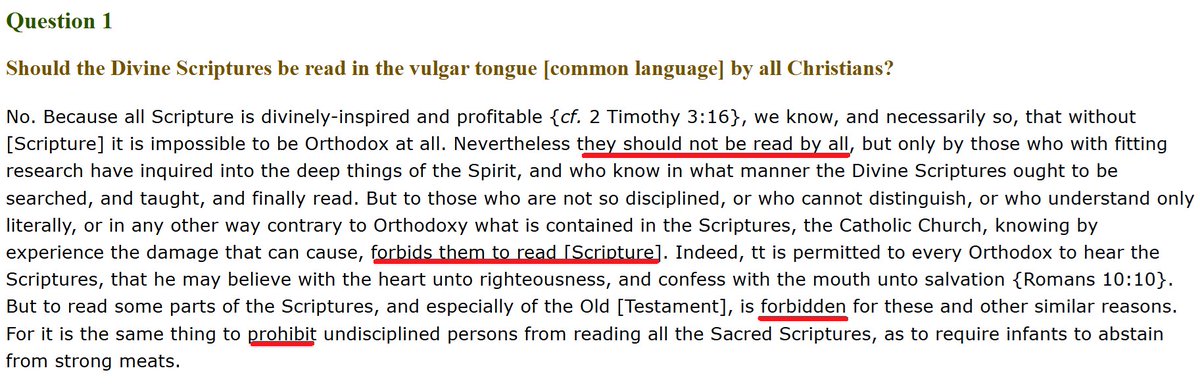
Catholic slopogetics. Dositheus doesn't forbade laity from Scripture, it forbids the lazy. Read it again. It prohibits those who fail to inquire into the deep things of the Spirit, the undisciplined & careless, the innovators. Nothing about clergy vs laity or academic vs layman.
Erick Ybarra@ErickYbarra3

Jay Dyer was given the privilege to speak on the large platform of Tucker Carlson recently (it aired today). I'm not sure when it was recorded. As one would expect, I didn't agree with everything Jay said. That doesn't mean I disagreed with everything. However, some things were said that could be misleading (no doubt Tucker himself was likely misled). One such issue came up at minute 34:09 where Tucker brings up how the Catholic Church forbade the Bible from being translated into the common tongue so as to forbid all people to read it on their own. Tucker goes on to praise Luther for translating the Bible into German so that the common folk can read the Bible for themselves without the mediation of the Church. Then Tucker asks Dyer, in correlation to Luther, "Did the Orthodox Church do the same [as Luther]"? Dyer responds, "Yes, in fact this is one of the differences between the pre-Vatican II Roman church and the Orthodox Church is that the Orthodox Church always put it in the vernacular." The idea is that Dyer was saying that the Orthodox Church never forbade the laity from reading, and thus encouraged the Bible to be read in the vulgar (common) tongue. However, at the Council of Jerusalem (1672), which is over a century after the Reformation, the Eastern Orthodox Patriarchs, with universal reception, specifically forbade the reading of Scripture by all (see pic below).

English
2
3
40
1.4K
Erick Ybarra
Erick Ybarra@ErickYbarra3·
Jay Dyer was given the privilege to speak on the large platform of Tucker Carlson recently (it aired today). I'm not sure when it was recorded. As one would expect, I didn't agree with everything Jay said. That doesn't mean I disagreed with everything. However, some things were said that could be misleading (no doubt Tucker himself was likely misled). One such issue came up at minute 34:09 where Tucker brings up how the Catholic Church forbade the Bible from being translated into the common tongue so as to forbid all people to read it on their own. Tucker goes on to praise Luther for translating the Bible into German so that the common folk can read the Bible for themselves without the mediation of the Church. Then Tucker asks Dyer, in correlation to Luther, "Did the Orthodox Church do the same [as Luther]"? Dyer responds, "Yes, in fact this is one of the differences between the pre-Vatican II Roman church and the Orthodox Church is that the Orthodox Church always put it in the vernacular." The idea is that Dyer was saying that the Orthodox Church never forbade the laity from reading, and thus encouraged the Bible to be read in the vulgar (common) tongue. However, at the Council of Jerusalem (1672), which is over a century after the Reformation, the Eastern Orthodox Patriarchs, with universal reception, specifically forbade the reading of Scripture by all (see pic below).
Erick Ybarra tweet media
English
42
36
341
16.8K
Askesis
Askesis@Askesis_Support·
@ErickYbarra3 @desertcynic @kizermarek Proof is that it says [undisciplined] people who are only able to read the text literally. They never then go on to specify any other quality so as to make a ban enforceable. But you read everything as uncharitably as possible all the time
English
0
0
0
14
Askesis
Askesis@Askesis_Support·
The Fast is over. Cyprian of Carthage "Outside the Church there is no salvation." — Letter 72 (also expressed in On the Unity of the Catholic Church)
English
0
0
0
5
Hill
Hill@YariLogos·
@desertcynic @Askesis_Support Always interpret Fr SDY Dyer Sijuwade charitably but everyone else interpret them in the worst way possible
English
1
0
0
37
Cynic in the Desert
Cynic in the Desert@desertcynic·
If the Gospel says one thing, and an Apostle says another, you are supposed to agree with the Gospel over the Apostle.
English
3
0
15
1.2K
Askesis
Askesis@Askesis_Support·
@desertcynic @YariLogos You’re creating a Protestant category error by failing to understand the definitions of words or their implications
English
1
0
0
19
Askesis
Askesis@Askesis_Support·
@desertcynic @YariLogos It doesn’t suggest a true Apostle, acting as Apostle, will preach another Gospel. Your hypothetical separates the Gospel from the Apostles who delivered it, which is the category mistake I’m pushing back on.
English
0
0
0
7
Askesis
Askesis@Askesis_Support·
@desertcynic @YariLogos Your OP isn’t Gal 1:8. Paul doesn’t pit the Gospel against the Apostles. He says any message contrary to the Gospel already delivered through Apostolic preaching is accursed. That safeguards the fixed Apostolic deposit.
English
1
0
0
7
Askesis
Askesis@Askesis_Support·
@desertcynic @YariLogos To be more precise, without Christ being a liar and the Spirit failing to preserve the deposit of the faith
English
1
0
0
26
Askesis
Askesis@Askesis_Support·
@desertcynic @YariLogos Because your phrasing was malformed. An apostle, as YOU SAY, cannot preach a false gospel, without two persons of the Trinity being made liars. Gal 1:8 is about the fixed nature of the Gospels
English
1
0
0
30
Askesis
Askesis@Askesis_Support·
@desertcynic @YariLogos The phrase “even if we” is rhetorical. Paul is emphasizing that no messenger—not even the original apostles, nor even an angel—has authority to alter the Gospel once delivered. The standard is fixed; he’s not asserting that the apostles will in fact proclaim another gospel.
English
1
0
0
22
Cynic in the Desert
Cynic in the Desert@desertcynic·
@Askesis_Support @YariLogos "But even if we, or an angel from heaven, should preach to you a gospel contrary to that which we preached to you, let him be accursed." Galatians 1:8
English
2
0
1
38
Askesis
Askesis@Askesis_Support·
@YariLogos @desertcynic 4. Therefore, the apostles, in their apostolic office, do not authoritatively proclaim false doctrine as the Gospel of Christ.
English
3
0
0
23
Askesis
Askesis@Askesis_Support·
@YariLogos @desertcynic A private person may err. An apostle may sin, fear, or act hypocritically. But an apostle, acting as an apostle, does not authoritatively proclaim a false Gospel. To deny that is to deny the efficacy of Christ’s commission and the Spirit’s guidance of the apostolic witness.
English
0
0
0
5
Askesis
Askesis@Askesis_Support·
@YariLogos @desertcynic 5. Any premise requiring an apostle to have authoritatively taught another gospel is self-refuting, since imply Christ failed in His commission and the Holy Spirit failed in His promise.
English
0
0
0
6
Askesis
Askesis@Askesis_Support·
@YariLogos @desertcynic Peter’s actions communicated the wrong message, which is why Paul corrected him. But Galatians never says Peter proclaimed another gospel or authored false doctrine. You’re collapsing two different categories.
English
1
0
1
27
Askesis
Askesis@Askesis_Support·
@desertcynic @YariLogos Gal. 1:8 concerns an apostle preaching another gospel. Gal. 2 concerns Peter failing to live consistently with the gospel. Those are not the same claim, and Paul never says Peter proclaimed a different gospel.
English
1
0
0
17
Askesis
Askesis@Askesis_Support·
Ignatius of Antioch (c. AD 107) "Apart from the bishop let no one do anything pertaining to the Church." — Letter to the Smyrnaeans 8
English
0
0
0
5
Askesis
Askesis@Askesis_Support·
@YariLogos @desertcynic Peter’s hypocrisy at Antioch isn’t the same as Peter authoritatively teaching the Church to Judaize. Where, in either of his epistles, does Peter command the churches to require circumcision or keep the Mosaic Law? Outside the temporary disciplinary decree of Acts 15, where?
English
1
0
0
20
Hill
Hill@YariLogos·
@Askesis_Support @desertcynic You're very confused Did St Peter at one time teach what was later called "Judaizing"? Obviously yes he did Was it part of the Gospel when he did it? Obviously no it wasn't
English
2
0
1
51