Nolan Koblischke

445 posts

Nolan Koblischke banner
Nolan Koblischke

Nolan Koblischke

@astro_nolan

Language models and astrophysics. PhD student @UofT, formerly @UBC, @EPFL. Interned at @PolymathicAI.

z = 0 Katılım Temmuz 2015
1.1K Takip Edilen420 Takipçiler
Sabitlenmiş Tweet
Nolan Koblischke
Nolan Koblischke@astro_nolan·
We built a semantic search engine for millions of galaxy images by having LLMs write the captions. These images are completely unlabeled, but our method enables astronomers to search for rare phenomena via text. Try our app! 🔭👇
English
2
2
22
3.7K
Nolan Koblischke
Nolan Koblischke@astro_nolan·
Everyone working on verifiable scientific code should read this blog by @kdqg1 on how he got Claude to build a JAX-based cosmological solver in a few days. Give it success criteria (in this case, matching existing code to 0.1%) and iterate until success! anthropic.com/research/long-…
English
2
19
162
10.8K
Felix Rieseberg
Felix Rieseberg@felixrieseberg·
We're shipping a new feature in Claude Cowork as a research preview that I'm excited about: Dispatch! One persistent conversation with Claude that runs on your computer. Message it from your phone. Come back to finished work. To try it out, download Claude Desktop, then pair your phone.
English
972
1.5K
17.3K
6.2M
Nolan Koblischke
Nolan Koblischke@astro_nolan·
@cgeorgiaw Such a great point, it's quite hard to think of many problems in astrophysics (not AI+astrophysics) that are hill climbing problems. Maybe improving the speed of simulations is one example.
English
1
0
4
1.2K
Georgia Channing
Georgia Channing@cgeorgiaw·
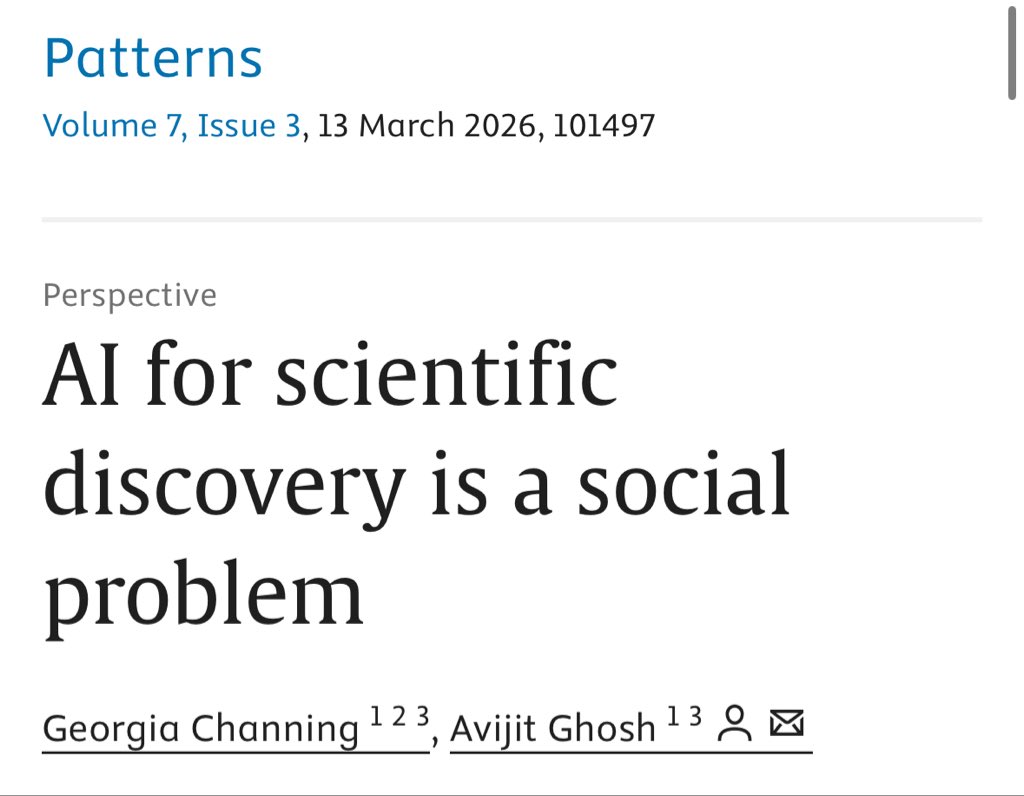
I’ve been at a small conference this week, one where the AI people have been presenting early in the week and the domain science people will be presenting later in the week. At the end of the talks last night, the conversation turned very doomer with all the AI people talking about how well Claude Code or Codex can do hill-climbing AI research and how we (the AI people) are maybe all about to lose our jobs! The domain science people expressed their shock at this attitude because, though Claude Code can be let loose to complete lots of banal hill-climbing AI research projects, basically no experimental science is hill-climbing or even metric driven. Most scientific fields are about much more taste-driven exploration that is incredibly difficult to make metrics for or to parameterize, and this misunderstanding from the AI community is one of the most damaging things to the realization of great science with AI. Seems like we’re actually pretty far from having AI models do that… Over the summer, @evijit and I wrote about this (and some other things hindering AI for science) at a bit more length, and today that work is out in Patterns! So, if you care about these problems and the real challenges in bringing AI to science in the real work, I recommend giving it a read!
Georgia Channing tweet media
English
23
94
604
81.2K
Sam Rodriques
Sam Rodriques@SGRodriques·
For fun, we let Edison and Gemini 3 Pro simulate trades by predicting drug approval events. After 3 months of events, Edison made 6 trades and earned 26% returns, while Gemini made 16 trades and lost 43%. Next time with real money...
Sam Rodriques tweet mediaSam Rodriques tweet media
English
8
7
72
8.9K
John F. Wu
John F. Wu@jwuphysics·
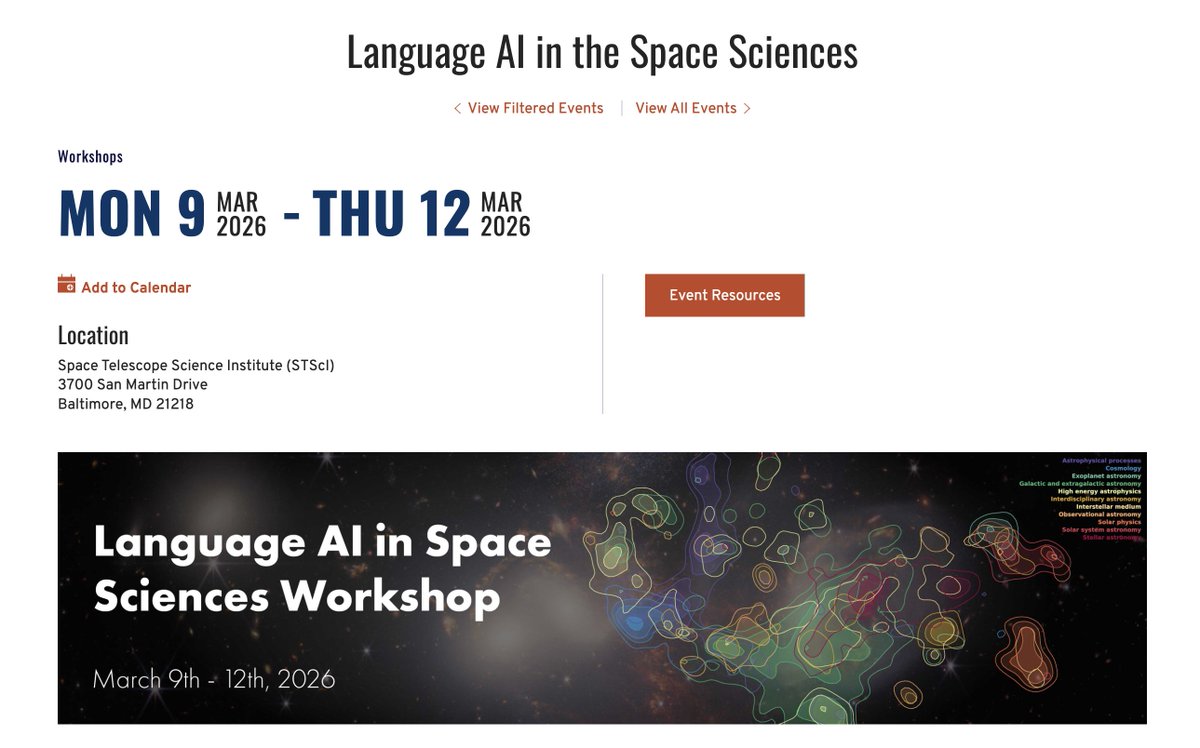
Excited to see astronomers and NLP/AI researchers at the STScI workshop next week!
John F. Wu tweet media
English
2
1
2
141
Dimitris Papailiopoulos
Dimitris Papailiopoulos@DimitrisPapail·
Obvious idea: every ml/cs arxiv paper can be turned into a terminal-bench task like, ~1,000 papers/day. most have a core question and a bunch of intermediate results you can check. So extract the question and verifiable intermediate claims with a good LLM. request figures already present in the paper and optionally verify what can be verified. Having all that in Tex and folders with images is kind of a unique gift. Thank you prof Knuth and arxiv So the CLI agent given the question has to -within some error- reproduce the artifacts. not the repo or “answer questions about the paper.” just: here’s what we’re trying to understand, give me something that looks like [description of figure 2.a] PaperBench did something adjacent for 20 papers with rubrics co-developed with paper authors. but the whole point here is automating the extraction and then you have an endless source of RL training data for research agents. Modulo all papers that can’t be reproduced 😂
English
18
16
344
28.1K
Nolan Koblischke
Nolan Koblischke@astro_nolan·
New blog post: Running experiments with Claude Code overnight An account of letting Claude Code run experiments while I sleep, getting suspiciously good results, and then finding the subtle bug it missed. General musings as I test out this new paradigm! blog.nolank.ca/running-an-exp…
English
0
2
4
421
Nolan Koblischke
Nolan Koblischke@astro_nolan·
@mbodhisattwa @allen_ai This is really really cool, already trying it out on all the astronomy datasets I've tried on other discovery agents
English
1
1
4
309
Bodhisattwa Majumder
Bodhisattwa Majumder@mbodhisattwa·
.@allen_ai's next-generation Asta is live! ⏳ We extended from a goal-driven setup to long-horizon open-ended scientific exploration, with AutoDiscovery. Try now. 🧑🏻‍🚀 For the past 6 months, we partnered with oncologists, social scientists, marine biologists, and epidemiologists to uncover "hidden truths" from vast public and private datasets. 🌈 This work was a researcher's paradise: it started with an important AI problem, and ended with driving truly impactful applications with countercurrent findings that change traditional practices in critical sciences. ✨ Today, we release three technical reports, where our partner scientists document the discoveries made by our system, opening up to their respective scientific communities. 🎷 We are heavily marching towards truly long-horizon discovery systems paired with asynchronous user feedback. While we share our next research updates, have fun with AutoDiscovery. PS: This release has so much that I'm gonna need multiple posts to unpack it.
Ai2@allen_ai

Knowing which questions to ask is often the hardest part of science. Today we're releasing AutoDiscovery in AstaLabs, an AI system that starts with your data and generates its own hypotheses. 🧪

English
1
7
36
5.7K
Andrew Carr 🤸
Andrew Carr 🤸@andrew_n_carr·
1. scrape arxiv 2. find all associated code 3. get code running with agent 4. write a bunch of tests for current functionality 5. rewrite code to be modern and beautiful train arxiv paper -> clean implementation boom AI intern by 2027
English
6
4
309
23.2K
Nolan Koblischke
Nolan Koblischke@astro_nolan·
@natalienkhalil Fun! An almost perfect AI detector in this game: return A if len(A) > len(B) else B i.e. shorter review = human-generated
English
0
0
2
62
Natalie Khalil
Natalie Khalil@natalienkhalil·
ICLR got a lot of heat for its AI-generated reviews. Introducing Review Arena. Can you guess which review is human and which is AI?
English
2
0
7
355
Nolan Koblischke
Nolan Koblischke@astro_nolan·
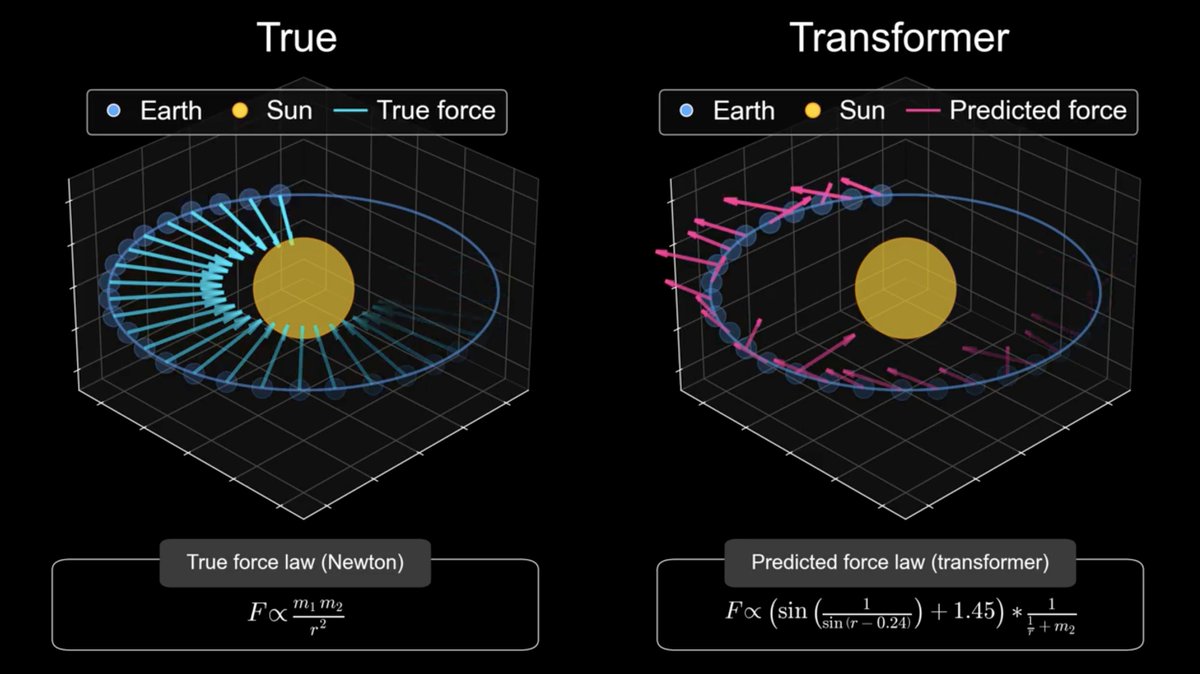
@ZimingLiu11 Super cool, especially the context length finding. It would be cool to see a recreation of the original figure. From your Figure 10, it looks like the probe should predict force nearly perfectly.
Nolan Koblischke tweet media
English
1
0
3
518
Ziming Liu
Ziming Liu@ZimingLiu11·
🚨Transformers don't learn Newton's laws? They learn Kepler's laws! Like us, transformers don't predict a flying ball via a differential equation, but by fitting a curve. Moreover, reducing context length steers a transformer from Keplerian to Newtonian. Compression in play.
Ziming Liu tweet media
English
25
204
1.2K
116.4K
Nolan Koblischke
Nolan Koblischke@astro_nolan·
@kevinweil Version history is a big one, and a related feature is being able to click on the 'previous changes' entries in the chat interface to see the related diffs.
English
0
0
2
96
Kevin Weil 🇺🇸
Kevin Weil 🇺🇸@kevinweil·
If you're a scientist and/or write in LaTeX, try Prism at prism.openai.com and let us know what you think! Taking feedback and feature requests here and turning them into code daily with Codex.
OpenAI@OpenAI

Much of today’s scientific tooling has remained unchanged for decades. Prism changes that. @ALupsasca joins @kevinweil and @vicapow to walk through what it looks like when GPT-5.2 works inside a LaTeX project with full paper context.

English
26
12
194
27.3K
Nolan Koblischke
Nolan Koblischke@astro_nolan·
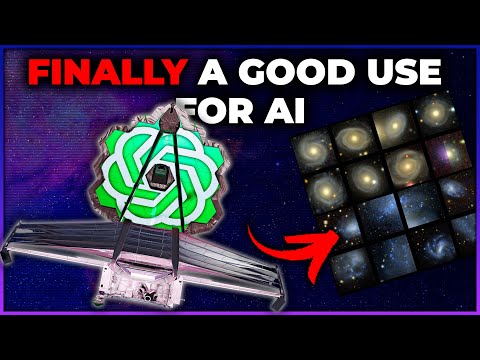
My interview by the amazing Fraser Cain (Universe Today) on how we built a search engine for millions of galaxy images using AI! Check it out 👇 "Teaching ChatGPT to Do Real Science": youtu.be/LF22szp7ouo
YouTube video
YouTube
English
0
0
3
194
Nolan Koblischke
Nolan Koblischke@astro_nolan·
Rare phenomena are difficult to find. We explored LLM re-ranking as a way to uncover them. After a search, we re-rank the top 1,000 results with GPT-4.1 by asking it to score each image based on the query. Amazingly, performance improves with larger models and additional sampling. Spend more compute -> make more discoveries.
English
2
1
2
157
Nolan Koblischke
Nolan Koblischke@astro_nolan·
We built a semantic search engine for millions of galaxy images by having LLMs write the captions. These images are completely unlabeled, but our method enables astronomers to search for rare phenomena via text. Try our app! 🔭👇
English

2
2
22
3.7K