
Sabitlenmiş Tweet
Atticist
9.9K posts


Atticist
@Atticist
"For in my nature I quested for beauty, but God, God hath sent me to sea for pearls"
Truth or Consequences, NM Katılım Aralık 2011
12.7K Takip Edilen13.6K Takipçiler
@proginosko @Bryant728 @RTSRFandP @UPuritano Now you are begging the question— that’s what’s in dispute.
English

@Atticist @Bryant728 @RTSRFandP @UPuritano All true enough, but hardly a defense of the original argument, which doesn't even get off the starting block.
English
Finishing up a review of this book for @RTSRFandP. 5000+ words... 😬 davenantinstitute.org/without-excuse
English
@proginosko @Bryant728 @RTSRFandP @UPuritano Hard to do— every argument seems to be incomplete. Hence why reviewers can always ask something more out a paper before acceptance. Perhaps one thing syllogisms do is present to dialoguers which premises need to haggled over and detailed.
English
@Atticist @Bryant728 @RTSRFandP @UPuritano Fine, then all that needs to be built into the argument. The point remains: as it stands, without further support for premise 2, the argument isn't going to do any useful work. Nobody would accept 2 who didn't already accept 3.
English
@proginosko @Bryant728 @RTSRFandP @UPuritano This is only true if you think the world does not evidence the qualities associated with being an effect. Indeed one might think a mutable and uneternal cosmos necessarily requires it be an effect.
English
@Atticist @Bryant728 @RTSRFandP @UPuritano Nobody here is talking about denying premise 1 or suggesting that premise 1 begs the question. As I wrote, "Since an effect has a cause by definition..."
The problem with the argument, as I explained, is that *premise 2* begs the question.
English
@proginosko @Bryant728 @RTSRFandP @UPuritano If someone denies that an effect has a cause, in doing so they have not avoiding begging the question, but have indulged in a denial of basic logic.
English
@Atticist @Bryant728 @RTSRFandP @UPuritano An argument begs the question when one of its premises tacitly assumes its conclusion. Since an effect has a cause by definition, 2 assumes 3. No one would accept 2 who didn't already accept 3. Hence, it's not a good argument.
English

@virginicus @Leesandersmyth Well, Health is the cause of health— but don't think there is a form for disease.
English

@Leesandersmyth Hey, @Atticist, does Plato agree that a thing can be its own cause?
English

@Atticist im prolly missing the joke here, but what's wrong with buying kitchen clocks on amazon
English

Was given a gift card to a large chain bookstore.
Went to one of its locations.
After several passes: found nothing.
English
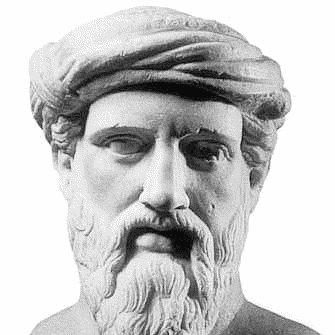
An underrated side effect of Tinder is the reintroduction of physiognomy back into the culture
English
@bruceahuntjr Yes, monasteries are social institutions, that's why I specified without a monastery. So it seems belief in immortality does not extinguish social need for community.
English

@Atticist How about the ones that become monks and go to monasteries are the believers in their own potential for immortality.
English
@bruceahuntjr What would the evidence for your position be? Would you become a monk without a monastery if you were granted immortality?
English
@bruceahuntjr This is untrue, for if we were granted immortality on the spot, we would still seek social society. Immortals are not hermits. Life is primary to death as the soul is to the body.
English
@Atticist It's all validation craving born from the fear of death.
English
@PhilosophiBooks I think wit is in full display in ancient philosophy, sometimes in philosophy itself, but often through indirect ways such as are recorded by gossipy bits of D. Laertius or Plutarch. Few contemporary philosophers have wit.
English
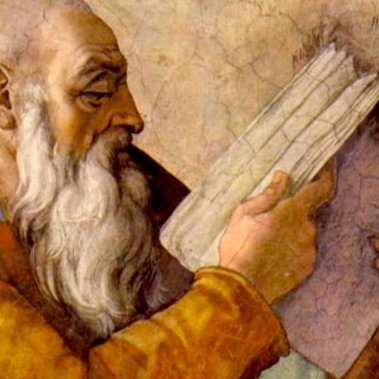
@Atticist Who in your opinion has 1? (preferably not "proofs that x" humour, altho if nothing else is available i'll take this too)
English