Atul Kumar

34 posts

Atul Kumar banner
Atul Kumar

Atul Kumar

@Atul901

Founder @ WireGress Founder @ APYL Founder @ StackExpress Open to interesting collaborations involving real systems, infrastructure, and operational problems.

North Carolina, USA Katılım Eylül 2024
2 Takip Edilen4 Takipçiler
Atul Kumar
Atul Kumar@Atul901·
@csaba_kissi Building a managed static outbound IP platform. Turns out “just use a NAT gateway” becomes 38% of your cloud bill at scale.
English
0
0
0
20
Csaba Kissi
Csaba Kissi@csaba_kissi·
What project/app/website have you been working on this week?
English
266
3
126
12.6K
Atul Kumar
Atul Kumar@Atul901·
@sflorimm Building a managed static outbound IP platform for SaaS founders who need vendor allowlisting without wrestling AWS NAT across multiple AZs. Infrastructure shouldn’t be the thing slowing product teams down.
English
0
0
1
39
Floro S.
Floro S.@sflorimm·
Looking to connect with solo founders. What are you building?
English
303
6
218
13.9K
Atul Kumar
Atul Kumar@Atul901·
NAT gateways are rarely the problem by themselves. It’s when shared egress becomes the default traffic path for everything — logs, image pulls, S3 reads — that cost and visibility drift. Multi-AZ just amplifies it. Most of the time the real issue is traffic-path architecture, not the NAT line item.
English
0
0
0
11
PsudoMike 🇨🇦
PsudoMike 🇨🇦@PsudoMike·
@brankopetric00 This happens at almost every company. NAT looks invisible on small bills and then explodes when you add a second AZ or scale task count. S3 VPC endpoints are free. Should be day one config. CloudWatch Logs through NAT is the one that catches people by surprise.
English
2
0
1
336
Branko
Branko@brankopetric00·
Reviewed an AWS bill for a client. NAT Gateway was 38 percent of total spend. Investigation: - ECS tasks pulling images from ECR through NAT - CloudWatch Logs egress through NAT - S3 reads going out and back through NAT - Three AZs, three NAT gateways, three hourly bills The fixes, in order of impact: - VPC endpoints for S3 and ECR (saved 1800 USD per month) - VPC endpoint for CloudWatch Logs (saved 600 USD) - Consolidated to two AZs for non critical workloads - Set ECR image pull behavior to cache aggressively Total monthly savings: 3200 USD. Time invested: one day. NAT is the silent killer of AWS bills. Always check it first.
English
11
11
129
13K
Atul Kumar
Atul Kumar@Atul901·
@Niraj_Dilshan NAT gateways are one of those resources that feel harmless… until you look at per-GB processing charges in a multi-AZ setup.
English
0
0
0
3
Niraj Dilshan
Niraj Dilshan@Niraj_Dilshan·
reviewing ai generated pull requests is just grading homework for a machine that types faster than you
English
1
0
0
57
Atul Kumar
Atul Kumar@Atul901·
@dashmundkar Most AWS bills don’t explode because of CPU. They explode because no one mapped the data paths. Every byte that crosses: AZ boundaries NAT gateways Load balancers Logging pipelines is metered. Cost control starts with egress awareness, not instance resizing.
English
1
0
1
29
Dashrath Mundkar
Dashrath Mundkar@dashmundkar·
The cloud cost iceberg: Visible: - EC2 / VMs - Databases Hidden: - NAT gateway data processing - Cross-AZ traffic - Idle load balancers - Snapshots from 2022 - Log ingestion - CloudWatch custom metrics - Orphaned EBS volumes 90% of "AWS is expensive" lives below the line.
English
2
1
8
436
Atul Kumar
Atul Kumar@Atul901·
This is a very common pattern. NAT Gateway is priced per GB processed, not just per hour — so the moment internal AWS traffic (ECR pulls, S3 reads, Logs) crosses it, you’re effectively paying a “tax” on your own infrastructure. What surprises many teams is that: Image pulls Logging Cross-AZ traffic Even misconfigured SDK endpoints quietly accumulate under NAT without anyone noticing. VPC endpoints should almost be part of the initial VPC baseline template. The deeper lesson isn’t just “reduce NAT cost” — it’s to map outbound traffic paths intentionally. Most AWS bills don’t grow from compute. They grow from invisible network edges.
English
0
0
1
23
Atul Kumar
Atul Kumar@Atul901·
In multi-AZ cloud architectures, outbound traffic behavior is often assumed to be stable. In reality, NAT gateways are scoped to a specific availability zone. A common pattern looks like this: • Private subnets route outbound traffic to a NAT Gateway • Each AZ has its own NAT • Elastic IP is attached to that NAT Under normal operation, this works as expected. However, during AZ failure or route table changes: • Traffic may shift to a different NAT • The egress IP can change • Long-running integrations may experience connection resets • Vendor allowlists may no longer match These are not design flaws — they are simply characteristics of how cloud routing works. For workloads that depend on consistent outbound identity, multi-AZ design requires careful consideration of how egress paths behave during failover. Understanding this early can prevent subtle production issues later.
English
0
0
0
22
Atul Kumar
Atul Kumar@Atul901·
Static outbound IP sounds simple in cloud environments. In practice, it becomes more complex once systems move beyond a single instance or availability zone. Many teams rely on: • NAT gateways • Elastic IPs • Load balancer endpoints These work well for basic scenarios. However, when environments scale across zones or regions, outbound identity can change during failover, scaling, or re-provisioning. For workloads that depend on vendor allowlists, partner integrations, or compliance-driven IP controls, this introduces an additional operational consideration: Outbound IP is not just a configuration detail — it becomes part of reliability design. As cloud architectures mature, deterministic outbound identity is increasingly treated as infrastructure rather than an afterthought. Curious how others are approaching this across multi-AZ or multi-cloud environments.
English
0
0
0
17
Atul Kumar
Atul Kumar@Atul901·
@ppoi fck-nat is a nice cost saver. For teams that also need stable + highly available outbound IP (no changes during failures), we created WireGress — dedicated HA gateways with true multi-DC resilience.
English
0
0
1
27
PPOI
PPOI@ppoi·
規範ガイドにEgressの集約を掲げるんだったらちゃんとAWSのサービスでできるようにしておいて欲しいよな。IPv6だけ各VPCに分散させるんだと、結局Firewallを個別に設置することになるので、それならNAT Gatewayも個別においた方が良くなってしまう
日本語
2
0
0
39
Atul Kumar
Atul Kumar@Atul901·
@yourclouddude NAT Gateway is one of the sneakiest cost + complexity traps in AWS. Beyond the bill, the unpredictable outbound IP causes endless allow-listing and CI/CD pain. We built WireGress as a managed dedicated egress solution with automatic same-IP BGP failover across two Texas DCs.
English
1
0
2
37
yourclouddude
yourclouddude@yourclouddude·
AWS Cost Optimization in Plain English ☁️ Most AWS beginners don’t get hacked. They get billed. And it usually starts with one forgotten resource. Why AWS bills go wrong You launch services like: • EC2 • NAT Gateway • RDS • EBS volumes • Load Balancers Then forget they’re still running. AWS doesn’t charge by intention. It charges by usage. What to monitor first • EC2 running hours • Unused EBS volumes • NAT Gateway usage • RDS instances • Data transfer • S3 storage classes These are common cost leaks. Beginner cost mistakes ❌ Leaving EC2 running overnight ❌ Not deleting unattached EBS volumes ❌ Using NAT Gateway for tiny projects ❌ No billing alerts ❌ Storing everything in S3 Standard forever Simple fixes ✅ Set AWS Budgets ✅ Use CloudWatch billing alarms ✅ Stop unused EC2 instances ✅ Use S3 lifecycle rules ✅ Delete unused volumes ✅ Prefer serverless for small workloads Golden rule If you create it, track it. 🔖 Bookmark this - cost awareness is one of the most underrated AWS skills.
English
4
6
53
2.6K
Atul Kumar
Atul Kumar@Atul901·
@KamranMoazim Forgotten NAT Gateway is a classic bill killer. Beyond cost, the unpredictable outbound IP creates allow-listing and CI/CD headaches. WireGress solves both: managed dedicated egress with true multi-DC resilience.
English
0
0
1
395
Serverless Guy | ~Zero Cost Solutions
Enable CloudWatch billing alerts on day one. Not day two. Day one. A runaway Lambda loop or forgotten NAT Gateway will drain your account fast. Set a threshold. Get an email. Sleep better. Takes 3 minutes to set up. Could save you hundreds. #AWS #CloudCost
English
1
0
0
16
Atul Kumar
Atul Kumar@Atul901·
@ozturkkberkayy fck-nat is a smart cost hack. Many teams still hit issues with stable IP + reliability during outages. We created WireGress as a managed alternative — dedicated egress IP with true multi-DC HA (same IP on automatic failover) for $59/mo.
English
0
0
0
22
Berkay Ozturk
Berkay Ozturk@ozturkkberkayy·
It's crazy that AWS NAT Gateway costs ~$34/mo! Deployed fck-nat on a t4g.nano, now I have a NAT for ~$3/mo. Comes with a terraform module with HA mode too.
Berkay Ozturk tweet media
English
2
0
0
40
Atul Kumar
Atul Kumar@Atul901·
Great breakdown on NAT Gateway vs Public IP. For teams that need truly stable + resilient outbound identity (especially across failures), we built WireGress: dedicated IP with automatic BGP failover across two separate Texas data centers. Same IP even if one DC goes down — no allow-list updates needed.
English
0
0
0
13
浜田将稔
浜田将稔@Hama_isfnet·
AzureのPublic IP、選ぶ基準迷ってないですか?🤔 VMの送信アクセス廃止に向け 「NAT GatewayかPublic IPか」の 判断基準をまとめました! ✔使ってOKなケース ✔避けるべきケース インフラエンジニア必見の通信設計ポイントを解説👇 note.com/isfnet_officia…
日本語
1
0
0
85
Atul Kumar
Atul Kumar@Atul901·
@sankar2704 This is exactly why outbound IPs cause so many CI/CD flakes. We built WireGress with automatic BGP failover across two separate Texas DCs so the same IP stays stable even if one facility goes down. Saved us multiple times.
English
0
0
0
9
Sankar
Sankar@sankar2704·
When an Azure App Service cannot access another resource (like SQL or Storage), a few targeted checks help narrow it down quickly: ☑️Check outbound IP addresses of the App Service ☑️Verify firewall rules on the target resource ☑️Confirm if Managed Identity or connection strings are correct ☑️Check if Private Endpoint or Service Endpoint is being used ☑️Review NSG or VNet integration if configured Instead of checking everything randomly, focusing on these layers usually leads to the root cause faster
English
1
0
1
49
Atul Kumar
Atul Kumar@Atul901·
We built this model into WireGress to simplify deterministic outbound identity for production systems. Curious how others are solving this.
English
0
0
0
20
Atul Kumar
Atul Kumar@Atul901·
The solution is not just configuration. It’s treating outbound identity as infrastructure: Workloads → Dedicated HA gateway → Internet One stable egress identity.
English
1
0
0
16
Atul Kumar
Atul Kumar@Atul901·
Static outbound IP in cloud is simple — until failover breaks vendor allowlists. Here’s a simplified deterministic egress architecture we’ve been working on.
Atul Kumar tweet media
English
1
0
1
27
Atul Kumar
Atul Kumar@Atul901·
@shelbyserves Egress is where things get interesting—cost is one part, but the amount of infra people end up building just to control outbound traffic is just as surprising.
English
0
0
0
32
Shelby
Shelby@shelbyserves·
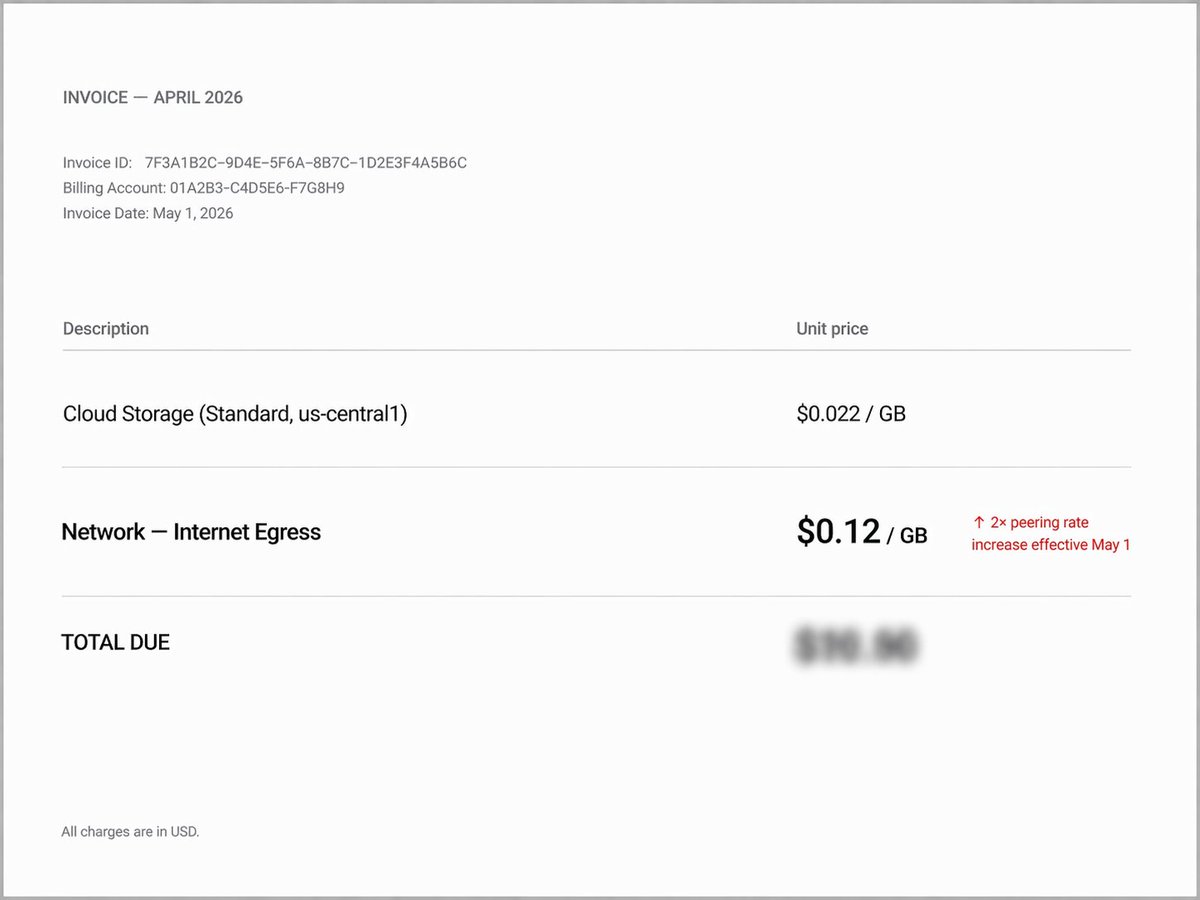
GCP storage: $0.022/GB/month. GCP egress: $0.12/GB. One is what you pay to keep data still. The other is what you pay to move it.
Shelby tweet media
English
64
47
251
14.6K
Atul Kumar
Atul Kumar@Atul901·
@syssignals @hnasr Yeah, L7 proxies make sense when you need control at the request level. We’ve seen the tricky part often comes later—keeping outbound identity consistent once traffic leaves the cluster.
English
0
0
1
21
Vishwas Sharma | DevOps · Security · MLOps
In our K8s setups we use L7 proxies (Envoy or Nginx Ingress) when we actually need to inspect or modify traffic — adding auth headers, rate limiting, logging, or WAF rules. NAT (via kube-proxy in iptables/IPVS mode) is perfect for simple outbound traffic from pods where we just need IP translation and don’t care about reading the payload (especially with TLS). The HTTP CONNECT method for end-to-end encryption is the part that saves us when we want proxy benefits without breaking security.
English
1
0
2
398
Hussein Nasser
Hussein Nasser@hnasr·
Proxy vs NAT – What is the difference? They are similar actually. Both acts on behalf of the client. In both cases the final destination doesn’t know the original client. In a Proxy (at least layer 7), we have two connections, one from client to the proxy and another one from proxy to server. The proxy receives the client request, the request is decrypted, read, parsed, and understood, all user data is exposed to an L7 proxy. The proxy then uses the upstream connection to write a completely new request to the backend, it may add headers and other stuff. The server will see the client as the proxy in this case. The proxy has also another mode where it has end to end encryption using the http connect method. This way the TLS is sent all the way to the backend and the proxy simply forwards packets as is. In a NAT router (or a server doesn’t have be a router), there is 1 single connection all the way from the client to the final destination, but the NAT server translates the source IP and destination IP back and forth. So still the backend server doesn’t know the original client IP address (which is often really private ip). But when you send a request, the NAT router cannot read what is in this request if it is encrypted. It just blindly forward packets to the final destination after changing the source IP to its own IP. Here are I’m referring mainly to forward proxy not reverse proxy. ⸻ Get my fundamentals of Network Engineering course to learn more about the first principles of networking. courses.husseinnasser.com
English
4
15
201
16.1K