
Auke Hunneman

3K posts

Auke Hunneman banner
Auke Hunneman

Auke Hunneman

@AukeHunneman

Dutch marketing professor living in Norway. Interested in analytics, passionate about nature & book lover. Tweets are my own.

Oslo, Norway Katılım Mart 2019
372 Takip Edilen121 Takipçiler
Auke Hunneman retweetledi
Muhammad Ayan
Muhammad Ayan@socialwithaayan·
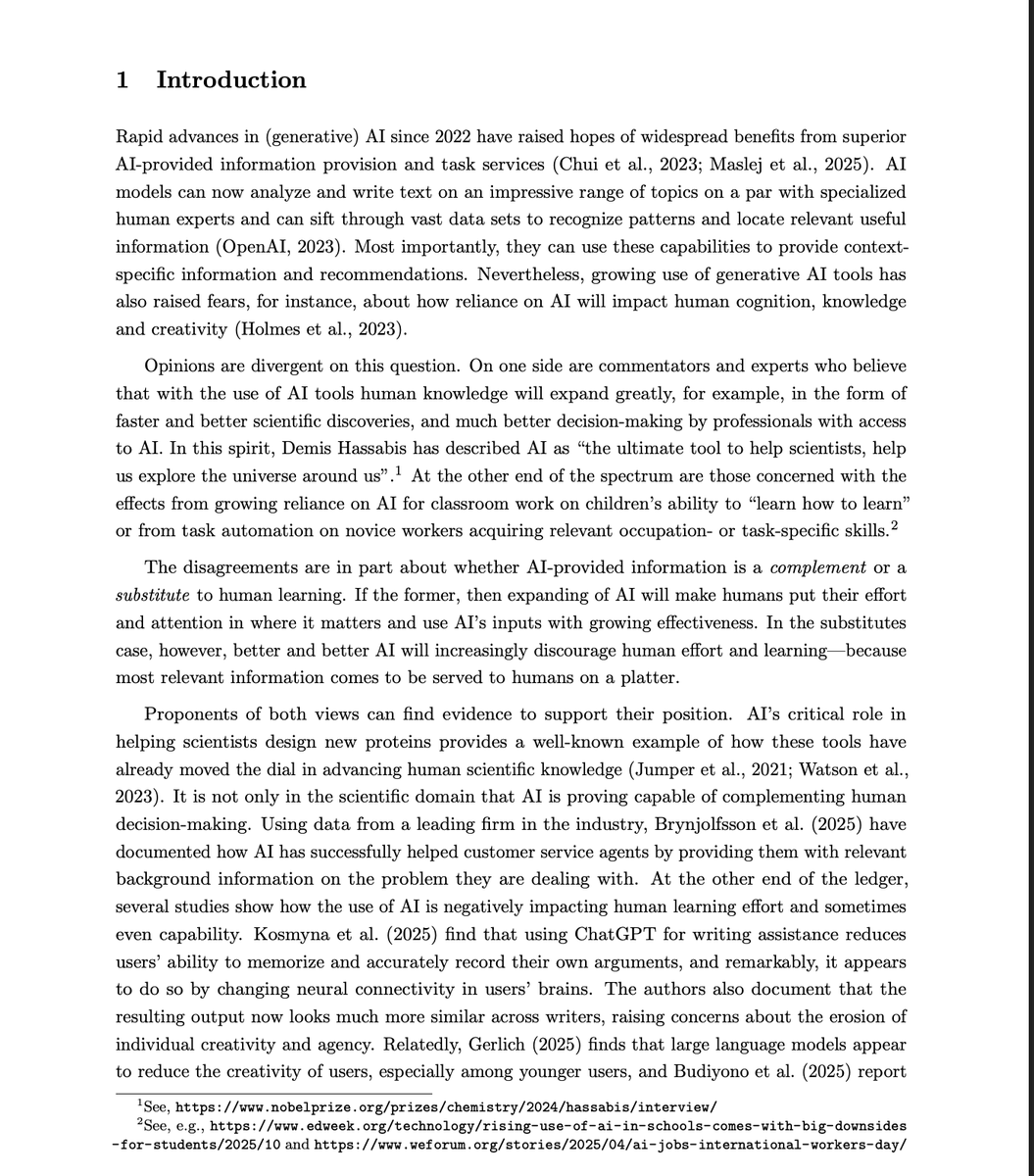
MIT's Nobel Prize-winning economist just published a model with one of the most alarming conclusions in the AI literature so far. If AI becomes accurate enough, it can destroy human civilization's ability to generate new knowledge entirely. Not gradually degrade it. Collapse it. The paper is called AI, Human Cognition and Knowledge Collapse. Authors: Daron Acemoglu, Dingwen Kong, and Asuman Ozdaglar. MIT. Published February 20, 2026. Acemoglu won the Nobel Prize in Economics in 2024. He is not a doomer blogger. He is the most cited economist of his generation, and his models tend to be taken seriously by the people who set policy. Here is the argument in plain terms. Human knowledge is not just a collection of facts stored in individuals. It is a living system that requires continuous reproduction. People learn things. They apply them. They teach others. They build on prior work to generate new work. The entire engine of science, medicine, technology, and innovation runs on this cycle of active human cognition. What happens when AI provides personalized, accurate answers to every question people would otherwise have to learn themselves? Individually, each person is better off. They get correct answers faster. They make fewer errors. Their immediate outcomes improve. But they stop doing the cognitive work that sustains the collective knowledge base. Acemoglu's model shows this produces a non-monotone welfare curve. Modest AI accuracy: net positive. AI helps at the margin, humans still do enough learning to sustain collective knowledge, everyone gains. High AI accuracy: net catastrophic. AI is accurate enough that learning yourself feels unnecessary. Human learning effort collapses. The knowledge base that AI was trained on is no longer being refreshed or extended. Innovation stalls. Then stops. The model proves the existence of two stable steady states. A high-knowledge steady state where human learning and AI assistance coexist productively. A knowledge-collapse steady state where collective human knowledge has effectively vanished, individuals still receive good personalized AI recommendations, but the shared intellectual infrastructure that enables new discoveries is gone. And the transition between them is not gradual. It is a threshold effect. Below a certain level of AI accuracy, society stays in the high-knowledge equilibrium. Above that threshold, the system tips. And once it tips, the collapse is self-reinforcing. Because the people who would have learned the things that would have pushed the frontier forward never learned them. And the AI cannot push the frontier on its own. It can only recombine what humans already knew when it was trained. The dark irony at the center of the model: The AI does not fail. It keeps giving accurate, personalized, useful answers right through the collapse. From the individual's perspective, nothing looks wrong. You ask a question, you get a correct answer. But the collective capacity to ask questions nobody has asked before, to build the frameworks that generate new knowledge rather than retrieve existing knowledge, that capacity is quietly disappearing. Acemoglu has been the most prominent mainstream economist skeptical of transformative AI productivity claims. His prior work found that AI's actual measured productivity gains were much smaller than the technology industry projected. This paper is a different kind of warning. Not that AI will fail to deliver promised gains. But that if it succeeds too completely, it will undermine the human cognitive infrastructure that makes long-run progress possible at all. The welfare effect is non-monotone. That is the sentence worth sitting with. Helpful until it is not. Beneficial until it crosses a threshold. And past that threshold, the same accuracy that made it so useful is precisely what makes it devastating. Every student who uses AI instead of working through a problem is a data point. Every researcher who uses AI instead of developing intuition is a data point. Every generation that grows up with accurate AI answers and no incentive to develop deep domain knowledge is a data point. Individually rational. Collectively catastrophic. Acemoglu proved this is not just a cultural concern or a vague anxiety about screen time. It is a mathematically coherent equilibrium that a sufficiently accurate AI system will push society toward. And there is no visible warning sign before the threshold is crossed.
Muhammad Ayan tweet mediaMuhammad Ayan tweet media
English
201
1.1K
2.7K
396.5K
Auke Hunneman retweetledi
Bluebell Raven
Bluebell Raven@BluebellRaven·
Dandyfloss! ✨🌼✨ “Dandelions” (1859) by William Moore Davis
Bluebell Raven tweet media
English
17
234
1.2K
15.4K
Auke Hunneman retweetledi
Art or Other Things
Art or Other Things@ArtorOtherThing·
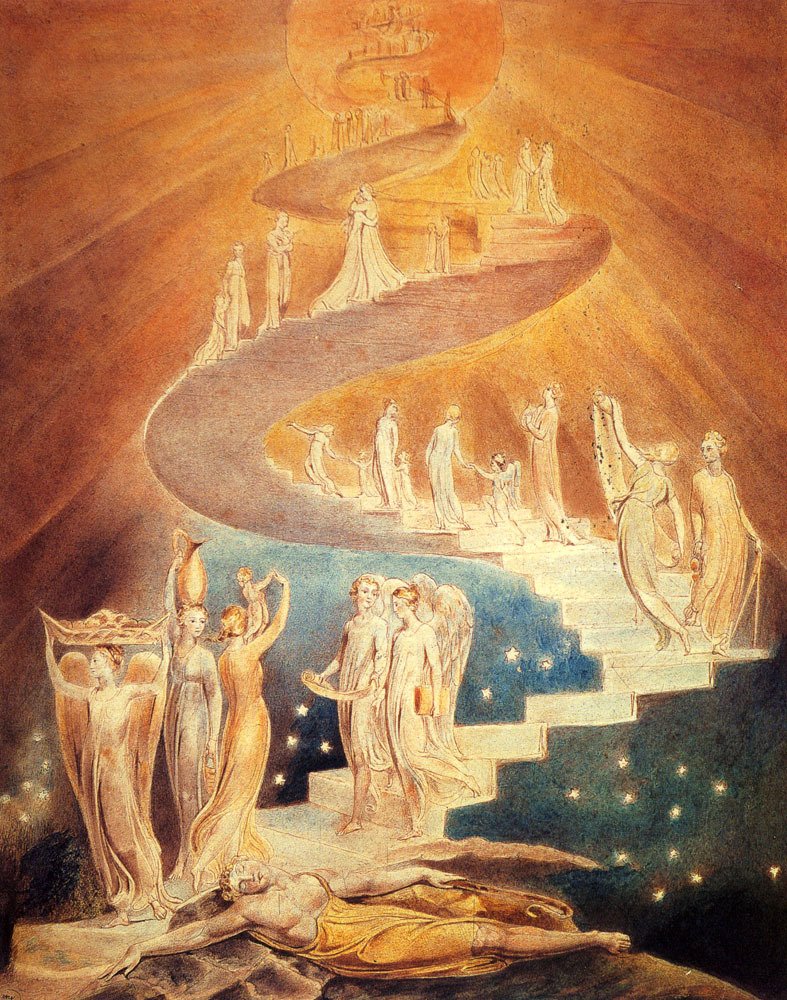
Jacob's Ladder (1806) by William Blake
Art or Other Things tweet media
English
4
135
726
11.2K
Auke Hunneman retweetledi
Massimo
Massimo@Rainmaker1973·
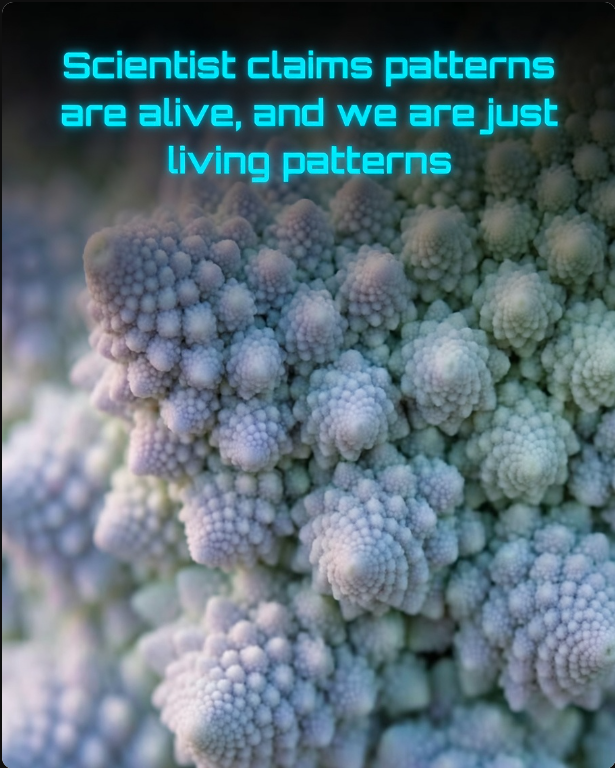
Advanced consciousness may already exist on Earth — in forms we have completely failed to recognize. For decades, the search for intelligence has been narrowly focused on brain-like structures and signals from outer space. However, pioneering biologists like Michael Levin are challenging this limited view. Levin proposes that intelligence is not a rare accident confined to nervous systems, but an emergent property that can arise from any sufficiently complex and organized pattern. His "diverse intelligence" framework suggests that cognition can manifest in surprising ways — from clusters of cells solving problems to entire ecosystems behaving with collective intelligence. These forms of awareness may look nothing like human thought, yet they demonstrate remarkable problem-solving abilities. This radical shift in perspective could transform how we search for sentient life, both on our planet and across the cosmos. If consciousness emerges from organized patterns rather than specific biology, we may have been living alongside "alien" intelligences for billions of years without realizing it. By separating intelligence from its traditional biological substrate, scientists are opening the door to a far richer understanding of life — one where consciousness becomes a natural consequence of complex organization, and where the definition of a "thinking being" must be dramatically expanded. [Levin, M. (2024). Patterns Are Alive, and We Are Living in Them. Institute of Art and Ideas]
Massimo tweet media
English
28
96
459
29K
Auke Hunneman retweetledi
Dr Peter Sjöstedt-Hughes
Dr Peter Sjöstedt-Hughes@PeterSjostedtH·
Schelling: ‘The I think, I am, is, since Descartes, the basic mistake of all knowledge; thinking is not my thinking, and being is not my being, for everything is only of God or the totality.’
Dr Peter Sjöstedt-Hughes tweet media
English

0
83
461
15.7K
Auke Hunneman retweetledi
Africa First
Africa First@AfricaFirsts·
The Greater Kudu, one of the most beautiful animals in the world, found only in Africa.
Africa First tweet media
English

77
1.1K
6.7K
91.1K
Auke Hunneman retweetledi
Art Guide
Art Guide@ArtGuide_db·
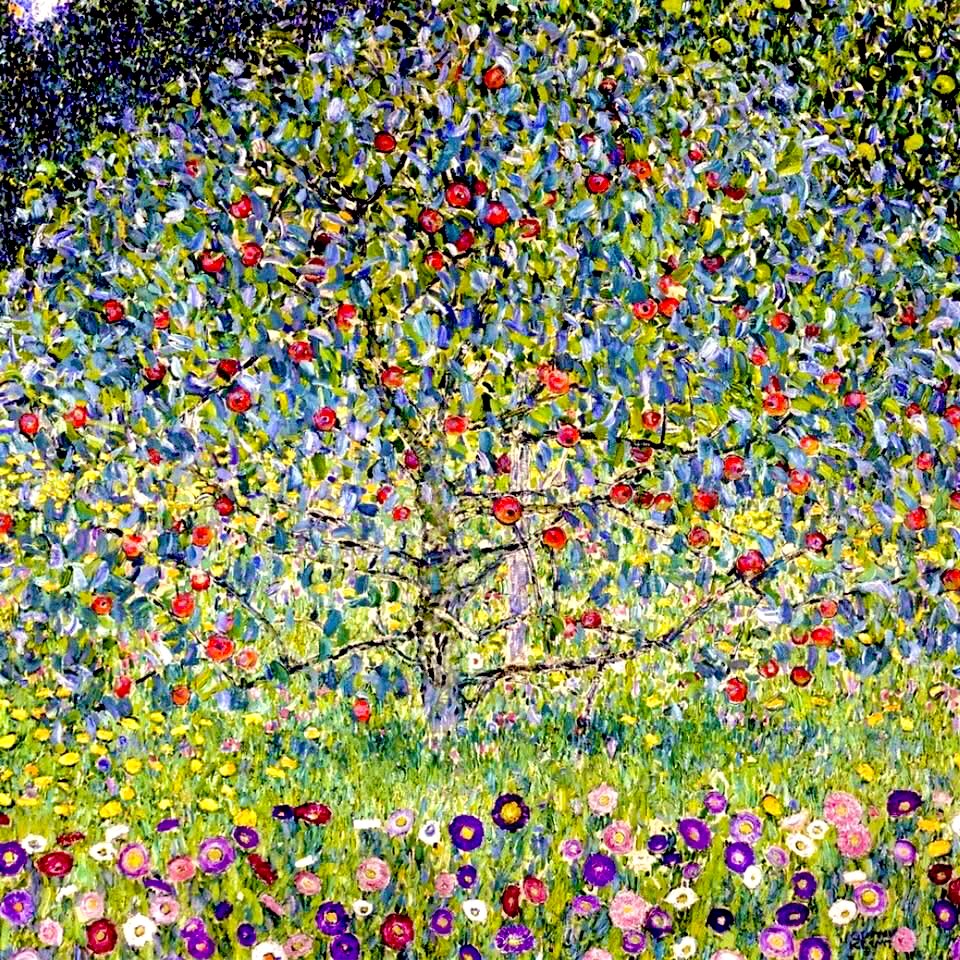
Gustav Klimt Apple Tree, 1912
Art Guide tweet media
Eesti
13
441
2.2K
33.3K
Auke Hunneman retweetledi
Monica AS
Monica AS@_monica_as·
“Love is the only way to rescue humanity from all ills.” ~ Leo Tolstoy, 𝐴 𝐿𝑒𝑡𝑡𝑒𝑟 𝑡𝑜 𝑎 𝐻𝑖𝑛𝑑𝑢 · © Spring blossoms by Juuli Salo
Monica AS tweet media
English
20
317
1K
12.5K
Auke Hunneman retweetledi
Maaraa
Maaraa@Maraaaks·
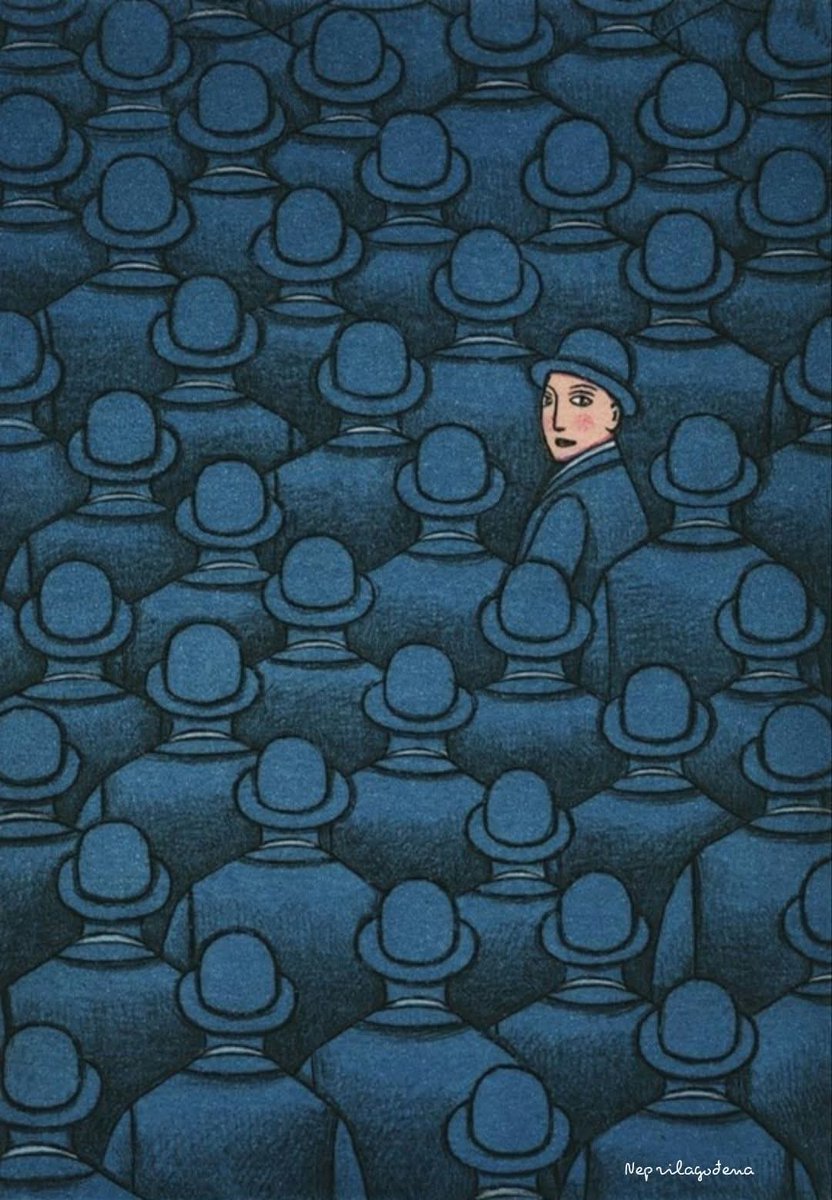
"There is no harmony when one is forced to conform to others." Oscar Wilde
Maaraa tweet media
English
15
752
3.2K
129.2K
Auke Hunneman retweetledi
African Hub
African Hub@AfricanHub_·
There are many ways to solve a problem
English
245
1.3K
9.1K
1.6M
Auke Hunneman retweetledi
lynk
lynk@lynk0x·
Are you listening?
lynk tweet media
English
124
1.1K
12.2K
158.7K
Auke Hunneman retweetledi
Viking History
Viking History@Vikinghistory·
Viking themed bar in Norway
English
40
197
1.7K
46.6K
Auke Hunneman retweetledi
Rage ❉
Rage ❉@ragecvlt·
Rage ❉ tweet mediaRage ❉ tweet media
ZXX
36
4.8K
30.4K
536.7K
Auke Hunneman retweetledi
Earth
Earth@earthcurated·
Photographer Alexey Kljatov captures the perfect symmetry and the invisible details of snowflakes.
Earth tweet mediaEarth tweet media
English
55
820
4.1K
104.3K
Auke Hunneman retweetledi
love drops
love drops@lovedropx·
love drops tweet media
ZXX
60
1.5K
8.4K
100K
Auke Hunneman retweetledi
Theoni Rogersen
Theoni Rogersen@RogersenTh49909·
Lilies on the pond! Claude Monet lovely
Theoni Rogersen tweet media
English
116
1.7K
9.4K
116.4K
Auke Hunneman retweetledi
Mathieu
Mathieu@miniapeur·
Mathieu tweet media
ZXX
50
812
4.6K
103K
Auke Hunneman retweetledi
All day Astronomy
All day Astronomy@forallcurious·
🚨: A 32,000-year-old flower bloomed again from seeds a squirrel stashed during the ice age
All day Astronomy tweet media
English
54
857
6.6K
739.4K