

Axel Ansorge
64.1K posts
Axel Ansorge
@AxelAnsorge
...feeling sorry & ashamed for Germany's many low pledges and government's unredeemed promises made to Ukrainians...
Hamburg, Deutschland Katılım Mart 2022
7.3K Takip Edilen2.8K Takipçiler

Einmalige historische Chance!
Irans Raketen haben
die islamische Allianz
aufgebrochen.
EU-Europa sollte jetzt
seine Kontakte
in die arabische Welt vertiefen
und nicht stumm zuschauen.
Israel, die Ukraine und die USA
sind uns mal wieder weit voraus.
youtu.be/vN2rgoXanG0?is…

YouTube
Deutsch
Axel Ansorge retweetledi

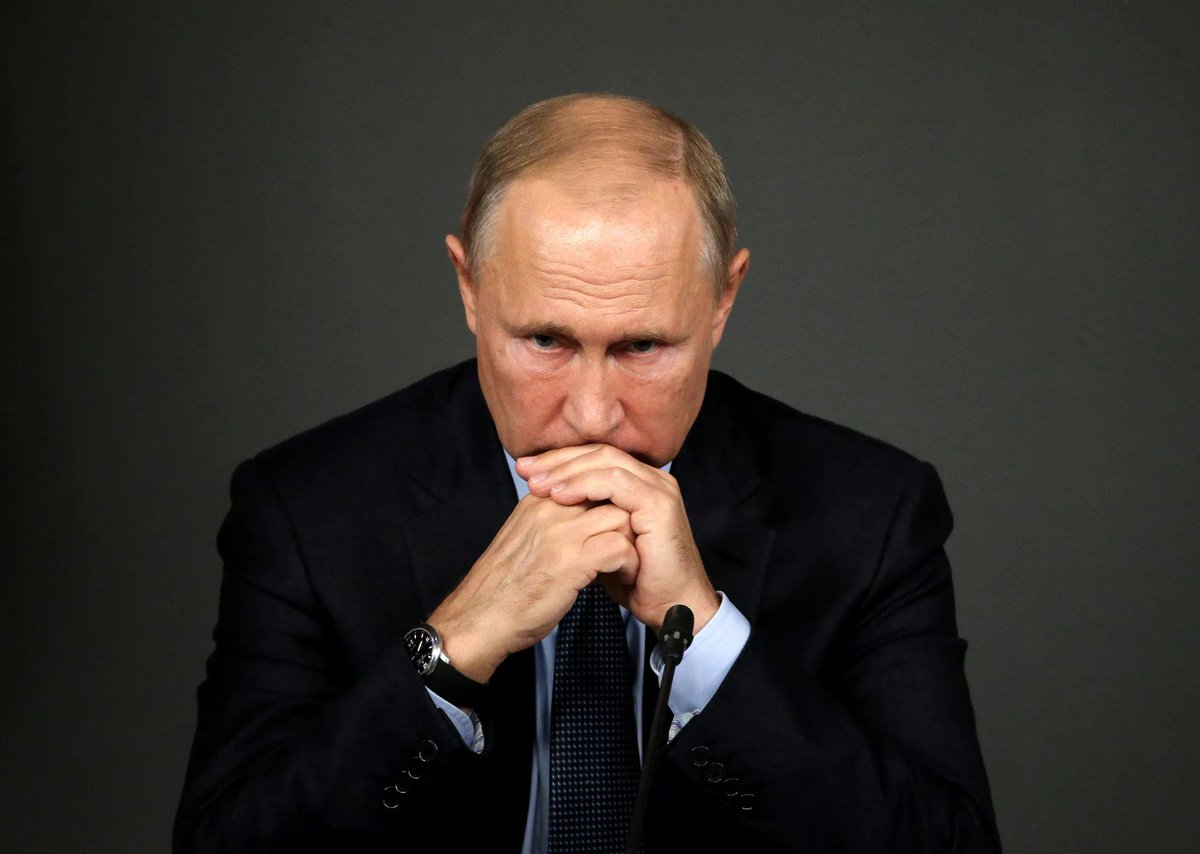
Putin is a weak loser.
He just lost his closest European ally.
He lost his dictator friends in Venezuela and Syria.
His allies in the Iranian theocracy are in tatters.
His stooges lost elections in Moldova & Romania. He lost the support of Armenia, and it’s only a matter of time before the Georgian people throw off their corrupt pro Putin regime.
He lost his effort to stop NATO expansion, pushing Finland & Sweden into the alliance.
He has lost over 1.3 million Russians to battlefield casualties.
And now he is losing his war against Ukraine, falling back in many areas & controlling less Ukrainian territory than he did 4 years ago.
English
Danke für den Hinweis !
Vera vdrVlk@veravalk1
‼️scammer/Bot Alert ‼️ Continuing: Please block this account @James0027705762 ⤴️. ⤴️. ⤴️. ⤴️ These people are following him: @MagnusStorm84 @Bf_ghost_ua @UADefenderG @Lilli_Saar @giorgig31418111 @AngryNeurotic @LeaLoverunning @BondKost @AxelAnsorge @AnnadeMilanese
Deutsch
Axel Ansorge retweetledi

Haus in der Schweiz🇨🇭
Frau aus Sri Lanka 🇱🇰
Geld aus Russland 🇷🇺
Social Media Likes aus Nigeria 🇳🇬
Aber Alice für Deutschland?🇩🇪
Nein, danke! 🖕🏽
Der Besserossi 🩷 #TeamAntifa 💚@besserossi
Haus in der Schweiz🇨🇭 Frau aus Sri Lanka 🇱🇰 Geld aus Russland 🇷🇺 Social Media Likes aus Nigeria 🇳🇬 Aber Alice für Deutschland?🇩🇪 Nein, danke! 🖕🏽
Deutsch
Axel Ansorge retweetledi


Es nutzt wenig,
Trump moralisch überlegen zu sein,
wenn man es nicht besser macht
als er!
Herbert Zelzer@HZelzer
Deutsch
Axel Ansorge retweetledi

"Do you want to know how difficult it is to confront FPV drones on the battlefield? And how a child controlling one remotely can take out a soldier with long military experience?
Watch this video…
They decided to try it themselves and were shocked—they didn’t know how to deal with them. That’s why the war in Ukraine is so tragic."
English
Axel Ansorge retweetledi

The capabilities of Ukraine’s defense industry mean millions of FPV drones per year, our deep strikes, our interceptors, and millions of shells. Ukraine has its own long-range missile weapons. Not just in development, but a real force already at work. Flamingo and Ruta, Peklo and Neptune, Palianytsia and Vilkha – we can already be proud of all of this, but we will not stop here for sure. These are only our first steps – the industry will grow, and the enemy will feel it.
Everyone sees the historic long-range reach of our drones – striking 1,750 kilometers from our border. There will be more. And this is not about records – it is about justice that will find evil anywhere in the world. And our Sichen, Liutyi, Morok, Bars, Obriy, and FP are proof of that.
From the congratulatory address to the workers of Ukraine’s defense-industrial complex (1/3).


English
Axel Ansorge retweetledi

Jeden Donnerstag: Politische Bildung! Diesmal - wer den Aggressor nicht nennt und unbestraft gewähren lässt, ist kein „Pazifist“, sondern wahrer Kriegstreiber. Stoppt Aggressor, stoppt #russland - dann haben wir Frieden!
Deutsch
Axel Ansorge retweetledi

Wir sind es den Opfern schuldig, dass wir dafür sorgen, dass sich die Verbrechen der Nationalsozialisten nicht wiederholen. Wir alle sind gefordert, uns einer AfD, die die Erinnerungskultur diffamiert und die Demokratie bedroht, entgegenzustellen.
#AfDVerbotsverfahren

Deutsch
Wehrhaftigkeit funktioniert,
wenn Gesellschaft und Staat
je eigenständig,
entschlossen,
stark,
initiativ,
handlungsfähig
und frei
kooperieren.
Eine wehrhafte Zivilgesellschaft,
die wirkungsvoll
Hand in Hand arbeitet
mit einem funktionierenden Staat,
mit einer Regierung der Freiheit,
und mit einer durchsetzungswilligen Armee,
macht jedes Land
zur Supermacht.
Volodymyr Zelenskyy / Володимир Зеленський@ZelenskyyUa
The future is already on the front line – and Ukraine is building it. These are our ground robotic systems. For the first time in the history of this war, an enemy position was taken exclusively by unmanned platforms – ground systems and drones. The occupiers surrendered, and the operation was carried out without infantry and without losses on our side. Ratel, TerMIT, Ardal, Rys, Zmiy, Protector, Volia, and our other ground robotic systems have already carried out more than 22,000 missions on the front in just three months. In other words, lives were saved more than 22,000 times when a robot went into the most dangerous areas instead of a warrior. This is about high technology protecting the highest value – human life. From the congratulatory address to the workers of Ukraine’s defense-industrial complex (2/3).
Deutsch
Axel Ansorge retweetledi

A 19-year-old Saghar Golami, from Gonbad-e Kavus in Golestan Province, was arrested by the Islamic security forces following her participation in January protests.
She was sentenced to death by the Islamic regime in Iran and faces an imminent threat of public execution.

English
Axel Ansorge retweetledi

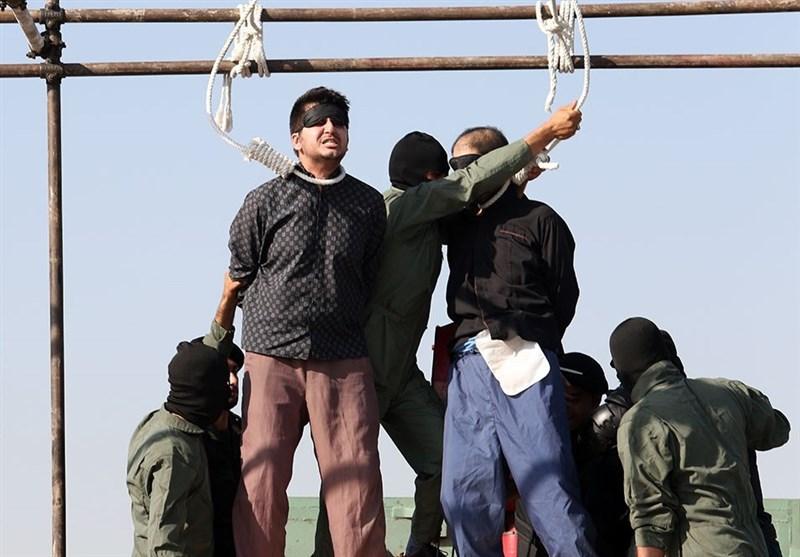
🚨 IRAN EXECUTED AT LEAST 1,639 PEOPLE IN 2025 — HIGHEST SINCE 1989
New report by Iran Human Rights (IHR) and ECPM reveals:
• 1,639 executions in 2025
• Up 68% from 975 in 2024
• At least 48 women executed
• Over 4 executions per day on average
• Figures are considered a minimum due to lack of transparency
NGOs warn executions are being used as a tool of repression, especially after recent protests.
Hundreds of detained protesters are now at risk of death sentences.
And this does NOT include the estimated 35,000+ executions carried out without any real judicial process.
Let that sink in.
Stay connected, follow @MOSSADil
English
Axel Ansorge retweetledi

MISS GERMANY GEGEN DAS MULLAH-REGIME!
„Das iranische Volk hat keinen Waffenstillstand!“ Bei einer Kundgebung rechnet sie ab: Während Trump mit Teheran verhandelt, leiden die Menschen weiter unter Folter und Angst. Ihr Appell: „Sprecht mit der Oppositionsführer @PahlaviReza – nicht mit den Unterdrückern!“ #IranRevolution2026
Deutsch
Axel Ansorge retweetledi

Hungary chose Europe today.
Budapest’s streets are packed, with people chanting “Russians out”
English
Axel Ansorge retweetledi

Это бесконечно отчаяная 12 летняя Яна Степаненко, которая потеряла обе ноги во время обстрела фашистами вокзала в Краматорске.
И вот она на Бостонском марафоне бежит превозмогая боль и дискомфорт и всё это Яна организовала ради сбора средств на протез для воина ВСУ Саши Рясного.
Русский
Axel Ansorge retweetledi

Today, we remember the victims of the #KatynMassacre — over 22,000 Polish officers and intellectuals murdered on Stalin’s orders.
On this Remembrance Day, we honor their memory and stand with Poland 🇵🇱.
By keeping history alive, we ensure such crimes are never repeated.

English
Axel Ansorge retweetledi

I will never forgive Orbán for helping Russia commit genocide in Ukraine

English