Valeriy M., PhD, MBA, CQF@predict_addict
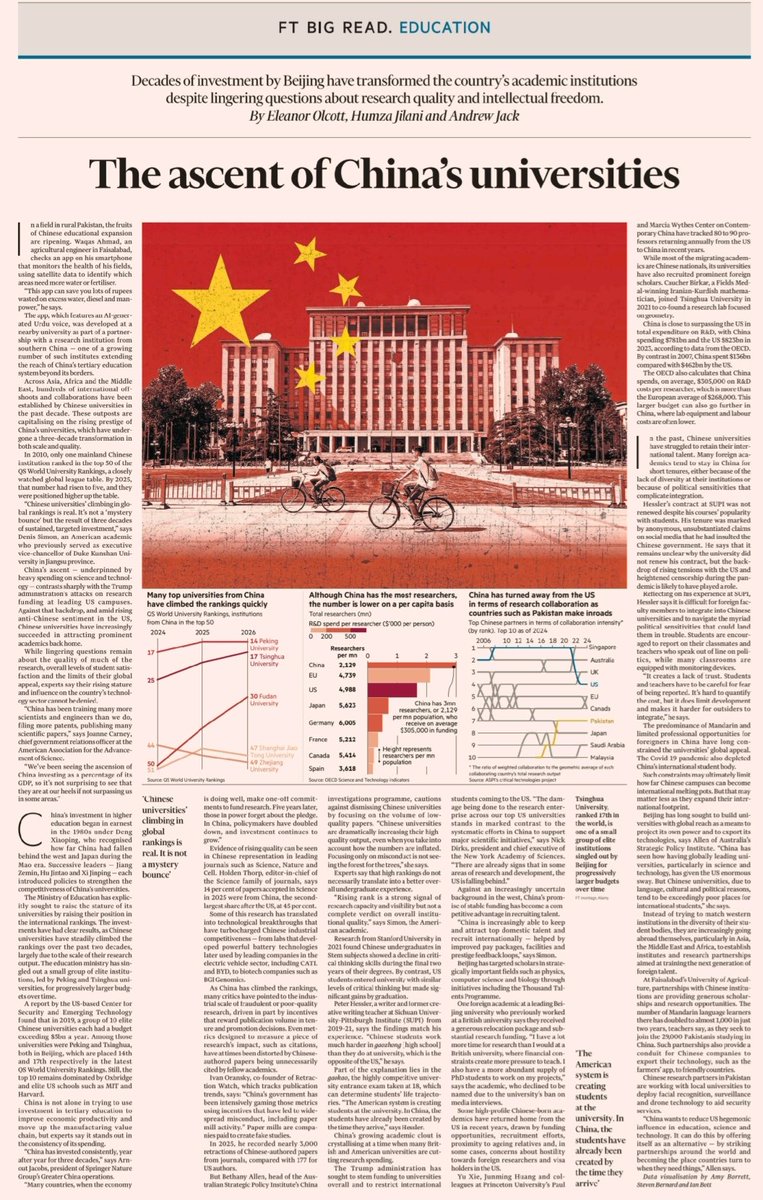
The Times asks: “Why is Britain educating China’s scientists?”
The more honest question is the inverse:
Why do Chinese students still bother coming to the UK?
A big part of the answer is selection pressure.
Getting into the very top tier in China (Tsinghua, Peking, etc.) is brutally competitive. If you don’t make that cut, you look abroad.
The top slice goes to the US when possible. If the US is out of reach (money, visas, timing, risk), the UK becomes the next default option.
And the UK is happy to take them — not because of some grand national science strategy, but because the economics are obvious:
International students often pay 3–4× the home fee. That money cross-subsidises departments, keeps marginal programmes alive, and in some universities quietly props up the whole balance sheet.
If you remove that revenue, a lot of “STEM capacity” simply evaporates.
So framing this as “Britain generously training China” is mostly hot air. It’s a transaction.
There’s also an uncomfortable quality question that UK commentary keeps dodging:
If you’re coming to do something like physics at a place like Oxford, what are you actually buying?
In many UK programmes the contact hours are low, the structure is light, and the admissions filter is often more about signalling than depth of preparation.
That can be fine if the goal is a credential. It’s not fine if the country is pretending it’s building a serious scientific pipeline.
If Britain wants fewer Chinese postgrads in advanced STEM, there are only two real levers:
produce more British students who want and can do hard STEM,
fund universities so they don’t depend on overseas fees.
Everything else is op-eds.