Anonymous@YourAnonCentral
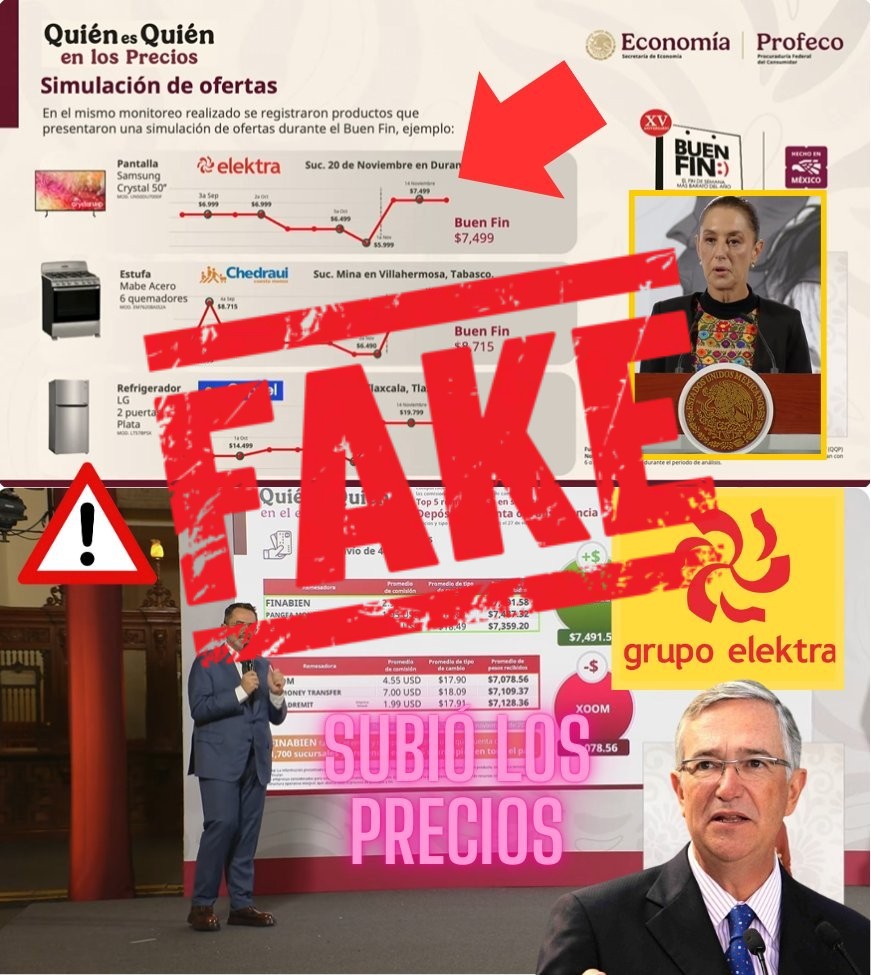
This is Ricardo Salinas Pliego, Mexico’s oligarch, who has donated to Trump and is currently trying to overthrow the Mexican government to avoid paying taxes and a deeper money laundering investigation into his cartel tied casinos.
Ricardo Salinas Pliego is not simply a billionaire with media influence; he is an oligarch who has influenced policy behind the scenes for decades. He is one of the most powerful corporate actors in Mexico, a figure whose empire spans television, banking, telecommunications, retail finance, resource extraction, and gaming. Through Grupo Salinas, he controls TV Azteca, Banco Azteca, Elektra, and Totalplay, companies that give him unmatched reach into public opinion, credit markets, household consumption, and national infrastructure. His companies’ interests intersect directly with areas where federal regulation, tax enforcement, and anti-corruption policy have become more aggressive in recent years, creating friction between the oligarch and the current Sheinbaum government.
Salinas has faced significant legal scrutiny over the past two decades, both in Mexico and abroad. Notably, in 2005, the U.S. Securities and Exchange Commission accused him and TV Azteca of financial misconduct; this case was settled. Currently, in Mexico, tax disputes have intensified. Courts have ordered Grupo Elektra to pay billions of pesos in overdue liabilities, part of a broader federal effort to recover more than 63 billion pesos tied to his conglomerate. Mexican officials have openly accused Salinas of leveraging influence over the judiciary to obstruct payment. To date, no court has concluded that Salinas Pliego personally maintains direct ties to drug cartels. However, the casino investigations have tied his companies to criminal financial networks, raising questions about oversight, compliance, and exposure to cartel influence or collaboration.
The oligarch and the orange tyrant
Ricardo Salinas Pliego’s political reach extends far beyond Mexico’s borders. Over the past decade, he has cultivated ties with influential figures in the United States, particularly within the Republican Party and networks aligned with former President Donald Trump. A U.S. subsidiary of Grupo Salinas donated $250,000 to Trump’s 2017 presidential inauguration committee, placing him among a small circle of foreign-linked business interests that publicly supported the incoming administration. In the years that followed, a political action committee tied to his U.S. operations contributed to Trump’s re-election effort and more than $289,000 to Republican candidates and committees during the Trump presidency. Signaling a clear engagement with GOP power structures and Trump’s network of influence.
The overlap does not end with donations to the Trump campaign. Salinas Pliego has also surfaced in the corporate intelligence world, where his legal disputes have intersected with firms connected to Israeli intelligence. Reporting from Intelligence Online indicates that during a high-stakes financial conflict with businessman Val Sklarov, hiring Black Cube, a company founded by former members of Israel’s security services. Black Cube is already familiar in U.S. political circles. In 2017 and 2018, multiple investigations by major outlets revealed that aides to Donald Trump or actors aligned with his policy goals had contracted with Black Cube in connection with efforts to undermine the Iran nuclear agreement. The firm was reported to have targeted former Obama administration officials Ben Rhodes and Colin Kahl, looking for compromising personal or financial information that could be used to discredit them.
Several of Salinas’s public statements have echoed core Trump Republican messaging, including skepticism of state regulation, denunciations of “socialist” policies, and advocacy for market-driven reforms. During the Trump presidency, he publicly defended U.S. trade pressure on Mexico and praised Trump’s economic approach. His media and corporate messaging often mirror themes common in right-wing circles, emphasizing limited government oversight and hostility toward regulations that affect telecommunications, banking, and large-scale retail lending.
In 2025, Salinas launched a right-wing political initiative in Mexico that shared stylistic similarities with global far-right regressive movements tied to Russia, Israel, and Trump. His call for a citizen-led movement against “crime and corruption” drew heavily on the rhetoric of “taking back the country,” a phrase central to the former U.S. president’s political identity. While not publicly affiliated with any U.S. political organization, his messaging and political posture place him squarely within the ideological and influence orbit of contemporary regressive populism. Salinas’s corporate empire depends on a regulatory environment that favors private industry, helps him evade taxes, and limits federal regulations that protect ordinary people.
Taxing the oligarch: Mexico vs Corruption.
The long-running tax conflict between Ricardo Salinas Pliego and the Mexican government reached a decisive moment in 2025 under President Sheinbaum. After more than a decade of disputes, a federal tribunal in June ordered Grupo Elektra to pay 2,000 million pesos in overdue taxes, rejecting the company’s appeals and confirming the SAT’s assessment. Administrations before Claudia Sheinbaum had attempted to collect, but Salinas’s legal teams repeatedly stalled the process through appeals, constitutional protections (amparos), and challenges that kept the cases tied up in the courts. The standoff became a symbol of a broader problem in Mexico’s political economy: the difficulty of compelling untouchable oligarchs to comply with tax obligations that ordinary companies and citizens cannot escape. Salinas had long been seen as one of the most protected businessmen in the country, benefiting from political access and relationships that allowed him to delay or dilute enforcement efforts.
That changed under President Sheinbaum. Her administration inherited years of unresolved tax disputes involving Mexico’s largest corporate groups, but unlike previous governments, she treated these liabilities not as political bargaining chips but as a cornerstone of her anti-corruption platform. Unlike earlier governments, Sheinbaum entered office with a mandate to show she was not beholden to private power. Taking decisive action in a high-profile case involving one of the richest and most politically connected figures in the country gave her administration immediate credibility. Her administration strengthened the SAT’s litigation capacity, publicly backed regulators, and encouraged prosecutors to accelerate long-delayed cases. Sheinbaum’s government expanded audit protocols for large corporations, tightened rules governing public procurement, and introduced stricter oversight of federal contracts. She pushed for clearer reporting standards within government agencies, increased transparency requirements for public spending, and supported measures to limit influence peddling within regulatory bodies. Her administration also backed judicial reforms aimed at reducing the abuse of amparos that had historically allowed wealthy defendants to delay or nullify enforcement actions.
In June 2025, a federal tribunal issued a firm and final ruling ordering Grupo Elektra to pay 2,000 million pesos in overdue corporate taxes. The judges dismissed Elektra’s final set of appeals and upheld the SAT’s position that the liabilities were legally sound and long overdue. The court also determined that no further protections or procedural delays were justified, meaning Elektra was forced to pay immediately. The decision was unprecedented, not because of the amount but because of who it targeted. The courts signaled that they would no longer serve as a safety valve for corporate power, and SAT officials described the ruling as a watershed moment for fiscal sovereignty. It marked the first time in modern Mexican history that one of the country’s most powerful business empires was forced to comply with a major tax judgment after more than a decade of resistance.
This judgment represents only a fraction of what is at stake. According to SAT data, companies tied to Salinas Pliego collectively owe over 63,000 million pesos in accumulated liabilities, including corporate income taxes, penalties, and interest involving Elektra, TV Azteca, and other subsidiaries. These are among the largest corporate tax debts in the country.
For Sheinbaum, the ruling served two purposes. It demonstrated the government’s commitment to legal equality and undermined the perception that major businessmen could negotiate away their obligations. It also provided political momentum for her anti-corruption agenda, reinforcing public confidence in institutions that had long been viewed as deferential to economic elites.
For Salinas, the implications were immediate. The ruling weakened his perception of invulnerability and impunity, increased his financial exposure, and raised the prospect that the rest of his accumulated liabilities could soon be enforced with equal force. It also intensified the political conflict between his corporate empire and the federal government, contributing to his increasingly aggressive posture in the media and online political networks. The defeat significantly increased Salinas’s financial exposure, as well as that of every other oligarch in Mexico, and reduced his ability to negotiate from a position of strength. His public response framed the rulings as political retaliation, even as officials emphasized that the cases reflect an effort to enforce tax law uniformly after decades of selective oversight. The ruling reflected a structural shift in the balance of power between the state and the corporate oligarchs who had shaped Mexico’s political economy for decades. Sheinbaum’s anti-corruption measures provided the institutional foundation. The Elektra ruling provided the precedent. And together they signaled that Mexico’s era of untouchable billionaires was beginning to crack.
The Oligarch and the Cartel
The legal pressure on Ricardo Salinas Pliego intensified further when two casinos owned by Grupo Salinas were suspended as part of a nationwide crackdown on financial operations linked to organized crime, including drug cartels. Mexican authorities announced in 2025 that 13 casinos across multiple states were being investigated for laundering large volumes of illicit proceeds generated by the country’s major cartels. Two of those establishments belonged to the Salinas conglomerate.
Casinos have long been a favored laundering mechanism for Mexican cartels, as well as other organized crime groups worldwide. Their cash-heavy business model allows criminal networks to inject illicit funds into the financial system with minimal detection. The most common methods include:
1. Structured Cash Buy-ins
Cartel operatives bring significant amounts of small-denomination cash into casinos, break it into chips, play minimally, then cash out. The money is reissued as “winnings” and appears legitimate once deposited into bank accounts.
2. Use of Intermediaries (Smurfs)
Multiple individuals make smaller, separate transactions to avoid triggering reporting thresholds. These intermediaries often rotate casinos, making surveillance more difficult.
3. Collusion With Casino Staff
Criminal groups bribe or threaten employees to bypass required identification checks or to falsify transaction records. Some casinos have been accused of maintaining parallel bookkeeping systems to facilitate money movements.
4. Cross-Border Financial Transfers
Cartels use casinos near the U.S. border to convert pesos into dollars, then move the funds through shell companies or fake vendors abroad, completing the laundering cycle.
5. Use of Virtual Betting Platforms
Some casinos operate online platforms that are lightly regulated, enabling anonymous high-volume transactions across jurisdictions.
These practices make the gaming industry one of the most strategically important laundering channels for major criminal groups, including the Sinaloa Cartel, the Jalisco New Generation Cartel (CJNG), and various regional factions. It is also one of the sectors where government oversight has historically been weakest.
The nationwide casino investigation marked the first time in over a decade that federal authorities aggressively targeted the financial infrastructure supporting cartel liquidity rather than solely pursuing high-profile traffickers. By focusing on casinos, regulators went after the “cleaning” stage of cartel finances, where illicit proceeds are transformed into spendable corporate assets.
For Grupo Salinas, the suspension of two of its gaming establishments was especially consequential, not because authorities accused the conglomerate of criminal intent, but because any proximity to illicit finance networks carries severe regulatory and reputational risks. Even indirect exposure forces companies to undergo thorough audits, intensified reporting requirements, and forensic accounting reviews that can uncover additional irregularities.
At the moment the casino investigation broke, Salinas was already entangled in multi-billion-peso tax disputes and facing heightened regulatory scrutiny across his telecom, banking, and retail-finance divisions. The suspension of his casinos added a new legal front and expanded the scope of state oversight into his business empire.
The regulatory challenges emerged as a significant threat to his corporate model, signaling a broader “rule-of-law offensive” aimed at establishing system-wide changes rather than isolated regulatory incidents. This approach reflects the structural reform effort, intending to strengthen legal compliance across sectors and diminish the influence of entrenched oligarchies. Regulators gained access to internal financial records that were previously shielded by legal challenges. Increased surveillance meant less room for aggressive accounting strategies or opaque financial movements. Heightened AML (anti-money laundering) compliance requirements forced Banco Azteca to red-flag transactions more aggressively, undermining some of the flexibility the group and cartels relied on. Insurance and credit rating agencies responded by intensifying scrutiny of Grupo Salinas’s risk profile. Political opponents leveraged the investigation, framing it as evidence that his empire operates in legal gray zones.
For an oligarch whose empire has flourished under a light regulatory touch, this was a direct challenge to his operating environment. The casino suspensions also showed a transformation in Mexico’s approach to both criminal finance and elite impunity. For the first time in years, regulators were willing to risk confrontation with major corporate groups to disrupt the financial pipelines on which cartels depend. And because Grupo Salinas is one of the most politically connected conglomerates in the country, the enforcement action was widely interpreted as a sign that the government was willing to target any actor, regardless of status, if their financial operations fell within the scope of the investigation.
In short, the casino crackdown did more than expose potential vulnerabilities in Salinas’s empire. It demonstrated that, under President Sheinbaum, corruption would face serious pushback.
spookyconnections.com/2025/11/17/hyb…