Balázs Knakker

465 posts

Balázs Knakker

Balázs Knakker

@BKnakker

Postdoc @ Translational Neuroscience Research Group, Univ. Pécs, Hungary. #visual #attention #workingmemory #EEG #signalprocessing #stats #rstats

Hungary Katılım Mart 2016
1.1K Takip Edilen172 Takipçiler
Balázs Knakker
Balázs Knakker@BKnakker·
@psolymos What's your take on using date-based snapshots from Posit Public Package Manager?
English
0
0
0
2
Péter Sólymos
Péter Sólymos@psolymos·
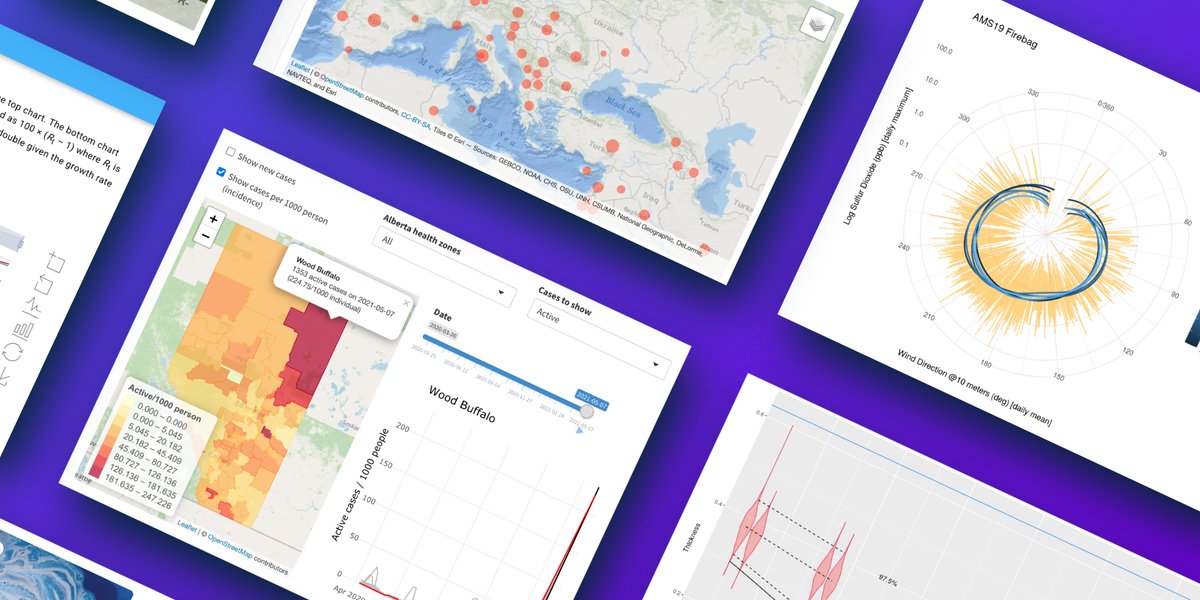
The wealth of #rstats packages 📦 can supercharge your #shiny ✨ app... ...so now you have to manage these dependencies! Here are the 3 most common ways for dependency management when working with R and #docker:
Péter Sólymos tweet media
English
3
25
40
0
Balázs Knakker retweetledi
Andrej Karpathy
Andrej Karpathy@karpathy·
Wow, this tweet went very viral! I wanted share a possibly slightly improved version of the tweet in an "idea file". The idea of the idea file is that in this era of LLM agents, there is less of a point/need of sharing the specific code/app, you just share the idea, then the other person's agent customizes & builds it for your specific needs. So here's the idea in a gist format: gist.github.com/karpathy/442a6… You can give this to your agent and it can build you your own LLM wiki and guide you on how to use it etc. It's intentionally kept a little bit abstract/vague because there are so many directions to take this in. And ofc, people can adjust the idea or contribute their own in the Discussion which is cool.
Andrej Karpathy@karpathy

LLM Knowledge Bases Something I'm finding very useful recently: using LLMs to build personal knowledge bases for various topics of research interest. In this way, a large fraction of my recent token throughput is going less into manipulating code, and more into manipulating knowledge (stored as markdown and images). The latest LLMs are quite good at it. So: Data ingest: I index source documents (articles, papers, repos, datasets, images, etc.) into a raw/ directory, then I use an LLM to incrementally "compile" a wiki, which is just a collection of .md files in a directory structure. The wiki includes summaries of all the data in raw/, backlinks, and then it categorizes data into concepts, writes articles for them, and links them all. To convert web articles into .md files I like to use the Obsidian Web Clipper extension, and then I also use a hotkey to download all the related images to local so that my LLM can easily reference them. IDE: I use Obsidian as the IDE "frontend" where I can view the raw data, the the compiled wiki, and the derived visualizations. Important to note that the LLM writes and maintains all of the data of the wiki, I rarely touch it directly. I've played with a few Obsidian plugins to render and view data in other ways (e.g. Marp for slides). Q&A: Where things get interesting is that once your wiki is big enough (e.g. mine on some recent research is ~100 articles and ~400K words), you can ask your LLM agent all kinds of complex questions against the wiki, and it will go off, research the answers, etc. I thought I had to reach for fancy RAG, but the LLM has been pretty good about auto-maintaining index files and brief summaries of all the documents and it reads all the important related data fairly easily at this ~small scale. Output: Instead of getting answers in text/terminal, I like to have it render markdown files for me, or slide shows (Marp format), or matplotlib images, all of which I then view again in Obsidian. You can imagine many other visual output formats depending on the query. Often, I end up "filing" the outputs back into the wiki to enhance it for further queries. So my own explorations and queries always "add up" in the knowledge base. Linting: I've run some LLM "health checks" over the wiki to e.g. find inconsistent data, impute missing data (with web searchers), find interesting connections for new article candidates, etc., to incrementally clean up the wiki and enhance its overall data integrity. The LLMs are quite good at suggesting further questions to ask and look into. Extra tools: I find myself developing additional tools to process the data, e.g. I vibe coded a small and naive search engine over the wiki, which I both use directly (in a web ui), but more often I want to hand it off to an LLM via CLI as a tool for larger queries. Further explorations: As the repo grows, the natural desire is to also think about synthetic data generation + finetuning to have your LLM "know" the data in its weights instead of just context windows. TLDR: raw data from a given number of sources is collected, then compiled by an LLM into a .md wiki, then operated on by various CLIs by the LLM to do Q&A and to incrementally enhance the wiki, and all of it viewable in Obsidian. You rarely ever write or edit the wiki manually, it's the domain of the LLM. I think there is room here for an incredible new product instead of a hacky collection of scripts.

English
1.1K
2.8K
26.4K
6.9M
Balázs Knakker
Balázs Knakker@BKnakker·
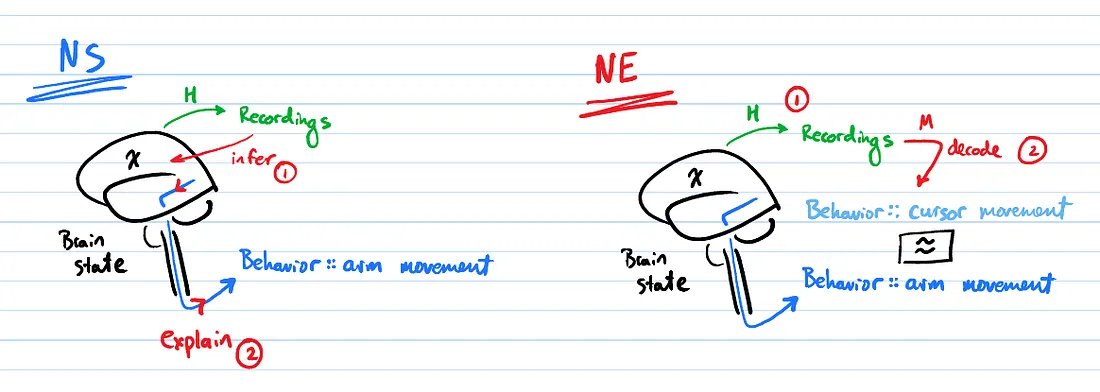
@vineettiruvadi @DrCoreyKeller There might be very convincing cases where something "clearly just works", e.g. BCIs I think are nearly getting there, I guess DBS for Parkinsons was sth similar maybe?
English
0
0
0
9
Balázs Knakker
Balázs Knakker@BKnakker·
@vineettiruvadi @DrCoreyKeller Bridges, computers, phones and rockets are engineered systems. Neural interfaces interact with a complex biological system, which is very far from deterministic and mostly unknown ('sth special ab. biology').
English
1
0
0
7
Vineet Tiruvadi, MD PhD
Vineet Tiruvadi, MD PhD@vineettiruvadi·
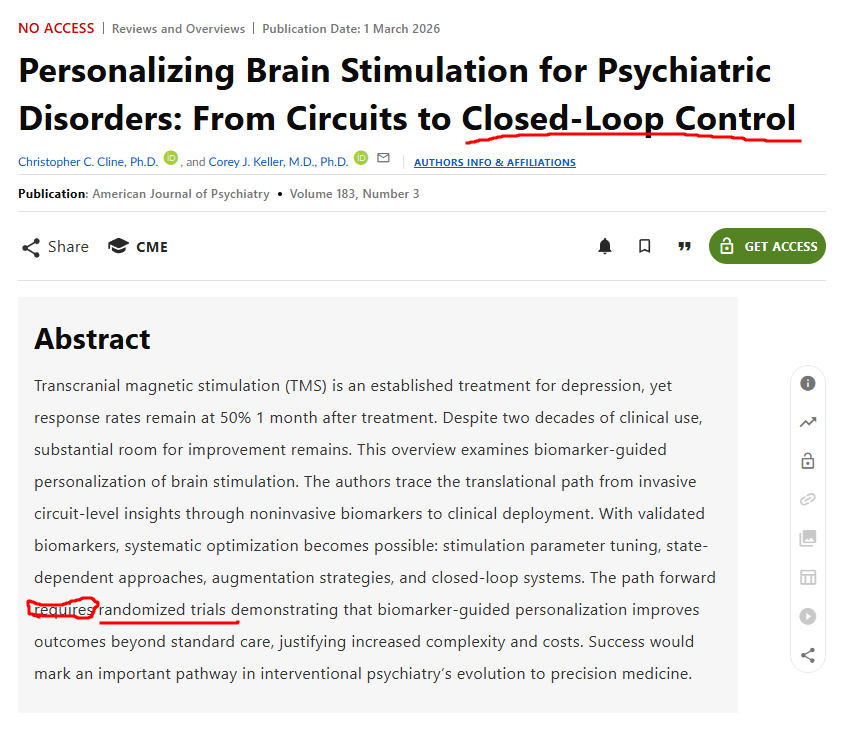
Apparently Harvard doesn't have access to this article, but it's incredibly frustrating to see this in 2026
Vineet Tiruvadi, MD PhD tweet media
English
1
0
1
120
Balázs Knakker
Balázs Knakker@BKnakker·
@vineettiruvadi @DrCoreyKeller Help me understand your point. Are you saying that an RCT is not necessary to establish that a specific kind of treatment works or works better than an alternative? It's not clear to me where you're getting at.
English
1
0
1
6
Mushtaq Bilal, PhD
Mushtaq Bilal, PhD@MushtaqBilalPhD·
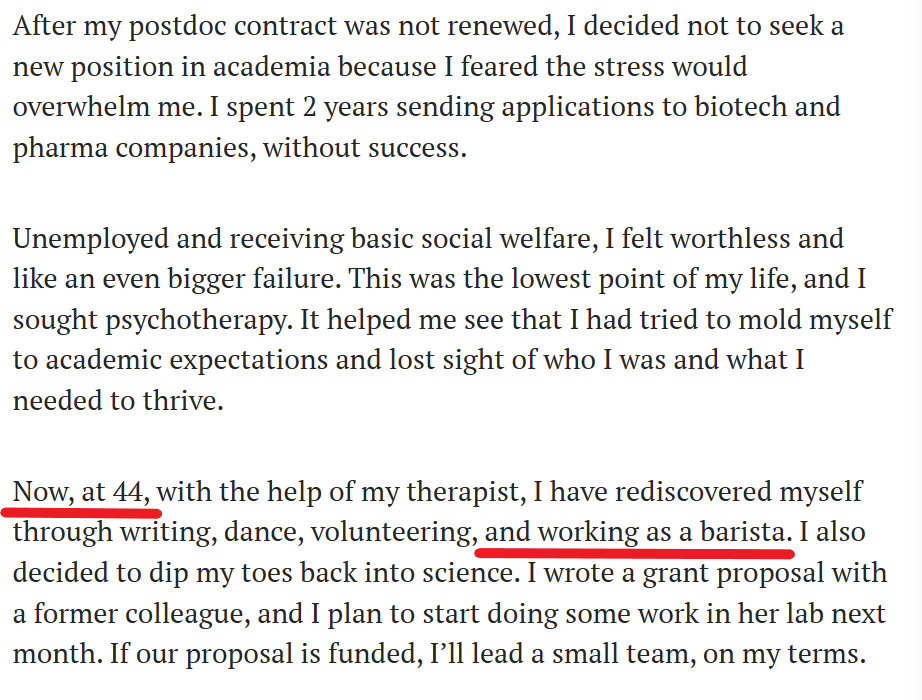
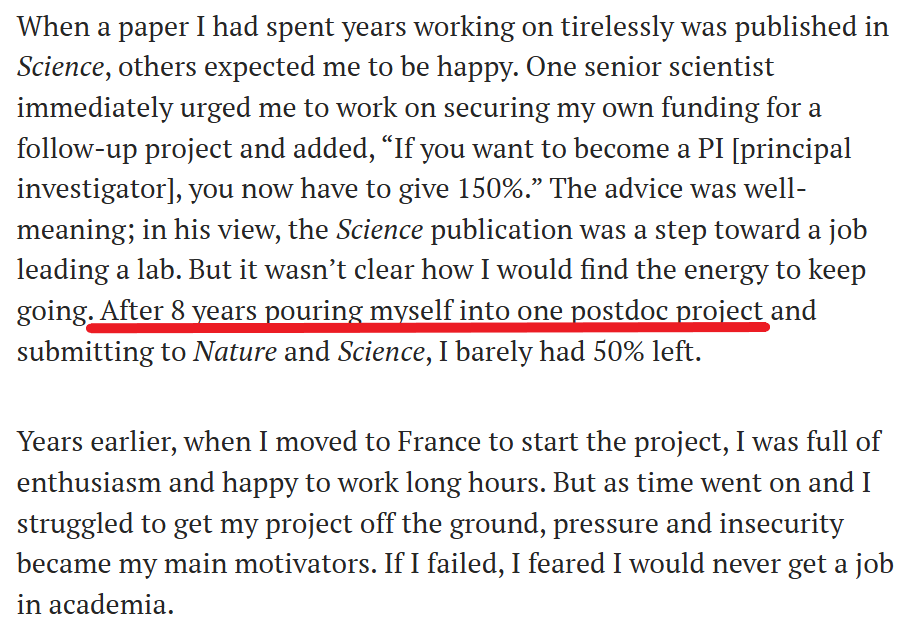
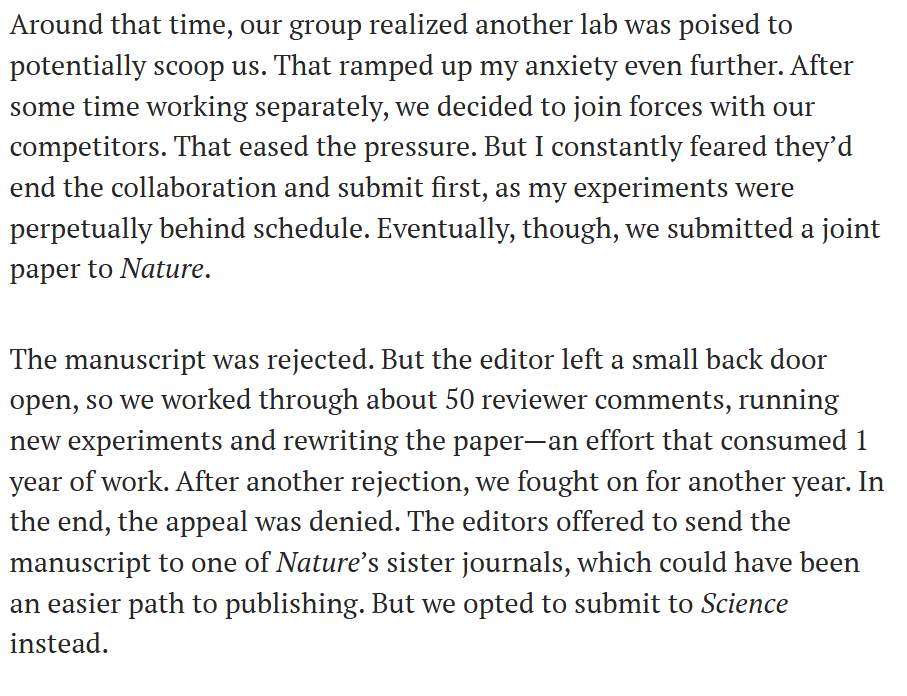
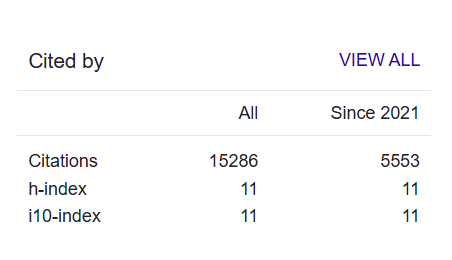
If you're doing (or thinking of doing) a PhD, read this: 8-year long postdoc, paper in Science journal, 15,000+ citations. Now works as a barista. Academia doesn't care about you. You are totally on your own. www. science. org/content/article/how-chasing-high-impact-publication-nearly-broke-me
Mushtaq Bilal, PhD tweet mediaMushtaq Bilal, PhD tweet mediaMushtaq Bilal, PhD tweet mediaMushtaq Bilal, PhD tweet media
English
21
39
350
74.3K
Elisabeth Bik
Elisabeth Bik@MicrobiomDigest·
Ugh. Why is @SpringerNature still publishing crap like this? I am not referring to the low quality of the panels. Can you spot the actual problem? #ImageForensics
Elisabeth Bik tweet media
English
26
10
123
46.9K
Balázs Knakker
Balázs Knakker@BKnakker·
@vineettiruvadi You responded quickly :) I continued in another tweet with an example when NE can be actually bottlenecked by inadequate "NS". So it's not _necessarily_, but possibly bottlenecked I think.
English
0
0
1
10
Balázs Knakker
Balázs Knakker@BKnakker·
@vineettiruvadi ... I also recall a video where a BCI competition team boasts with their results, which turn out to be just using jaw clench signals. NE needs NS to know what it's doing. I don't think I'm contradicting btw :)
English
0
0
1
18
Balázs Knakker
Balázs Knakker@BKnakker·
@vineettiruvadi From my (NS) pov, it makes sense that NE can be fine with a correlate of e.g. movement intent, not interested in the exact causal layout of the story. But...
English
2
0
1
33
Balázs Knakker retweetledi
Tahereh Toosi
Tahereh Toosi@taherehtoosi·
How does our brain excel at complex object recognition, yet get fooled by simple illusory contours? What unifying principle governs all Gestalt laws of perceptual organization? We may have an answer: integration of learned priors through feedback. New paper with Ken Miller! 🧵
GIF
English
12
72
268
23.8K
Micah G. Allen
Micah G. Allen@micahgallen·
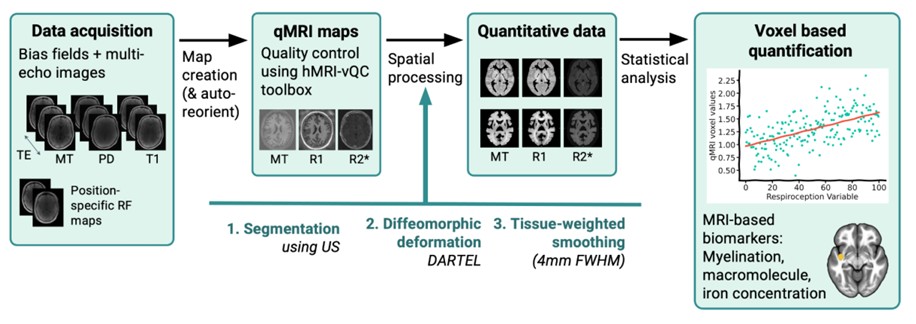
@BKnakker @AshleyTyrer @TobiasUHauser @DubMagda In our case, the TFCE values were obtained using the SPM TFCE toolbox (in CAT12), with permutation-based inference providing the multiple-comparison control. So “TFCE-corrected” here refers to p-values derived from that permutation framework rather than a separate RFT correction.
English
1
0
1
20
Balázs Knakker
Balázs Knakker@BKnakker·
@AshleyTyrer @TobiasUHauser @micahgallen @DubMagda Explore-exploit is a key question, I love this! A technical question: what do you mean by "TFCE corrected"? afaik TFCE is not a(n mcp) "correction" method. Did you use cluster permutation or RFT-based methods after TFCE?
English
1
0
1
12
AJ Thurston, PhD
AJ Thurston, PhD@AJThurston·
Randomly remembered this article that, instead of calculating confidence intervals for their error bars, just used the letter "T" on the end of each bar 🤣
AJ Thurston, PhD tweet media
English
31
143
2.6K
94.8K
Balázs Knakker retweetledi
Tyler is finishing a book, slow to reply
Amongst dancers, it’s well known that there’s a pre-dance that you have to do before each time you dance. You have to bear 10-30 minutes of dancing in a way that feels awkward before you really hit your groove If you didn’t know about the pre-dance phenomenon, then you might give up dancing at minute 7, right before you were about to hit your groove I find that anything involving creativity is like this, from writing to schmoozing at a party to working through my own complex emotions If you don’t know that all these things require an awkward pre-dance, then you lose confidence too early. You conclude that you’re “just not a creative person.” You give up or start using an AI instead of your own internal ocean of untapped intelligence
English
64
428
4.9K
158.7K
Balázs Knakker retweetledi
Jesse Brown
Jesse Brown@jesseaaronbrown·
Amazing paper. All the good stuff: brain dynamics, state trajectories, embedding, links to arousal, tracking full dynamic state with a single measurement. nature.com/articles/s4158…
English
2
50
223
23K
Balázs Knakker
Balázs Knakker@BKnakker·
@DillanDiNardo Is the context and methodological background of this figure available? A study, a whitepaper?
English
1
0
1
63
Dillan DiNardo
Dillan DiNardo@DillanDiNardo·
9/ In a blinded, placebo-controlled human trial, MSD-001 showed: – No hallucinations – Less “psychedelic” than any known psychedelic on all 7 standard non-visual dimensions With the access mechanism isolated, we're now combining it with modular add-ons to render specific states.
Dillan DiNardo tweet media
English
9
6
170
22.9K
Dillan DiNardo
Dillan DiNardo@DillanDiNardo·
1/ It feels surreal to announce completion of the first human trial in the development of our neurotech platform for designing mental states, from the molecular level. Human experience is now programmable. A🧵on the sequel to psychedelics & the first new "emotion in a bottle."
Dillan DiNardo tweet media
English
169
419
2.7K
361.5K