
Sabitlenmiş Tweet
BA☝
5.4K posts

BA☝
@Ba_ups56
سَلَـٰمٌ عَلَىٰ مُوسَىٰ وَهَـٰرُونَ
Shafi'i/athari Katılım Mart 2024
215 Takip Edilen60 Takipçiler
@boysoverflours At this point and her, have just created new religion separate from Islam
English

Ayah is always unfairly represented by the same hypocritical muslim men she exposes. I don't think its out of bounds to say peoples overreaction to calling Allah "she" suggests that using "he" has subconscious gender connotations...despite God being above human description
⚔️ Aslan Bey |Y| ⚔️@Aslan_Bey_1
Why is Feminism just another Kufri ideology? I give you exhibit A. 🤦🏽♂️ (Snippet of her rant - and yes she's filled this rant in the 🚽 rest room)
English
Hanafis are known for denying sahih hadith because it goes against the desire of Abu Hanifah
ابن محبوب@IbnMahbub_
The best Madhab, in its Usūl, and the way evidences are utilised, thus being closest to the Sunnah is (in my opinion) the Hanafī Madhab
English
BA☝ retweetledi

No more Fish And Chips Fridays? The game is gone
Politics UK@PolitlcsUK
🚨 NEW: Fried food including chicken nuggets and fish and chips will be banned from being served in schools to reduce obesity Pizza and sausage rolls will be severely limited, and desserts will also need to be at least 50% fruit
English
@Laptusk @oldsoulpilltv >"that doesn't follow"
> "goes on to make argument that doesn't follow
English

@Ba_ups56 @oldsoulpilltv That doesnt follow at all, the pressing of a button is more like stabbing yourself
English

Suicide bombers are the ultimate chuds💊
Suicide Bombers refuted
oldsoul@oldsoulpilltv
Tomorrow I’m going to be refuting isis dawla on suicide bombings and the tadlis and deception they use when trying to bring athar to prove it’s halal
English
@Shhh899 @oldsoulpilltv I've watched the video you son of wh0r£, he's entire points goes down for the example of "Sahaba" they're getting killed by someone else.
English

@Ba_ups56 @oldsoulpilltv You didn't watch the video or you're mentally disabled?
English
BA☝ retweetledi

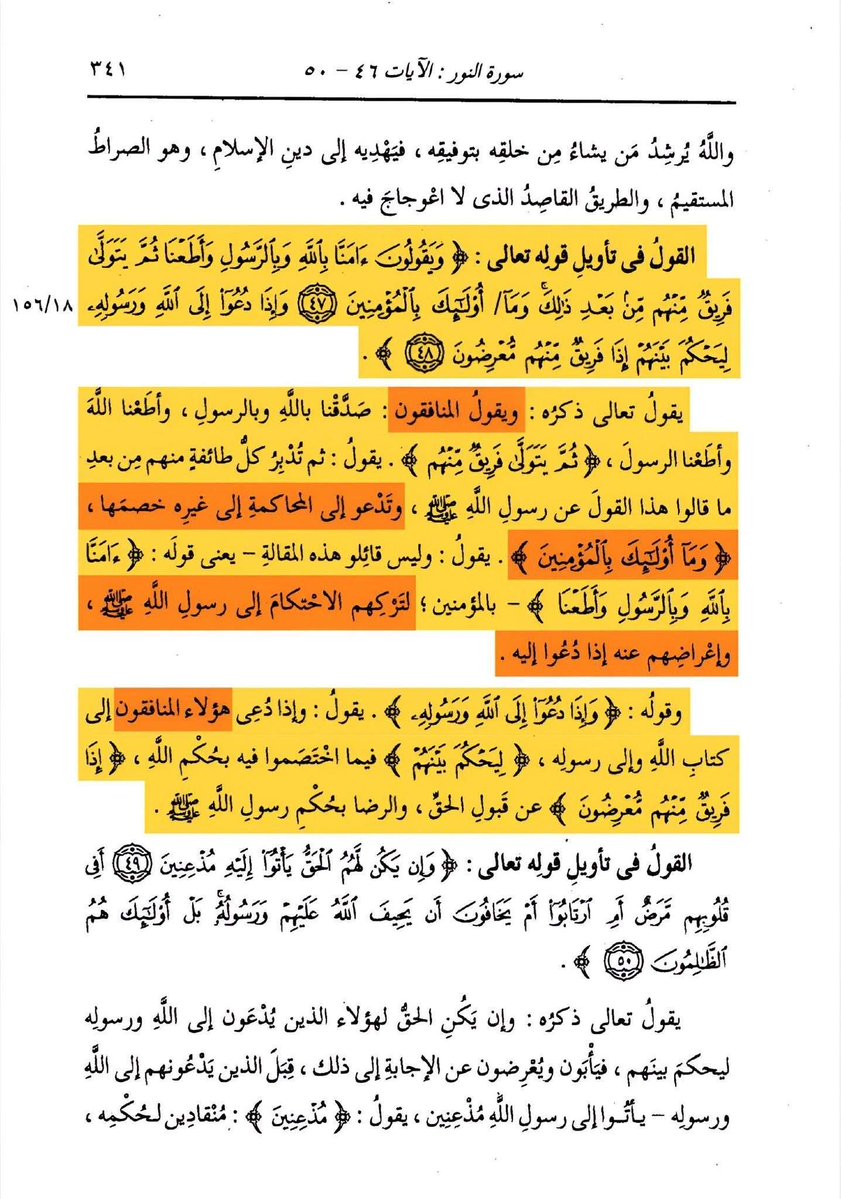
📌 Imam of Mufassirin, Imam Tabari on Tahakumm to Taghut
"Whoever says this to Prophet than calls to seeking Judgment elsewhere in disputes are not believers
-
English
@back3nddchildd @AhmedTayy Ibn qayyim says ibn taymiyyah reported the belief about hell ending for kuffar not that he believed the hell will end
English

@AhmedTayy Doesn’t Ibn Qayyim expounding on the view serve as a very strong indicator IT held/was sympathetic to the position at the end of his life? Or at the very very least he considered it an opinion worth mentioning?
English

Ibn Taymiyyah never at any point conclusively held to the position that Jahannam would end for the Kaafir.
Anyone claiming otherwise is lying upon him.
I'll translate and gather some writing by sh Yusuf al-Gafis and sh al-Barrak on this issue insha'allah.
English
@AbdullahReads_ He never believed that people like you always build their argument on a strawman, don't try to play the "genuine" gimmick
English

BA☝ retweetledi

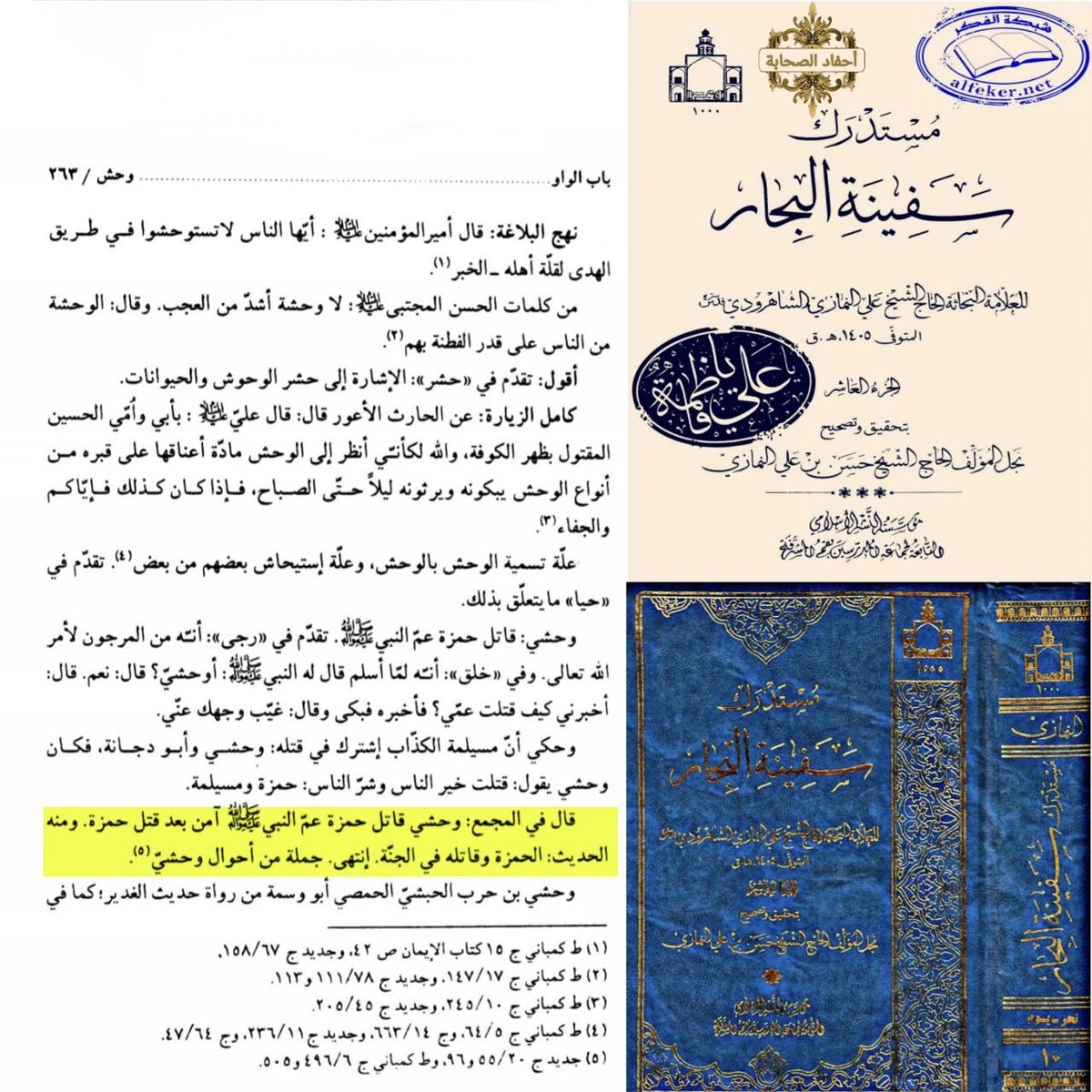
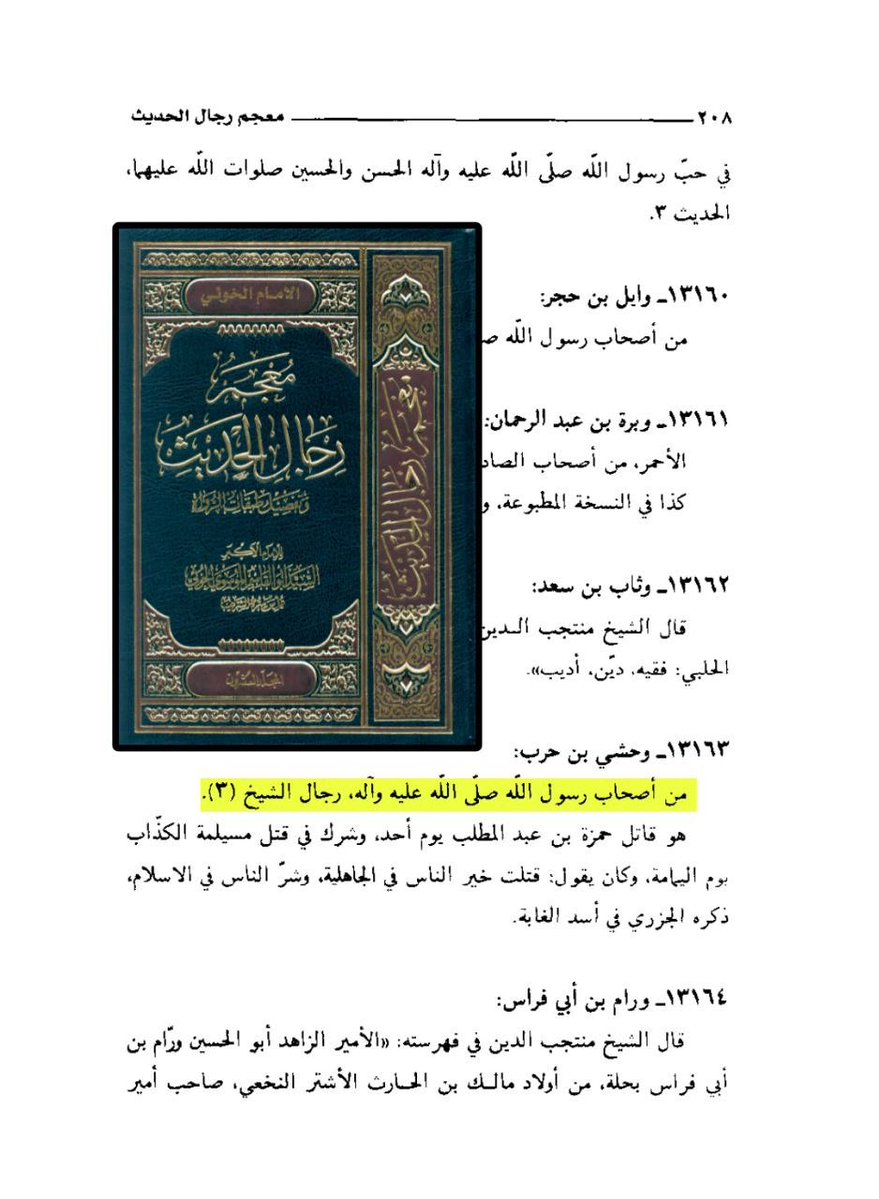
Sahabi kills another Sahabi and both of them in Jannah? Yes and from the authentic Shia narrations, Al Wahshi killer of Hamzah (both will be in paradise!) #shia #companions #Islam

English

@AlDonFodio Agreed, except for Muawiyah
We should withhold judgement on him, and allow Allah to judge him.
There is a huge list of alleged terrible crimes he commits, that if 1 were true, his iman would be called to question
English
@Anonymousfor545 @FunkinForNow @bourema_imad Make mistakes about her age by 10 years difference 🤣, don't try to act low on purpose, if the age of consent was 21 kafir like you would be saying she's 21
English
@FunkinForNow @bourema_imad Aisha also said Abu Bakr did not meet Fatima after Fadak incident, yet we have authentic reports showing Abu Bakr meeting Fatima before she died.
Aisha quotes from the Torah a description of Muhammed (saw), but mistakenly attributes it to the gospel
Aisha can make mistakes
English

He has been astray for a looooooooonnggg time
Mohammed Hijab@mohammed_hijab
In the broader scholarly discourse concerning the historical details of Sayyidah Aisha radiyallahu anha at the time of her marriage and its consummation the narration appearing in the Sahihayn that places these events at the ages of six and nine respectively remains the position affirmed by the vast majority of classical authorities. Yet the present discussion is strictly methodological in nature and does not endorse any alternative chronological proposal such as the figure of eighteen sometimes advanced in modern academic analyses of the sirah and maghazi literature. The sole purpose here is to illustrate through the words of the ulema themselves that the layman Neo Salafi assertion namely that every single narration contained within Sahih al Bukhari and Sahih Muslim must be accepted without the slightest academic reservation is not the nuanced position upheld by the Salaf or by the broader Sunni tradition of hadith scholarship. On matters that are purely historical and biographical rather than constitutive of legal rulings or articles of creed the classical authorities have always permitted a measured degree of critical engagement. The foundational distinction drawn by the early muhaddithun is instructive in this regard. Imam Abd al Rahman ibn Mahdi a towering figure of the second century and teacher of Imam Ahmad ibn Hanbal articulated the principle with characteristic clarity: “When reports reach us from the Prophet peace be upon him concerning the lawful and the prohibited and the legal rulings we are severe with the chains of transmission and we scrutinise the narrators. But when reports concern the virtues of actions their rewards and punishments or permissible exhortations and invocations we show leniency with the chains.” This statement recorded by al Hakim in al Mustadrak and echoed in al Suyuti’s Tadrib al Rawi reflects a consensus among the Salaf that historical and biographical akhbar precisely the category into which the age of Aisha falls allow greater flexibility than those deployed for deriving ahkam. Imam Ahmad ibn Hanbal expressed a similar view when he remarked that extreme strictness is reserved for what pertains to halal and haram while leniency befits reports of virtues stories and narratives. On purely historical questions therefore the acceptance or rejection of a particular report after due academic examination has always been far less consequential than on matters touching usul al din or fiqh.Even within the Sahihayn themselves the classical tradition never treated every narration as immune to scholarly discussion. Consider first the muallaqat those suspended reports in which Imam al Bukhari deliberately omits part or all of the opening chain for the sake of brevity. While the overwhelming majority of these are corroborated elsewhere in the Sahih with complete isnads a significant subset approximately one hundred and sixty unique instances stand alone in suspended form. Al Hafiz Ibn Hajar al Asqalani devoted an entire monograph Taghliq al Taliq to tracing their external supports and evaluating their authenticity according to rigorous criteria. He and other luminaries such as Ibn al Salah and al Dhahabi subjected these reports to independent scrutiny demonstrating that their inclusion in the Sahih did not exempt them from further verification. This labour alone refutes any notion that the mere presence of a narration in al Bukhari rendered further academic inquiry impermissible.A still more pointed illustration emerges from the work of Imam al Daraqutni whose Kitab al Tatabbu systematically examined roughly seventy eight narrations in Sahih al Bukhari one hundred in Sahih Muslim and thirty two common to both. His critique focused on subtle ilal hidden defects in precision of transmission inversion of wording or minor interruptions without ever impugning the overall stature of the two collections. Later authorities such as Imam al Nawawi engaged these points directly sometimes accepting and sometimes rebutting them yet always within the framework of legitimate scholarly discourse. Such exchanges were regarded as the natural outworking of the science of hadith not as an assault upon the Sahihayn. Concrete examples of these ilal include his observation concerning a narration in Sahih al Bukhari on the topic of Heaven and Hell complaining to Allah where one particular chain transmitted by Ubaydallah ibn Sad inverts the order of divine destiny in its wording an issue of narrator precision that later critics such as Abu Hasan al Qabisi also highlighted. Another instance involves reports that al Daraqutni judged were not transmitted in fully mawsul form as presented but only through specific limited routes such as those of Makhramah ibn Bukayr or Abu Burdah thereby introducing a subtle discontinuity in the chain that required separate verification.Nor was this critical spirit confined to earlier centuries. Shaykh Nasir al Din al Albani whose methodology is frequently invoked by those who champion an uncompromising view of the Sahihayn himself acknowledged that his own research led him to conclude that certain narrations within these collections fall short of the sahih or even hasan standard. In a recorded statement he explained: “Allah the Exalted has granted me firmness in the study of Hadith I applied this study to some of the Hadiths that appear in Sahih al Bukhari. Thus I found that there are some Hadiths that are not considered to be on the grade of Hasan much less the level of Sahih in Sahih al Bukhari not to mention Sahih Muslim.” He reiterated that “during my knowledge based research I passed over some Hadiths in Sahih al Bukhari and Sahih Muslim and it was revealed to me that there are some Hadiths that are weak.” He reinforced this position by quoting Imam al Shafi'i who stated “Allah didn't want to complete anything except His Book.” Al Albani’s position was not a wholesale rejection of the Sahihayn but a continuation of the classical practice of evaluating individual reports on their merits even when they appear in the most authoritative compilations as heard in his lecture available at youtube.com/watch?v=9VuoM-… same principle of critical engagement is evident when one examines mawquf reports statements attributed to the Companions rather than directly to the Prophet peace be upon him that are nonetheless included in Sahih al Bukhari. A particularly illuminating example concerns Sayyidah Aisha’s declaration that no one should believe the Messenger of Allah urinated while standing for she had never seen him do so except while sitting. Despite the sound chain supporting this mawquf transmission the scholars of the ummah did not accept her testimony as an absolute and unqualified rule. It stands in direct tension with the explicit report of Hudhayfah ibn al Yaman in the same Sahih al Bukhari who personally witnessed the Prophet urinate while standing during a journey at a place of refuse. Rather than discarding one narration or the other the hadith scholars undertook detailed reconciliation concluding that Aisha spoke of the Prophet’s habitual practice in the domestic setting while Hudhayfah recorded a specific concession made under the necessity of travel. Her sentiment though conveyed through a sound chain was therefore qualified and not taken at face value. This case demonstrates that even a soundly transmitted statement from Aisha within the Sahihayn is subjected to scrutiny cross referencing and qualification rather than uncritical endorsement.This pattern of scholarly engagement extends directly to other reports transmitted by Aisha herself in Sahih al Bukhari including the well known narration concerning her age at the time of marriage and consummation. Just as her mawquf testimony on the Prophet’s manner of urination was weighed against parallel evidence rather than accepted at face value so too are her statements about her own early life placed in conversation with additional historical indicators. In one narration she describes herself as a young girl who had not yet committed much of the Qur’an to memory when Surah al Qamar was revealed placing the event in the context of the early Medinan period after the Hijrah. This is juxtaposed by scholars with the chronological data surrounding her sister Asma bint Abi Bakr who was consistently reported to be ten years her senior. Asma’s own death at the advanced age of one hundred in the year seventy three after the Hijrah supplies an independent timeline that some classical and later analysts have brought to bear on the broader question of Aisha’s birth year and the precise dating of the marriage. In yet another narration Sahih al Bukhari 2297 Aisha states that since she reached the age when she could remember things she has seen her parents worshipping according to the right faith of Islam and she recounts events from the period of early persecution before the Hijrah including Abu Bakr’s attempted emigration to Ethiopia. This recollection of conscious memory from the pre Hijrah era implies that she must have been well beyond the age of one at the time of those events yet under the strict traditional calculation tied to consummation at nine shortly after the Hijrah she would have been no more than an infant during that persecution. The point is not to reject any single report but to illustrate that the ummah’s hadith scholars have routinely subjected even Aisha’s own transmissions soundly chained as they are to this kind of comparative historical analysis exactly as they did with her statement on the Prophet’s urination. The presence of such ikhtilaf within the pages of the Sahihayn themselves shows that academic discussion of these details has always been part of the Sunni tradition.Comparable caution appears in cases involving transmissions that carry Israelite content. A striking instance is the narration found in Sahih Muslim describing the days of creation land on Saturday mountains on Monday and so forth which certain major authorities including Imam al Bukhari and Yahya ibn Ma’in explicitly identified not as a statement of the Prophet but as originating from Ka’b al Ahbar the learned Jewish convert. Despite an apparently sound chain the content itself prompted its reclassification away from the Prophetic corpus. In Sahih al Bukhari itself hadith 7361 Muawiyah radiyallahu anhu remarks of Ka’b that he was among the most truthful of those who transmit from the People of the Book yet sometimes his words turned out to be false. Such examples underscore that even reports supported by strong chains were not immune to rejection or qualification when historical and biographical scrutiny revealed Israelite influence or internal inconsistencies.It is also important to recognise why many of the classical scholars of the past did not delve more deeply into this particular historical question. In their time there was simply little impetus or external pressure to do so the age of Aisha was not a major point of polemical attack against the Prophet peace be upon him or Islam as it has become in certain modern contexts. Had a scholar of the calibre of al Hafiz Ibn Hajar al Asqalani been aware that this matter would one day constitute one of the primary lines of attack upon the character of the Holy Prophet peace be upon him it is entirely conceivable that he and others would have approached the issue with even greater scrutiny and produced a more exhaustive analysis.In sum the tradition of the Salaf and the classical Sunni muhaddithun has consistently maintained that rigorous academic discussion of individual narrations even those appearing in the Sahihayn remains both permissible and necessary particularly when the material in question belongs to the domain of history and biography. Such discussion in no way undermines the overarching reliability of these collections nor does it constitute rejection of the Sunnah as a whole. Applied to the historical question of Sayyidah Aisha’s age any conclusion reached through sincere evidence based inquiry whatever that conclusion may be carries no implication whatsoever for a Muslim’s aqeedah. It remains a matter of ikhtilaf in the realm of akhbar not a challenge to the foundations of iman. This is not a moral issue the Prophet’s marriage to Aisha fourteen hundred years ago is very much fully defensible within its historical cultural and revelatory context. Rather the discussion serves to show those who disbelieve in Islam that even if they hold a strong view on the perceived immorality of this practice it does not undermine the religion itself. The ummah’s scholars have always distinguished between what touches the core of religion and what pertains to the details of sirah on the latter scholarly difference has been tolerated without the slightest accusation of deviation. May Allah grant us all the guidance to pursue knowledge with integrity and to preserve the unity of the community.
English

@Leafywashere00 Hisham ibn urwah also narrated the subject of black magic on the prophet saw. Great scholars like jassas al hanafi, imam maturidi and abu bakr al assam also rejected this narration. It is not the first narration in which he made mistakes.
English
BA☝ retweetledi

Attacking hisham ibn Urwah to appease liberals is stupid. They will never be happy with until you adopt their religion.
Even granting the assumption of later decline that’s irrelevant unless you prove the report originated only in Iraq. One still has to explain why the report was accepted through multiple channels, why no strong early correction displaced it, and why the core datum remained stable.
Mohammed Hijab@mohammed_hijab
Some traditionalist revisionists (such as Abdul Rahman Kandahlawi) argue that Hisham ibn ʿUrwah whom they show, citing al-Dhahabi and others, suffered from memory issues simply made an error in transmitting this hadith from ʿĀʾishah. While there are counterarguments based on other chains of transmission, I am only elaborating his view here. One must also remember this issue is a historical exegesis and doesn't carry aqeedah or fiqh implications so it doesn't matter too much how old people believe she was.
English

It's ironic that two loudest pro-Saudi voices are our western-raised Somali & S Asian brothers
Two ethnicities that would never be allowed to lead the prayer at the Saudi-occupied Haramain
Not only for their race & tribe but also nationality
Land of tawheed?
Land of tribalism
English
@Shades_256 @Assimalhakeem Making dua to other than Allah isn't tawasul z let me guys you're one of those ashari/sufi shirk apologist
English

@Ba_ups56 @Assimalhakeem Now I know how ignorant you are about some concepts in Islam . Do u know what tawasul means
English
We say what the Salaf used to say in their duaa:
O Allah, destroy the wrong doers one by the other and get the Muslims safe away from them both!
We pray that Allah destroys all enemies of Islam and save the Muslims in the process.
Memes Zone@ZoneMemes10302
@Assimalhakeem sheikh there is a famous Quran reciter who supported America for bombing Iran… should we support his stance?
English
@ShiaofAli_ Whether it's "divinely oriented" is irrelevant because you can't forget and be infallible at once. All forgetfulness is caused by the divine because nothing can happen without his will, so there is no difference between me forgetting and your infallible imam forgetting
English

@Ba_ups56 We can't question Allah SWT. Imams' forgetfulness is not like us. It's divinely oriented. They are our eternal guides.
English
They know everything through Allah SWT. And knowing everything doesn't mean they can go against Allah SWT. Sometimes you know everything about the mission but you can't execute it because the time has not yet come. I am a new revert. If I made any mistake, kindly forgive me.
Husayn@IbnHusayn02
According to Twelver Shia mythology, an infallible imam has ultimate knowledge of the past, present and future which includes the unseen. He knows what was and what will be. He cannot forget, be ignorant, lacking or imperfect in any sense. He controls the atoms of the universe.
English
@MuslimBin13574 @ShiaofAli_ 2/2 When Allah causes them not to forget that information is no longer in their intellects even if it's for a short time so they do forget things on their own in some sense, nothing happens without Allah causing it
English

@Ba_ups56 @ShiaofAli_ Allah made them forget in a particular situation means they are infallible, if Allah did not make them forget they will never forget it, if they forget things from their own then they are not infallible like sunni believes.
English
@MuslimBin13574 @ShiaofAli_ Forget and infallible in the same sentence doesn't work you just repeated the other guy's claim. When you forget Allah also cause you to forget so there is no difference between you forgetting and them forgetting.
English