

Bailey Renger
17 posts
Bailey Renger
@BaileyRenger
Formerly @NASA, @Brown_Physics. Founder, BeSound
San Francisco, CA Katılım Ağustos 2025
101 Takip Edilen58 Takipçiler

@gabriel1 Try our new AI for asking questions. Imo it's better than ChatGPT
What screening equipment do you want in the clinic
English

on top of normal healthcare, for low stakes curiosity, i'd love a cheap clinic with all screening equipment. no doctors and no diagnoses
i can book any screening, and they send files that ai reads. and i add it to my health context so i can continue asking chatgpt questions
English

Breast cancer is now the top cause of cancer death for American women ages 20-49. Cases are rising fastest in younger women. Get checked.
English
@maxmarchione Companies are focused on marketing “blood tests” because it’s specific. The value you get from the product is quantified. Whereas “healthcare” is vague. Someone needs to solve root infrastructure problems (i.e. shorten time to results, build own lab) to have a moat.
English
Blood testing is a lousy business.
Attractive story, lots of hype, but poor economics. Most companies in the space will fail. But there is a way to succeed if you chart the right path.
Here's why:
1) Low barriers to entry.
You can now stand up lab testing via APIs in weeks. Most consumer blood testing companies are simply pretty wrappers on Labcorp and Quest. They do not own IP. They compete on sales, branding, and UI while renting the core capability from someone else. That alone is not a durable business.
2. Diagnostics margins are thin and compressing.
Commoditization plus lack of proprietary IP drives economics down to the labs. Labcorp and Quest capture the value. Many founders copy the blood-testing piece of Superpower, ignoring the fact that our operating assumption is that there is little long-term margin in blood testing for anyone other than the labs.
3. Even the incumbents are not safe.
Machine learning is changing how we measure biology. Once we have large datasets and good models, you don’t need to run every test through a traditional lab. You can infer biomarkers from a face photo, a cheap at-home sensor, or small sample of blood. Theranos was wrong on many things, not the direction of travel. There are already companies running 1,000+ biomarkers off a single drop. Over time, this could threaten Labcorp and Quest as well.
So what actually works if you want to build a valuable company in this space?
1. Assume blood tests are a commodity.
Begin with the premise that a blood test is no different than an AWS compute unit. Necessary, but not where you make your money. Design your strategy, product, and unit economics with that as the baseline assumption.
2. Don't rely on blood tests alone to acquire customers
Selling someone a blood test is harder than it looks. For most people, it is a “nice to have,” not an urgent need. Blood tests are vitamins not painkillers.
3. Build the business downstream of the test.
The value is in what happens after the lab result arrives. The longitudinal relationship. The decisions, behaviors, and outcomes you drive for the member. The protocols, interventions, logistics, and software.
The winners won’t be “the next Labcorp.”
They’ll be the companies that actually change human health. That use labs as a launchpad for a far great mission – preventing disease and enhancing human capability. That's what matters.
English
I love this!!! Proud of you
Max Marchione@maxmarchione
For Black Friday, we did a thing... Blood Friday. How you can get 100% off:
English

In the age of AI, the greatest danger as a startup isn't tackling a problem that is too technically hard, but rather tackling a problem that is too technically easy
English
OH in SF: "Sorry I missed your call, the opportunity cost of my time rn is crazy"
English
Bailey Renger retweetledi

Happening Now: Advancing Women's Health twitter.com/i/broadcasts/1…
English
Engaging fireside chat with co-founder of Moderna, Bob Langer, on our advisory board, + the creator of Rick and Morty, Dan Harmon discussing “the future” 🤓

English
It's one of those nights again where I've hardly slept in 3 days but don't even want to sleep because life is too exciting right now
English

In the 80s it was garages. In the 2000s it was dorm rooms. What’s the new birthplace of great startups?
English
Bailey Renger retweetledi

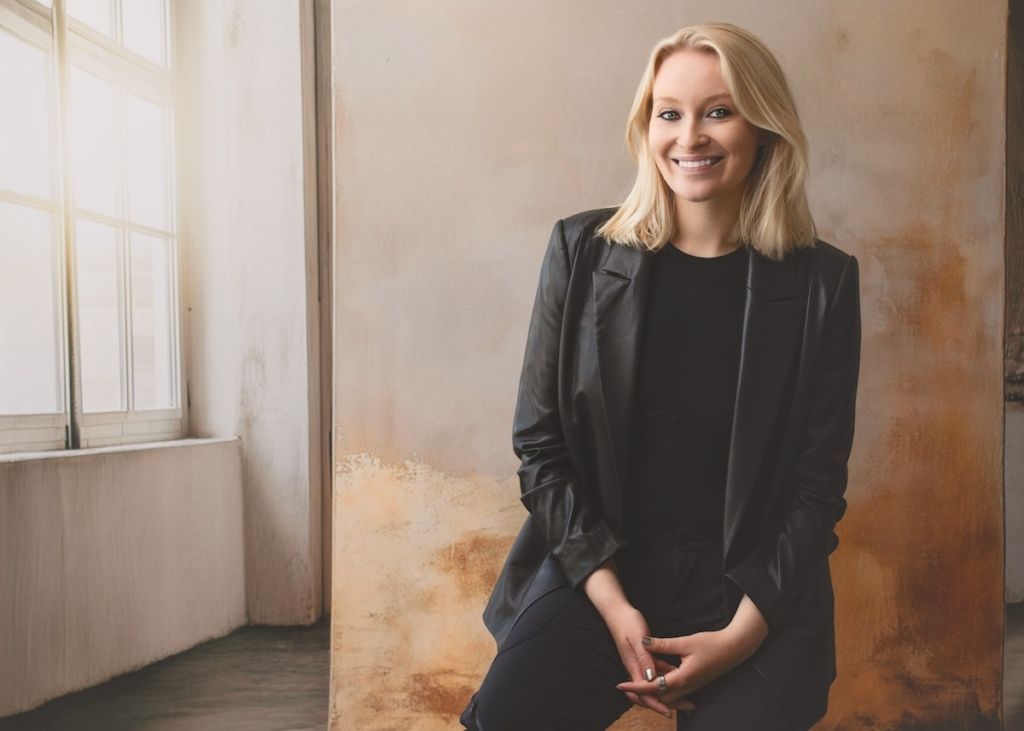
BeSound Raises $6.8M to Expand Breast Cancer Screening for Dense Tissue and Younger Women femtechinsider.com/besound-raises…
English
update: building management said this was illegal
obviously though these are just nap pods for daytime use, so we're safe
Max Marchione@maxmarchione
superpower hq triple bunk is officially official
English
Bailey Renger retweetledi

Bailey Renger was interning at NASA when, at 21, she had a cancer scare. Today, Renger, now 26, is launching BeSound, a breast screening ultrasound startup that aims to catch what mammograms miss or insurance won’t cover. trib.al/dZ3umnr
English
Bailey Renger retweetledi

Bailey Renger was interning at NASA when, at 21, she had a cancer scare.
Today, Renger, now 26, is launching BeSound, a breast screening ultrasound startup that aims to catch what mammograms miss or insurance won’t cover. trib.al/abhRJhv

English
Bailey Renger retweetledi

We @Lux_Capital are proud to back @BaileyRenger and BeSound as they as take on breast cancer diagnostics to deliver faster and more accurate results to women when they need it most!
FORTUNE@FortuneMagazine
Bailey Renger was interning at NASA when, at 21, she had a cancer scare. Today, Renger, now 26, is launching BeSound, a breast screening ultrasound startup that aims to catch what mammograms miss or insurance won’t cover. trib.al/dZ3umnr
English