Sabitlenmiş Tweet

Ball
6.4K posts

@BallTalkO
Talk Ball & More. Featured on @SportsCenter, @ESPN, @ESPNNBA & More. @SocialSight


Recent surveys show people, especially Gen Z, no longer believe hard work promises a better life.





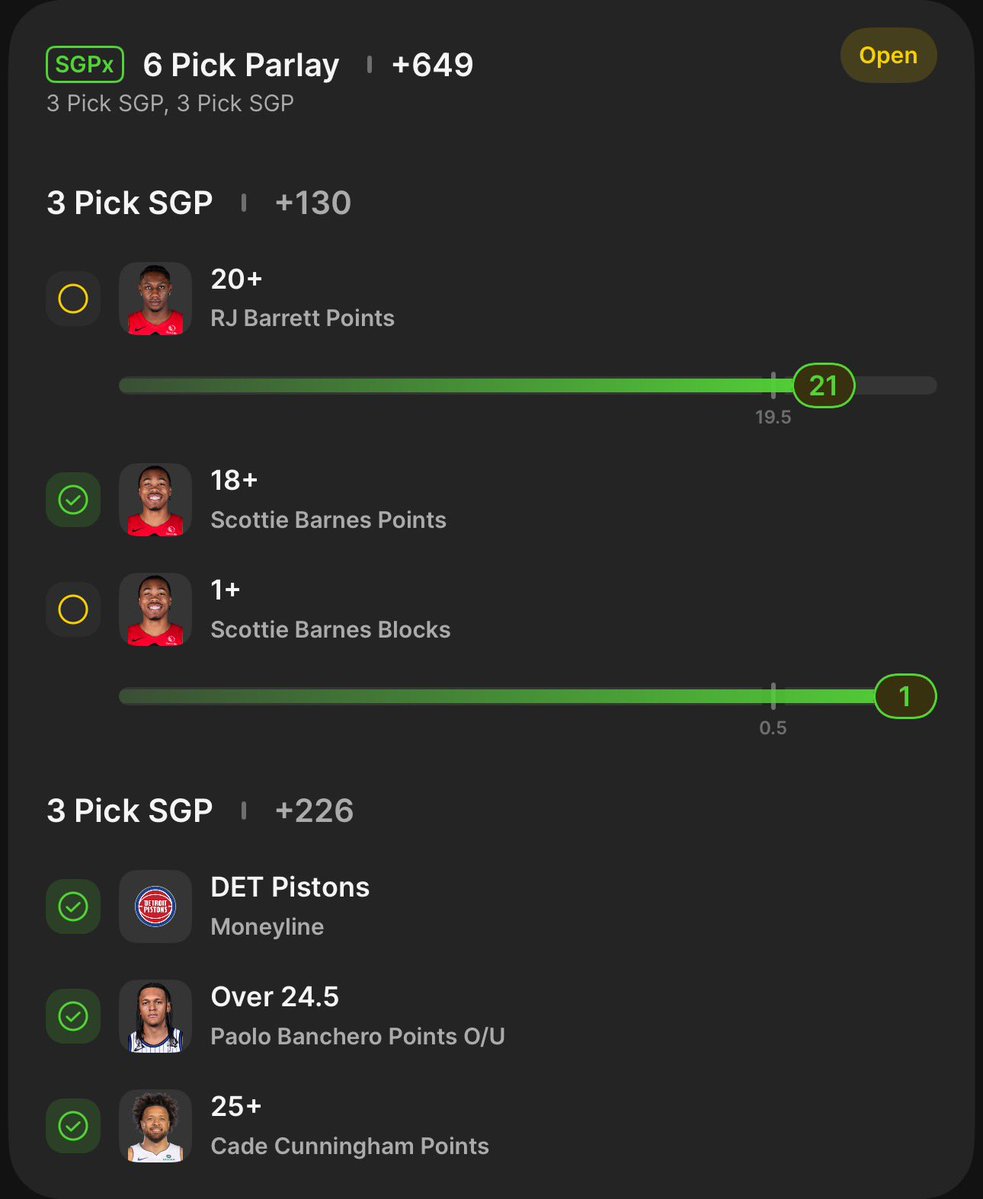
+649


"Flopping has ruined our league. Joel Embiid is one of the greatest players that has played basketball, but he flops. He knows it too" - Jaylen Brown (h/t @rileysbetter )


FREE FULL CARD SUNDAY 🚨 CLICK LINK TO TAIL 👇👇👇 dubclub.win/r/p/pri-g5gbm/… 7 MLB & 2 NBA Plays Posted ⚾️🏀













ChatGPT is now performing better than Claude. Here is how someone will use it to make $1,000,000 in 2026. Codex now works across every department in a business. In the latest update, OpenAI repositioned it for finance, marketing, sales, operations, product, data science, and design. It connects directly to Slack, Google Workspace, Microsoft 365, Notion, Jira, and over 90 other tools through plugins. It can use your computer alongside you: seeing your screen, clicking, typing, and running tasks with its own cursor. It remembers your preferences, learns from previous actions, and can run scheduled automations in the background. It is included in ChatGPT Plus for $20 a month. [Check what ChatGPT currently says about your services using SEO Stuff (it's free): seo-stuff.com/free-audit] A fractional COO costs $5,000 to $18,000 a month. A bookkeeper costs $300 to $1,500 a month. A marketing virtual assistant runs $20 to $50 an hour. A full-time operations manager costs $60,000 to $100,000 a year. Most small businesses need help in all of these areas and can afford none of them at market rates. The fractional executive market is worth $5.7 billion and growing at 14% a year because the demand has always been there. The bottleneck has always been cost. Codex just removed the bottleneck. One person can now handle the financial reporting, marketing operations, sales pipeline management, project coordination, document production, and internal communications for multiple businesses simultaneously. Just by connecting Codex to each client's Slack, Google Workspace, and Microsoft 365 and letting it handle the repetitive operational work while you provide the judgment, the prioritization, and the client relationship. Knowledge workers spend over 20% of their time on low-value administrative tasks. Automation already saves an average of 3.6 hours per week per worker on routine work. Codex takes that further by operating across applications. It can pull data from a client's Google Sheets, draft a summary in their Notion, post an update to their Slack, and schedule a follow-up, all from a single conversation. But here is the part that turns this from a freelance operation into a million-dollar business. The operational work is the delivery. The thing that determines whether you have five clients or fifty is whether your business is the one that shows up when a small business owner searches for help. Not just on Google. On ChatGPT, Perplexity, Google AI Overview, and the AI agents that are increasingly finding service providers on behalf of buyers. Right now, most fractional operations providers have zero AI search presence. A restaurant owner in Nashville asking ChatGPT for the best fractional operations service gets a generic answer. A startup founder asking Perplexity for a virtual COO gets a list of staffing agencies. An e-commerce seller asking Google AI for help with back-office operations gets nothing useful. Every one of those searches is a client waiting to be won. And the first operator optimized for AI search in each vertical, in each major city, locks out everyone who comes after. Check what AI currently says about your services using SEO Stuff (it's free): seo-stuff.com/free-audit Here is the play. Step 1: Build operational packages for small businesses using Codex as the production backend. The sharpest combination: financial operations plus marketing operations for the same clients. Every small business that needs help with bookkeeping, reporting, and cash flow management also needs help with marketing execution, content scheduling, and campaign tracking. You are solving both problems for the same client with the same AI backend. Build a core operations package at $3,000 to $5,000 a month: financial reporting, expense tracking, invoice management, marketing execution, social media scheduling, email campaign management, sales pipeline updates, and weekly operational summaries. A traditional fractional COO charges $5,000 to $18,000 a month and typically covers only one operational area. You are covering multiple functions at a fraction of the cost because Codex is doing the execution while you provide the oversight and strategic direction. Your cost to deliver is a $20 ChatGPT Plus subscription and your time. The margins are the entire fee minus the cost of your judgment and attention. Step 2: (This is where the real money is.) Every small business you run operations for also needs to be found by their customers. The restaurant you handle operations for needs to show up when someone asks ChatGPT for the best restaurant in their neighborhood. The e-commerce brand you manage logistics for needs to appear when an AI agent searches for their product category. The startup you do financial reporting for needs investors and customers to find them in AI search results. SEO Stuff shows you exactly what AI is saying about each client's business: seo-stuff.com/free-audit Show them the gaps. Show them the competitors who are showing up instead. Then offer to fix it. Charge $1,500 to $3,000 a month to manage their AI search presence alongside the operations work you are already doing. Recurring revenue. Every month. For every client. Now you are the only operator who makes the businesses you run actually findable. That is a positioning advantage no traditional operations consultant can match. Step 3: At 15 clients paying $4,000 a month for operations and $2,000 a month for AI search management, you are at $90,000 a month. That is $1,080,000 a year. One person with Codex running the operational backend and SEO Stuff driving client acquisition and retention. seo-stuff.com OpenAI just opened Codex to every department in a business: finance, marketing, sales, operations, data science, and design. It connects to the tools companies already use and handles everything from research and planning to docs, slides, and spreadsheets. The work that used to require a bookkeeper, a marketing coordinator, a project manager, and an operations associate now runs through a single AI that operates across all of them. But the tools are just the delivery mechanism. The business is built on being findable. And the operators who own the AI search results for fractional business services in their markets are the ones that will scale past freelancing into seven figures. That is the gap SEO Stuff (seo-stuff.com) was built to close. Codex handles the operations. SEO Stuff makes sure the right clients find you. The tools are here. The playbook is above. Someone is going to run this in the next six months and it is going to work.